H.E M7’s overview on tracking Uganda’s economy since 1900-1962, through its collapse between 1970-1980, in 1986, Today and future projections (modern economy).
When NRM took power in 1986, Uganda had only 1,900 kilometres of tarmac roads, mostly in poor condition. Today, we have 6,199 kilometres.”- @KagutaMuseveni
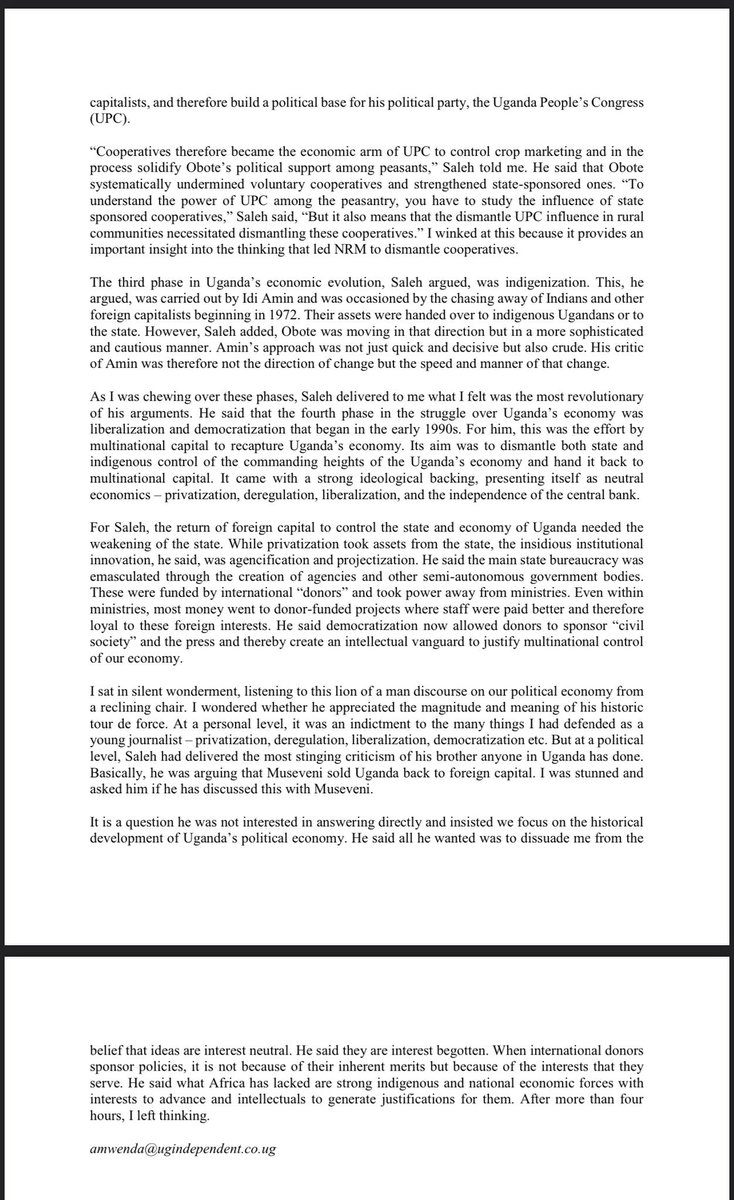
@AndrewMwenda reflects on a profound discussion with Gen. Salim Saleh ( Chief Coordinator-OWC) about Uganda’s economic history. Saleh traced four key phases: colonial exploitation, post-independence nationalization, Amin’s indigenization, and the 1990s liberalization.
@TumukundeTT@KagutaMuseveni This might be a good sign that in the nearest future CAPITAL as a factor of production will be cheap and accessible.👏🏾👏🏾👏🏾 Asante Sana H.E @KagutaMuseveni
@nbstv@KagutaMuseveni For Example, the country is ignoring where Uganda’s economy has come from…tracing it back in 1900 at the dawn of Colonialism, to Independence, through the different regimes up to when NRM found it in ICU in 1986 to what it is today and how it’s envisioned as a Modern economy.