Limrun (@limrun) provides the infrastructure to leverage your favorite cloud agents for mobile development too. Today, we provide remote XCode, IOS & Android Simulators to Replit, Rork, Momentic AI, and many more.
Congrats on the launch, @muvaff!
https://t.co/JKJEQrzI40
@Lol12392781283 It’s a generally known ratio for cloud providers with quality concern. The higher you go, it means you get new hardware. I’m not sure whether that still makes sense for the labs though because their workload is easier to control for spikes
Someone who built clouds here!
It’s counter-intuitive but the cost for a token largely depends on the *utilization rate* of the infra. The higher utilization, the lower cost.
But it’s double edge; if you run at 80%, then the cost is so low you can even give it for free but you’re too close to the sun! When a customer launches a new product, the infra crumbles for everyone so you lost your best customer.
What labs are doing is to give cheap tokens with time limits so they can control the cheap demand. As long as you don’t cause a spike, you don’t matter from cost perspective so they make money even from $200 subs!
Now obv there is KV cache and LLM-specific mechanisms at play but still there is allocation of a piece of hardware that makes the economics just as similar as usual servers.
Now were you curious about why some compute providers are so cheap? Ask for concurrency guarantees! Suddenly you’re looking at a whole new line item that makes you wonder, why am I risking my business again?
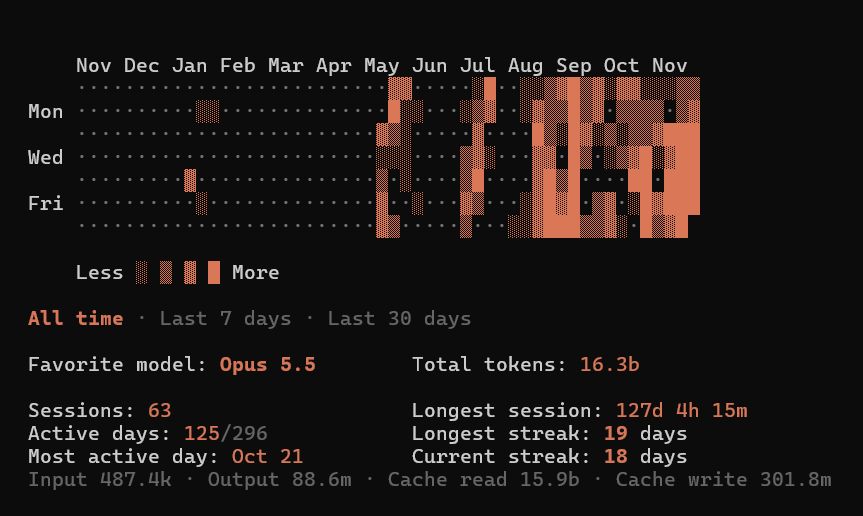
I don't understand Anthropic's business model.
My Pro plan costs $200 per year, yet I used 16B tokens, which, at the per-use rate, would cost around $100,000.
Elon is the generational CEO of lifetime who runs incredible companies (rockets / satellite internet / AI / cars / brain chips / tunnels / social-app) and still has this level of understanding of the nuances of what each one is doing.
@711_Joseph You’re evaluating the cheaper options for margins but you don’t know how it will behave at scale. When you ask guarantees, then suddenly it’s not so cheap or they can’t even give you that guarantee. Now you’re risking to break your users for cost savings
@jpbarona The marginal increase of power & bandwidth approaches to zero as you build out more infra since the load is distributed so your cost becomes more and more upfront & fixed. Depreciation is measured only by time so it all converges on capex/opex at scale regardless of usage
Unless it’s Linux kernel, don’t go near C.
Sources of the worst CVEs are all ‘that one gotcha’ with fking C. We had it in one (1) dependency and our pentest with @calif_io found the worst CVE in there; we scrapped it completely and rewrote the thing in Go.
To all the people who are defending C, I would recommend reading the following article which talks about the damage it has done to modern systems. It's sheer luck it's still this embedded in modern programming.
https://t.co/DPTOaGyVRs
@justinsunyt In the past, custom was much more costly due to how native ones hillclimbed KV cache hits and supposedly had server-side tricks. Has that been a problem or hit rates pretty much reached the equillibrium anyway?
@theshortjacob Linux network stack is the most scrutinized code ever existed and it still has critical CVEs now and then. Is what you’re running documented anywhere? How do you trust it’s safe?
Finally!
It’s always surprised me Bazel was in Java in the first place. With all the efficiency gains we did in our RBE, the one thing that added friction to everything was Bazel, the machine, itself with its JVM.
https://t.co/G0irIoP4I5
Work have started to port @bazelbuild to @rustlang
rules_rs by @dzbarsky was merged today to power the rust portion of the build graph.
This reminded me last year when I forked webrtc for iOS simulator and wrote an entire HW encoder with diffing, spatial awareness, live reconfig.. mostly by hand and o3.
Now that level of care is going into our globally distributed streaming tech with Fable 5.2
That’s why we win
we patched x264 in voxl to skip the parts of the screen that didn't change
when a small window is animating on a 2560×1600 desktop:
→ 38% faster encode
→ 32% less CPU
→ latency 9 → 5 ms