The Fibonacci sequence (0,1,1,2,3,5,8,13…) isn’t just math — it’s a universal pattern. As it grows, ratios of terms approach the Golden Ratio (Φ ≈1.618), a harmony found in spirals, plants, shells, galaxies & even DNA.
[🎞️ thevisualalchemy]
Tus padres están envejeciendo.
30 cosas que hacer con ellos antes de que el tiempo pase.
1. Graba su voz contando una historia. Algún día, esa voz se convertirá en un sonido que nunca volverás a oír.
Hoy cumple 93 años un monstruo del 7º arte.
Este perfil de twitter, fan abnegado de la música de cine, solo le puede rendir pleitesía a su música dedicándole un hilo de sus 10 favoritas. Gracias John Williams, GRACIAS❤️.
Espero que les guste👇🏼🧵:
1/10 - La marcha imperial - Star Wars
Simplemente HISTORIA del cine🙌
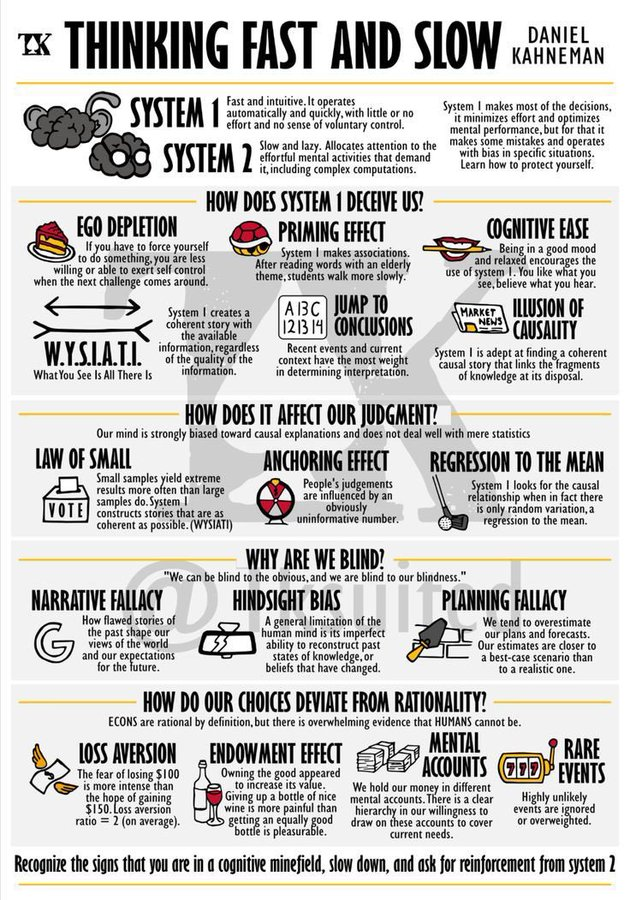
Daniel Kahneman, a psychologist whose work casting doubt on the rationality of decision-making helped spawn the field of behavioral economics and won him a Nobel Prize, has died. He was 90. https://t.co/puNCJbsWpQ
Le 12 tipologie di amore dell'antica Grecia - thread 🧵
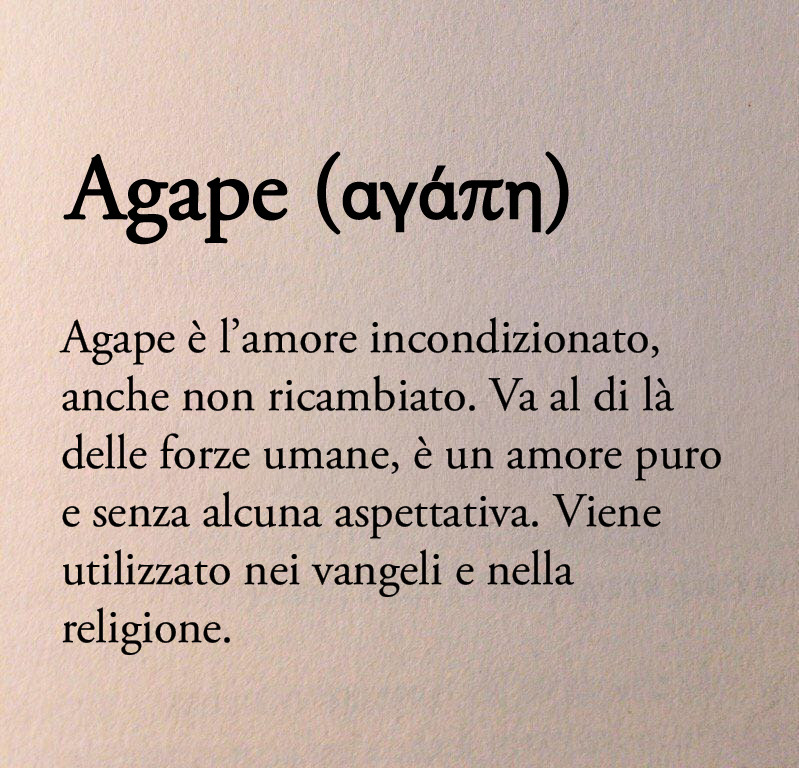
1. Agape (αγάπη)
Agape è l’amore incondizionato, anche non ricambiato. Va al di là delle forze umane, è un amore puro e senza alcuna aspettativa. Viene utilizzato nei vangeli e nella religione.
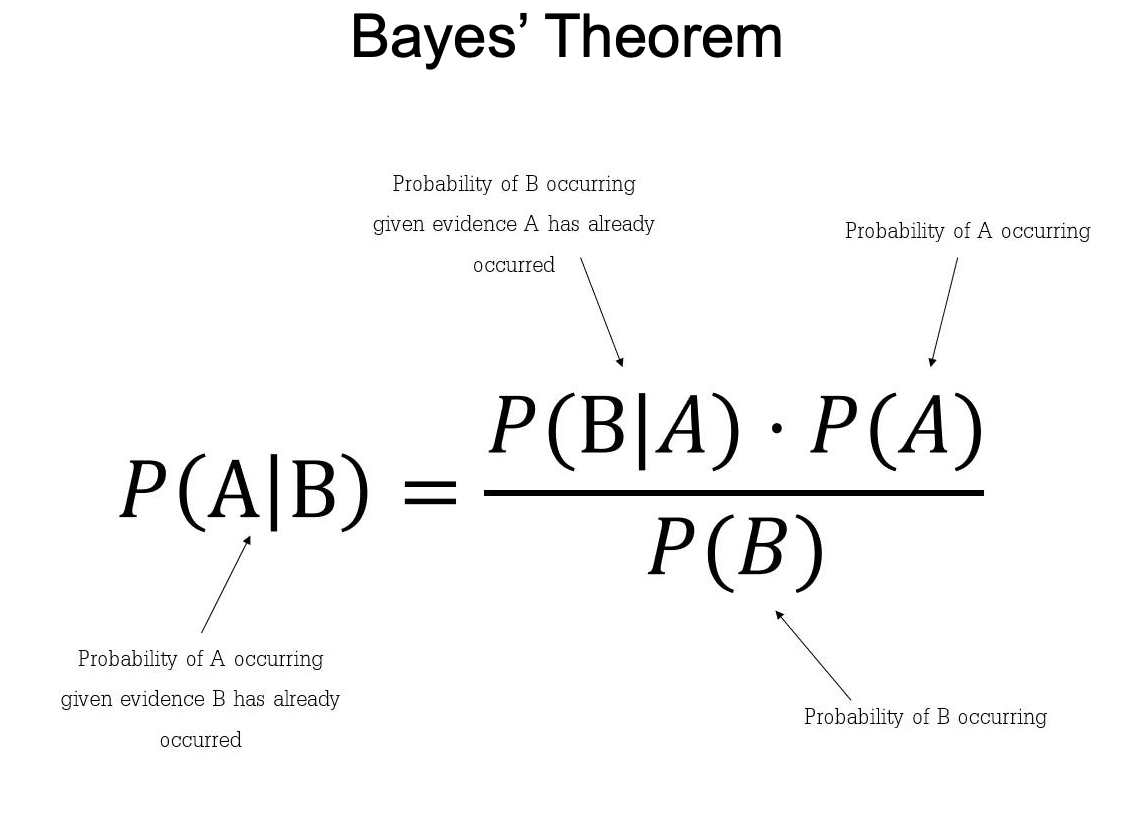
Bayes' Theorem is a fundamental concept in data science. But it took me 2 years to understand its importance. In 2 minutes, I'll share my best findings over the last 2 years exploring Bayesian Statistics. Let's go.
1. Background: "An Essay towards solving a Problem in the Doctrine of Chances," was published in 1763, two years after Bayes' death. In this essay, Bayes addressed the problem of inverse probability, which is the basis of what is now known as Bayesian probability.
2. Bayes' Theorem: Bayes' Theorem provides a mathematical formula to update the probability for a hypothesis as more evidence or information becomes available. It essentially describes how to revise existing predictions or theories in light of new evidence, a process known as Bayesian inference.
3. Bayesian Statistics: Bayesian Statistics is an approach to statistics that interprets probability as a measure of belief or certainty rather than just a frequency. This belief may be based on prior knowledge of the conditions that might be related to the event or experiment in question. This allows for making probabilistic statements about unknown parameters. For instance, instead of estimating a single value for a parameter, Bayesian statistics provides a distribution of possible values, reflecting the uncertainty.
4. Bayesian vs Frequentist: Bayesian inference is fundamentally about updating beliefs or probabilities as new data is observed, which can be very intuitive and aligns with how we often think about the world. Frequentist statistics interpret probability as the long-run frequency of events. The problem I have with frequentist approaches is that pre-determined distributions are used (e.g. Normal Gaussian), which does not always make sense.
5. Bayesian Machine Learning: Any time true confidence and probabilistic decision making is needed, Bayesian is the answer. Here are a couple of examples. Uncertainty Modeling: Unlike traditional machine learning methods that often provide point estimates, Bayesian methods focus on estimating distributions. Time-Series Analysis: Bayesian methods are particularly useful in time-series analysis, where uncertainty in the future is crucial.
6. Business Context: Businesses can use Bayes' Theorem to assess and quantify various risks, such as market risks, credit risks, or operational risks. By continuously updating the probability of risks as new information emerges, businesses can make more informed decisions.
===
Ready to learn Data Science for Business?
I put together a free on-demand workshop that covers the 10 skills that helped me make the transition to Data Scientist: https://t.co/LR39RJ5XKB
And if you'd like to speed it up, I have a live workshop where I'll share how to use ChatGPT for Data Science: https://t.co/EaMpKrJiqX
If you like this post, please reshare ♻️ it so others can get value.
#EnAgenda | La petrolera mexicana carece de un plan para el uso de hidrógeno proveniente de energía renovable para la obtención de amoniaco, lo que ralentiza aún más la descarbonización de su cadena productiva.
✍️📷Emilio Godoy / IPS
https://t.co/j2DtQp2OpT
Sapevi che il miele contiene una sostanza che aiuta il cervello umano a funzionare meglio?
Sapevi che il miele è l’UNICO cibo sulla terra che da solo può sostenere la vita umana?
Sapevi che un cucchiaino di miele è sufficiente per sostenere la vita umana per 24 ore?
Sapevi che la propoli prodotta dalle api è il più potente ANTIBIOTICO naturale?
Sapevi che il miele non ha una data di scadenza?
Sapevi che per guadagnare 1 kg. di tesoro, hai bisogno del nettare di più di 1.000.000 di fiori?
Sapevi che c’è un cucchiaio di legno speciale per il miele, e non uno di metallo?
Sapevi che i pascoli di api sono il cibo più salutare del mondo?
Sapevi che Il polline può avere più di 1500 colori e sfumature?
Sapevi che i corpi dei grandi imperatori del mondo sono stati sepolti in bare d’oro e poi ricoperti di miele per evitare il marcimento?
Sapevi che le api sono gli UNICI insetti che producono cibo per l’uomo?
Sapevi che mamma (regina) depone il doppio del suo peso nelle uova in un giorno?
Sapevi che le api battono le ali più di 11.000 volte al minuto?
Sapevi che l’unico miele che può essere apprezzato da persone allergiche ai prodotti dell’apicoltura è il miele di manna (manuka).
Sapevi che il miele manuka è il miglior miele per le donne?
Sapevi che il miele di acacia non è dolcificato?
Lo sai questo?
Un’ape vive meno di 40 giorni, visita almeno 1000 fiori e produce meno di un cucchiaino di miele, ma per lei è tutta la vita!