🙏❤️ I BELIEVE IN THE POWER OF PRAYER! AND I BELIEVE IN MIRACLES!
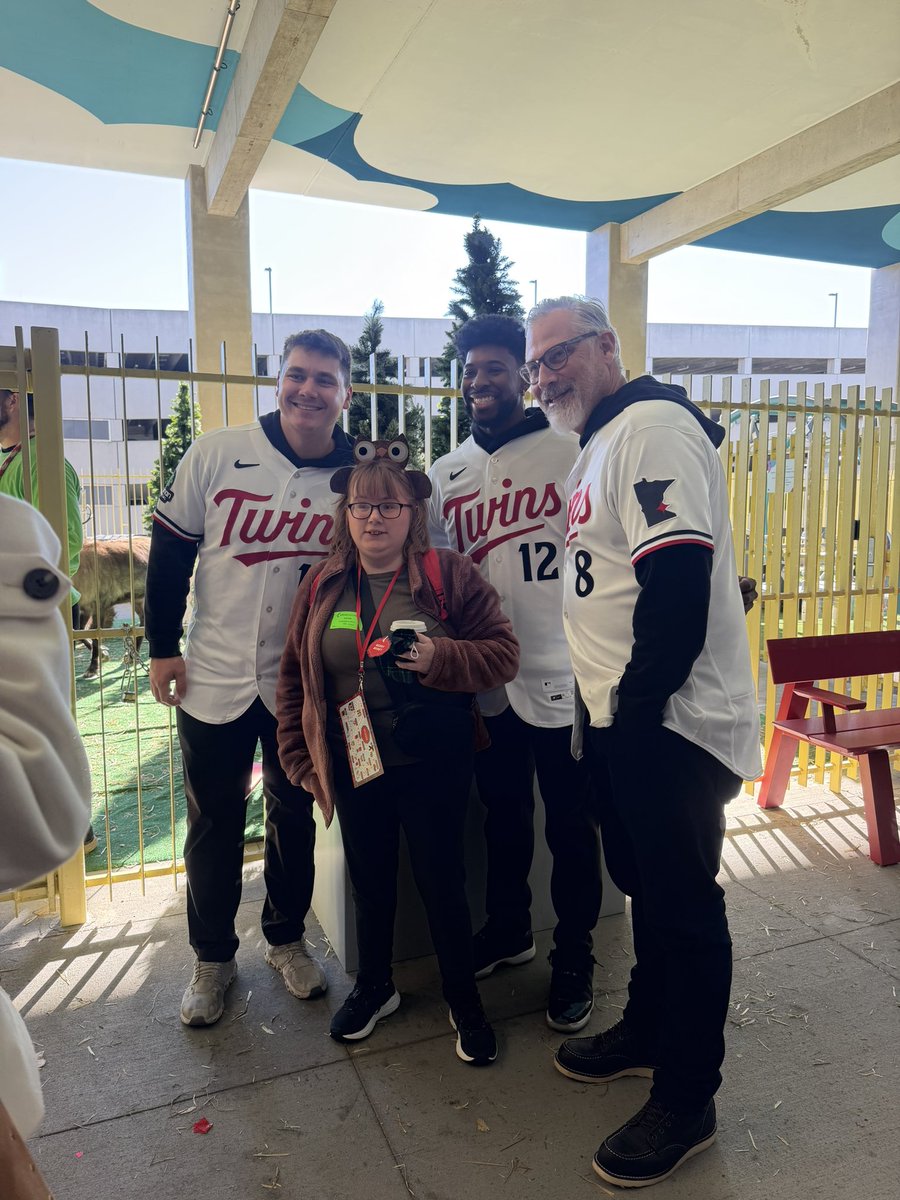
PEEPS, please JOIN ME in praying for this beautiful, courageous young student from JOHN PAUL II CATHOLIC HIGH SCHOOL in SAN ANTONIO, TX, who is battling cancer.
I BELIEVE WITH ALL MY HEART THAT GOD CAN RESTORE HER TO FULL HEALTH!
LORD JESUS, wrap her in YOUR LOVE, give her STRENGTH, and bless her with the miracle we are praying for!
WHO WILL JOIN ME IN FAITH AND PRAYER? 🙏❤️
#missionaryofmercy #PowerOfPrayer #FaithOverFear
WHEN THE LAST GRAIN OF SAND FALLS.
By Michael Whelan
Someday, perhaps tomorrow, perhaps years from now, the final grain of sand will fall through the hourglass of my life.
And I will be gone.
Death, that patient and undefeated adversary, will have won another round.
Some people will cry. Others will mourn deeply. Some will remember a conversation, a kindness, perhaps a moment when our lives briefly touched. Others will barely notice my absence.
And that's all right.
The world will continue turning. The sun will rise without asking my permission. Somewhere, someone will laugh, a child will be born, and another heart will quietly break.
Such is the magnificent, heartbreaking indifference of life.
But before my final curtain falls, I have one humble prayer.
I hope I mattered.
Not because of accomplishments, accolades, or the fleeting applause of strangers. Those are merely footprints in sand, destined to disappear beneath the tides of time.
I hope my suffering taught someone courage. That my failures gave someone permission to forgive themselves. That my hundreds of essays reached one frightened soul sitting alone in the darkness and whispered, I understand. You are not alone.
Just one.
That would be enough.
And perhaps, somewhere among the people I leave behind, someone will remember that I loved deeply, sometimes clumsily, sometimes imperfectly, but always with everything my battered heart could give. I know what it means to hold someone you love and beg the universe for one more tomorrow. I know the terrible silence that follows when tomorrow never comes.
The Buddha taught compassion as a path toward liberation. Jesus placed love at the center of human existence. The Dalai Lama reminds us that compassion is humanity's common language.
Different voices. Different centuries. One extraordinary truth.
We are here to love one another.
I've witnessed extraordinary beauty and unbearable sorrow. I've tasted victory, swallowed defeat, buried people I adored, and discovered that even a shattered heart can still offer shelter to another.
Perhaps that is our greatest purpose.
Not to conquer the world, but to soften it.
Not to be remembered by millions, but to have mattered deeply to someone.
And if there is one thing grief has taught me, it is that we never truly know when we are holding someone for the last time. So hold them longer. Forgive them sooner. Tell them they matter while their hearts are still beating. Flowers placed upon a grave are beautiful, but they cannot replace the words we were too frightened to say while someone was alive.
So when death finally comes knocking, I hope I can greet it without regret, knowing I left behind a little more tenderness than I found.
And if somewhere, years after I'm gone, one person chooses kindness because of something I wrote, said, or did—
Then my life was not merely lived.
It was given.
And that, my friends, is more than enough.
A massive starling murmuration was captured flowing dynamically against a purple twilight sky. This mesmerizing phenomenon occurs because each individual bird constantly mirrors the speed and direction of its seven closest neighbors, allowing the flock to react instantly and move as a single, fluid entity.
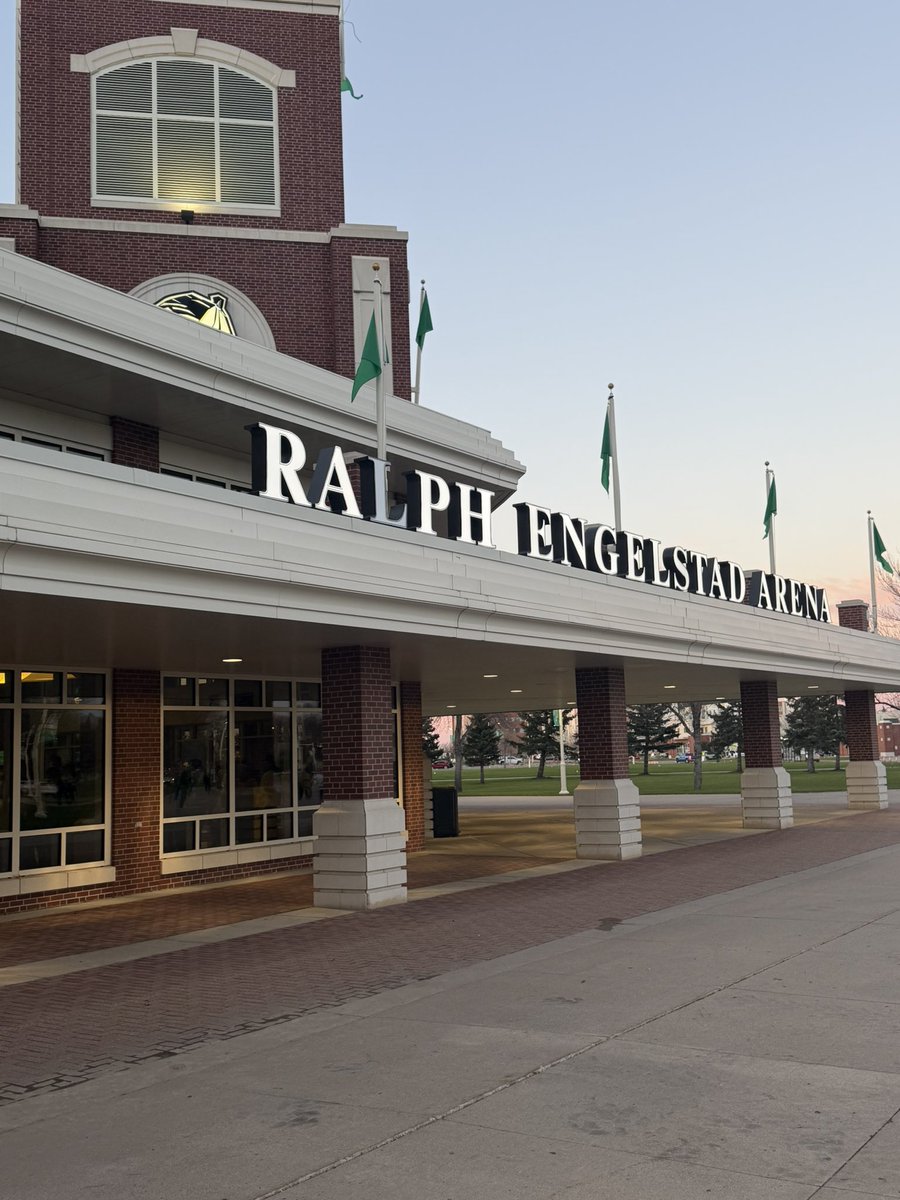
I’d heard for years that catching a game at the Ralph was something special.
Turns out, the stories don’t even do it justice.
Incredible barn. Impeccable atmosphere.
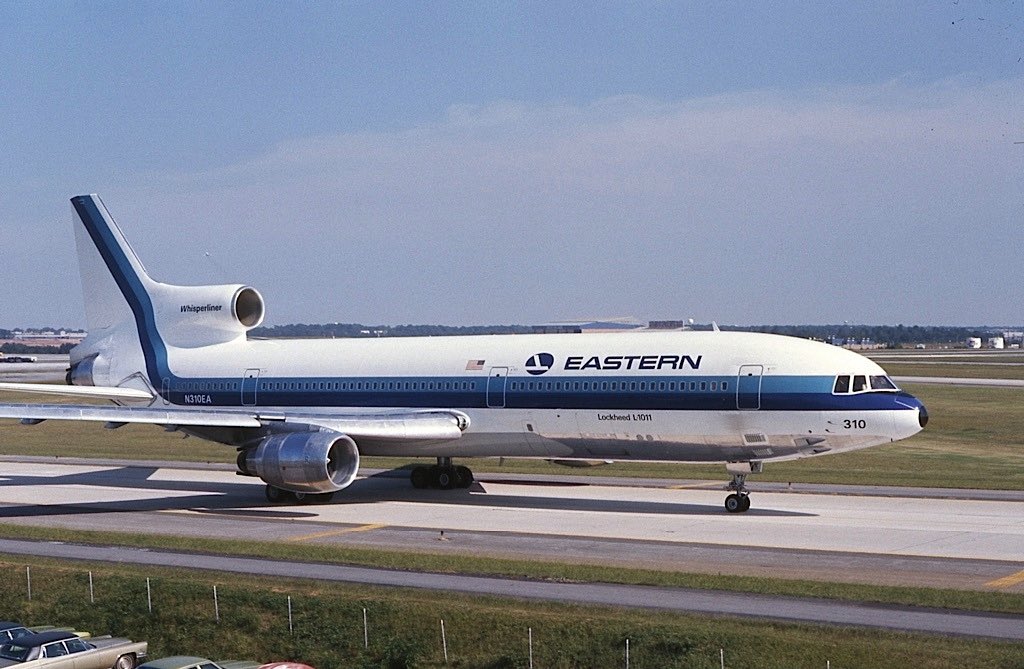
Perhaps the most famous airplane ghost story:
Eastern Airlines flight 401 crashed into the Florida Everglades shortly before midnight on Dec 29, 1972.
The crash was avoidable; a malfunctioning landing gear light distracted the pilots, the yoke was bumped, the autopilot disconnected & the L-1011 jet slowly spiraled into the swamp without anyone noticing. 101 were killed.
Now, it’s not uncommon for airlines to salvage useable parts in the aftermath of a crash. Flight 401 was no different; useable parts were recovered & *allegedly* used as spares across Eastern’s L-1011 fleet.
According to stories, the ghosts of the Captain & Flight Engineer began to appear aboard jets that used the salvaged parts, warning flight crew of problems that were developing on the jet. Eastern executives were unhappy & warned that sharing such stories was unprofessional. It’s *alleged* that they then ordered all the salvaged parts to be removed from their jets & disposed of, after which the ghost reports stopped.
A book was written on the subject, “The Ghost of Flight 401”, which was developed into a TV movie. It also appears in other media from time to time.
A second book claimed that the parts had never been installed on other jets & that nobody had reported ghost sightings. The whole thing was just a myth.
I don’t believe in ghosts, but certain non-critical parts are definitely salvaged in crashes. They have to be re-certified, but can be used again. Critical parts like wing spars & engines are much less likely to be reused.
I don’t pay much heed to these stories, but it seemed appropriate to share tonight!
I watched a documentary about Matthew Perry on Netflix. I was interviewed for the docu but unfortunately my interview stayed on the edit room floor. For those who might have missed it, this was my essay.
BEFORE THE WORLD KNEW HIS NAME.
By Michael Whelan
I met Matthew Perry in October '94, before the world knew his name.
I was an executive at The Golf Channel in Orlando, visiting Los Angeles to compose music for our network. One evening, a creator invited me to watch a taping of a new sitcom called Friends.
Funny show. Talented cast.
I had no idea I'd just witnessed television history.
Matthew Perry, meanwhile, was convinced he'd witnessed his own professional funeral.
I'm getting fired.
Afterward, Matthew, a few showrunners and I attacked the Los Angeles bar scene with the enthusiasm of men apparently determined to destroy their livers before breakfast.
Matthew was hilarious.
Not Chandler Bing hilarious.
Matthew Perry hilarious.
Faster. Darker. Dangerously funny.
“I sucked tonight.”
“You were brilliant.”
“They're firing me.”
“Matthew, I produce television.”
“Then you should know I sucked.”
There wasn't enough alcohol in California to convince him otherwise, although we conducted an exhaustive scientific investigation.
By midnight, we were friends.
By two, philosophers.
By four, psychiatrists.
By sunrise, we'd solved humanity's problems.
Except our own.
We couldn't even find his car. Mercifully, we found a cab instead.
But beneath our ridiculous laughter lived something surprisingly intimate.
Fear.
Matthew suffered from that familiar creative affliction: impostor syndrome. The conviction that success is merely an administrative error waiting to be corrected.
I understood perfectly.
I'd spent my career expecting someone to confiscate my office keys and expose me as a spectacularly fortunate fraud.
But our friendship went deeper.
Neither of us was afraid to discuss our mental health.
Depression. Anxiety. Insecurity. Those terrible, inexplicable afternoons when the world applauds while your mind quietly falls apart.
No embarrassment. No judgment. No Hollywood bullshit.
We could discuss our demons without pretending they didn't exist.
Then laugh until our ribs hurt.
Perhaps that's why we connected so easily.
We weren't two men without darkness. We were two men who recognized each other's shadows.
Occasionally, we bought those shadows another drink.
Whenever business brought me back West, Matthew and I sometimes reunited, closing far too many bars and behaving like two unsupervised adolescents with expense accounts.
He made me laugh until breathing became optional.
Making him laugh felt like beating Michael Jordan at basketball.
For a few hours, neither of us had to perform happiness.
We could simply be human.
Years passed.
Matthew became a star.
Money. Fame. Adoration.
Everything except lasting peace.
Fame is a lousy anesthetic.
And depression doesn't care how many millions love you.
Our final encounter happened in New York. He wanted to visit The Golf Channel in Orlando and meet Arnold Palmer.
“Absolutely,” I promised.
He never arrived.
I called.
Voicemail.
That was our goodbye.
No dramatic farewell. Just an unanswered telephone and two lives quietly separating.
Years later, watching the Friends reunion, I barely recognized him.
Then came the news.
Matthew was dead.
Fifty-four.
Suddenly, I was back in California.
Two drunken fools greeting the sunrise, hugging, laughing, promising another adventure.
Matthew terrified he'd lose his job.
Me assuring him he'd become a star.
I was right.
But here's what breaks my heart.
We believed there would always be another night, another laugh, another sunrise.
We understood our darkness.
We simply underestimated its appetite.
Sometimes the funniest man in the room is fighting the saddest battle.
And sometimes the laughter survives long after the man who gave it to you.
God, Matthew, how I wish we'd had one more sunrise.
Cheers to 20 years! I’ve been blessed with fantastic coworkers/friends, and wonderful viewers like you! I will celebrate with Riunite on ice…that’s nice!
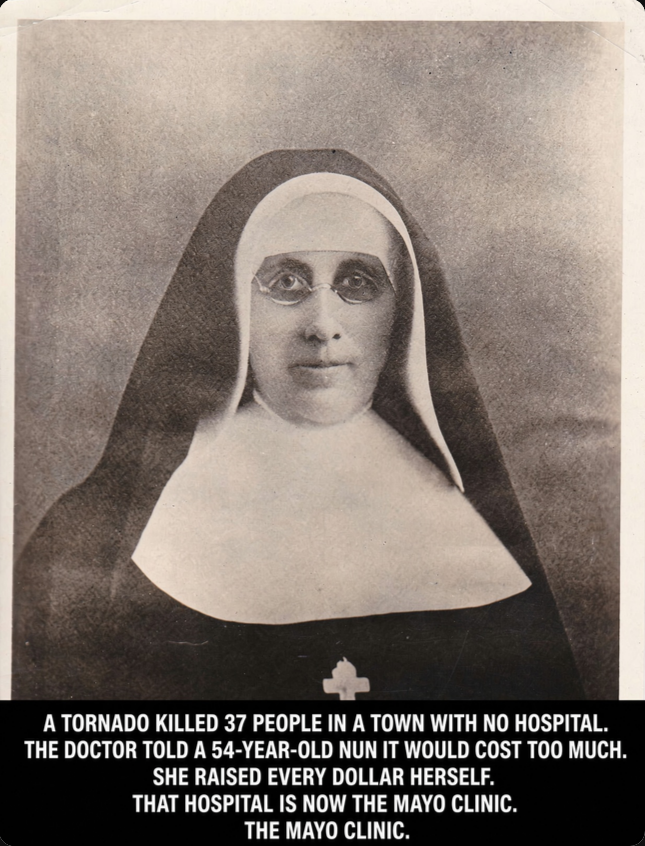
August 21, 1883. Just after six in the evening, the sky over Rochester, Minnesota turns the color of a bruise. Twenty minutes later, a third of the town is gone. Thirty seven people are dead. More than two hundred are bleeding in the streets.
Rochester had no hospital. Not one.
So a convent school on the edge of town emptied out. The nuns walked into the wreckage in full habits, and a woman named Mother Alfred Moes, an immigrant from Luxembourg who had come to America with almost nothing, sent word to the only doctor in town who could handle that many wounded.
His name was William Worrall Mayo. He was 64, an English country doctor, a hard skeptic on the subject of religion.
The sisters took over Rommel's dance hall and turned it into a hospital overnight. None of them had ever been trained in nursing. They learned it standing up, with Mayo giving orders and the injured laid out on the floorboards.
When the last patient was gone, Mother Alfred went to see him.
She told him Rochester needed a real hospital. A permanent one. She said she had seen it, a great hospital rising out of the cornfields on the west edge of town, and that she wanted him to run it.
Mayo told her the truth. A building like that would cost $40,000. Well over a million in today's money. He said no congregation of school teaching nuns could possibly raise it.
She did not argue with him. She simply told him that if he would take charge of the hospital, the sisters would take charge of paying for it.
Then she went out and did it.
For six years, her sisters taught school and handed over their wages. Every dollar. She bought nine acres of farmland. She hired the builders. She oversaw the plans herself, and when the money ran short, she found more.
Saint Marys Hospital opened on September 30, 1889. Twenty seven beds. Thirteen sisters, none of them nurses by training. Dr. Mayo, now 70, walked in as chief of staff with his two sons, Will and Charlie, beside him.
Those two boys built their surgical practice inside her building. Patients started arriving from Chicago, then from every state, then from overseas. The brothers formalized the partnership in 1919 and gave it their family name.
Mayo Clinic. Today it treats more than a million patients a year and is ranked the best hospital in the United States.
Mother Alfred Moes died on December 18, 1899, ten years after the doors opened. She never saw what it became.
The Mayo brothers always said it plainly. Their father did not want the hospital. The nun did. She built it, and then she handed them the keys.
Millions of Americans have made the drive to Rochester with someone they love in the passenger seat. Almost none of them know that the whole thing started with a 54-year-old woman standing in tornado wreckage, refusing to accept a no.
h/t: Minnesota | FB