Museum of Vertebrate Zoology (MVZ), UC Berkeley, is a research facility with collections of fish, amphibians, reptiles, birds, and mammals. @Arctosdb member!
Excited to share an awesome project I was part of as an undergrad at the @MVZUCB (and my #firstpaper!) Thanks to @Nick_mas0n and @eco_physiology for being great mentors through the whole process.
1. We utilized museum collections (@UNM_MSB and @MVZUCB) to detect Coccidioides and other fungal pathogens in lungs of small mammals with community sequencing
#ValleyFever caused by species of Coccidioides is endemic to the Southwestern US https://t.co/PoA7mIN36A
NEW ARTICLE 🥳👇🏿!
Our interdisciplinary group of collaborators highlight how translation tools are critical to the multilingual future of science.
Tweet thread written by @Valeria_RamCas, translated with DeepLTranslator, and human-verified by yours truly.
💜👩🏿🔬🌎
1/13
Founder of AmphibiaWeb David Wake was celebrated May 7th at the @MVZUCB.
Attendees came from all over the world to celebrate David's work, impact on others, and his generosity of spirit he afforded every one he met.
https://t.co/BntW3f37jx
https://t.co/ZRXa0Hvk32
We are all deeply saddened to report that Grinnell was found dead in downtown Berkeley this afternoon. We are devastated and heartbroken.
His cause of death isn't known, but he was probably struck by a car given where we found him.
Celebrating #Grinnell and the Natural History of the Vertebrates course at the @MVZUCB 👇🏽
"Ahead of his time: Joseph Grinnell, natural history, and inclusion and equity in STEM"
by David O. Ribble
https://t.co/ZhRz7GVBos
🐀🦎🦜🐸
image by Monica Jurik 👇🏽
We were excited to welcome @bhjuarez to the @MVZUCB for #herpgroup seminar last night. He touched on one of his recent publications benchmarking the use of morphological measurements to approximate jumping function in frogs. Great use of museum specimens! https://t.co/CYLHSanJrh
New preprint, led by an @MVZUCB working group. This was really fun work and an opportunity to collaborate across disciplines to learn more about translation studies and tools. Check it out!
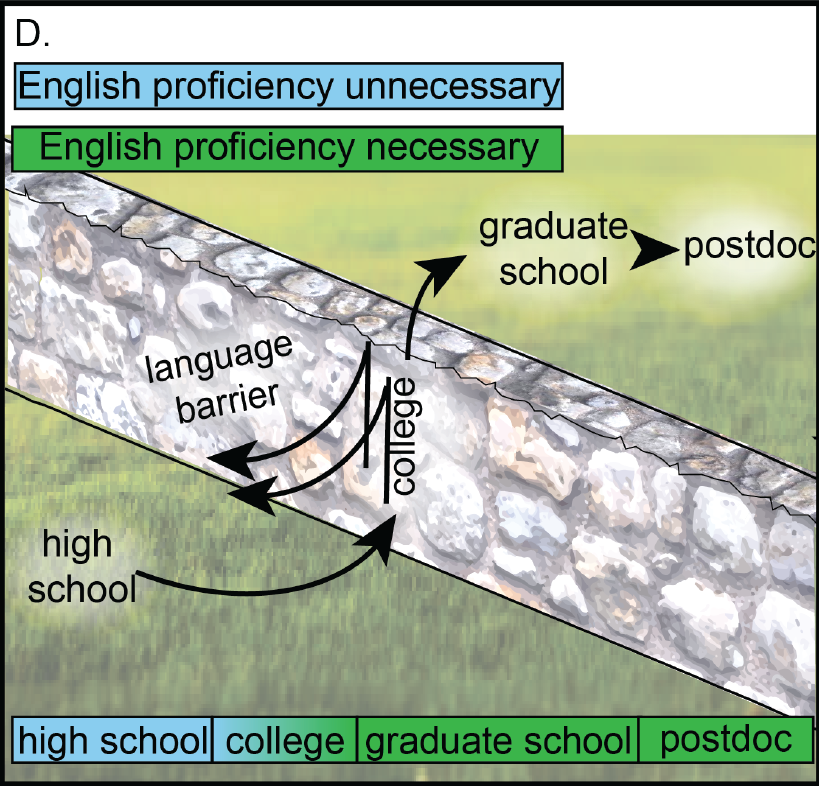
But maintaining a single language also has its costs, particularly through the exclusion of many people who must become proficient in English.
Have you or your collaborators faced linguistic barriers?
3/15
Having a universal language in science does have its benefits: a common method of communication helps scientists connect and communicate globally.
2/15
English is not the 1st language of most scientists but ~98% of scientific articles are published in English.
How can we build a more multilingual academy & why should we?
Read more in our new preprint: https://t.co/1ATzfKA9Ek
#LanguageMatters#MultilingualScience#SciComm
1/15
Beautiful write-up on Kannon's undergraduate thesis and first paper from our lab: Losing amphibian diversity also means losing poison diversity https://t.co/eT3Y4LQojy #atelopus