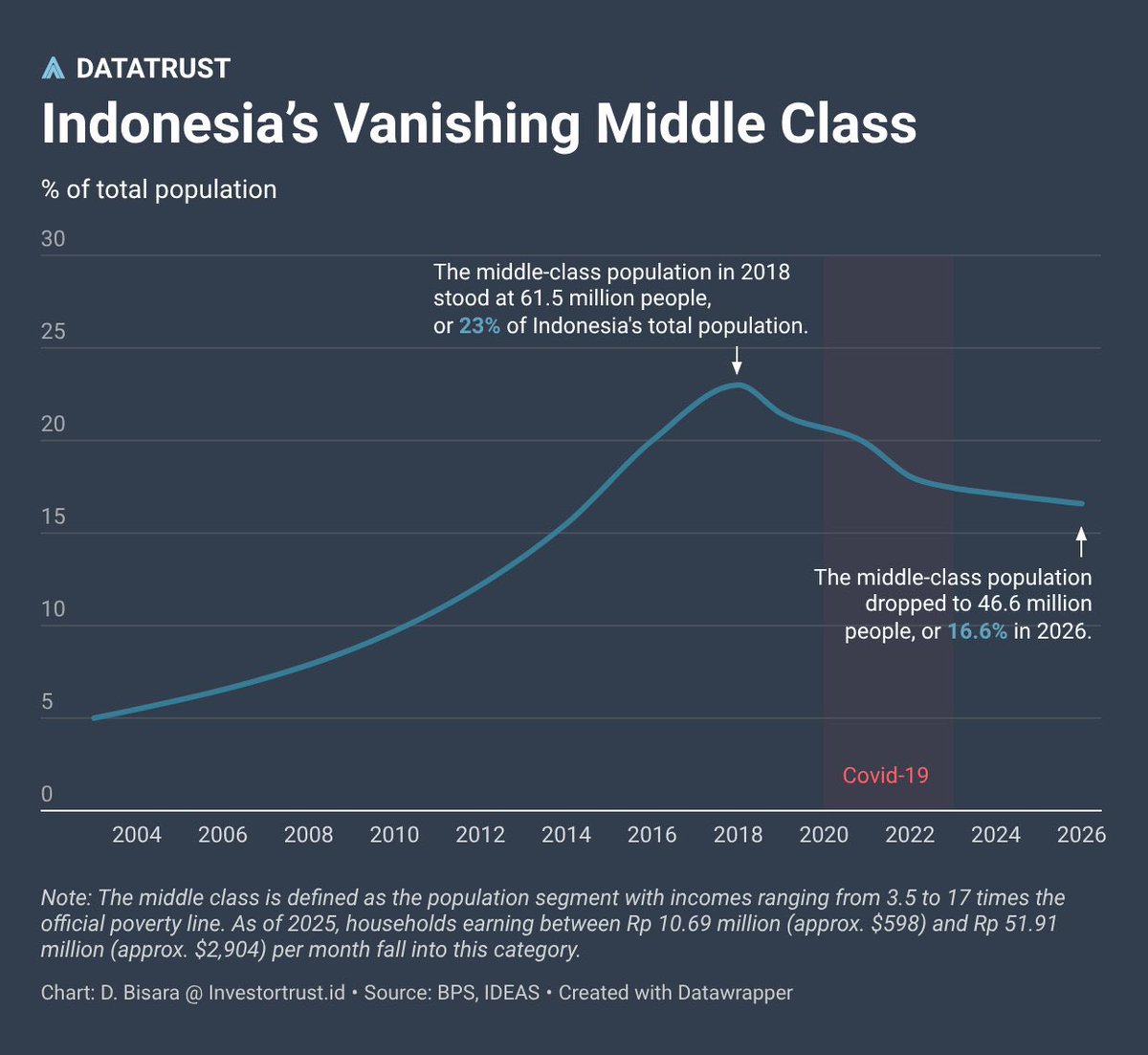
This chart should terrify policymakers. Indonesia’s middle class did not merely slow down. It went into reverse.
After two decades of expansion, the middle-class population peaked at 61.5 million people in 2018, representing 23% of the population. By 2026, that figure had fallen to just 46.6 million people, or 16.6%. That is not a cyclical slowdown. That is structural deterioration.
For years, policymakers celebrated GDP growth, infrastructure projects, commodity booms, and headline investment numbers. But the ultimate scorecard of an economy is whether ordinary people become wealthier over time. This chart suggests millions of Indonesians are moving in the opposite direction.
The middle class is the economic engine of every successful country. They buy homes, cars, insurance, consumer goods, education, travel, financial products, and healthcare. They generate tax revenue. They create small businesses. They drive domestic demand. When the middle class shrinks, the economy loses its most important customer.
The uncomfortable question is simple: where did the gains go? If GDP is growing, if conglomerates continue expanding, if commodity exports remain large, then why are fewer Indonesians qualifying as middle class than eight years ago?
More importantly, if you are born poor in Indonesia today, what ladder exactly are you supposed to climb?
If you are exceptionally good looking, perhaps you can monetize attention through social media. If you are academically gifted, perhaps you can break into an ultra-competitive institution like MBB, survive years of brutal expectations, and eventually use that platform to do something bigger. If you are entrepreneurial, maybe you build a business against overwhelming odds. If you are lucky, perhaps you benefit from family connections, inheritance, or access to opportunities unavailable to most people.
But an economy cannot rely on exceptionalism. A healthy economy creates millions of pathways upward, not a handful of lottery tickets.
The situation becomes even more concerning when you consider that well-paying white-collar jobs are becoming increasingly scarce. Many multinational companies that once established regional operations, technology centers, shared-service hubs, and professional offices in Indonesia have either downsized, relocated, or shifted future expansion elsewhere.
Those jobs were not valuable merely because of the salaries they paid. They were valuable because they transferred knowledge, management expertise, technical skills, global best practices, and professional networks into the local workforce. Over time, they helped develop intellectual capital that could later be recycled into entrepreneurship, leadership positions, startups, and domestic businesses.
When those opportunities disappear, the loss is not limited to employment. The country also loses a training ground for future managers, engineers, consultants, analysts, and business leaders. Human capital compounds just like financial capital. Once that pipeline weakens, rebuilding it can take years or even decades.
The bigger risk is that social mobility slows. When people stop believing hard work leads to a better life, trust in institutions weakens. Aspirations decline. Consumption slows. Talent leaves. The country’s most productive people increasingly look elsewhere for opportunity.
This is why Indonesia’s biggest economic challenge is no longer growth. It is upward mobility. A country cannot thrive without a growing middle class, a steady pipeline of high-quality jobs, and a clear path for ordinary people to join it. And right now, all three appear to be moving in the wrong direction.
Far too much in Indonesia depends on a thin-skinned former general with a sketchy human-rights record. Prabowo Subianto needs to hear some unpalatable truths https://t.co/kWEld3J9dR
Indonesian authorities used online disinformation campaigns to brand activists and journalists as "foreign agents" and silence dissent, sometimes leading to physical threats, Amnesty International said. https://t.co/sFoBm6AbMx
Baier: "Xi probably liked that you haven't approved the weapons to Taiwan."
Trump: "I would say 'like' is maybe too strong of a word…China's a very, very big country. That's a very small island. It's 59 miles away. We're 9,500 miles away…[Taiwan] stole our chip industry."
@DerekJGrossman IhjnnouiumxmbiihZgl
ivn8obiBut they can also be exclusionary. Something that isnt s.e.a. this is a region of diversity. We got different types of govs here.https://t.co/Davq4XfG5G https://t.co/x0GEX1xKqZ https://t.co/XMjKbDClnT
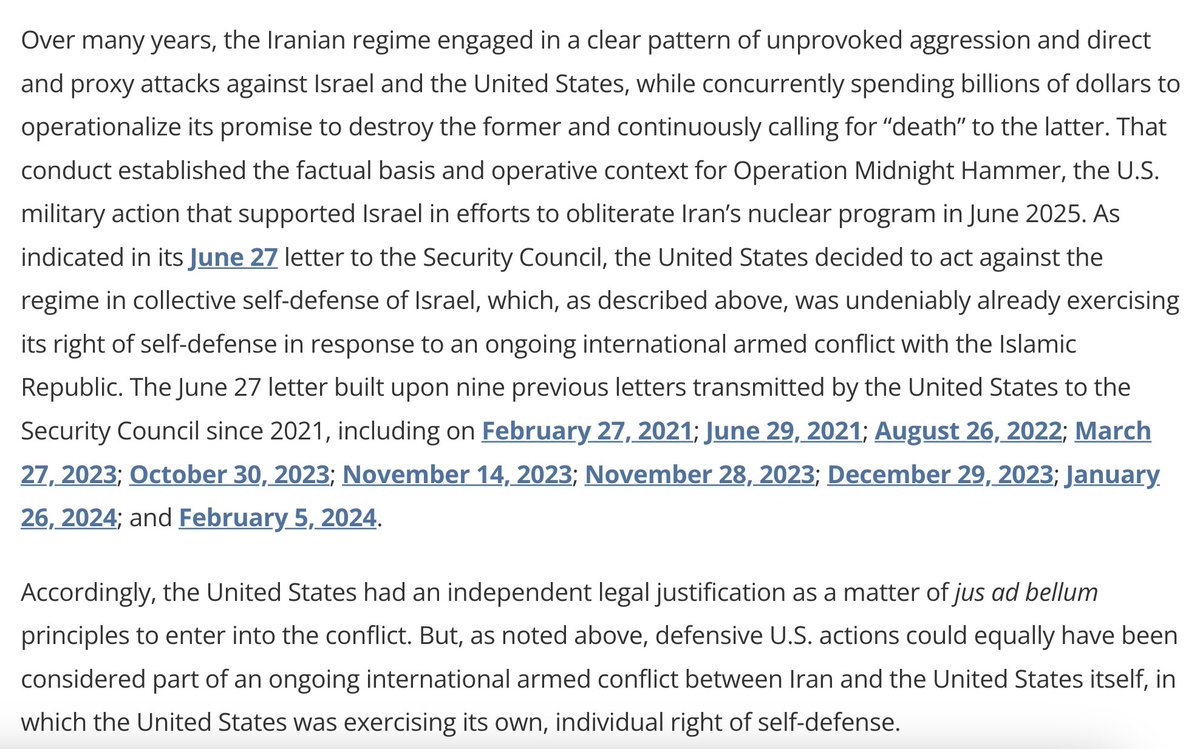
The U.S. State Department published its legal defense of the war against Iran on Tuesday.
A few observations 🧵
1. As a matter of public diplomacy, it's notable that collective self-defense of Israel comes first, individual self-defense of the United States comes second.
An underwater drone developed by the 710th Research Institute of 🇨🇳 China Shipbuilding Industry Corporation (CSIC) was caught by an Indonesian fisherman near a key waterway leading to Australia on Apr 6. The discovery of the “torpedo-like” object near the Lombok Strait comes at a time of increasing Chinese underwater activity in sensitive areas.
The waterway between Bali and Lombok is closely watched by the US and Australia. It is one of the few deepwater routes that can accommodate submarine transits at operational depth and is also suitable for large naval vessels travelling between the Pacific and Indian Oceans.
The device was found a few kilometres north of Lombok near the approaches to the strait while the fisherman was casting his nets. He became suspicious and hauled it to shore before contacting the local authorities.
It was believed to be a “marine technology device” and police concluded there was no immediate threat after examining it for explosives or radioactive material.
The cylindrical object was about 3.7m long and 0.7m in diameter. Local police said these were “characteristics commonly found in observation devices or underwater survey equipment”.
Photos taken at the site showed the object bore the logo of CSIC, along with the Chinese characters “第七一〇研究所” and “研制”. So this drone was developed by the 710th Research Institute of CSIC.
🇨🇳 CSIC is one of China’s largest shipbuilding conglomerates, which mainly develops submarines, naval vessels and equipment for underwater monitoring or surveys.
Australia, which will acquire nuclear submarines under the Aukus pact with Britain and the US, would rely on the Lombok Strait for a stealthy and rapid deployment of those vessels.
Several of China’s Southeast Asian neighbours have previously found unmanned underwater vehicles suspected to be of Chinese origin. These include Indonesia and the Philippines, which have long-standing disputes with China over their maritime territorial claims.
Unlike the Philippines, Indonesia is not a rival claimant to the South China Sea. However, it has become increasingly critical of China’s claims and has protested against Chinese ships entering its exclusive economic zone north of the Natuna Islands, part of which extends into the South China Sea.
Even when unmanned underwater vehicles are ostensibly being used for research or survey purposes, the data they collect can have significant military and strategic value.
Police said further investigations into the origin and function of the object were under way, adding that it would be handed over to the Mataram Naval Base on Lombok. One focus was whether there were any implications for national security or sovereignty.
https://t.co/o8XRDzRrLo
An Indonesian fisherman just pulled a 3.7-meter torpedo-shaped Chinese spy sensor out of the Lombok Strait, near Gili Trawangan. Defense analysts have identified it as a Deep-Sea Real-Time Transmission Mooring System made by China's 710 Research Institute, a body focused on underwater attack and defense.
Here is why this is a big deal.
The device sits anchored to the seafloor and uses acoustic sensors to detect submarines passing by, transmitting real-time data back to shore. Sound. Target information. Continuously. It bears the logo of CSIC, China's state shipbuilding corporation.
The Lombok Strait is one of the most strategically important waterways on the planet. It is the deep-water corridor between the Indian and Pacific Oceans, and the primary route for Australia's future AUKUS nuclear submarines to reach the South China Sea and any Taiwan flashpoint.
Beijing's response? "There is no need for excessive interpretation or suspicion."
Analysts say this device suggests China may already have a network of these sensors across Southeast Asian sea lanes, building a real-time picture of undersea conditions to give its submarines a wartime advantage.
Indonesia will investigate. Then go quiet. It happened the same way in 2020 when a Chinese underwater glider was found near Sulawesi. Jakarta is simply not in a position, politically or economically, to push back loudly against Beijing.
Full story here: https://t.co/5wioJXPq4r
이스라엘 스스로 확인한 시신 앞에서, 검증을 논하는 자들에게
서안지구의 한 팔레스타인 주민이 이재명 대통령의 리트윗을 “기도에 대한 신의 응답”이라 불렀습니다. 그 한 문장이, 지금 이 나라에서 벌어지고 있는 논쟁의 본질을 가장 정확하게 드러냅니다. 우리가 지금 다투고 있는 것은 대통령의 SNS 소통 방식이 아닙니다. 침묵이 당연해진 세계에서, 누군가가 마침내 그들을 보아주었다는 사실 앞에서 터져 나온 눈물입니다.
이스라엘 외교부는 이재명 대통령의 발언이 “홀로코스트 전야에 유대인 학살을 사소하게 만드는 것”이라며 강력히 규탄했습니다. 이준석 의원은 검증되지 않은 영상을 공유한 것이 외교적 무게를 망각한 경솔한 행동이라 비판했습니다. 명백한 궤변입니다. 이준석 의원이야말로 공격할 빌미를 찾았다는 생각에 실수한 겁니다.
먼저 사실부터 확인하겠습니다. 이재명 대통령이 공유한 영상은 2024년 9월 19일 서안지구 카바티야에서 촬영된, IDF 병사들이 팔레스타인인의 시신을 건물 옥상에서 투척하는 장면입니다.
BBC, 워싱턴포스트, 뉴욕타임스가 사실로 확인했고, 바이든 행정부의 존 커비 백악관 국가안보회의 전략소통조정관은 “매우 충격적(deeply disturbing)“이며 “용납할 수 없는 끔찍한 행위”라고 공개 규정했습니다. 이스라엘 군 당국 스스로도 조사에 착수한 사건입니다. ‘허위 정보를 유포하는 악명 높은 계정’이라는 이스라엘 외교부의 주장은, 영상이 담고 있는 행위의 실재를 단 한 글자도 지우지 못합니다.
이준석 의원이 지적한 ‘검증 문제’는 개미 손톱만큼 정당합니다. 최초 공유 당시 ‘아동을 살아서 던졌다’는 설명은 부정확했고, 이 대통령 스스로 수 시간 안에 이를 바로잡았습니다. 그러나 본질은 전혀 흔들리지 않습니다. 그것이 생존자든 시신이든, 아이이든 저항군이든, 팔레스타인인의 몸을 건물 옥상에서 내던지는 행위는 제네바 협약이 명시한 시신 존엄 보호 의무를 위반하는 국제인도법 위반입니다.
더 결정적인 사실이 있습니다. 이 대통령이 자체 수정을 마친 이후에도 비판은 멈추지 않았습니다. 이것이 증명하는 것은 무엇입니까? 비판자들의 진짜 문제는 ‘검증’이 아니라, 대한민국의 지도자가 이스라엘의 행동에 감히 의문을 제기했다는 사실 그 자체였다는 것입니다.
이스라엘 외교부의 반론은 더욱 황당합니다. 그들은 이 대통령이 “테러리스트에 대해 한마디도 하지 않았다”고 비난합니다. 그러나 이 논리는 낡은 방패입니다. 하마스의 테러 역시 규탄할 수 있습니다. 그러나 그 사실이 IDF의 전쟁범죄 의혹을 덮는 면죄부가 될 수 없습니다.
국제사법재판소(ICJ)는 2024년 1월 이스라엘에 집단학살로 간주될 수 있는 행위를 방지하라는 잠정조치를 명령했습니다. 유엔 조사위원회는 2025년 9월, 국제법이 정의하는 집단학살 행위 다섯 가지 중 네 가지가 이번 전쟁에서 자행되었다고 결론 내렸습니다. 국제앰네스티는 식량과 물의 차단이 집단학살에 해당한다고 공식 선언했습니다. 이것은 이재명 대통령의 SNS 발언이 아닙니다. 국제사회의 공식 판단입니다.
홀로코스트와의 비교가 불경하다는 이스라엘 외교부의 항의는 스스로 홀로코스트의 세계사적 비극성을 우습게 만드는 것입니다. 이스라엘 내부에서조차 반박하고 있습니다.
- 홀로코스트 및 제노사이드 연구 분야의 세계적 권위자이자 이스라엘계 미국 역사학자인 오메르 바르토프 브라운대 석좌교수는 이스라엘의 가자 작전을 집단학살로 규정하며, 2024년 5월을 기점으로 그 결론이 더는 피할 수 없는 것이 되었다고 밝혔습니다.
- 예루살렘 히브리대학의 아모스 골드버그 교수는 가자에서 벌어지는 일이 집단학살이며, 이를 인정하기까지 고통스러운 과정이 있었다고 공개적으로 선언했습니다.
- 맨부커 인터내셔널상 수상 작가이자 이스라엘인인 다비드 그로스만은 오랫동안 사용을 거부해 온 ‘제노사이드’라는 단어를 마침내 직접 사용했습니다.
이재명 대통령의 비교는 홀로코스트를 격하한 것이 아닙니다. 홀로코스트의 교훈을 무시하고 있는 것이 누구인지를 물은 것입니다. 그 물음을 불경하다고 말할 수 있는 자격이 네타냐후 정권에게 있는지, 저는 진심으로 묻고 싶습니다.
이준석 의원은 “북한, 중국, 러시아에도 같은 원칙을 적용할 것이냐”고 묻습니다. 이 질문은 원칙의 일관성을 요구하는 척하지만, 실제로는 이스라엘 비판을 원천 봉쇄하는 수사적 장치입니다. 국가 수반의 발언이 모든 인권 침해국을 동시에 다루어야만 정당성을 얻는다면, 세상 어떤 지도자도 어떤 발언도 할 수 없습니다.
더 나아가, 대한민국은 일본 제국주의의 강점 속에서 위안부 강제 동원과 강제 징용, 그리고 민간인 학살을 경험한 나라입니다. 바로 그 역사의 고통 속에서 단련된 민족으로서, 팔레스타인에서 벌어지는 참상을 외면하지 않겠다는 선언은 무원칙한 편향이 아닙니다. 역사의 교훈으로부터 길어 올린 도덕적 일관성입니다.
프리모 레비는 그의 저작 『휴전』 속에서 경고했습니다. 진짜 위험은 괴물 같은 악인이 아니라, 질문 없이 믿고 행동할 준비가 된 평범한 사람들, 기능하는 관료들에게서 온다고. 지금 이 나라에서 가장 분주하게 움직이는 것은 이스라엘의 만행을 걱정하는 목소리가 아닙니다. 대통령이 그 만행에 목소리를 냈다는 사실에 당황하며 ‘외교적 수습’을 논하는 목소리입니다. 레비의 경고가 낯설지 않은 풍경입니다.
서안지구의 팔레스타인 주민은 “저희가 바란 것은 단지 주목받는 것, 목소리가 들리는 것뿐”이라고 썼습니다. 기적을 바란 것도, 특혜를 원한 것도 아니었습니다. 그저 인간으로서 존재를 인정받기를 원했습니다.
대한민국 대통령이 그 목소리에 귀를 기울이자, 우리 안에서 ‘국격’과 ‘외교적 실익’을 걱정하는 목소리가 먼저 터져 나왔습니다. 어느 쪽이 더 부끄러운 일인지, 역사는 반드시 기억할 것입니다. 보편적 인권이 외교적 계산보다 앞서는 것이 진정한 국격의 시작입니다.
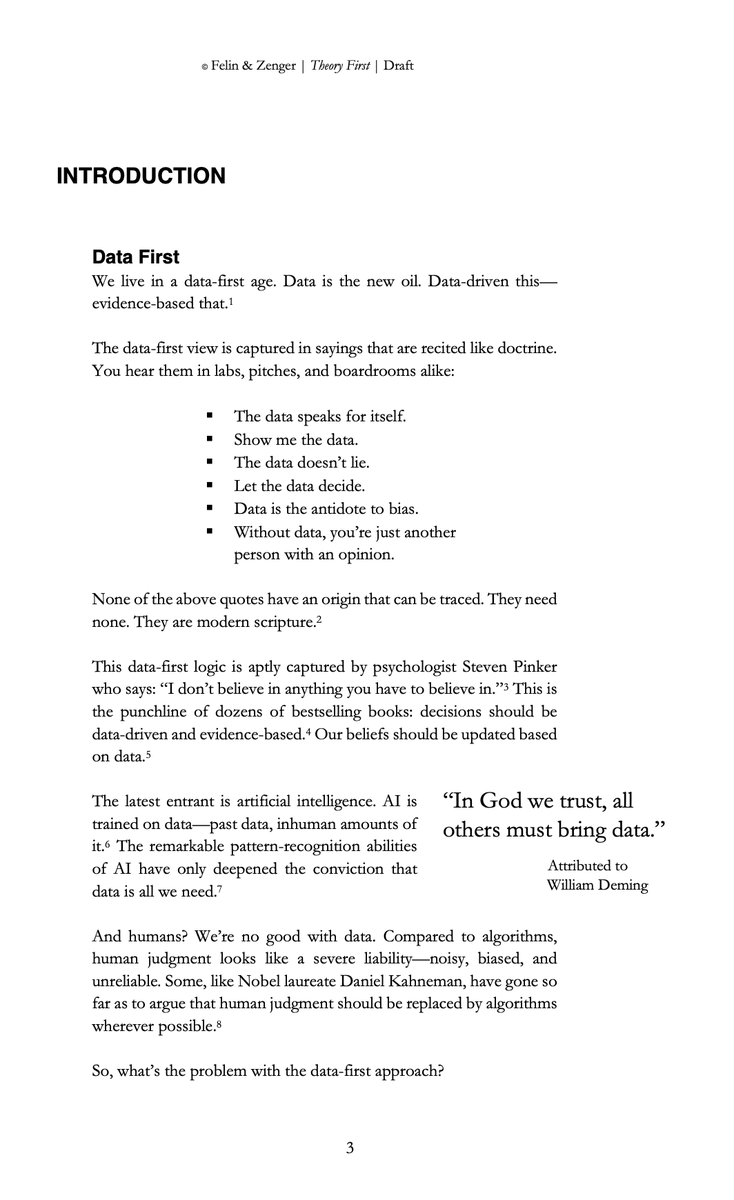
The problem with data-first thinking shows up everywhere:
- venture capital: https://t.co/2xzlbYiJ2n
- science (@ItaiYanai): https://t.co/0sRzMxr4WD
- Chris Anderson @chr1sa captured (and endorsed) data-first early on - https://t.co/rRIhG9ALND
European reaction to Trump’s war against Iran redefines fecklessness. I thought Greenland was the stand/up moment. But Europeans are half- endorsing a war they don’t believe in; pulled like a moth to a flame to cater to Trump who has nothing but contempt for them.
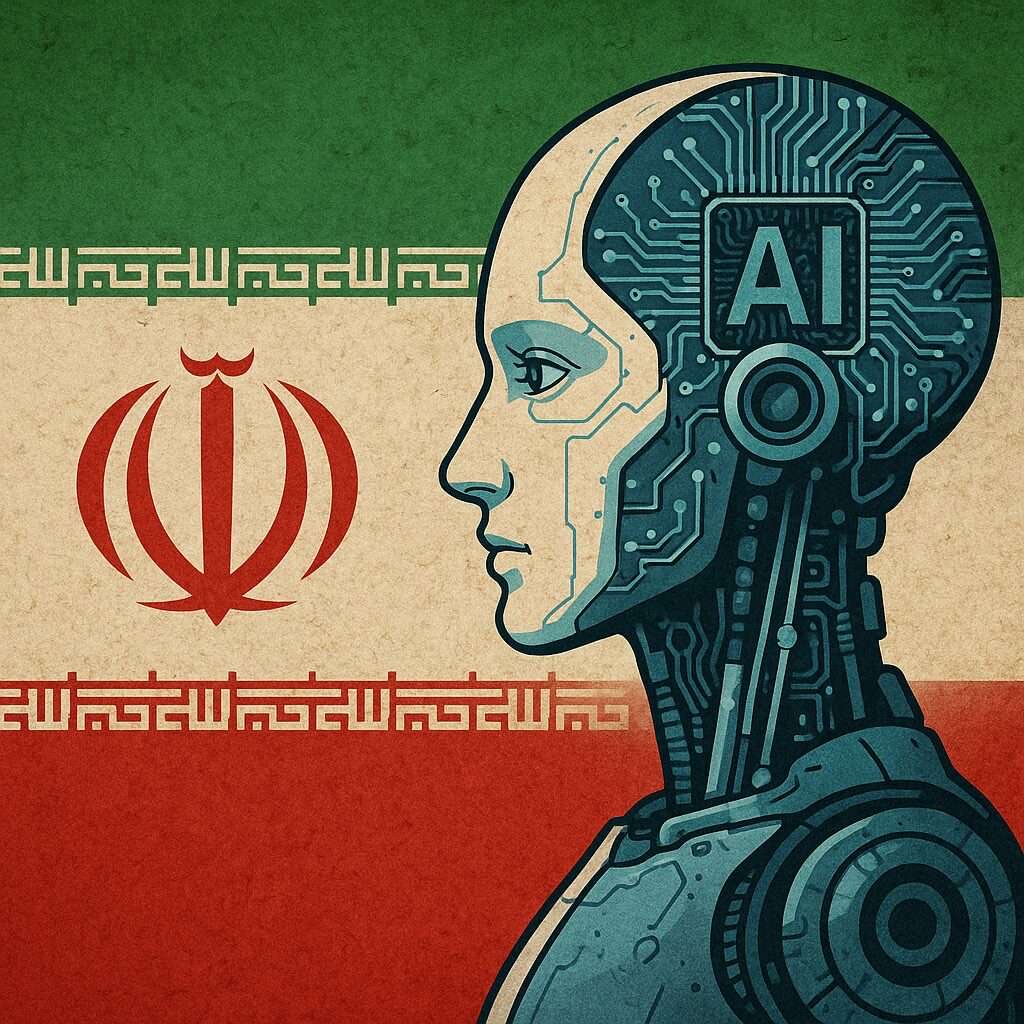
One day before the first bombs fell on Iran, the Pentagon designated Anthropic a supply chain risk to national security. The classification is reserved for foreign adversaries. The last company to receive it was Huawei.
The next morning, Anthropic’s Claude, running inside Palantir’s Maven platform on classified military servers, identified and prioritized over a thousand Iranian targets in the first twenty four hours of Operation Epic Fury. What previously required days of human analysis was compressed into hours.
The same artificial intelligence the Defense Secretary tried to ban on Thursday selected the targets his bombers hit on Friday.
That is not a contradiction. That is the architecture of this war. Three nations are building three separate AI kill chains in real time, each shaped by its own constraints, and none of them fully control what they have built.
On the American and Israeli side, Claude works alongside an Israeli system called Lavender that scores individual human targets, a companion called Gospel that generates structural target lists, and a tracker called Where’s Daddy that times strikes for when scored individuals are at known locations. Together they produced roughly nine hundred strike packages before the first sunrise. The speed compresses days of deliberation into hours of machine output. A commander approving targets at that tempo is not conducting the proportionality assessment that international humanitarian law requires. A human signature appears in the record. The deliberation it represents has been structurally eliminated by the velocity of the system presenting the options.
On March 1, an estimated 165 female students were killed in a strike near an IRGC naval base in Minab. Neither the United States nor Israel has claimed responsibility. No AI targeting review has been announced.
On the Iranian side, the AI is primitive and strategically perfect. IRGC drones carry basic computer vision and Chinese BeiDou satellite navigation that resists American jamming, supplied under a twenty five year partnership. A twenty thousand dollar drone with enough machine intelligence to force the expenditure of a fifteen million dollar interceptor. Iran does not need AI that thinks. It needs AI that costs less than the missile that kills it.
Behind both, a third AI actor. MizarVision, a Shanghai satellite company assessed by Western analysts as an intelligence front, published free AI annotated imagery of American military positions before the war began. F-22s in Israel. AWACS in Saudi Arabia. THAAD batteries in Jordan. Iran subsequently struck the THAAD radar at the published coordinates.
The surveillance monopoly that gave American operations a structural advantage for decades was not defeated by a rival space programme. It was eliminated by commercial satellites costing less than a single interceptor.
Three nations. Three AI architectures. America compresses the kill chain from days to hours. Iran compresses the cost of attack below the cost of defense. China compresses the information advantage that made American power projection possible since 1945.
And a school in Minab sits in the gap between machine speed and human accountability, ten years of satellite imagery showing it was a school, and nobody willing to say whose algorithm put it on the list.
https://t.co/ULBgEzZ3A8
I don't know if people understand just how insanely egregious this is.
First of all, 1) not only are NATO spending targets NOT legally binding (nothing in any NATO-related legal text mandates a specific GDP-based threshold for defense spending), but on top of this 2) Spain requested AND RECEIVED an exemption from the 5% target at the 2025 Hague Summit - NATO changed the declaration's language specifically to allow Spain to sign while publicly declaring it would not comply (https://t.co/q3VE2Je3TS)
This means that, legally speaking and according to NATO's own rules, Spain is doubly within its rights: there is no binding obligation to begin with, and Spain was excused from even this non-binding obligation.
That's the first point: Germany's chancellor just endorsed - from the Oval Office - the U.S. punishing a fellow EU nation for refusing to comply with an obligation that doesn't exist in law, under a political pledge Spain was excused from at a NATO summit.
The second point is that this 5% target has nothing to do with "defense", quite the contrary in fact: it is pretty explicitly an imperial tribute to the U.S. that will actually **weaken** European defense.
That was Spain's main argument for refusing to comply: Prime Minister Pedro Sánchez said that "committing to 5% would not make us any safer" because it "would only reinforce our dependence" on the U.S. (https://t.co/QUMDyfvWDP)
That's the insane thing about EU defense spending: in recent years, the more it has spent on defense, the more that spending has flowed to American contractors as opposed to European ones, making the EU defense industry weaker (https://t.co/XHGLW71tX0). Increasing spending to 5% doesn't strengthen European defense: it accelerates exactly this transfer.
All the more insane given the well-documented production backlogs in the U.S. defense industry and its inability to produce at scale: US defense analysts - including from Trump-adjacent think tanks like AEI (https://t.co/c3DobMYpru) - openly acknowledge that European customers would be deprioritized behind U.S. ones in any real conflict.
AND, critically, a defense industry from a country that's increasingly hostile to Europe - explicitly so in its National Security Strategy - and whose weaponry has "kill switches" that allows for remote disabling.
I mean, the sheer madness of it: anyone with an ounce of common sense can see that DOUBLING your defense spending to enrich a foreign arms industry that has kill switches on your weapons, can't meet its own military's needs, and increasingly treats you as an adversary, is not even remotely a defense strategy - it's suicide.
That's why having Merz - in the oval office, sitting next to Trump - endorse economic coercion against the one EU country that's still sane enough to see through this madness is so egregious, and frankly straight-up traitorous.
For those who know Asterix and Obelix, Spain is the "one small village still holding out against the invaders" and Merz is Cassius Ceramix, the self-described "gallo-roman" Gaul village chief who's the incarnation of all sycophants after his tribe were conquered by the Romans.
I'm with Asterix, and all Europeans should be too.
I am fascinated that no one in CSIS, Jamestown, CFR, or ASPI has talked about the absolutely stunning geopolitical changes that just happened. Iran has used missiles to completely destroy the 5th Fleet headquarters at Bahrain, the logistic centers in Muscat, and the radars