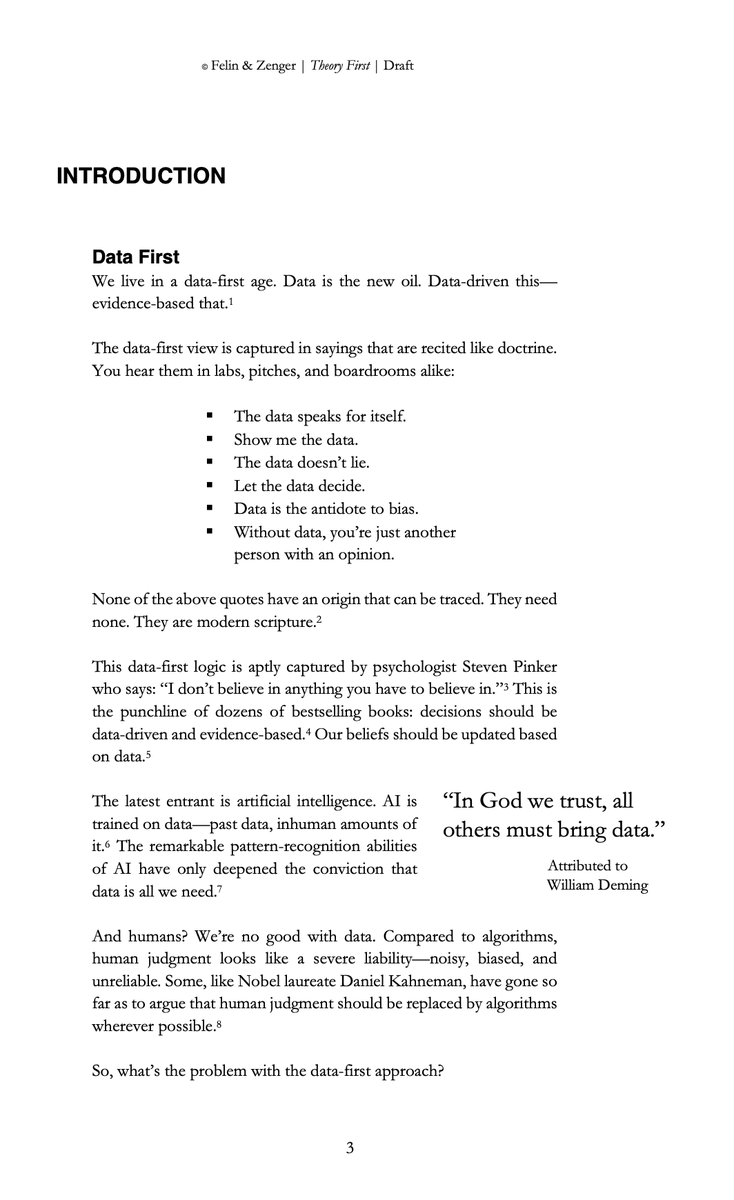
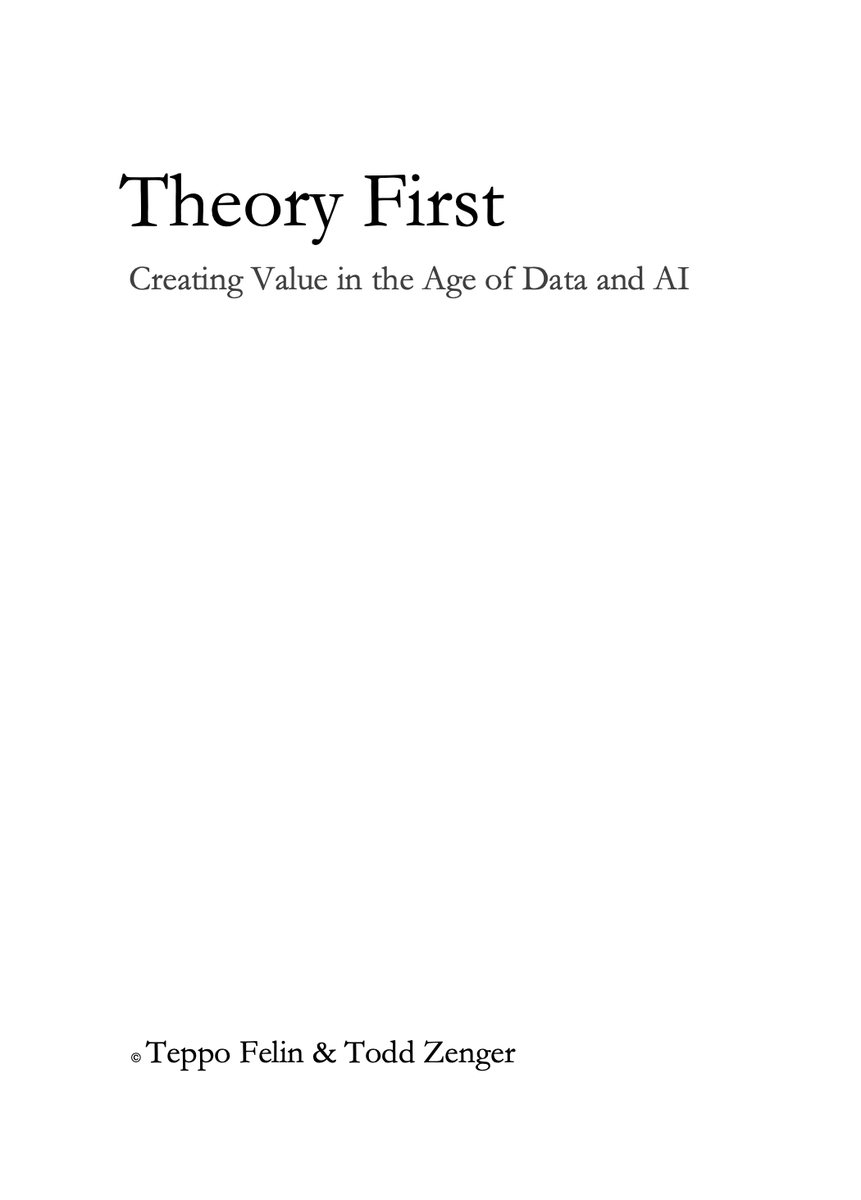
@DaveVoelkerPhD The scientist in the void has the opposite problem of the one the book describes—too little to look at, not too much. The real problem is the latter: Jan and I work through this here - https://t.co/jKtyUS6tmu
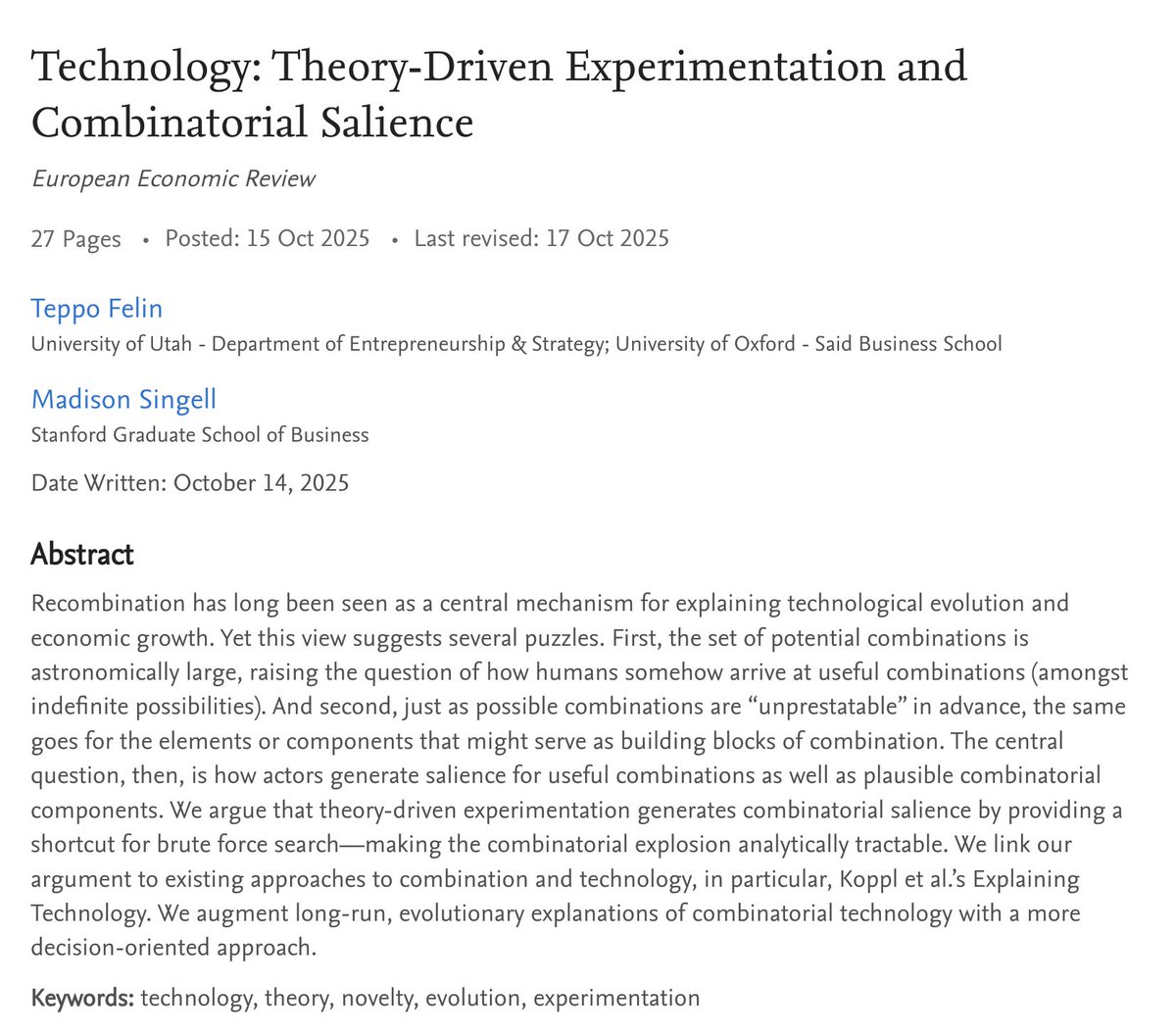
@MarcosGallacher Sorry - didn't see this until now. Yes, I read Koopman's years ago. Definitely linked. Though our emphasis is on the role of economic actors/subjects themselves as theorists. The early '50s Penrose-Alchian AER debate highlights some issues related to this (discussed in endnotes)
The problem with data-first thinking shows up everywhere:
- venture capital: https://t.co/2xzlbYiJ2n
- science (@ItaiYanai): https://t.co/0sRzMxr4WD
- Chris Anderson @chr1sa captured (and endorsed) data-first early on - https://t.co/rRIhG9ALND
Andreessen calls it and says AGI is here.
Huh?!?
Just last week frontier models (Grok, Claude, ChatGPT) got <1% on ARC-AGI-3.
<1% for AI. And humans? 100%.
AI is backward-looking. Humans forward-looking.
Check out the latest from the SSRN #blog which includes the top downloaded papers on #AI in Finance for Q2 of 2025.
Read more: https://t.co/cUcvEQ4GND
#FInanceTwitter#AICommunity
Sad to be leaving the Huntsman School and Logan. We've absolutely loved it here: students, colleagues, location, etc. But thankfully will continue with an affiliation, which is fantastic.
I started a new job today: I'll be the Ion Foundation Endowed Prof at the University of Utah - also Co-Director of the Ion Management Science Lab with Todd Zenger. Very excited to work with Todd and brilliant colleagues. @UUtah
LLMs are good at predicting—does that scale to decision making?
No, argue Sako & @teppofelin, they cannot envision possibilities beyond existing data, generate new hypotheses or run experiments to get new data—essential for general real-world decisions:
https://t.co/VM1VRB8JB0