Breaking: Folarin Balogun will be available to play in USA's Round of 16 match against Belgium on Monday, FIFA announced.
The FIFA Disciplinary Committee has suspended the red card issued to the USA striker during their Round of 32 win over Bosnia and Herzegovina.
Today's article is an absurdly deep dive into what life was like in America 100 years ago, in 1926, on America's 150th
Some favorite factoids about life in 1926:
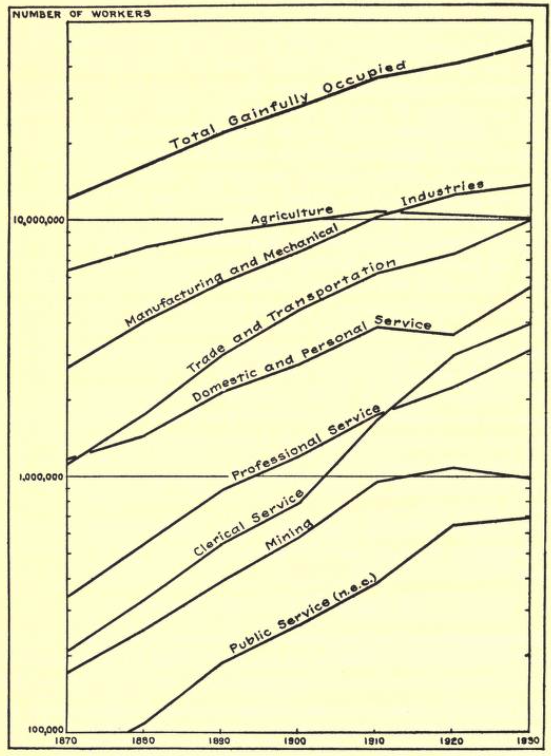
- Farming is collapsing: Agriculture’s employment share fell from 50% in 1870 to <25% in 1926. The price of cotton & corn fell 50% after WWI. percent.
- Manufacturing productivity growth is insane: In 1910, it took ~15 hours to put together a Model T; by 1926, a new car rolls off an assembly line every 10 seconds. A vehicle that cost the avg worker two years’ wages before World War I cost 3 months’ earnings in 1926
- Americans are obsessed, obsessed, obsessed with cars: 1920s Kansas had more vehicles than France
- The influence of flappers on fashion is quantifiable: The amount of fabric in the avg dress fell from 20 yards in 1910 to 7 yards in 1926
- Prohibition killed a lot of people: 12k people died in 1927 from drinking industrial alcohol that the feds had poisoned on purpose to discourage consumption—adjusted for population, that'd be the mortality equivalent of 36k people dying in 2026, which is roughly the number of car deaths
- Sports were very different: No TV means no commercial breaks, and players were in a rush. In one doubleheader against the New York Yankees on September 26, 1926, the St. Louis Browns won 6–1 in 72 minutes and then won 6–2 in 55 minutes with a one-hour break in between
- 1926 might have been the high-water mark for literacy in US history: The number of books published annually had doubled since the 1910s; magazine advertising revenues grew by 500%
- All this change was driving ppl crazy: In Germany, where medical records were better, the number of patients registered in mental hospitals grew from 40,375 in 1870 to 220,881 in 1910. Over the same period, the share of patients admitted to general hospitals for illnesses of the nervous system rose from 44 to 60%.
https://t.co/ThhKO5YWm1
To conclude, modern diff-in-diff methods yield the same old answer: minimum wages reduce jobs. The opposite finding in CDLZ and DL is the consequence of discretionary, narrow, and unsound researcher choices that favor that result.
Comments welcome. Link:
https://t.co/kb9XG90D5w
It was two in the morning, the hour when even the bravest samurai retires to his bedroll, yet here, a fortress of light beckoned me from the darkness.
Every castle I have ever known has fallen. Fire, siege, taxes. Eight hundred years of my family learning one lesson: nothing stays open forever.
This house has never closed.
Not for storms. Not for holidays. Not for the hour when even the moon looks tired. I asked the waitress when they lock the doors.
"We don't have locks, hon."
No locks. I own walls, moats, and a sword older than this country, and I have never once said anything that powerful.
Inside, a cook was scraping the grill at 2 a.m. with the calm of a man guarding something. I asked if he was the night watch.
"I'm Darnell."
A trucker two stools down raised his coffee. "Place stayed open during the hurricane," he said. "FEMA's got a whole index about it."
An index. The government of this nation measures disasters by whether THIS HOUSE is still standing. In Japan, we measured a clan's strength by its castle. Same thing. Theirs serves waffles.
I ordered. I ate. I confess what happened next.
I did not want to leave. The night outside was large. The booth was warm. I am a grown warrior, and I sat in a yellow fortress at 3 a.m. feeling protected by hash browns.
A castle does not promise to stand forever. It simply leaves the lights on.
I drive past at night now. Just to check. The lights are always on.
Sentries of the griddle — I see you. Hold the line.
I returned to my dwelling to find a package resting against the door, unguarded and alone, like a weary traveler abandoned in the wilderness.
My blades — well, my kitchen knives — had arrived. Left in the open. In daylight. On a street where anyone may walk.
In Japan, a deliveryman who cannot hand you the box takes it away again, apologizing to you, the box, and the company. Here, the man set it down, took a photograph, and departed. I checked my phone. The photograph was of my own door. Caption: Delivered.
Delivered. To no hands. To the nation itself.
"Aren't you afraid someone will take it?" I asked my neighbor Sue.
"Off the porch? Nah."
"But there is no wall. No guard. No oath."
"It's got my name on it," she said, as if names were fences.
An entire country has agreed, without a single meeting, that the porch is sovereign ground. The box rests there like treasure in a sealed vault, defended by a doorbell camera and the agreement of three hundred million people.
There are exceptions. Sue speaks of porch pirates with the cold fury of a coastal village recalling raiders. When one box is taken, the street becomes a navy. Justice here is a neighbor named Brenda posting footage at 11 p.m.
I confess my shame: the first month, I rushed home for every delivery. I stood watch at the window. I guarded a phone case for four hours. No one came. No one was ever coming. I was a sentry in a land that had already won the war I was fighting.
A treaty is strongest when no one remembers signing it. The porch is such a treaty.
Now when the photograph arrives, I bow slightly to my phone. Delivered. I believe it instantly.
Tomorrow a box of tea arrives. I will let it wait on the porch like everyone else's. This is trust. I am still practicing.
USA. A breakfast counter. The waitress recommended the biscuits and gravy, and when the plate arrived, I thought something had gone wrong in the kitchen.
I say this with shame. The dish looked like a construction site after rain. Pale mounds. Gray ladle-fall. Speckles I could not identify.
In my land, the eye eats first. A meal is arranged like a garden. This meal was arranged like weather.
"Is it… finished?" I asked, carefully.
"Honey, that's what it looks like."
The man beside me was already eating his. He did not look up. "Just try it."
I am a man who has charged hillsides at dawn. I raised the fork. I tried it.
I must now formally apologize to the biscuits, the gravy, the waitress, the kitchen, and the entire breakfast tradition of the American South.
It was magnificent. Warm. Peppered. The biscuit drank the gravy the way a field drinks rain — THAT is why it is shaped like that, you fool — and every mound I had insulted was a soft fold of comfort that my homeland, in eight hundred years, never once thought to invent.
"Well?" the waitress asked.
"I judged it," I confessed. "By its appearance. I am ashamed."
"Everybody does, hon."
Everybody does. A national dish that forgives you for doubting it. It expects the doubt. It waits for you on the other side of it.
Do not judge the gravy by its face. Judge yourself, for hesitating.
I order it every Saturday now. I no longer see the construction site. I see only the garden.
It was a garden the whole time. The eye must be trained.
Out here, a burger stand. They sold me a drink that cannot be drunk, and they knew, and they sold it anyway, and they were right to.
A milkshake. Listed under DRINKS. Served with a straw — the universal promise that liquid waits within.
The straw lied.
I pulled. Nothing. I pulled harder. The shake did not move. I inspected the straw for blockage. Clear. I pulled with the focus of a man drawing a stubborn bow, felt my own ears adjust, and received nothing.
"It's thick," said the boy at the counter. He had been watching.
"It is SOLID."
"It softens up. Give it a minute."
A waiting period. A drink with a waiting period. In my land, when we want softened dairy on a schedule, we — we do not, actually. We have never attempted this. There is no protocol.
I did not wait. Waiting felt like negotiating, and the shake had started it. I pulled again, both hands steadying the cup, with full intent.
A single molecule of vanilla reached my tongue. Then the line collapsed.
I sat back, breathing. A grown warrior, winded by a beverage.
The boy slid something across the counter without a word.
A spoon.
I stared at it. To accept the spoon is to admit the drink has won. To refuse the spoon is to fight a wall of cream for forty minutes in a public place.
I accepted the spoon. It was the correct decision. The shake, approached as food, is glorious. Approached as a drink, it is a siege.
That which resists the straw is not refusing you. It is asking to be taken seriously.
I order one every week now. The boy hands me the spoon at the register. Before I pay.
He knows. I know. We do not discuss it.
USA. A Mexican restaurant. We had not yet ordered anything, and the food was already arriving.
Chips. Salsa. Unrequested. Free.
I stopped the waiter. "We have not earned these."
"They just come with the table, man."
They come with the TABLE. In my land, hospitality is a debt. Every gift creates an obligation, weighed carefully, returned in the proper season with interest of feeling. Here, the gift arrives before you have even proven you can pay for dinner.
This is not an appetizer. This is a declaration: we trust you. Eat.
I ate with the gravity the moment deserved. And then — I must report this calmly — the basket emptied, and a new one appeared.
"Did we…?"
"Refill," the waiter said. "It's bottomless."
Bottomless. They have wells of salsa. The supply lines of this nation are beyond anything my ancestors imagined.
My friend warned me. "Don't fill up on chips, dude."
Too late. I had accepted three baskets. Honor demanded each one be finished — an unfinished gift is an insult. By the time my actual food arrived, I was a ruined man.
I was not hungry. I was not comfortable. I had been defeated by a courtesy.
Generosity that arrives before the request cannot be repaid. It can only be survived.
I know the rule now. I have made my peace with the basket. One basket. Two at the most.
Who am I deceiving. There is no number of baskets I would refuse. The trust of a nation is in that salsa, and I intend to honor all of it.
In America, a warehouse store. A fully roasted chicken costs five dollars, the raw chicken beside it costs seven, and I stood between them like a man between two truths.
Golden. Hot. Seasoned. Spinning in glory under the lights, in a line of its brothers. Four dollars and ninety-nine cents.
I checked the raw birds. Seven dollars. Pale. Cold. You must do everything yourself.
This is not commerce. Commerce does not move backward. Somewhere in this building, mathematics lies defeated.
I asked the man at the counter. "How is the cooked bird cheaper than the raw bird?"
"Been five bucks forever. They keep it that way."
"But the store loses."
"Yep. On purpose."
On purpose. I held my receipt with both hands.
In my land, a lord who lowered the price of rice in a hard winter was remembered for generations. They built him a small shrine. This store does it every day, with chicken, and tells no one.
A woman behind me grew tired of my reverence. "It's just a chicken, sir."
It is not just a chicken. It is a wound the merchant takes on purpose, so that anyone, on any day, with five dollars, eats like a lord. The bird is the message. The price is the vow.
I will confess: I bought two. I did not need two. The second was not hunger. It was gratitude, and it was delicious.
Some prices are not prices. They are promises.
I return every week now. I take one bird. I bow toward the deli, briefly, so as not to alarm the staff. They have begun nodding back.
The vow holds. The bird turns. Five dollars.
Long may it spin.
Stateside, a gas station. I drank a frozen blue beverage too quickly, and was struck down by a punishment this entire nation knows, and accepts, and has named.
The drink is called a slush. Ice, sweetness, and a blue that does not occur in nature. The day was hot. I was thirsty. I drank like a soldier at a river.
The pain arrived in my skull like a war horn.
Behind the eyes. Above everything. Total. I gripped the roof of my car. I may have made a sound.
"Brain freeze," said the cashier through the door, with no urgency whatsoever.
It has a NAME. The affliction is so common it has a household name, like a cousin.
"Tongue on the roof of your mouth," called a man at the pumps. He did not look over. He prescribed the remedy mid-pump, casually, the way one mentions weather.
I pressed my tongue to the roof of my mouth. The war horn faded. The healer nodded at his pump, finished, and was gone in a Chevrolet.
In my land, punishment follows crime by way of courts and seasons. Here, the sentence is instant. Drink with greed, and the ice strikes the mind directly. No trial. No appeal. Perfectly fair.
And here is what moves me. EVERYONE has felt it. The cashier. The healer. Children. Elders. An entire nation united by the same small lightning, all taught the same cure, all passing it on to strangers at gas stations, free of charge.
You cannot fully distrust a country once you know it shares one pain.
The freeze does not punish thirst. It punishes haste.
I finished the slush slowly, like a scholar. Blue tongue. Clear mind.
Then at the door I forgot everything, drank deeply, and was struck down again.
"Tongue, hon," said the cashier, without looking up.
Discipline is a journey.