I'm using git since quite a while and today I learned that there are two different kind of tags, annotated ones and lightweight ones.
annotated ones have a message and create a new hash whereas a lightweight one uses the current hash.
🏗️ Working on xstate/effect
XState handles type-safe state-machine logic
Effect makes the effectful boundary "type-safer" with typed failures, reqs, schemas, structured concurrency, and more
Goal: run existing XState machines in Effect w/ minimal changes
Follow along: https://t.co/4dVxWsewvT
I wanted my agents to call tools on machines they were not running on.
That kept coming up.
We already solved remote access for humans. SSH is great. But agents do not really work like humans in a terminal. They call tools. And when the thing they need is somewhere else, we still reach for keys, firewall rules, VPNs, bastions and credentials that outlive the task.
So I built OpenTunnel.
The flow is simple:
1. Start OpenTunnel with one command on the remote machine. It runs as a temporary foreground session and does not install anything.
2. Paste the printed prompt into your agent.
3. Remote commands behave like local tool calls, with stdout, stderr and the real exit code coming back.
No accounts. No standing access. The relay only forwards encrypted frames and stores nothing.
Use the hosted relay, or run your own. The relay is stateless and easy on your infrastructure.
When you are done, press Ctrl+C. Access is gone.
I made this because I wanted the primitive to exist. Maybe it helps someone else too. Remember: With great power comes great responsibility 😊
After AI took over the whole programming world I've started to do some project-euler puzzles regularly without any AI integration and no fancy editor features in pure C.
This gives me a little bit of joy back even though I do not produce anything meaningful.
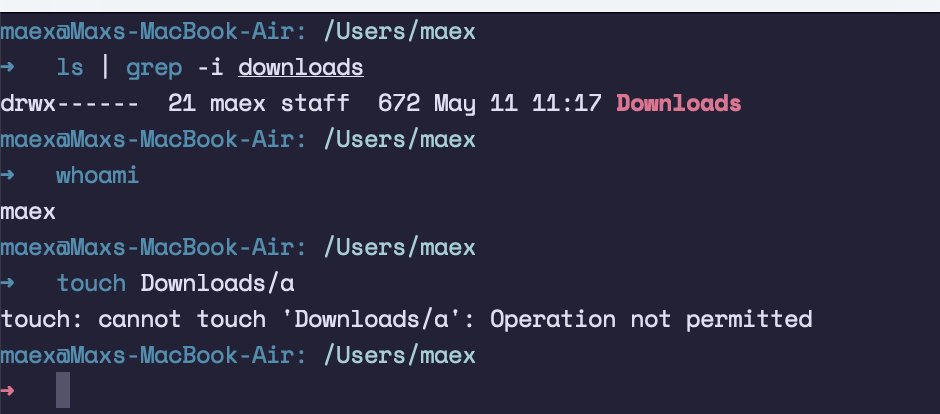
@makkes I do have it activated for my terminal. Interestingly I can write in `~/Documents` and `~/Desktop` without issues which should also be affected.
I've learned about `git worktree` just yesterday and it feels like a feature I really needed for years.
Turns out it was already introduced 2015, I'm feeling behind.
https://t.co/Xw0Ul1fsNi
I've co-authored my first blogpost for @kubermatic
Special thanks to Julio Perez Duran 🙏
We describe what's possible with skills, MCP servers and our product (KDP) including a test of all of these.
You can read it here: https://t.co/fuz0RzDOh1
#kubernetes#ai
I rolled the boulder away: Cave is now in public beta 🎉
The private beta is over. No more explicit allowlist additions, which means anyone can now install Cave and run coding agents in isolated environments on their own infrastructure:
bash <(curl -fsSL https://t.co/QGQOXFCCrI)
cave server install
A huge thank you to the brave souls who joined early and shared so much valuable feedback throughout the private beta 🚀
There is now also a dedicated repo for feedback, feature requests, and bug reports: https://t.co/vZyIb3nXWZ
Next stop: open sourcing Cave. It's already on the horizon.
Coding agents shouldn't run on a laptop.
That's why I've been building Cave.
It's a self-hosted platform for running @opencode agents in isolated sandboxes on your own server.
You give it a GitHub repo, it creates an isolated sandbox, clones the code, sets everything up, and gives you a coding agent.
Check in from your phone, run multiple agents side by side.
It's not open source yet (it will be), but I'm opening a private beta so you can install it on your own server already.
I've been dogfooding it since day one. If you're running a software factory: multiple agents working in parallel across repos, Cave gives you one place to monitor and manage all of it.
Now, I'm looking for people who want to give it a spin. DM me, happy to set you up 😊 🚀
🚨 CRITICAL: Active supply chain attack on axios -- one of npm's most depended-on packages.
The latest [email protected] now pulls in [email protected], a package that did not exist before today. This is a live compromise.
This is textbook supply chain installer malware. axios has 100M+ weekly downloads. Every npm install pulling the latest version is potentially compromised right now.
Socket AI analysis confirms this is malware. plain-crypto-js is an obfuscated dropper/loader that:
• Deobfuscates embedded payloads and operational strings at runtime
• Dynamically loads fs, os, and execSync to evade static analysis
• Executes decoded shell commands
• Stages and copies payload files into OS temp and Windows ProgramData directories
• Deletes and renames artifacts post-execution to destroy forensic evidence
If you use axios, pin your version immediately and audit your lockfiles. Do not upgrade.