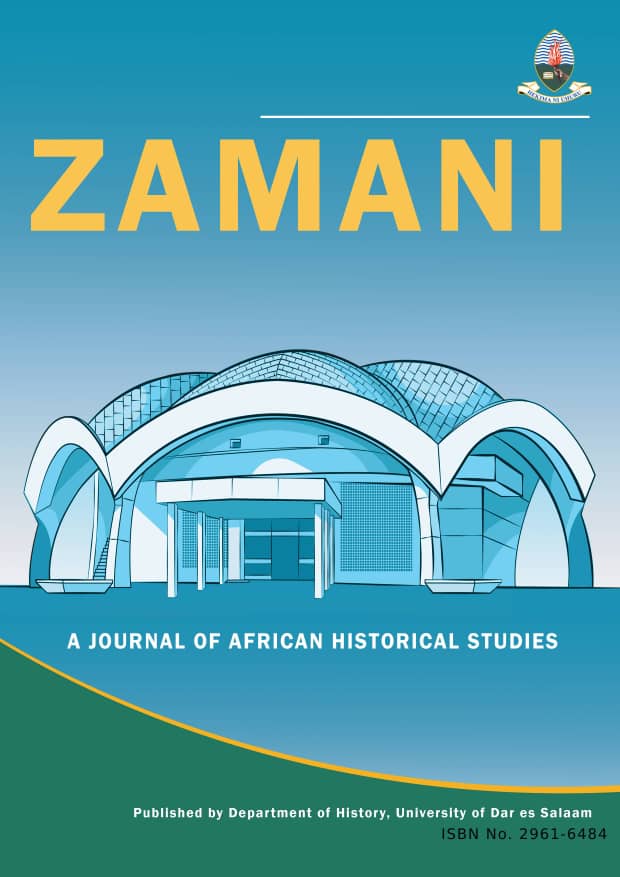
Zamani: A Journal of African Historical Studies has just published a new issue, Vol. 2 no. 1 of 2025.
Has papers with issues ranging from road safety in colonial Zambia, power generation and infanticide in Tanzania to quiet diplomacy in Kenya.
Read here: https://t.co/YGVGJVENme
Writing on African history? Consider submitting your research and book reviews to the African based, pan-African journal of history, Zamani: A Journal of African Historical Studies. For inquiries, write editors at [email protected] Zamani signals the renaissance of Dar School.
@kafulila_david Huko nyuma nchi iliwezaje kujenga barabara bila PPP na sasa ikiwa na wataalam lukuki ishindwe? Na kodi inayokusanywa kwa ajili ya kujenga barabara inaishia wapi siku hizi mheshimiwa? Mimi naona mnataka kupunguza watumia barabara wabakie matajiri tu
🔊Call for New Journals🔊
Under the African Journals Initiative, we are looking to partner with social science and humanities journals published on the African continent.
Apply here: https://t.co/TpuvHqRIvH
As I step to Juneteenth🇺🇸
then 🇹🇿flashes of much great things happened lat few days further humanity🙏
To those who fought for humanity…who we are fighting for justice …that showed results in the last few days (especially)you won another step toward justice. This victory belongs to every person who still believes in humanity, justice, truth, accountability, and the sacred dignity of human life….then acted accordingly.
Many of their names will never trend. Many will never stand behind a podium, take a photo, or receive public recognition. Yet quietly, faithfully, and often at great personal cost, they keep fighting the good fight.
As The Impossible Dream says:
*“This is my quest, to follow that star, no matter how hopeless, no matter how far. To fight for the right, without question or pause. To be willing to march ….
Sasa, let me tell you a story… maana ogopa wapole.
Despite millions of dollars being spent on lobbying and image management, I couldn’t help but think about what that money could do back home. It could build desks so children don’t have to sit on the ground to learn. It could improve healthcare so expectant mothers don’t have to give birth on the floor or risk losing their lives because of inadequate services. 🇹🇿
Yaani ni hivi… while some were trying to shape narratives and manage perceptions, others were quietly working behind the scenes for truth, justice, and accountability. Some voices made difficult choices and refused to normalize human rights abuses or celebrate those perceived to be benefiting while ordinary citizens suffer.
And when I heard officials were in town seeking meetings and photo opportunities, I did what many others did: I reached out, shared concerns, provided information, and trusted the truth to speak for itself.
Go figure. Then go home.
Because in the end, propaganda fades, but truth remains.
Justice is the only answer.
And on this Juneteenth, we are reminded that freedom is never handed over willingly-it is pursued by ordinary people with extraordinary courage. Every generation has its unfinished work. Ours is to keep speaking truth, defending human dignity, and standing with those whose voices have been silenced.
We fought a good fight. We won another step toward justice. And we keep going.
Happy Juneteenth
May we never stop believing that freedom, accountability, and justice belong to every human being.
Ugandan President @KagutaMuseveni points out that Egypt repeatedly emphasizes its “historical rights” based on colonial-era Nile agreements, but the other Nile Basin countries are now asking a straightforward question: “What about us?”
He argues that the Nile cannot be treated as if only downstream states have rights while upstream countries are ignored or sidelined.
Instead, all basin nations should focus on shared prosperity: electricity, irrigation, drinking water, and economic cooperation, rather than an “us versus them” approach.
#Ethiopia #GERD #Abbay #BlueNile #Nile #CFA #WaterJustice #Africa #Sudan #Egypt #SouthSudan #Uganda #Kenya #Tanzania #Rwanda #Burundi #DRC #Eritrea @StateHouseUg
watu wanavunjwa moyo na chande — wana kila haki — lakini tunasahau kutambua how deeply entrenched ccm is kwenye kila nyanja ya maisha ya mtanzania. wewe ukiangalia unamuona jaji, igp, cdf; ccm wao wakiangalia wanaona wanachama wenzao tu. this isn’t by an accident; it’s by design:
hii yenyewe ni aina ya ukatili unaofanywa na dola dhidi ya w’nchi. hii ni dar, inayozalisha utajiri mkubwa kila sekunde. unakwenda wapi, kama mitaa inaonekana kama hivi? well, inakwenda kwa wahuni na majambazi wachache, waliopora madaraka, na kila siku kuimba amani na uzalnedo:
SCANDAL IN NIGERIA
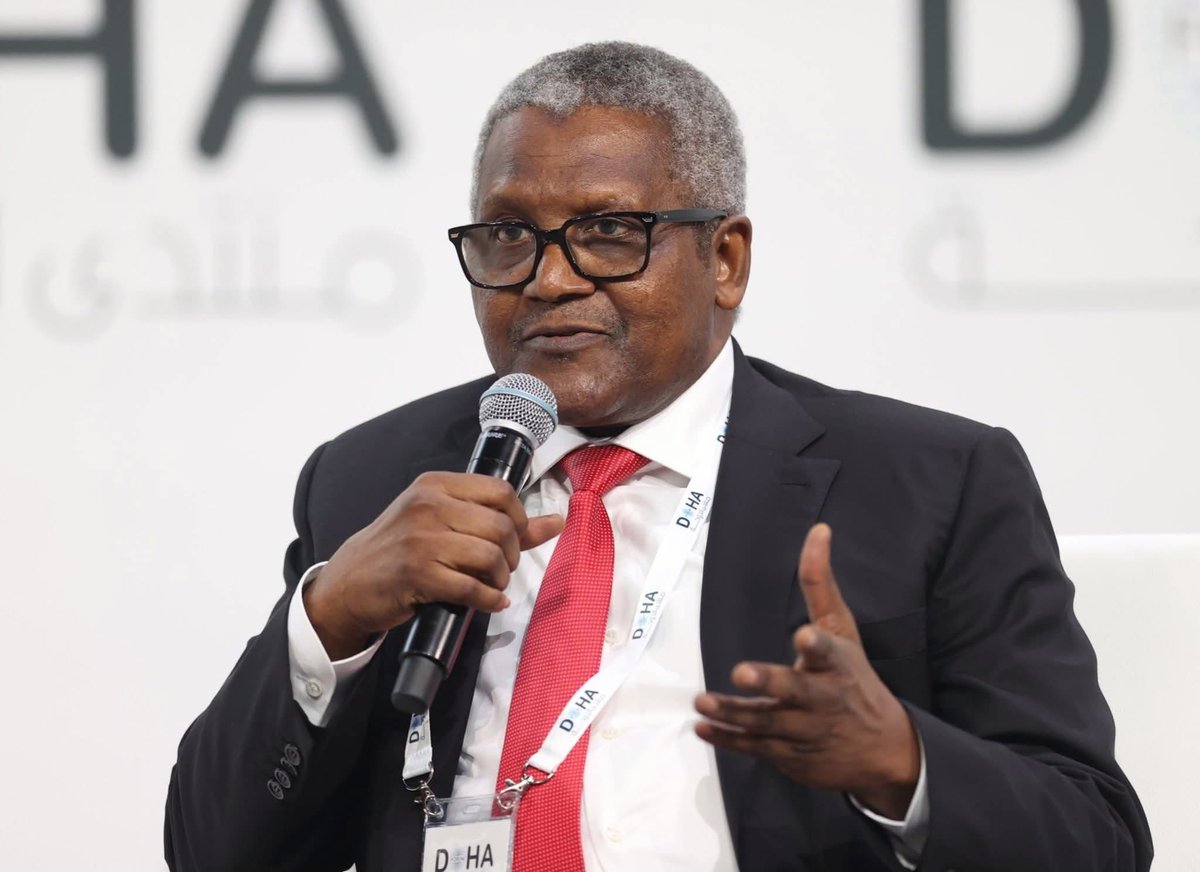
11,000 Indians hired to work in the Dangote refinery!
Dangote, India, and the burning mirror: what is happening to Nigeria is happening to all of Africa
There are truths that do more than wound pride; they puncture illusions, strip hypocrisy bare, and throw us—naked—before our own contradictions.
The Dangote case is one of them.
11,000 Indian technicians recruited because Nigeria couldn’t find 100 locally.
In a country of 235 million inhabitants, Africa’s largest economy, the self-proclaimed giant of the continent.
This is the clinical diagnosis of an illness that affects not just Abuja: it runs through the entire African body.
Many are shouting “scandal.”
I see a mirror.
And a mirror never lies.
1. Africa wasn’t defeated by tanks, but by polytechnics
People accuse Dangote of preferring Indians.
False.
Dangote prefers people who know how to run a refinery. Period.
It isn’t India that is humiliating us; it is our inability to produce skills that match our ambitions.
While Africa organizes summits, “national dialogues,” endless conferences, India organizes classrooms.
While we politicize technical education, India professionalizes it.
While we glorify long chains of theoretical diplomas, India trains thousands of hands-on technicians.
Indians didn’t take Lagos by force.
They are entering with their screwdrivers, their software, their skills.
2. Without skills, even our billionaires become dependent
Dangote is not the problem.
He’s actually the proof that wealth cannot compensate for weak human capital.
We may have oil, bauxite, gold, cobalt, lithium…
But until we have the men and women capable of transforming them, we remain tenants of our own development.
We provide:
the land,
the raw materials,
the tax exemptions,
sometimes even public money…
Others provide the brains.
And in the end, they walk away with the largest share of the added value.
Africa is a continent where you can build a port in 18 months—using foreign labor.
But where it takes 25 years to modernize a technical high school.
That should wake us up.
3. Technical education: our silent Waterloo
Our technical schools, where they still exist, operate with:
machines from the 1980s,
teachers who haven’t been retrained,
frozen curricula,
workshops turned into dusty museums,
students considered “less brilliant” than those in general education.
This is where everything begins.
This is where India beats us.
Not at Dangote.
Not in Lagos.
At school.
African parents dream of lawyers, doctors, and MPs…
Rarely of industrial mechanics, electromechanics, maintenance technicians, or process engineers.
Our societies continue to look down on technical jobs, even though the modern world depends entirely on them.
4. Nigeria’s problem is Africa’s problem: DRC, Kenya, Cameroon, Senegal… same fight
What is happening today in Nigeria is not exceptional.
It is the predicted future of all African countries if they do not wake up.
Across the continent:
Our power plants are repaired by foreigners.
Our mines are calibrated by foreigners.
Our dams are built by foreigners.
Our data centers are configured by foreigners.
Our roads are paved by foreigners.
And we applaud, as if development were about cutting ribbons.
Real development begins when we no longer need them for basic operations.
5. The mental revolution: turn every technical school into a talent factory
No magic.
No slogans.
No hollow “Vision 2030.”
Development requires:
qualified welders,
certified electronic technicians.
Culled
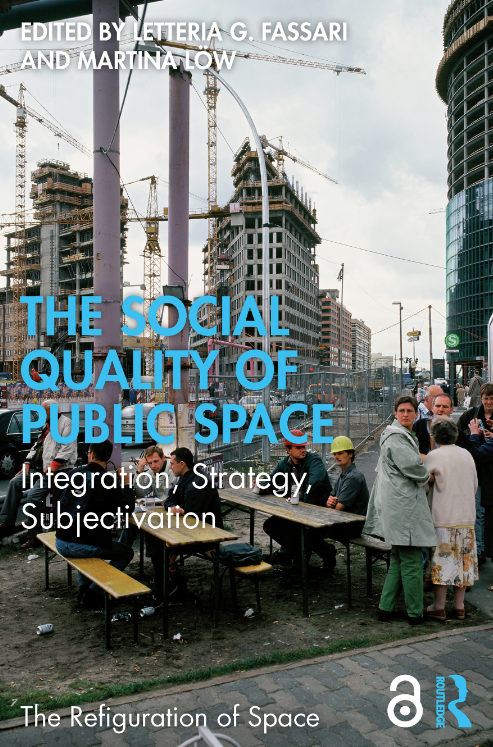
Open Access book: "The Social Quality of Public Space. Integration, Strategy, Subjectivation" edited by Letteria G. Fassari & Martina Löw. https://t.co/0Nv0ut1Wqa #urban#sociology
bila maumivu, mtu habadili tabia yake. bila uwajibikaji, walioko madarakani hawawezi kuacha kukiuka katiba na sheria. unda tume, ita malaika wakuandikie katiba yako, lakini kama huwezi kumwajibisha mtu kwa matendo yake, huna kitu unafanya. it’s that simple!
#AFCON2025#Senegal victory has reignited political justice debate in #Tanzania in the social media. Senegal's act against poor refereeing likened to Chadema's NRNE with Morocco equated to ruling CCM party reliance on unjust systemic favouritism.