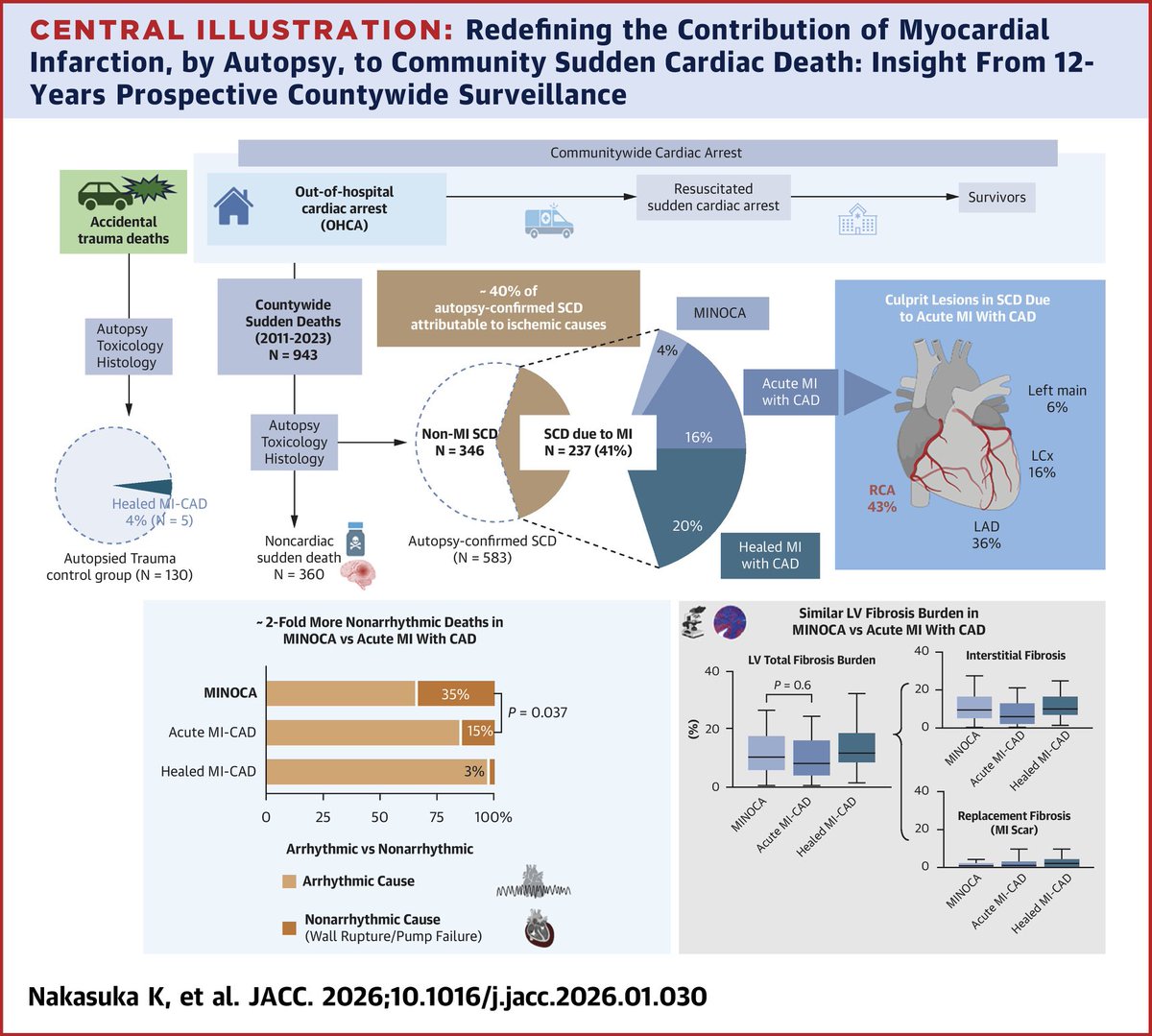
MINOCA is entering the precision medicine era.
The PROMISE trial demonstrates that identifying the underlying mechanism—not simply assigning a label—improves outcomes.
In modern cardiology, diagnostic certainty is increasingly becoming a therapeutic intervention.
From syndromes to mechanisms.
From labels to phenotypes.
From empiricism to precision.
#MINOCA #Cardiology #CardiacImaging #PrecisionMedicine
The evaluation of ischaemic heart disease is increasingly moving beyond a “one-test-fits-all” model.
CTCA, stress echo, CMR, nuclear imaging & invasive physiology each answer different clinical questions — the challenge is knowing when to use what.
Looking forward to tonight’s @kenyacardiacs session on multimodality cardiac imaging.
🕖 7PM EAT
Register:
https://t.co/kzTdHIbVCA
#CardiacImaging #Cardiology #Echofirst #YesCCT #whyCMR #Heartwork
Outcomes after a first acute myocardial infarction in patients with or without congenital heart disease. Discover more in #EHJ
👉 https://t.co/WRehf0gbDw
@RoccoMontone@ehj_ed#ACHD
Heart disease is the leading cause of death in women. Help your patients understand their risk & how to reduce it by adopting heart-healthy habits, & more.
Check out the Women & #HeartDisease#CardioSmart hub for resources. 🔗 https://t.co/VjsMmdFder
#NWHW#WomensHealth
Continuation of yesterday's MS case
After a long discussion with our staff and the family, we opted for a PMC, and fortunately, it went very well.
The MVA tripled, and the gradient decreased from 38 to 8
@alexsfelixecho@DrRajeshG1@alex1708ander@Hragy@CASivaram1@iamritu
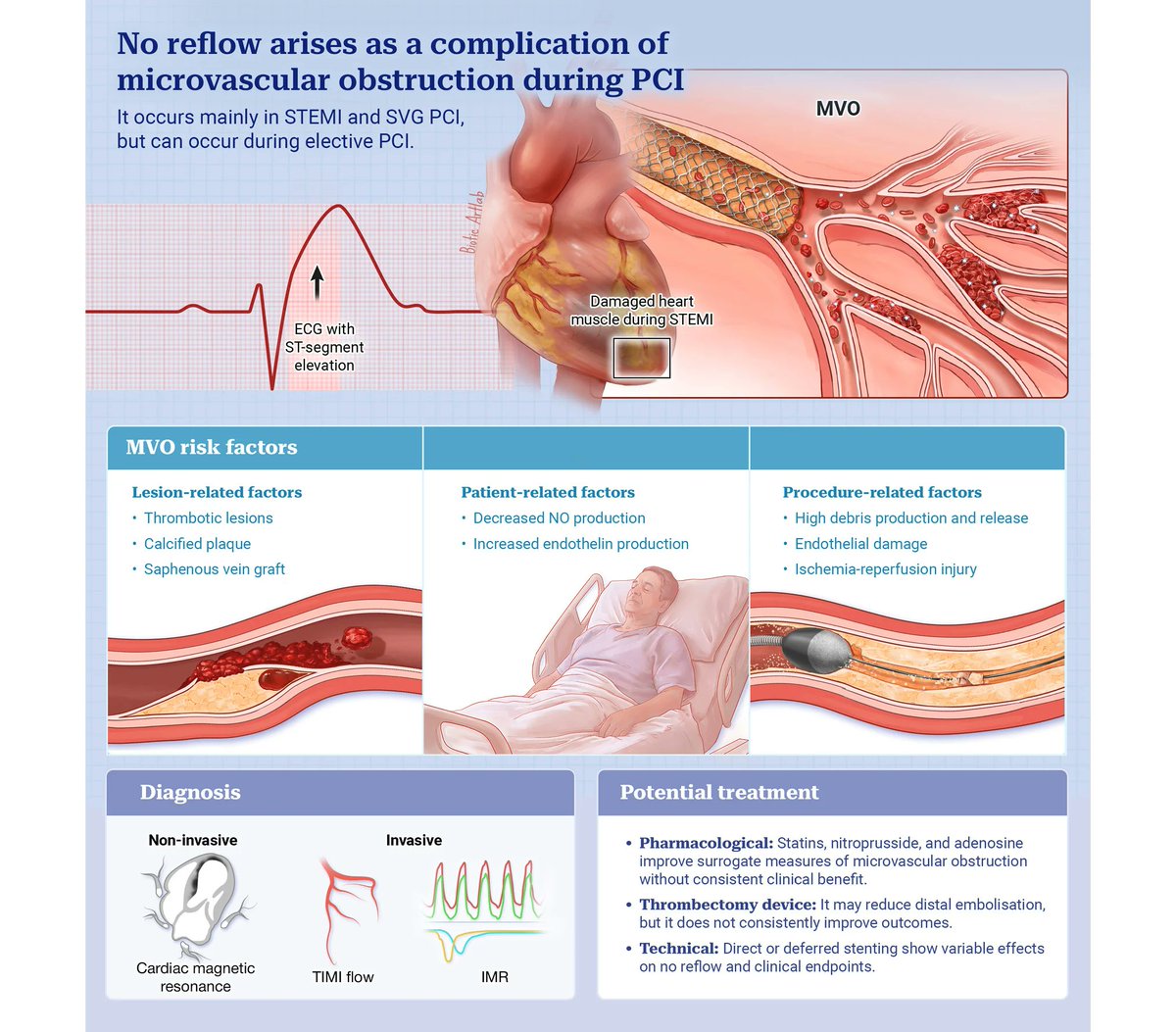
This state-of-the-art review provides a comprehensive overview of the pathophysiological mechanisms underlying the no-reflow/slow-flow phenomenon, covering invasive and non-invasive diagnostic tools, pharmacological and interventional treatment strategies, and the key clinical gaps that still need to be addressed in the field. https://t.co/glYW3u2X2z
A simple echo ratio predicts who dies after STEMI. 🧵
TAPSE/sPAP — a bedside measure of RV-PA coupling — is now a powerful, independent predictor of 1-year mortality post-primary PCI. New data from 973 patients.
The headline number:
⚠️ HR for 1-year mortality: 9.62× (reduced vs. preserved coupling, p<0.001)
1-year all-cause mortality:
🔴 Reduced RV-PA coupling: 27.1%
🔵 Preserved RV-PA coupling: 3.22%
🎯 Optimal cutoff: TAPSE/sPAP < 0.405 mm/mmHg
Measured by pre-discharge echocardiography — no invasive workup needed.
Study: 973 STEMI patients, 2 German tertiary centers, 2014–2023, median follow-up 4.2 years.
💡 RV-PA uncoupling is detectable at routine echo before discharge. It may be one of the most powerful tools we have to risk-stratify STEMI patients early.
Graesser C, et al. JACC Cardiovasc Interv. 2026;19(7):874–885.
#STEMI #Cardiology #RightHeart #Echocardiography #TAPSE #MedEd #MedTwitter
The American Heart Association mourns the passing of the legendary cardiologist Eugene Braunwald, M.D., widely recognized as one of the most influential figures in the history of cardiovascular medicine. Over seven decades, his work reshaped the understanding and treatment of heart disease, leading many to call him the father of modern cardiology.
Braunwald was a lifelong contributor to the American Heart Association, helping advance its research and scientific mission, and was honored with some of the Association’s highest honors for his lasting influence on cardiovascular care and research. His influence extended well beyond his own discoveries, as generations of Association‑supported investigators, clinicians and academic leaders were trained by Braunwald or guided by the clinical trial standards and mentorship models he helped establish.
https://t.co/ieZuHYMyOP