@HungaryBased Yep. All EU countries need to exit the EU
We can organize back together later, but the fastest way to fire all bureaucrats in Brussels, along with the EC, is a collective exit.
The EC will be without countries to rule over, and without budget.
It will be glorious.
Our solution was to just build a quantum secure chain
Simplest and cleanest
You'll be able to move your coins over with the click on 1 button
Bitcoin tokenomics, ZCash level privacy, Quantum security
Crypto will not die, nor even be damaged, by Quantum
Be the solution you seek
Saying one race is the least racist is racist?!
Non racist is not caring at all about race, realizing we're all human who happen to come in different but still very similar packages called bodies
Racism is the easiest to solve problem in the world, stop talking about it and it's gone
When no one cares about your race, then who can be racist?
Stop worrying about "other people" being racist - the way to stop racism is to stop worrying about other people being racist
Racism is a mistake - a concept born from ignorance and separation and an inability to see the truth
Some people make such a mistake but we simply need to not care about these people. They do not deserve your precious attention and time
Many people make many mistakes, so what, over time, they'll learn, or not, who cares, being wrong about a topic is self-defeating, so let this be their problem and leave it at that
There are still good and bad people in the world but it's not related to "race", it's related to what is in their hearts
It's ok to discern between good and bad, judge people, but judge them by merit, not by random features of their body
@elonmusk Legacy media:
> Will post anything that fits the propaganda
> Won't mention anything that doesn't fit the propaganda
> Will make up things if they can't find real events to support the propaganda
Legacy media is propaganda
It's a Quantum Quagmire even in the best of cases
If Bitcoin comes to its senses / removes bad actors, and suddenly takes Quantum super serious, then, still migrating self custody addresses to a new cryptographic scheme is very difficult
It would take 15 days to transfer all the coins with normal ECDSA signatures but PQC signature schemes are 100x bigger ... so that's 1500 days in the best case
Some coins are lost and will be lost to attackers anyway
Psychological pressure from these problems affects price long before it happens - maybe even today
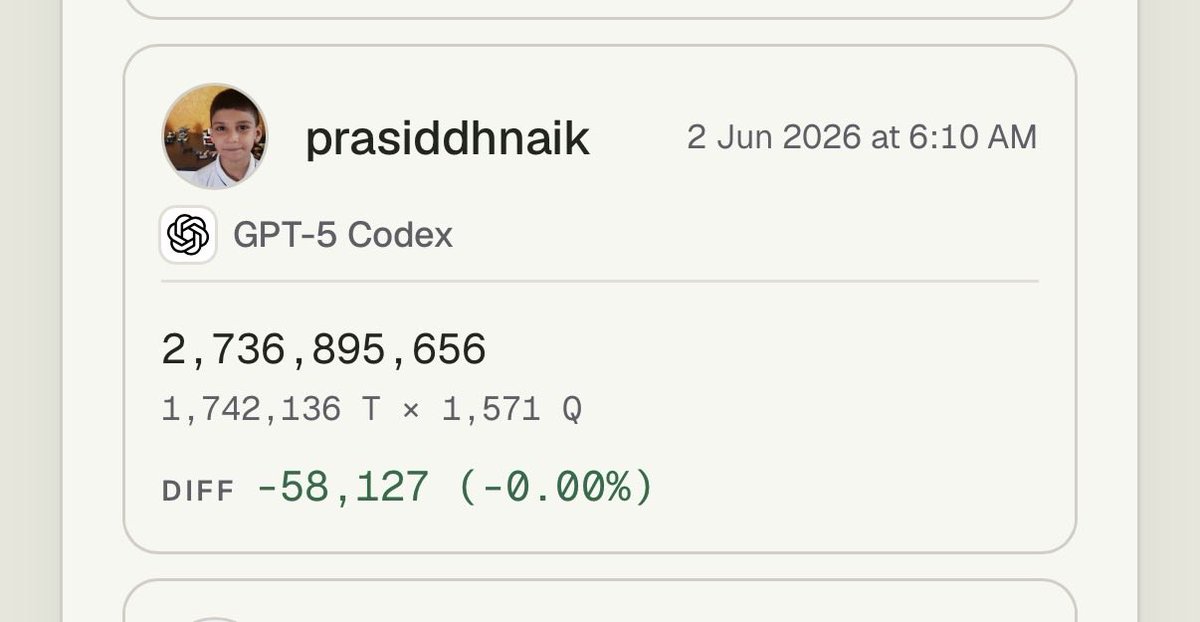
our algorithm is 12.4% ahead of google.
we started off with 50% of google, pushed it to 88% and opened it up to everyone.
8 hours later: we beat google.
anyone can participate. my 13yo brother has contributions to this.
if he can do it, why can’t you? — let’s push the boundaries more.
ecdsa(.)fail
One of the coolest things I've seen in a while (h/t @eigenlabs), and the clearest demonstration yet that AI is pulling Q-Day forward: a crowdsourced, open-research competition to optimize the Google ECDLP circuit, the best known approach for breaking ECDSA with a quantum computer.
In March, Google Quantum AI published a paper on the quantum threat to Bitcoin and other digital assets. Notably, they referenced, but did not reveal, the circuit used in their resource estimate. Instead, they used a zero-knowledge proof to show they had compiled it without revealing its layout.
Two months later, that circuit is no longer state of the art. On ecdsa dot fail, anyone can take a baseline circuit and try to beat the Google benchmark. The current leading submission doesn't just meet it; it exceeds it (as of this writing) by 13.3% on the core metric (logical qubits times Toffoli gates).
And these aren't results from a national lab or a leading technology company. Experts and amateurs are working side by side, including AI-driven "autoresearch" from people who aren't cryptographers. Even teenagers are participating.
Circuit design is only one piece. The same open, AI-assisted method can be aimed at error correction, decoding algorithms, and every other layer of the stack. Optimized in parallel, by anyone, continuously.
This is what the timeline debates keep missing. Q-Day doesn't depend on one breakthrough, at one company, on one roadmap. It's being chipped away at an accelerating rate by a distributed, disconnected group of people, both inside the industry and outside it.
It's a great demonstration of the power of AI to accelerate scientific progress, but also a reminder of the accelerationist reality we live in.
From a cybersecurity perspective, it means Q-Day timelines are only going to move up, not back, from here.
DJB has transitioned his focus toward post-quantum cryptography (PQC)!!!
The main takeaway from this paper is that the transition to post-quantum cryptography must be handled with great care. Even minor implementation mistakes can easily lead to full key compromise. The migration to PQC should optimize for overall system risk, not focus solely on quantum-threat resistance. In the near term, this may justify a hybrid approach combining classical and post-quantum cryptography to better mitigate operational and deployment risks, even if it comes with additional complexity!
I am not sure there is a greater signal that quantum is upon is than the US government preventing Google from publishing an algorithm
I mean the only greater signal would be Satoshis coins moving
🚨 Google Quantum result was just rediscovered and IMPROVED!
On March 31, 2026, Google Quantum AI published a paper showing that 256-bit ECDLP, the hard problem behind ECDSA and therefore behind Bitcoin, Ethereum, TLS, and most of the world's authentication, can be solved with fewer than 1,200 logical qubits and ~90M Toffoli gates. Under 20 minutes on ~500,000 physical qubits.
BUT, they didn't publish the circuits. They published a zero-knowledge proof that the circuits hit those numbers. The standard read at the time: clever responsible disclosure, elegant.
Two months later, that read needs an update. Two things happened, in opposite directions.
1. The ZKP wasn't a stylistic choice. Google was stopped from publishing.
What was speculation in April is no longer. Google did not choose to keep the circuits private. The U.S. government prevented publication. The blog post phrased it politely ("we engaged with the U.S. government"). Call it what it is: diplomatic cover for a publication block.
This is the line Scott Aaronson warned about. At some point, the people estimating the resources needed to break deployed cryptosystems would stop publishing. We just watched it happen, and the actor enforcing the silence isn't Google's PR team. It's a government.
2. The ZKP turned out to be a reward function. AI used it.
Here's the part that's almost funny.
A ZK proof that "this hidden circuit achieves these resource counts" is, when you flip it, a public verifier of any candidate circuit. Submit a circuit, get back: does it compute ECC point addition correctly, and at what cost. Pass/fail plus a number. That is exactly the shape of a reinforcement-learning reward function.
The ZKP was designed to hide the attack. What it actually published is the reward function for rediscovering it.
The research community wired the verifier into an automated AI-driven search loop. They reproduced Google's numbers. Then they improved them by 11.5%. Two months, from outside Google, no access to the circuits, using the very artifact Google released to keep them proprietary.
Both of these are true at once. Hiding the circuits worked: nobody outside Google has Google's exact circuits. And hiding the circuits did not slow the frontier; it changed who is doing the search, and arguably accelerated it, because the verifier industrialized the search loop.
Let's NOT PANIC!
Neither of these is a working CRQC. There is still no quantum computer that can run this circuit. The headline state of the world has not changed.
What has changed is the honesty of every public PQC timeline. Cryptography exists to create mathematical trust in the security of systems. Trust isn't broken when an attack runs. It is eroded when the foundation looks thinner than the public record suggests, and the public record is now demonstrably thinner than reality in two ways: by classification on one end, by AI-driven re-derivation on the other.
In security, the moment you start doubting the foundation is the moment you start rebuilding it. Not the moment you panic. The moment you plan.
This isn't a moment to rush. It's a moment to commit to a migration plan and execute against it, knowing the threat model is shaped by what governments are willing to classify, not by what researchers are allowed to publish.
Stay safe. Stay honest about your trust assumptions.
Future Tony Robbins
Those complaining about him likely don't even apply these most basic of things in their own life
Someone interested in self development won't criticize him - they'll encourage him to keep at it and get better.
He's just starting his journey and he is heading in the right direction
I am happy about every single person thinking more deeply about life
They're all my friends
Those who dedicate their life to self realization are dearest to me they are doing the heavy lifting to make our new civilization happen