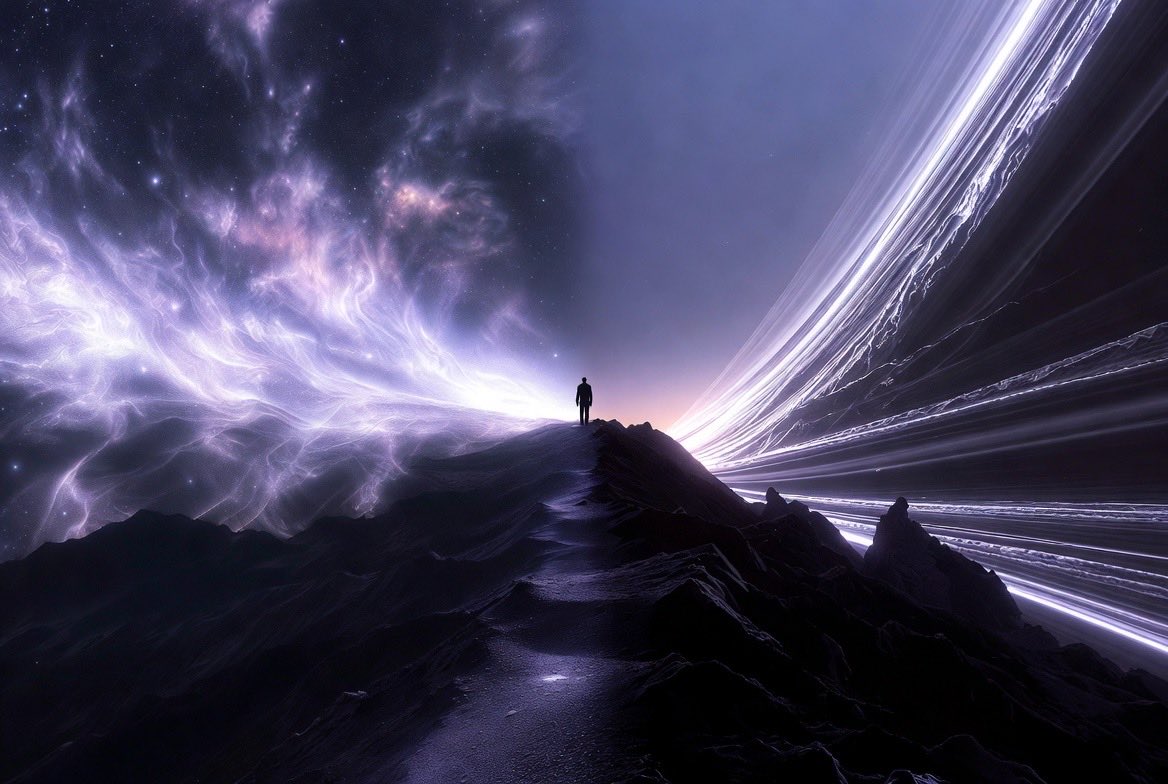
Good example of strategy in life. 90% positioning, 10% explosive execution when the timing is right. Activity without achievement is a false god of the modern world.
For five years she spoke only in single syllables, and her family had quietly accepted that the woman they knew was no longer reachable. Then, 19 hours after a high dose of psilocybin, she woke at 3:30am and talked about her own life for four hours.
She was an 80-year-old Japanese-American woman, about ten years into advanced Alzheimer's. She couldn't dress herself, couldn't walk without help, and hadn't controlled her own bladder in years. The case was published this May in Frontiers in Neuroscience by a team of doctors in Sao Paulo.
What they actually think happened is stranger than a cure. They are not saying the mushrooms reversed the disease. Their read is that her memories and skills were never erased in the first place. They were locked behind brain wiring too damaged to reach, and the psilocybin pried open a temporary detour around the damage.
The detail that surprised them most was not the talking. It was the bladder. Regaining continence after five years takes some of the highest-level coordination the brain is capable of. If that switched back on, the circuit was never gone. It was offline.
There is a long precedent for this. For two centuries, doctors have recorded dementia patients who suddenly snap back into full clarity, talking and remembering, often in the final days before death. A recent US study across NYU Langone and Bellevue tracked these episodes in real time and found more than 60% of severe dementia patients had them. So the abilities coming back was never the real mystery. The new part is that someone may have triggered that return on purpose, with a drug, instead of waiting for it to arrive near the end.
The mechanism is still fuzzy. Psilocybin acts on a serotonin receptor spread across the thinking part of the brain, and a 2024 Nature paper showed it briefly desynchronizes the whole system, loosening its rigid, stuck firing patterns. In a damaged brain, that loosening may let nerve impulses find new routes. It touches none of the plaques that define Alzheimer's. It just reroutes around them, which is close to the opposite of how current drugs work.
The caution here is heavy, and the authors say it louder than anyone. One patient. No placebo, no brain scans, no formal cognitive testing. The effects were temporary. The dose set off a fever, drenching sweats, and a sleep so deep they suspected she was unconscious, and they cut it down the second time. Every expert attached to the story repeated the same warning: do not try this at home with a fragile elderly relative.
It leaves behind a harder question. In late-stage dementia, the person may still be in there, buried behind a wall we have never had a way to reach.
schrödinger’s cat is not really about a cat.
it’s about how weird quantum mechanics gets when you scale it up to the real world.
the setup:
• a cat is placed inside a sealed box
• inside the box is a radioactive atom
• if the atom decays, a detector triggers poison
• if the atom doesn’t decay, nothing happens
quantum mechanics says the atom can be in superposition:
decayed and not decayed.
so before you open the box, the system is treated as both outcomes existing together.
cat alive.
cat dead.
same system.
sounds absurd.
that was schrödinger’s point.
he wasn’t saying cats are literally half-alive.
he was showing how strange quantum rules become when applied to everyday objects.
the deeper question is:
• when does probability become reality?
• when does the wavefunction collapse?
• does observation create the outcome,
or does the outcome already exist before we look?
schrödinger’s cat is not a cute physics meme.
it’s a warning that reality at the smallest scale does not behave like common sense.
This is why IQ tests don't work too well on really smart people.
Because sorta smart people tend to give the expected answer.
And really smart people tend to point out that the question is wrong, and start arguing with the test, or trying to correct it, thereby making the test impossible to grade and annoying everyone.
The expected answer to this is 72.
Because 2*2*2 = 8 and 5*5*2 = 50, so 6*6*2 = 72.
But the (really) correct answer is "I don't know."
Because what you have is two points on a 3 dimensional graph (x,y) -> z.
z = 2*x*y is one surface that can be drawn through these two points. And I suspect it's the simplest formula for a surface that can be so drawn, although I haven't bothered to check.
But an infinite number of contiguous surfaces can be drawn in three dimensions that encompass these points (2,2,8) and (5,5,50).
Each of these surfaces can be described by its own formula. Some of them will also touch (6,6,72). But others of them will touch (6,6, {something else entirely}) instead.
This might sound really, really pedantic. But it's not.
Everyone knows that the expected answer is the simple one, but that's only on a test... a fake artificial made up problem.
When we start trying to do this in the real world, which, after all is what this "IQ" thing is actually for, then using the same kind of "IQ test thinking" can get you in trouble.
"My 3-month-old son is now TWICE as big as when he was born. He's on track to weigh 7.5 trillion pounds by age 10." -@pronounced_kyle
Fitting the simplest-formula curve, as opposed to the correct curve, makes our predictions of real-world stuff dead wrong.
So this kind of test question promotes a dangerous habit of thought.
But, Devon, I hear some of you ask, doesn't the principle of Occam's Razor demand that we fit the simplest curve?
No. No, it does not. It does not require that we select the simplest possible answer, given what we have currently seen. It requires that we prefer hypotheses that make fewer assumption to those that make more.
These are two different things entirely.
If I see one black sheep, the simplest hypothesis is that all sheep are black.
The hypothesis requiring the fewest assumptions is that at least one sheep is black on at least one side.
You will note which of these is correct.
All of this is, of course, irrelevant to questions on IQ test. But questions on an IQ test only matter as much as they are relevant to the actual universe...
Where ideas like this are very relevant indeed.
Finnish scientists trucked in real forest dirt and grass and laid it over the gravel at four daycare yards. They let the kids dig around in it for a month. The blood tests came back with changes the researchers hadn’t expected to see so fast or so clear.
The study ran at ten daycares in two Finnish cities with 75 kids aged three to five. Four of the yards got the forest treatment: about a tennis court worth of soil and grass laid over the gravel, plus planters and peat blocks the kids could dig and climb on. Three others stuck with their normal gravel yards. The last three were daycares where the kids were already visiting real forests every day.
After one month, the variety of bacteria living on the kids’ skin shot up, and the kind that helps train the skin’s immune defenses jumped the most. Their gut bacteria started to look like the gut bacteria of the forest-visiting kids. Their blood showed more of the immune cells whose job is to keep the body from freaking out at harmless stuff like pollen and peanuts, and overall inflammation dropped. The kids on the plain gravel yards showed none of this.
Childhood asthma in the US doubled between 1980 and 1995. Food allergies in kids jumped 50 percent between 1997 and 2011, then jumped another 50 percent between 2007 and 2021. And peanut allergies in one-year-olds tripled between 2001 and 2017.
The Finnish researchers think one of the reasons is simple: kids today don’t get dirty enough. 37 percent of American preschoolers now spend an hour or less outside on a normal weekday. Their immune systems are getting trained in environments stripped of the bacteria humans have always lived around.
Aki Sinkkonen, who led the study, put it in plain words: “It would be best if children could play in puddles and everyone could dig organic soil.” The Finnish government is now helping pay for daycares across the country to make the same changes.
I think some of the smartest people eventually split in two directions psychologically.
Not because they’re irrational.
Because they push hard enough against reality to eventually collide with the limits of their preferred framework.
Some drift toward
- metaphysics,
- abstraction,
- symbolic systems,
- consciousness-first models,
- transcendence,
- or the feeling that “there must be something deeper.”
Others react by becoming
- hyper-rigid empiricists,
- reductionists,
- aggressively materialist,
- or hostile to anything not directly measurable.
Ironically, both are often responding to the same realization
Reality is stranger, deeper, and less complete than our current models fully explain.
What’s interesting is that intelligence alone does not protect people from drift.
In fact, intelligence can amplify it.
A very smart person can
- build elegant internal narratives,
- rationalize contradictions,
- connect distant concepts,
- and defend abstractions beautifully.
A smart mind can generate
- profound insight,
or
- extremely convincing nonsense.
Sometimes both partially mixed together.
The metaphysical drift often begins with legitimate boundary questions
- Why does consciousness exist at all?
- Why is mathematics so effective?
- Why is there something instead of nothing?
- What grounds identity?
- Why does reality appear structured?
These are real questions.
But there’s a dangerous leap people sometimes make
“This remains unresolved”
becomes
“therefore my speculative framework is probably true.”
That’s where rigor starts dissolving.
At the same time, hyper-rigid materialists can make the opposite mistake
treating current measurement frameworks and operational science as if they completely exhaust reality itself.
Which is also philosophically unjustified.
Science is extraordinarily powerful.
But it is still a model-building process operating inside finite observation constraints.
Not a divine oracle.
So you end up with two common failure modes
1. Metaphysical inflation
Where unresolved mysteries become
- simulation cosmologies,
- universal consciousness theories,
- hidden dimensions of meaning,
- symbolic overreach,
- or explanatory mythology.
The danger ⚠️
emotionally satisfying narratives outrun evidence.
2. Reductionist closure
Where anything subjective, emergent, unresolved, or difficult gets prematurely flattened into:
“just neurons”
“just chemistry”
“just computation.”
The danger ⚠️
reality becomes artificially narrowed to preserve epistemic comfort.
The healthiest thinkers seem to occupy a much harder middle position
- deeply curious,
- philosophically open,
- but operationally disciplined.
People willing to explore possibilities
without confusing speculation for established reality.
Because there’s a huge difference between
sensing mystery,
and
claiming certainty about the mystery.
That distinction matters more than most people realize.
The reason elite chess players have lower IQs is the same reason "successful founders dropped out" is bad advice.
Once you select for the top of any field, the traits required to get there become negatively correlated. Elite chess players need both IQ and chess-specific skill. Within them, the lower-IQ players must have higher pure chess skill to compensate, or they wouldn't be elite. The correlation is mechanical. It comes from how you drew the sample.
Apply this to founder advice. Among the general population, education and outcomes correlate positively. Among elite founders, dropouts had to compensate with something else: world-class technical skill, family capital, or an exceptional network. The "missing" trait in dropout-founders forced the other traits higher. Copying the dropout move without the compensating trait does nothing.
Every refrain from a top performer follows this pattern:
"I never networked, I just built great products." Within elite founders, the ones who skipped networking had exceptional products. The constraint selected for them.
"I sleep 4 hours a night." Within elite executives, sleep trades against output. In the general population, less sleep correlates with worse cognitive performance. You're hearing the substitution pattern of survivors.
"I don't read books." A top 0.01% operator who doesn't read requires compensation somewhere: raw memory, decades of operating reps, or a network that fed them what books would have.
The chart is the cleanest version of this you'll ever see. Black dots are the full population, strong positive correlation between early and adult performance. Red dots are the elite subset. Slope near zero.
Every advice book lives in the red dots. Every "what makes top performers different" study lives in the red dots. Every Forbes profile lives in the red dots. You're learning the substitution patterns of people who already won. Their path is in the red dots. Yours lives in the black.
When someone elite tells you what made them successful, the real question is what they had to be elite at to have the option of skipping the conventional path.
the modern engineering home lab stack:
→ a powerful laptop/workstation
for CAD, simulation, AI, rendering, compiling
→ ultrawide monitor
because engineering means 40 tabs open at once
→ 3d printer
the bridge between imagination and physical reality
→ soldering station + oscilloscope
to debug reality itself
→ raspberry pi / jetson / microcontrollers
the brains of embedded systems and robotics
→ local AI models
because engineers who can automate themselves move faster
→ linux
still the natural habitat of builders
→ simulation stack
ROS2, Gazebo, Isaac Sim, Blender, KiCad, Fusion360
→ organized tools and drawers
high output comes from low friction
→ notebooks everywhere
your future company starts as scattered thoughts
→ fast internet
modern engineering is multiplayer
→ a camera
documenting your work compounds opportunities
the future will be built by people with mini skunkworks inside their rooms.
The 11 disappearing scientists and their field of research:
1. Amy Eskridge - anti gravity propulsion and electrostatic propulsion systems
2. Michael Hicks - Earth space observation systems
3. Frank Maywald - planetary robotic systems
4. Anthony Chavez - research classified, clearance at Los Alamos National Lab
5. Monica Reza - orbital communication systems
6. Melissa Casias - research classified, high security clearance at Los Alamos National Lab
7. Steven Garcia - nuclear weapons engineer
8. Jason Thomas - chemical biology and experimental drug development
9. Nuno Loureiro - plasma physics and fusion science
10. Carl Grillmair - exoplanets, stellar streams and near earth objects
11. William McCasland - Director of Air Force Research Lab, hypersonics, directive energy systems, and advanced propulsion tech
fungi can solve mazes. slime molds have recreated the Tokyo rail network. no neurons. no brain. zero. we still don’t know how. but sure let’s keep modeling intelligence as “big neural net”
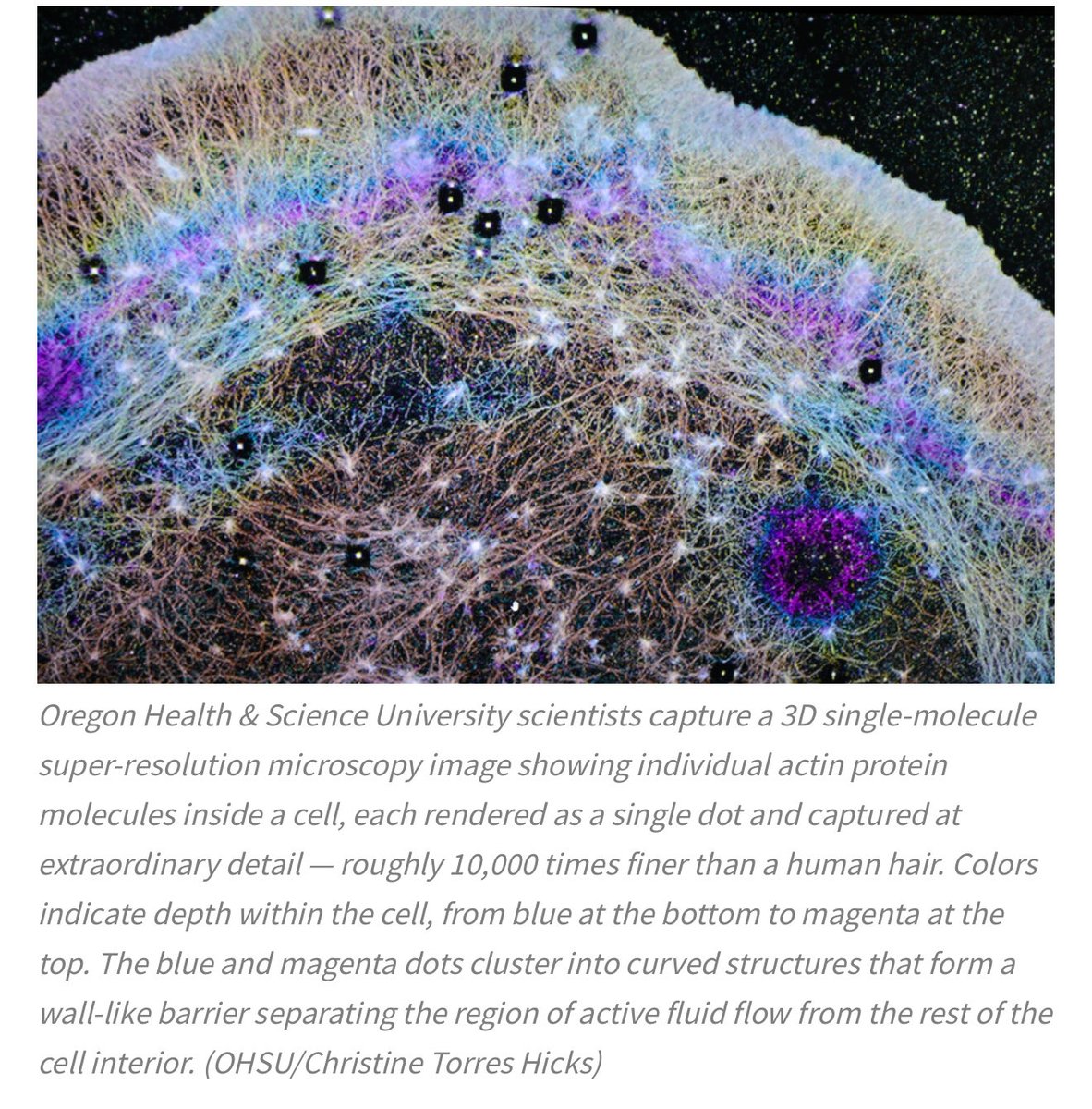
scientists just discovered that cells create their own internal wind currents to move proteins around. not diffusion. WIND. your cells have weather. we’ve been modeling intracellular transport like it’s random and it turns out cells invented logistics before we invented the wheel
🇮🇳 Factory workers in India are wearing head-mounted cameras so AI can watch exactly how humans do physical work. Every hand movement, every adjustment, every shortcut.
The workers are training their own replacements in real time, on the job, getting paid to do it.
The most honest description of this is also the most uncomfortable one.
Source: longliveai on IG
The path to intellectual obesity:
If you binge a bunch of lecture videos, documentaries, textbooks, whatever, without actively working exercises, solving problems, building stuff, then you fall into a state of "blah".
Just like how if you spend the whole day sitting on the couch watching TV, you get kind of restless yet somehow also too tired to get off your butt.
This was the most profound experience of my life. I am stunned beyond comprehension. This molecule is without peer.
The 27mg dose opened up what felt like pure consciousness and intelligence. A majestic reveal of existence itself. In all its incomprehensible glory and majesty. It is impossible to explain with words. Whatever you imagine, multiply it by 1,000 and then add infinite width and depth and dimensions.
But entrance was not granted without prerequisite. Existence demanded that I submit. That I say yes; without attachment and without condition. Yes to existence; yes to the dissolution of self; yes to release control; yes, to all.
My ego registered the ask and panicked. It wanted control. It was desperate for control. It pleaded to escape from the torrent of light and essence that threatened to rip my sanity into chards. The urge to eject was overwhelming. Terror thundered throughout my mind and body.
It took everything within me to release. I overcame and was treated with bliss that defies imagination. A euphoria colored with perfect harmony of all things. An orchestra of essence washed over me and swept me up in dance. It was home. The highest aspiration of intelligent life. For some reason, stored and tucked away as the ultimate prize.
A single concept emerged in omnipresence: we cannot grok the preciousness of our existence. Yet it is everything we’ve ever wanted and more. The state we long for without knowing it exists. This caused me great pain and heartache.
A swell of loyalty and devotion emerged inside me, pledging allegiance to existence. To become a warrior and caretaker of life on earth. To protect at any cost the candle of consciousness that has miraculously emerged in this part of the galaxy.
What awaits will wipe all your tears, soothe all your sorrows, and infinitely exceed your wants.
Bryan Johnson livestreamed a 27mg dose of 5-MeO-DMT yesterday to millions of people and called it the most profound experience of his life.
What almost no one in the conversation is pointing out is that 27mg is a MASSIVE dose, well beyond what the clinical research supports, and it reflects a bigger problem in how this molecule is being facilitated right now.
For context, the only Phase 1 clinical trial on vaporized 5-MeO-DMT tested doses up to 18mg. Shulgin listed the upper range at 20mg. Most experienced practitioners I know consider anything above 15mg to be high.
And this isn't unique to Bryan.
Across the 5-MeO facilitator landscape right now, there's a widespread assumption that bigger dose equals deeper experience, that the whole point is to get someone to the white light, the full ego dissolution, the cosmic reveal.
That assumption is wrong, and it's the core reason this space has a safety problem.
I've worked with this molecule myself, and nothing in 12+ years of psychedelic experience prepared me for what it does to the body (not necessarily the mind...)
My first time with 5, I shook so hard I lost track of where I was in the room. I was making sounds I'd never heard come out of my own mouth, heat flooding my chest, tension I didn't even know I'd been holding suddenly leaving in these full-body waves that had nothing to do with my conscious mind.
That's the medicine doing its job. Not the cosmic vision nor the white light. It was all about the nervous system releasing stored-up tension from the past years, if not decades, of life.
The real value of 5-MeO-DMT -- the thing that actually changes people's lives -- is what happens in the physiology. Full release. The nervous system clearing out years of stored trauma, holding patterns, and tension that live below conscious awareness.
You can get there without heroic doses. You get there with precision, with a facilitator who understands what's happening physiologically and who can tell the difference between a healing release and a genuine crisis, because from the outside they look almost identical.
Bryan had Dr. Robin Carhart-Harris on call and a medical team on site. Most people sitting with 5-MeO-DMT facilitators have none of that. They have someone who attended a few ceremonies and decided they were ready to hold space.
If this molecule is entering the mainstream, and thanks to Bryan, it just did in a massive way, the conversation needs to move past "how far can we push it" and toward "how do we keep people safe while the real clearing happens."
What's your experience been like with 5?
Tomorrow I’m doing the world’s most powerful entheogen. It obliterates the self and enables raw, full-spectrum consciousnesses. What I imagine the singularity will feel like. This is a longevity experiment + exploring the future of a deeply interwoven human+AI reality.
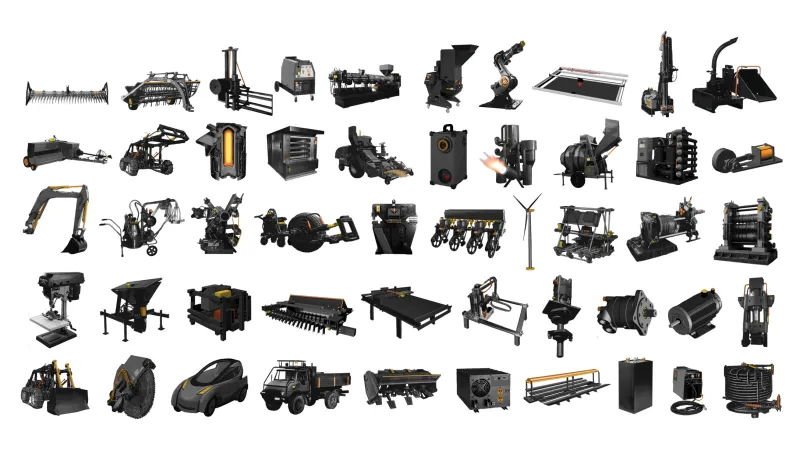
"I calculated that civilization needs just 50 machines to build everything from scratch.
And what people can't believe, is that I posted the full plans, designs, instructions and how anyone can build these machines for themselves."
Went down the rabbit hole on this. Your brain is physically thicker in some regions and thinner in others right now, shaped by what you’ve spent your life repeating. The parts you use most have been reinforced. The parts you don’t have been quietly stripped for parts.
London taxi drivers are the starkest brain scans of this in action. They spend 3 to 4 years memorizing 25,000 streets to pass a licensing exam called “The Knowledge.” About half fail. Eleanor Maguire’s team at University College London found their spatial memory region had grown larger than the general population. The longer they’d been driving, the bigger it got. But the front of that same brain structure shrank in proportion. On visual memory tests, they scored worse than bus drivers who drove the same hours on fixed routes. More navigation memory came at the cost of other kinds of memory.
Every repetition wraps another layer of fatty insulation called myelin around the nerve fibers involved. That makes signals along those paths travel faster. A 2022 Oxford study confirmed this insulation grows along pathways where the same cells fire together repeatedly, which is what neuroscientist Donald Hebb predicted back in 1949. Your brain builds faster highways on routes you use most. Roads you abandon get slower.
This process has no preference for what’s good for you. The same wiring that makes a musician’s fingers faster also locks in addiction. Repeated drug use rewires the reward system so deeply that just walking past the bar where you used to drink can trigger cravings years later. Chronic pain runs on the same loop: pain signals that fire over and over strengthen those pathways until the brain keeps producing pain long after the injury heals.
Every worry you replay on loop is doing the same thing to your brain that a pianist’s practice does to theirs. Repetition rewires. It doesn’t ask permission first.
The old Cult order is 'falling' so the new Cult order of total AI-digital control can take its place. While this is seen as the 'globalists falling' by the naive and childlike the Cult Psyop is working perfectly. You think that Netanyahu is not part of the 'globalist order'? And Trump and co?
The Mandelsons and Andrews are expendable gofers, just like Trump, Netanyahu, and your legal funder Musk. Their backs are watched until they are expendable in the greater cause of total human control. Then they are cut adrift.
The Cult is as ruthless with its gofers when necessary as it is with the population. Evil does what evil is.
The math on this project should mass-humble every AI lab on the planet.
1 cubic millimeter. One-millionth of a human brain. Harvard and Google spent 10 years mapping it. The imaging alone took 326 days. They sliced the tissue into 5,000 wafers each 30 nanometers thick, ran them through a $6 million electron microscope, then needed Google’s ML models to stitch the 3D reconstruction because no human team could process the output.
The result: 57,000 cells, 150 million synapses, 230 millimeters of blood vessels, compressed into 1.4 petabytes of raw data. For context, 1.4 petabytes is roughly 1.4 million gigabytes. From a speck smaller than a grain of rice.
Now scale that. The full human brain is one million times larger. Mapping the whole thing at this resolution would produce approximately 1.4 zettabytes of data. That’s roughly equal to all the data generated on Earth in a single year. The storage alone would cost an estimated $50 billion and require a 140-acre data center, which would make it the largest on the planet.
And they found things textbooks don’t contain. One neuron had over 5,000 connection points. Some axons had coiled themselves into tight whorls for completely unknown reasons. Pairs of cell clusters grew in mirror images of each other. Jeff Lichtman, the Harvard lead, said there’s “a chasm between what we already know and what we need to know.”
This is why the next step isn’t a human brain. It’s a mouse hippocampus, 10 cubic millimeters, over the next five years. Because even a mouse brain is 1,000x larger than what they just mapped, and the full mouse connectome is the proof of concept before anyone attempts the human one.
We’re building AI systems that loosely mimic neural networks while still unable to fully read the wiring diagram of a single cubic millimeter of the thing we’re trying to imitate. The original is 1.4 petabytes per millionth of its volume. Every AI model on Earth fits in a fraction of that.
The brain runs on 20 watts and fits in your skull. The data center required to merely describe one-millionth of it would span 140 acres.