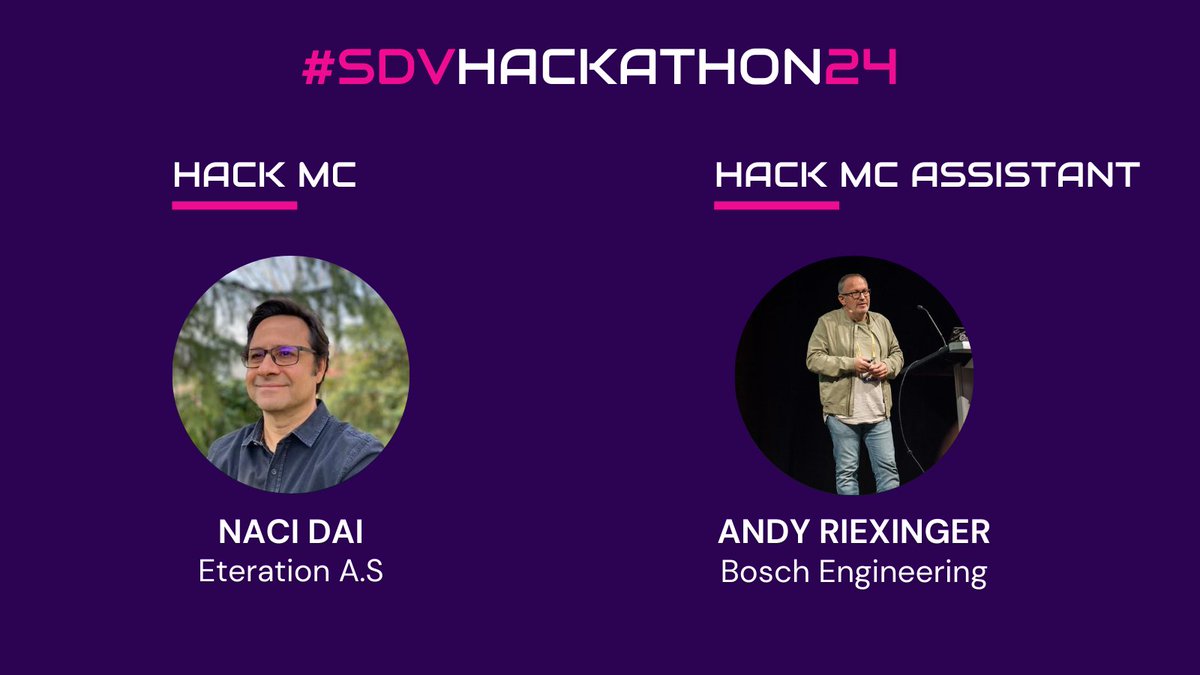
👥🤝 Meet the people behind the #SDVHackathon24!
Hack MC @nacidai & Hack MC Assistant @ARiexi talk about what’s new this year.
✨Check out their insights into the future of #SDV and how they’re pushing the boundaries of automotive tech: https://t.co/XjyB9OEzUs
Concerns about maintenance and integration are common blockers to OSS. Discover how to overcome them in our report. #Blockers#opensource#Automotive https://t.co/kUjctpHiNW
The first author of this astrophysics paper found that if he gave o1-preview the methods section, it was able to reproduce 10 months of work coding he did as a PhD in 5 prompts (a few caveats in the video)
Side note: all of your methods sections are becoming instruction manuals.
It's a bit sad and confusing that LLMs ("Large Language Models") have little to do with language; It's just historical. They are highly general purpose technology for statistical modeling of token streams. A better name would be Autoregressive Transformers or something.
They don't care if the tokens happen to represent little text chunks. It could just as well be little image patches, audio chunks, action choices, molecules, or whatever. If you can reduce your problem to that of modeling token streams (for any arbitrary vocabulary of some set of discrete tokens), you can "throw an LLM at it".
Actually, as the LLM stack becomes more and more mature, we may see a convergence of a large number of problems into this modeling paradigm. That is, the problem is fixed at that of "next token prediction" with an LLM, it's just the usage/meaning of the tokens that changes per domain.
If that is the case, it's also possible that deep learning frameworks (e.g. PyTorch and friends) are way too general for what most problems want to look like over time. What's up with thousands of ops and layers that you can reconfigure arbitrarily if 80% of problems just want to use an LLM?
I don't think this is true but I think it's half true.
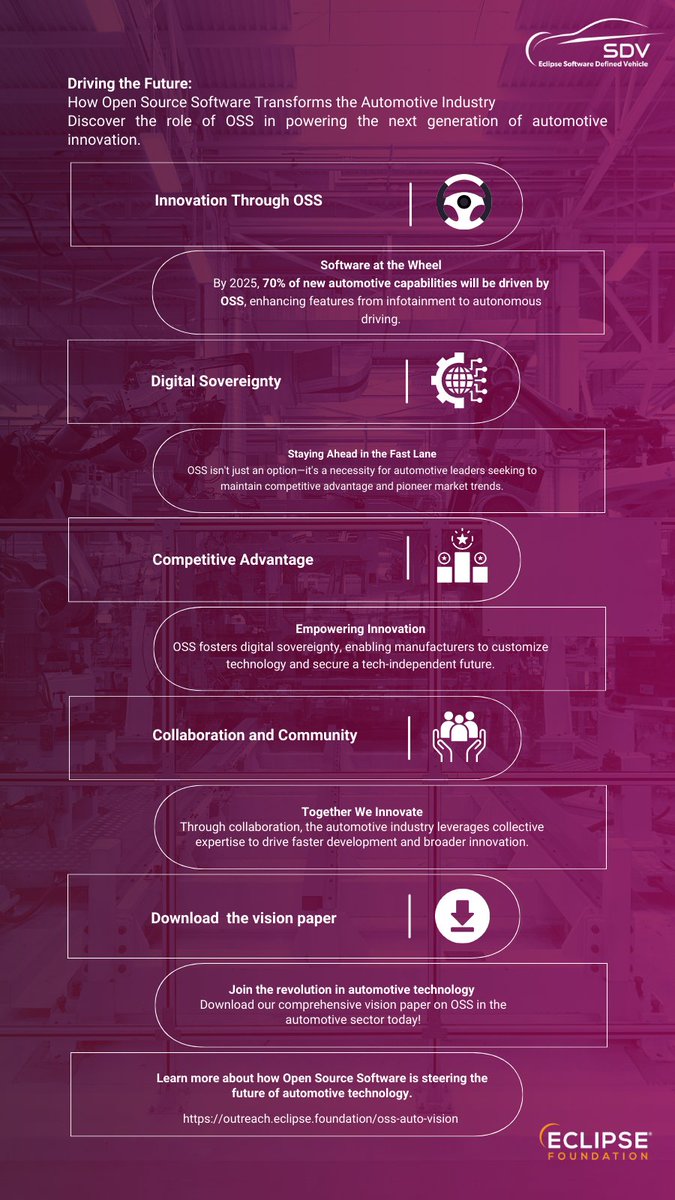
From isolation to integration: The automotive industry is on the brink of a major transformation. Learn how #opensource software is driving this shift towards a unified ecosystem. Download the vision paper! #ossrevolution#automotiveindustry https://t.co/fWEDTVhBUO
As cars get smarter, their software needs to be not only innovative but also secure. Find out how OSS is shaping the future of automotive safety in our latest vision paper.#smartcars#securesoftware https://t.co/JvroIgUCUv
Attention automotive tech enthusiasts! The early bird CFP deadline for Open Community for Automotive 2024 is fast approaching on 31 May. Submit your proposals now and be part of this groundbreaking event. #OCX24 https://t.co/lYZh7AeUTi
The #SDVHackathon is the perfect opportunity for us to show our unwavering support for educational software development organizations and institutions! 👨🎓👩🎓
#innovation#opensource#automotive
🌐 #Opensource#devs, this is your chance to shape the future of software-defined vehicles! 🚗 Join us at the Eclipse SDV C3ommunity Day on Oct 16-17. Let's drive progress together. https://t.co/2PAGLQENxt
Learn about Eclipse Chariott’s massage seat use case with Sören Frey and Lauren Datz in the first episode of Shifting Gears with #SDV https://t.co/KBVd2Lffmm #opensource#SoftwareDefinedVehicle#codefirst
Join leading automotive developers at EclipseCon 2023. Connect with experts, shape the future of automotive software. Register now! #EclipseCon2023#SDV https://t.co/vT59nLPIh5
Açık kaynak yazılım ve inovasyonu yerinde çakılmış gibi durdurabilecek European Cyber Resilience Act (CRA) konusunda bilgi sahibi olmamız ve aksiyon almamız gerekiyor https://t.co/s3VsSSVLEV via @YouTube