🚨🤔#Reflexión para el fin de semana...
¿Te ha infectado el "virus de la academia"? 🦠📖
Aquí una reflexión en Clinical Infectious Diseases sobre la pasión por investigar, la ambición científica y el equilibrio con la vida personal...
✅ La urgencia por leer, escribir, revisar y publicar puede convertirse en una forma de vivir la academia. 🧪
✅ La carga invisible: compatibilizar excelencia científica, familia, mentoría y expectativas sociales. 🏠
✅ ¿Ego o propósito?: ¿qué nos mueve realmente, el reconocimiento o contribuir con algo útil?
🩺
✅ Balance: convivir con esa “infección” sin olvidar que la ciencia debe servir a algo más grande que nuestros logros.
🌍
Detrás de cada paper hay personas intentando mantener su curiosidad, su compromiso, pero también su vida. Tómate un respiro: el impacto importa, pero XD... tú también. 🧠✨
🔗 👇https://t.co/02O9PlBiZn
#Academia #VidaCientífica #Investigación #Ciencia #MujeresEnCiencia #Mentoría #CulturaCientífica #InfectiousDiseases
@SEMicrobiologia @COSCE @ANIH_1@uniovi_info
madurar es volver a conectar con la chica rara de 14 años que llevás dentro, que sabía exactamente quién era antes de que el mundo intentara convencerla de lo contrario
#DocenciaSEDAR 📚
Artículo de interés: Manejo de la hemorragia en pacientes anticoagulados: guía práctica.
¿Quién no se ha encontrado alguna vez con una situación así? Esta guía práctica puede ayudarte en tu práctica clínica diaria. 🩸🩺
🔗 https://t.co/lUGoWzwRRI
¡Atención aspirantes a residencias médicas!
El @incmnszmx publica su convocatoria para el registro y participación en el proceso de selección de residencias médicas con ingreso en marzo de 2027.
Consulta toda la información aquí:
https://t.co/GjHacZV5ns
¡Pasen la voz!
Becoming a physician is not good for your health.
- High stress
- Sleep disruption
- Intense workload
- Feelings of isolation
- Putting your life on hold
- Limited time for exercise
- Exposure to traumatic cases
- Not having time for family and friends
- Always having to be perfect because the stakes are so high
https://t.co/88TiBA8tBA
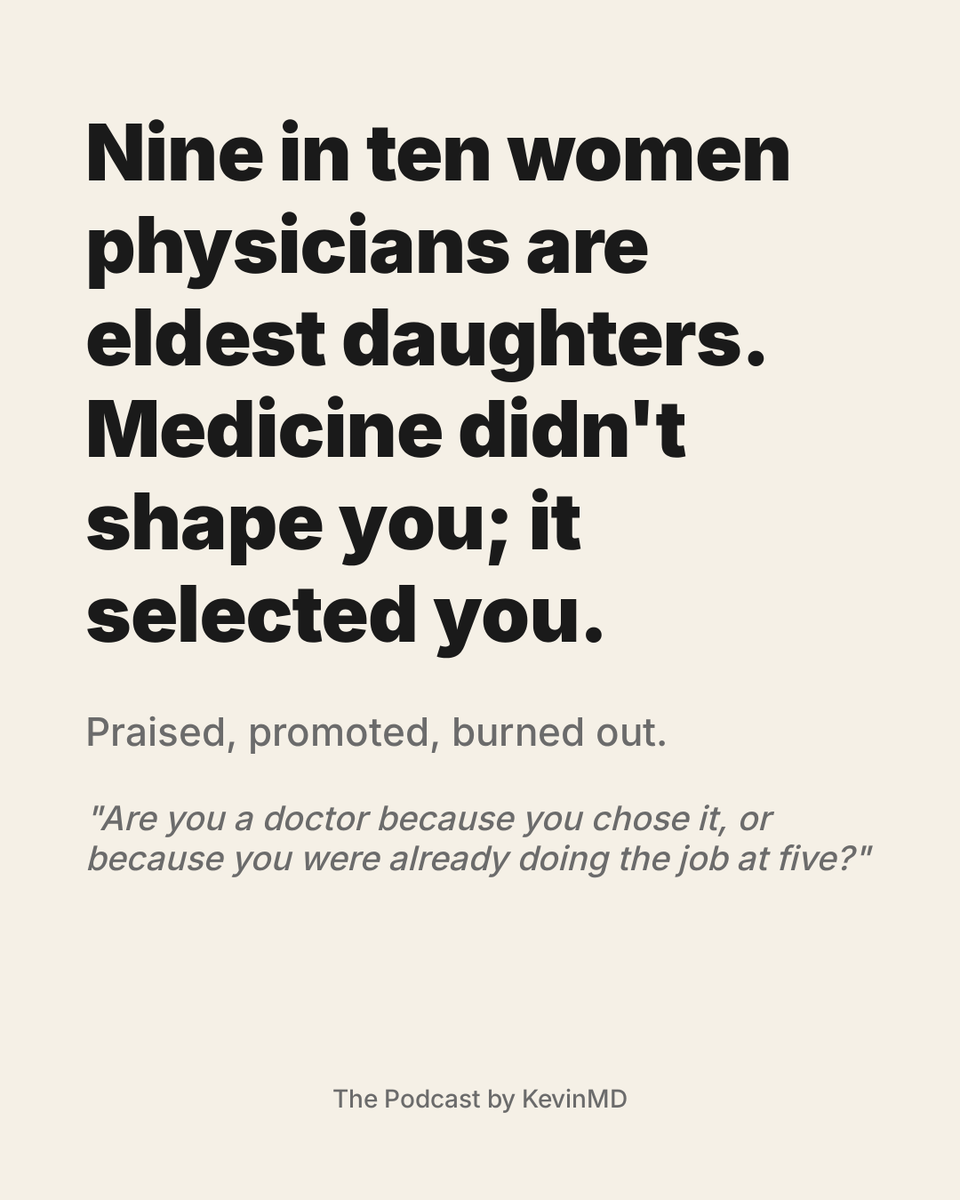
85 to 90 percent of women physicians are eldest daughters.
That is not a coincidence. That is a pipeline.
Eldest daughters are trained, before age five, to over-function. They take on a parent's worry. They organize the family. They clean up without being asked. They do not ask for help, because they were rewarded their whole childhood for not needing any.
Then they walk into medicine.
A career that demands hyper-responsibility, hypervigilance, perfectionism, and silent sacrifice does not have to ask these women to give those things. They were giving them before they could read.
The system is not stumbling into a burnout problem. The system is recruiting from a pool of people whose entire childhood was a training program for it.
This is what pediatrician and certified coach Jessie Mahoney has been finding when she asks the room. In every group, in every retreat. Maybe one or two women are not eldest daughters. The rest have been carrying something since before they could spell their own name.
Most of those women blame themselves. "Why don't I have boundaries?" "Why do I over-function?" "Why can't I delegate?"
Because at five years old, your family rewarded you for over-functioning. Because every teacher praised you for it. Because the medical training system selected for it. Because every job since has reinforced it. The pattern is older than your medical degree by twenty years.
The other piece nobody names: by the time these women are in their fifties, they are carrying eldest-daughter responsibility for aging parents AND running a department as chief AND running a household. The role does not retire when the children do. It just compounds.
Jessie's reframe is the part worth bookmarking.
The "hero" framing is the trap. Eldest daughters were made the savior of the family before they could read. Then medicine made them the savior of the patient. Then the department made them the savior of the team. At every stage, they learned that if they did not do it, terrible things would happen and it would be their fault.
Awareness is the first move. Non-judgment is the second. Excellence is not doing everything yourself. Excellence is letting other people do their jobs.
You are allowed to gift some of it back. You can ask your siblings to carry the aging parent. You can let your medical assistant do the medical assistant's job. You can stop covering the gap that nobody actually asked you to cover.
Most eldest daughters in medicine have never asked for help. When they finally do, they discover people are willing to help. The asking was the whole obstacle.
Listen to the full conversation on The Podcast by KevinMD. Link in the replies.
What is the one task you have been carrying for your family or your team that no one ever actually asked you to carry?
#ThePodcastbyKevinMD
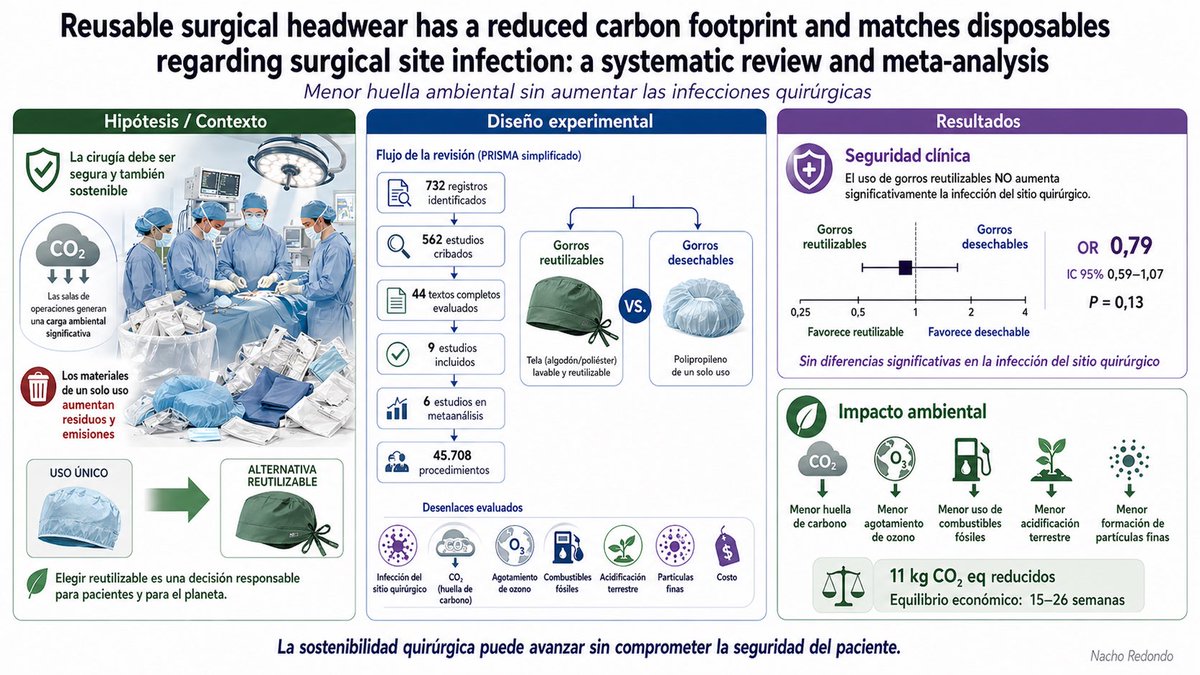
Usar gorros quirúrgicos de tela reutilizables es seguro: este metaanálisis con 45.708 procedimientos no encontró más infecciones quirúrgicas frente a los desechables. Además, reduce impacto ambiental 🌍🏥
DOI: https://t.co/jRPnSyWQsq
#Sostenibilidad#Cirugía#Anestesia
The CVP Waveform
a → c → x → v → y
a = atrial contraction
c = tricuspid valve bulging into the RA (RV contracts)
x = RV contracts downward (pressure drop)
v = preload filling the RA (early preload)
y = tricuspid opens → early RV diastole
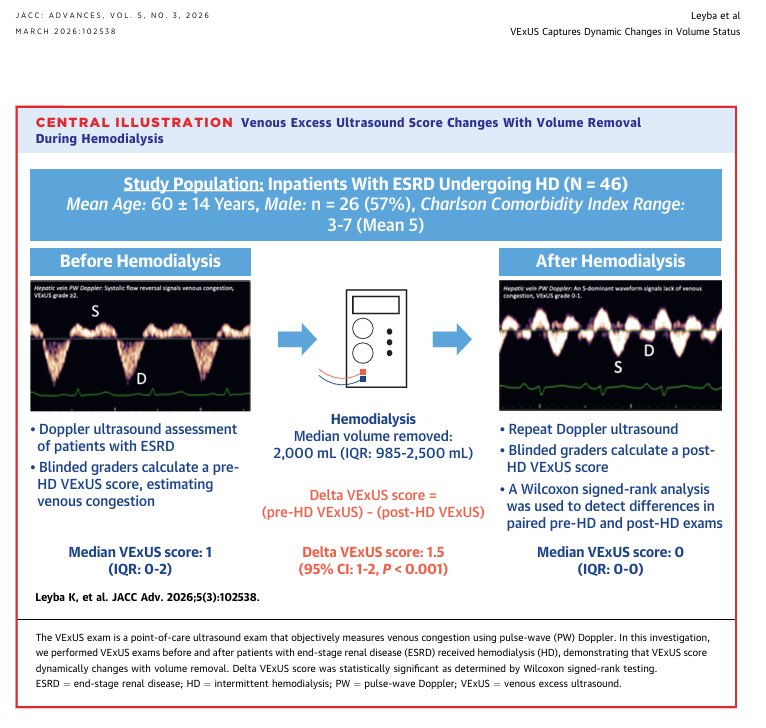
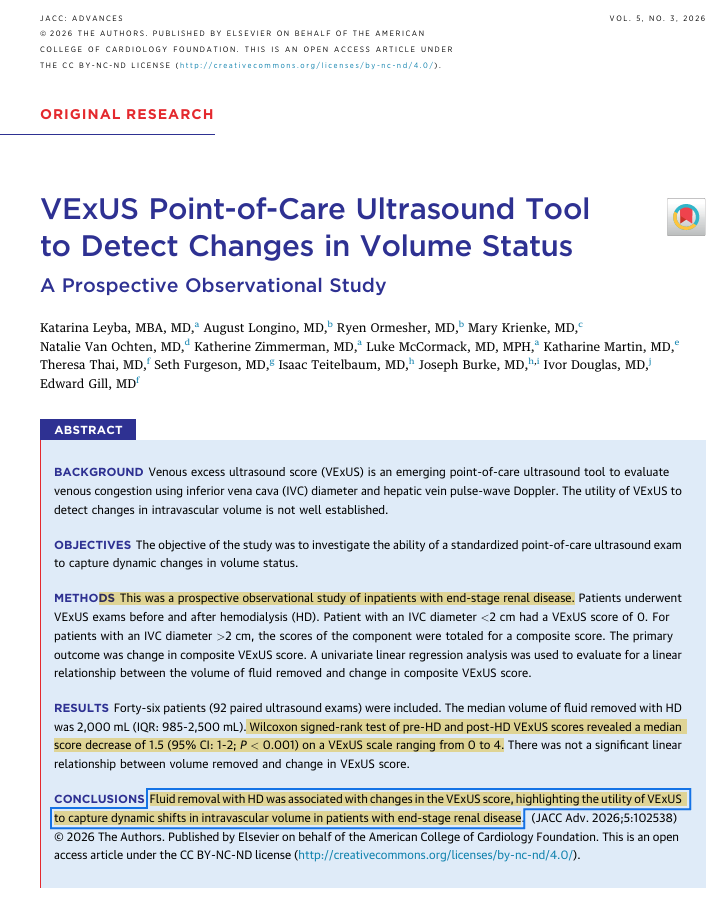
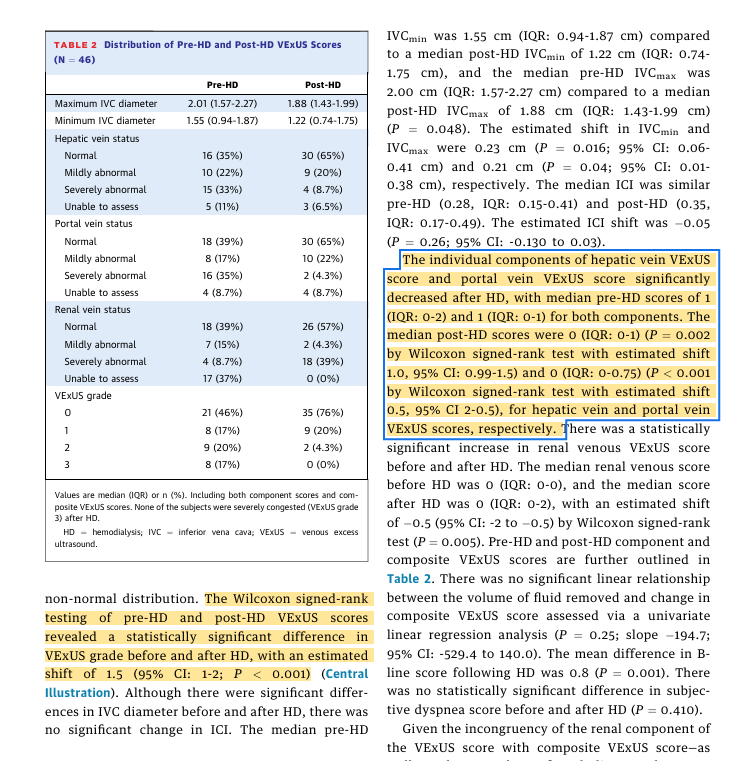
Queda demostrado que el cambio en el ranking obtenido por protocolo #VeXuS tiene correlacion con el volumen de liquido en el cuerpo del paciente.
https://t.co/nvqk04JFVn
Marzo 2026.
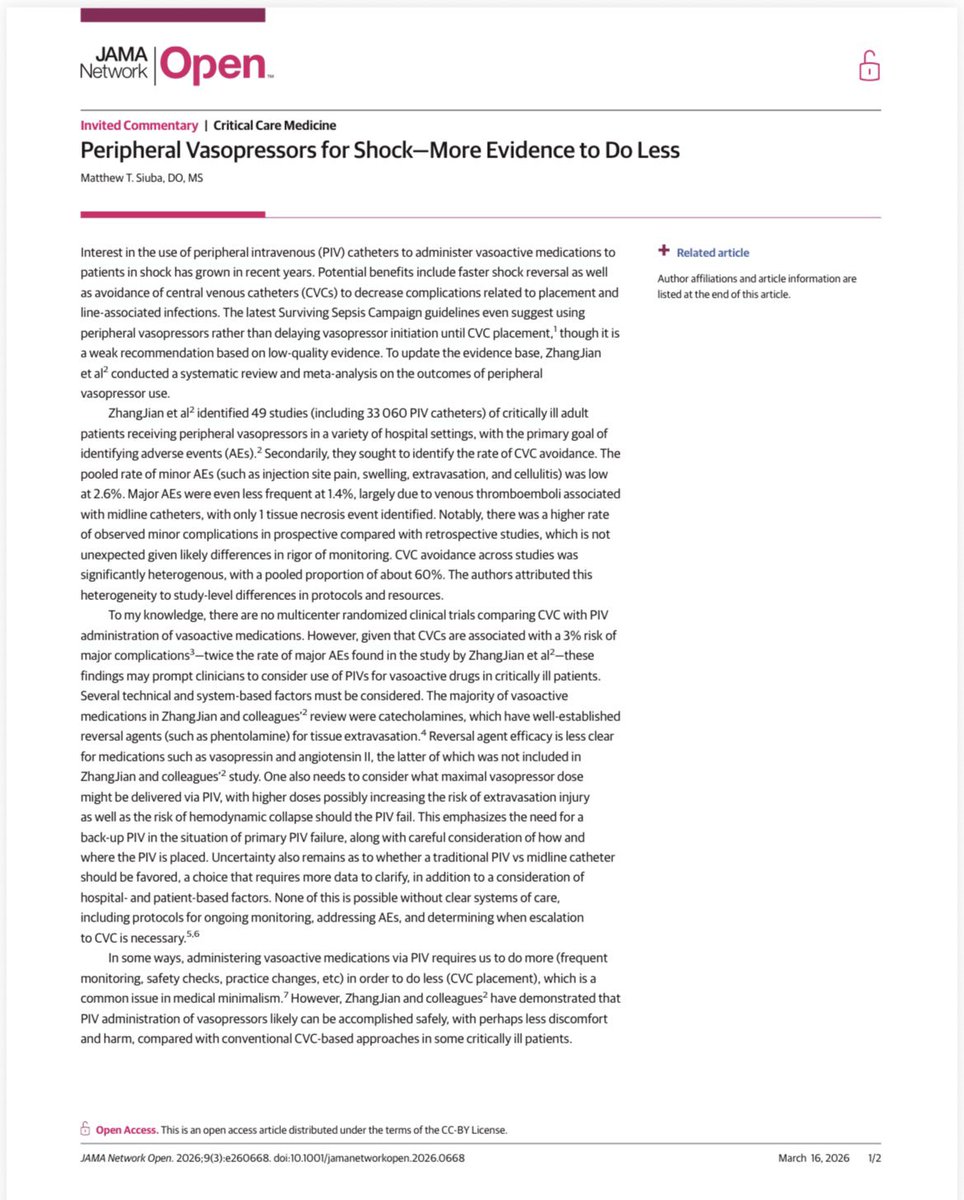
Si en un servicio de Urgencias te quieren poner un Catéter Venoso Central porque necesitas Norepinefrina, abunda la ignorancia y las manos calientes
Si un Intensivista te exige que un paciente que va a ingresar lo entregues con un Catéter Venoso Central porque tiene Vasopresores, es un inepto
https://t.co/xr4BhcNUvA
La clasificación de Guedel no define por sí sola la profundidad anestésica en el siglo XXI, pero sigue teniendo un gran valor clínico y docente. Nos recuerda que, incluso con monitores avanzados, la clínica manda y saber leer al paciente es clave #Anestesia#Monitorización
🌟 De PECEM a especialista en Medicina Interna: "No pierdan de vista aquello que existe más allá de la medicina: familia, amigos y espacios personales son fundamentales para mantener el equilibrio". Dra. Dheni Fernández continúa su formación en Nefrología. #GacetaFacMed https://t.co/U4eJF4APuq
Manifestaciones Neurológicas de Desequilibrios Renales y Electrolíticos 🧠🫘
🔰📚American Academy
of Neurology 2026
doi: 10.1212/cont.0000000000001657
Enlace a Artículo Completo🆓👇🏻✅
https://t.co/xumUMHaxVK
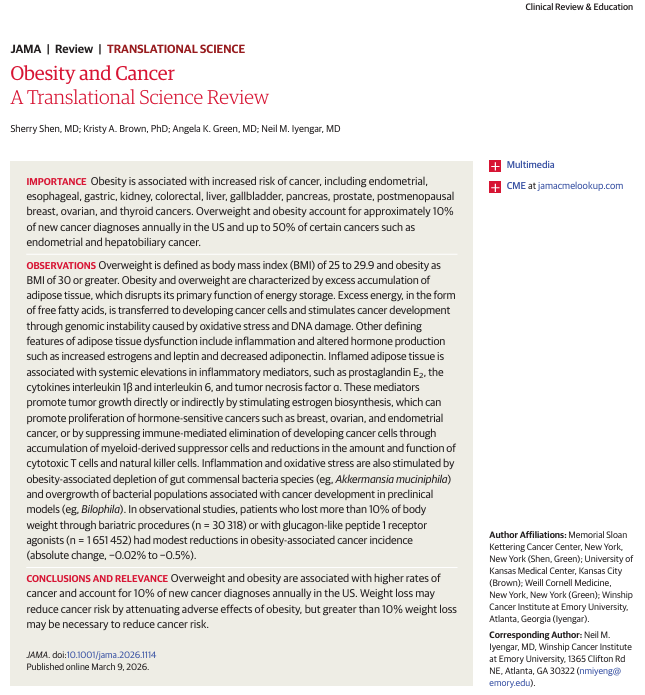
🚨 Fantánstico Review en JAMA (publicado HOY) que destapa cómo la obesidad impulsa el cáncer a nivel molecular. 🎗️⚖️
El exceso de peso no es solo "grasa extra": el tejido adiposo se vuelve inflamatorio y hormonalmente "loco", alimentando tumores. 🧬🔥
📊 Datos crudos:
Representa el ~10% de TODOS los nuevos cánceres diagnosticados cada año en EE.UU. Hasta 50% en tipos como endometrial, hígado, páncreas, etc. 📉
🔍 Mecanismos clave que revelan que la Inflamación crónica → aumenta citoquinas (IL-6, etc.) que promueven crecimiento tumoral.
Alteraciones hormonales → estrógenos elevados y leptina que estimulan proliferación.
🦠Microbiota alterada → pérdida de bacterias protectoras como Akkermansia muciniphila. @SEMicrobiologia
Supresión del sistema inmunitario → menos T cells y NK cells que eliminan células cancerosas.🏹
💊 La Cirugía bariátrica y agonistas GLP-1 (como Ozempic/Wegovy) reducen el riesgo al bajar de peso. Pero para impacto real: >10% de pérdida de peso es el umbral clave. 🏃♂️🥗💉
(No he visto menciones a grants, equity, patentes o consultorías directas de fabricantes de agonistas GLP-1 o fármacos para obesidad en la revisión).
La obesidad es prevenible (en la gran mayoría de casos) → ¡moverse, comer mejor y controlar el peso salva vidas! 👇
#Obesidad #Cáncer #Prevención #JAMA #Salud #Medicina #Bienestar #Ciencia #GLP1 #PérdidaDePeso
El paper aquí ⬇️ https://t.co/jKC0EPXC7w