tldraw offline + Codex is such a handy combo.
Sketching out ideas visually while working with Codex feels like a really nice workflow.
Still exploring 👀
cdx-chores v0.2.1 is out! 🧹
Just a little housekeeping:
A smaller dependency footprint, a built-in DOCX reader replacing Mammoth, XML handling updates and fixes, and a Codex SDK update to v0.163.0
Nothing groundbreaking.
Just routine maintenance.
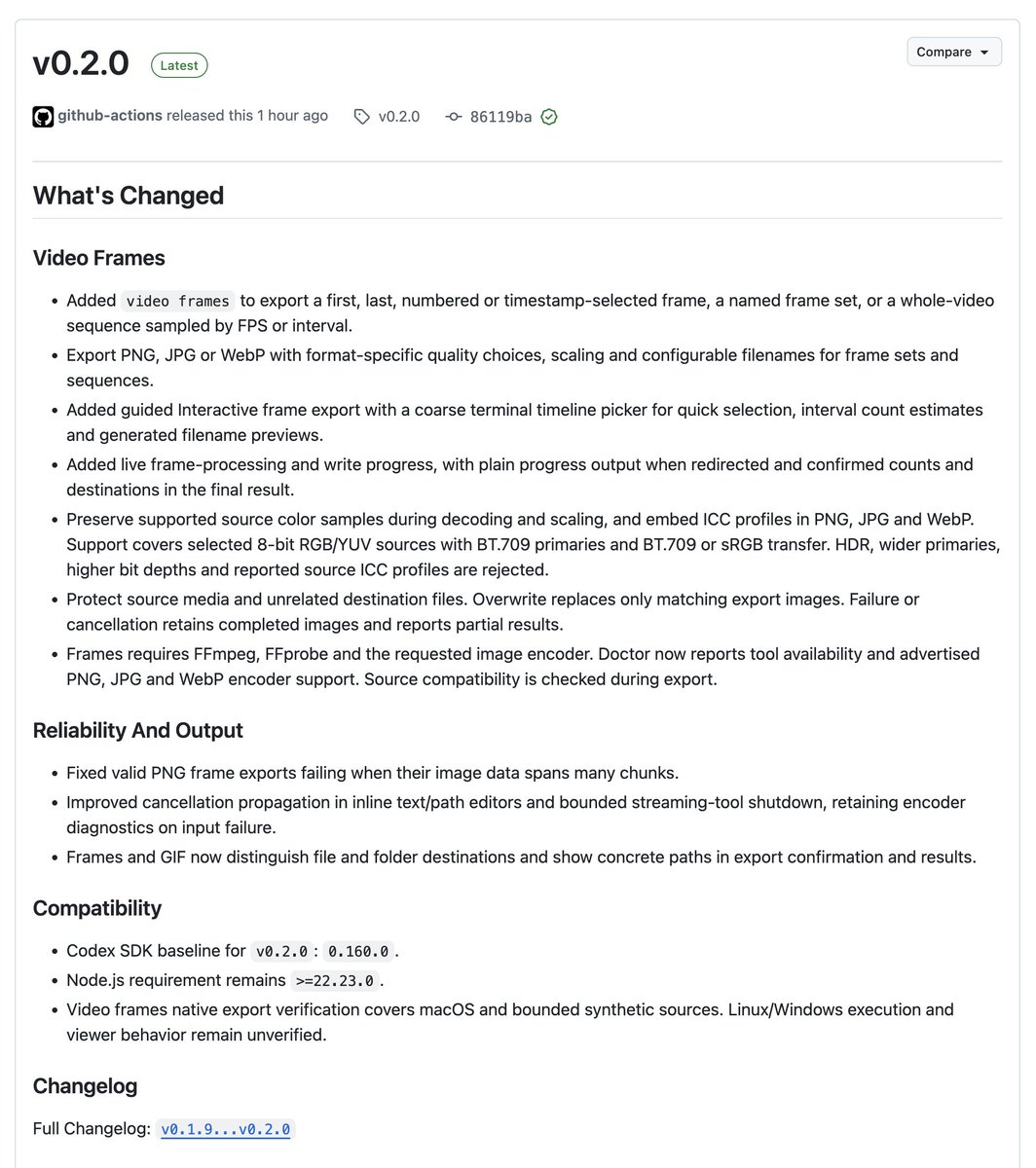
cdx-chores v0.2.0 is out 🎉
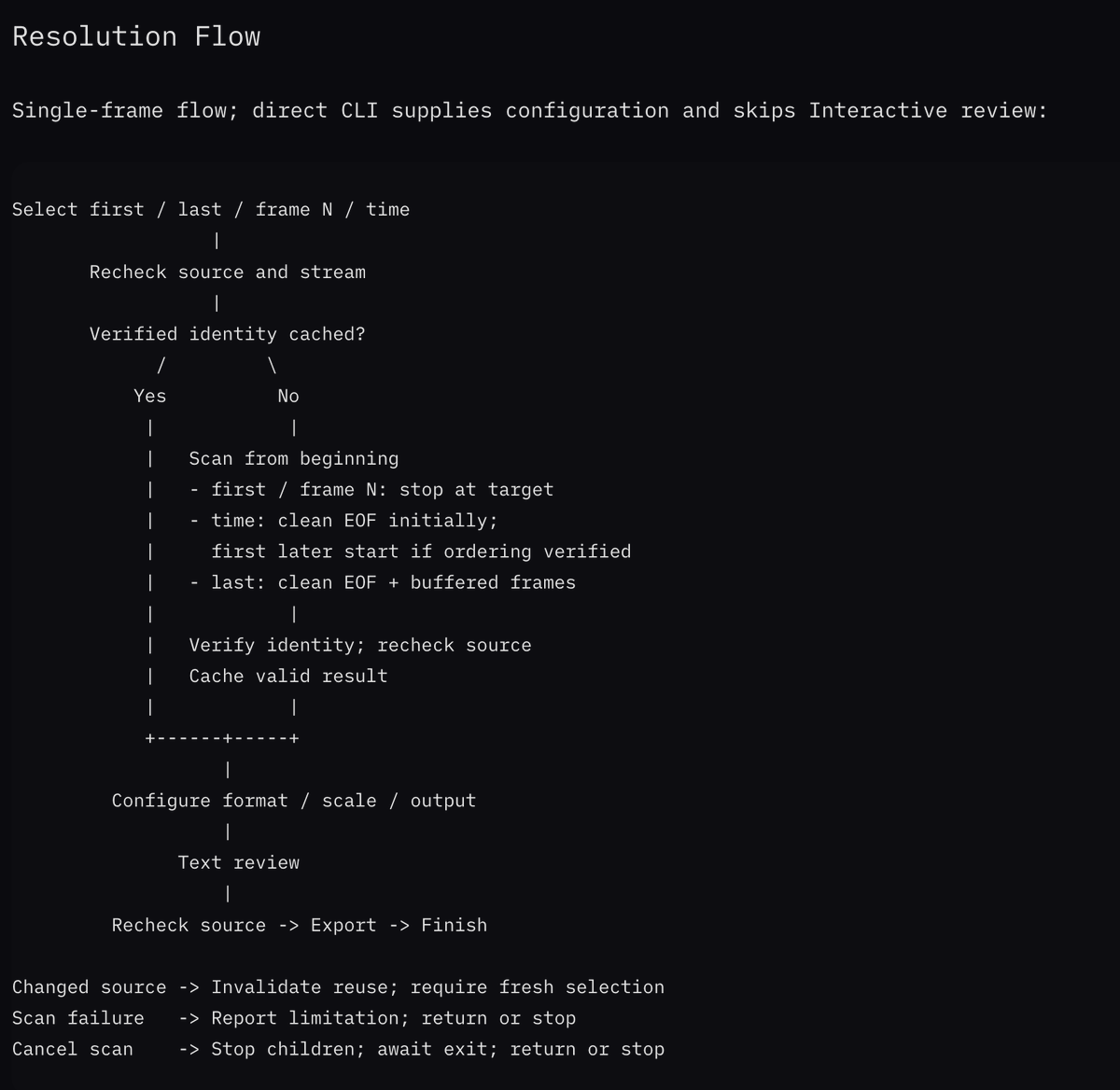
New feature: `video frames`
Pick by timeline, frame number, or timestamp, or export sequences by FPS/interval.
Now built on Codex SDK 0.160.0
PNG | JPG | WebP
Some cdx-chores v0.2.0-canary.x progress:
v0.2.0-canary.2 is already out with Codex SDK 0.159.2.
So gpt-6.1-sol is now supported.
Still working on a new feature for v0.2.0.
And actually, this one doesn’t require codex-assistant.
Anyway, still struggling with the research doc and figuring out the flow… 🫠
A tiny demo of what I could do
with custom scripts in the tldraw Offline app 👀
Really cool to see it in action.
→
The model images in this demo were generated with GPT-Image 2.5.
🚀 cdx-chores v0.1.9 is out!
This release brings Markdown PDF improvements:
- New page-information controls for Codex Assistant -- page numbers + repeating headers/footers
- Improved Project cover handling
- Fixes for literal $ text in covers
Also updated to Codex SDK 0.156.1, with support for the new model picker.
The Markdown PDF guide has been expanded with the new Codex Assistant page-information workflow and configuration details.
More PDF control, directly from the interactive assistant.
@EgeMustafaCelik I think agents can probably give you some good answers on this too. Thanks for the discussion. Hope that gives you a few more directions to explore!
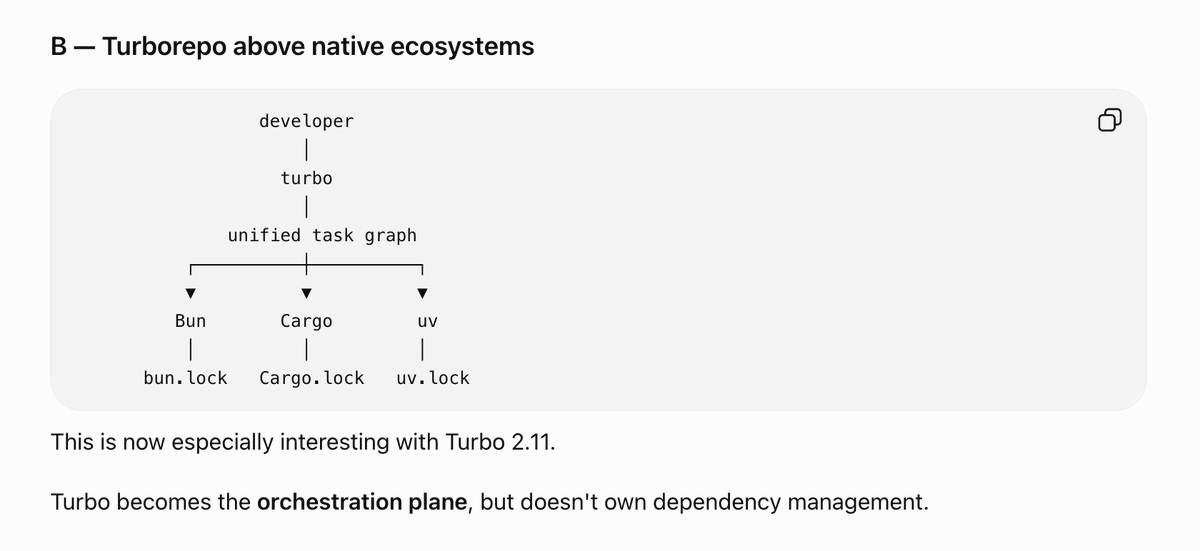
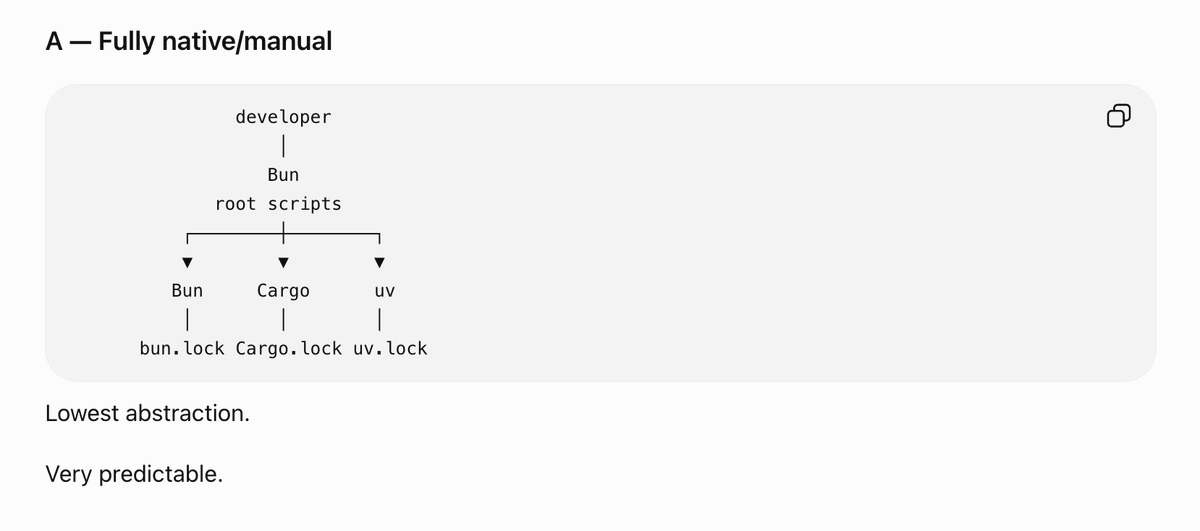
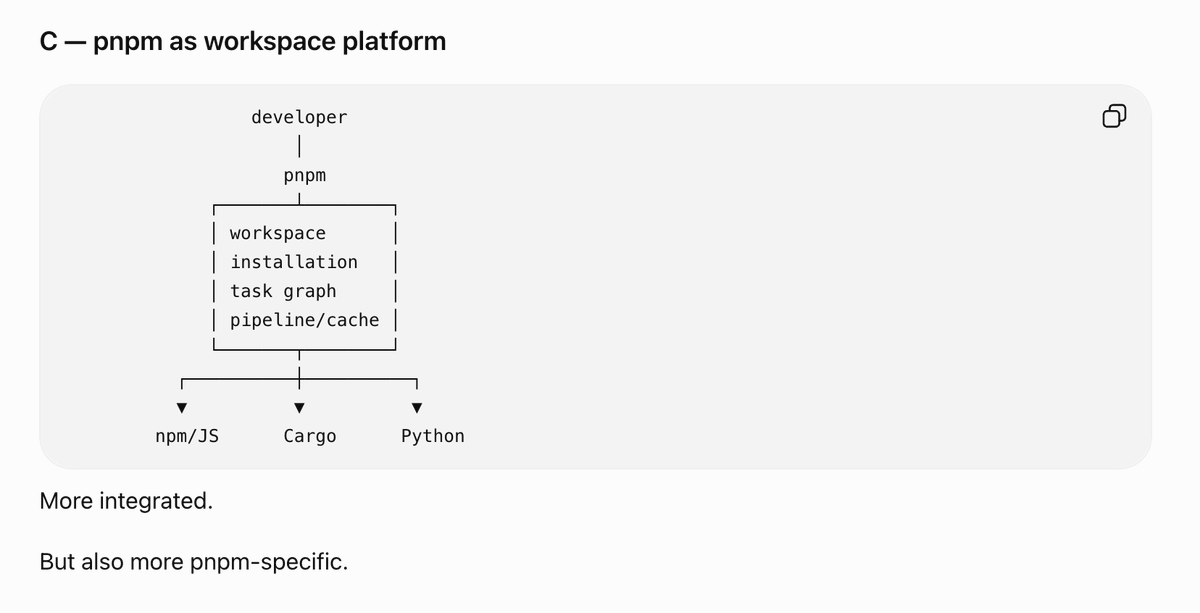
Been thinking about `multi-langs` / `polyglot` support in modern dev tooling lately.
Turborepo, pnpm, Bun, Cargo, uv… really interesting to see how differently they approach JS/TS + Rust + Python + Go workflows.
Appreciating the different approaches, and all the work behind them.
Screenshot: part of a comparison I asked ChatGPT for, not the full context.
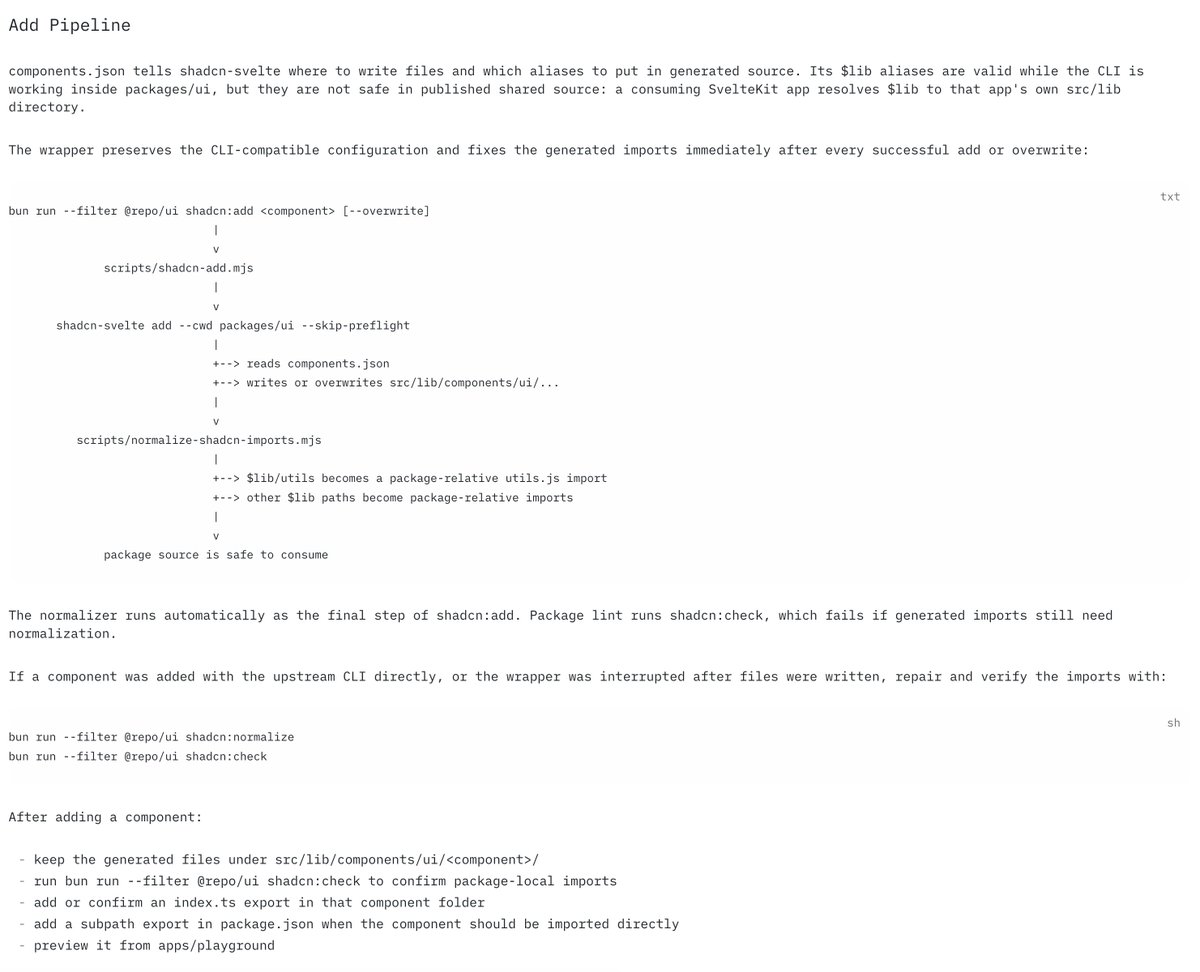
Worked with ChatGPT (Codex) on improving our shadcn-svelte workflow in a Turborepo.
I ended up adding a small post-processing step after shadcn add that rewrites generated `$lib` imports into package-relative imports, making the shared UI package safe to consume across apps.
It's a small addition, but it makes the workflow much cleaner 👀
@EgeMustafaCelik I haven’t explored it deeply yet, but shared UI components and running all the apps together are useful. Having the apps talk to each other locally also makes it easier to review the actual behavior. Still exploring this part, so hard to say much more yet :P
@EgeMustafaCelik Nothing fancy. With Turborepo, I’d mostly want a more structured web-app workflow. The custom scripts layer would still be there, especially for quickly mixing JS/TS and Python around things like Cloudflare Workers.
@EgeMustafaCelik Still case by case for me. Agents handle the env glue well, but custom workflows usually still need a manual scripts layer as the source of truth. That’s why I’m curious to try Turborepo next. For a quick scratch project, bun + cargo + uv works well.
@EgeMustafaCelik Mostly the env/path glue. I usually keep a custom scripts folder for common chores, so they’re easy to invoke from package[.]json or notebooks. The first notebook cell usually normalizes the relative paths. Btw, agents are also pretty good at handling the env/path headaches.
@EgeMustafaCelik The tooling path, for me. I’m on bun + cargo + uv: bun orchestrates commands, Rust handles heavy compute through an internal CLI, and Python integrates those results for visualization. I’ve noticed pnpm pipelines too, but Turborepo would probably be my next experiment.