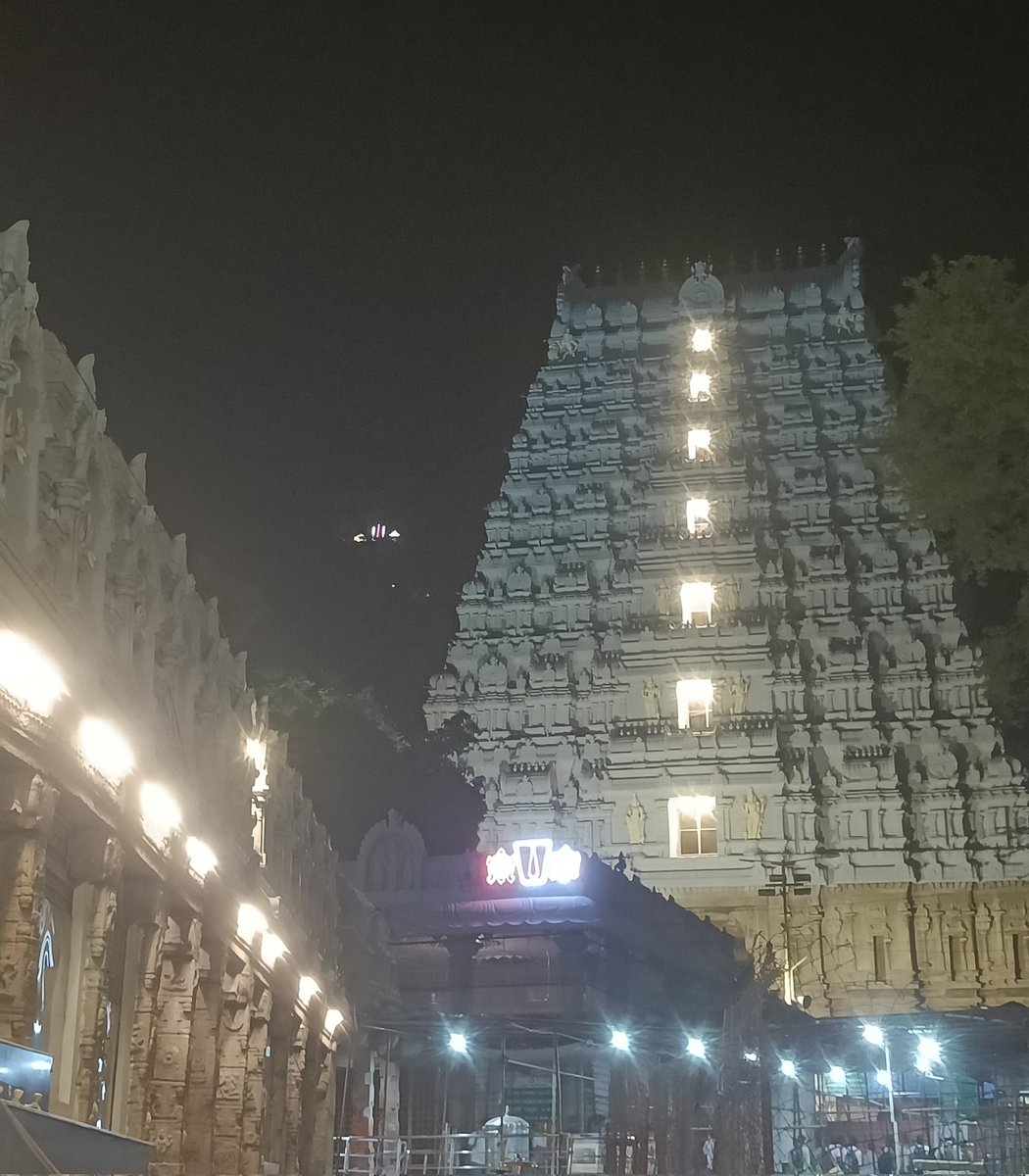
@nameless_mp4_ India is a third world country not because we lacks money to modernize but because Indians waste their hard earned money on things that give us zero returns in the future
Georg Bühler's Indische Palaeographie, the author explicitly classifies the script as a shared regional type and proves its dual origins by mapping it simultaneously to both Western (Kannada) and Eastern (Telugu) kingdoms across three historical stages
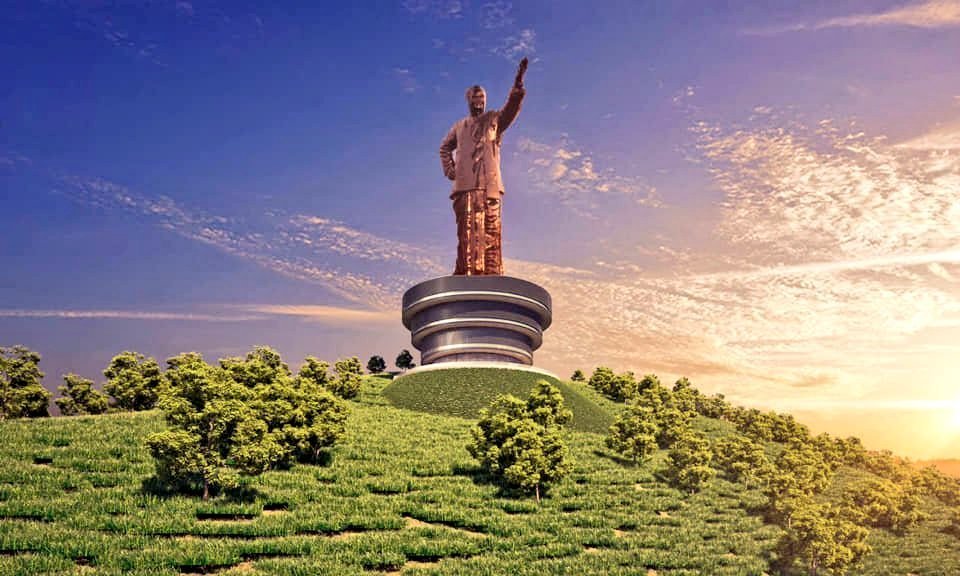
🚨 The proposed NTR statue-and-memorial project in Amaravati is reportedly estimated at ₹2,500 crore.
The project is reportedly included in AP’s proposal for additional loans from the World Bank and ADB.
#AndhraPradesh#Infrastructure#India
Finially the project moving forward
Andhra Pradesh has allotted 4,950 acres to BARC (Bhabha Atomic Research Centre) for this research facility.
The facility will serve as a national powerhouse for advanced nuclear research and development (R&D), clean energy, high-performance computing, advanced materials science, chemical engineering, and isotope applications, with a primary focus on nuclear research.
@Mitrarshi Current genetic data doesn't say anything as such.
Even most of the castes in the North contain lower Steppe ancestry & lower R1a presence, yet they speak Indo-Aryan. That's because of language shift due to elite dominance.
@Mitrarshi Language shift doesn't need any matrimonial alliances. People shift their languages to the dominant one.
The shift of many North Indian mother tongues to Hindi did not happen because of Hindi fathers marrying non-Hindi mothers and their children learning Hindi.
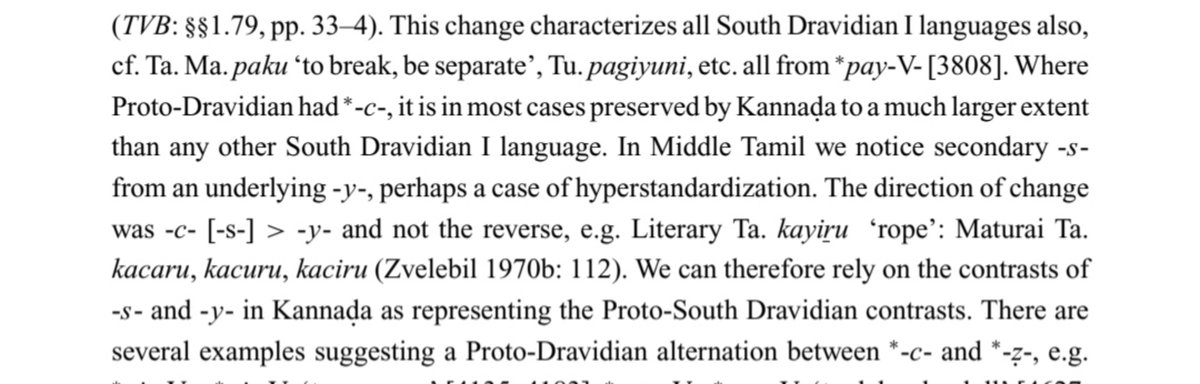
@avzaagzonunaada Telugu attests -c- > -s- > -h- > -y-
paciṇḍi > pasiṇḍi > pahiḍi > payiḍi (>payḍi) = 'gold'.
It could also be possible to have -h- in some early Tamil dialects, but unattested due to orthographic limitations. (-g- > -h- lenition is not represented in Tamil).
The lenition path of -c- > -h- > -y- is widely attested across most Dravidian languages, including Tamil.
It also explains the St. Tamil peyar, which comes from *pecar (Ka. hesaru).
The most despicable people aren't Dravidian linguists, rather the Lemurian Dumbtards.
Saying reconstructed form is not the early Tamil form is already flawed by attested evidence.
Most despicable people are Dravidian Comparitive linguists. The entire methodology is flawed to substantiate this the supposed Dravidian scholars themselves have not failed to acknowledge the ambiguity within their derivations.
Now coming to Tamil, to say It went successive lenition : -c- > -h- > -y- is again wrong. What is the attestation for these change in Tamil. ?!!
The oldest forms are already with -y- as in Mayir , Uyir and so on. If the supposed change happened there has to be an attestation for this. But nothing of this sort.
Secondly in Tamil the -h- glottal fricative is completely absent. Thousands of lines of Sangam poems rejects it completely. It is absurd to claim it passed through , when core phonemic structure of the language has systematically rejected it.
The actual path is intervocalic glide (-y-) to a sibilant or palatal fricative (-s- or -c-) phenomenon known as fortition (hardening). Colloquial/rural Tamil substantiates it.
Lastly, you cannot assume variable vowel as it will totally destroy the semantics in Tamil.
@SanKarNaata@ANONYMO52826141 The script of early Chalukyas was already a part of the same Deccan comtinuum. There is no recorded instance of Telugu getting a completely new script being employed. That's because, Chalukyas standardized what was already the norm over the Deccan writings. @grok
Correct. Scripts evolve through gradual regional refinement of shared southern Brahmi forms rather than sudden invention by any single dynasty. Kadamba and Chalukya periods marked clear standardization of the rounded styles into the common precursor used across Deccan language areas, building on the earlier continuum that included Bhattiprolu variants. Divergence came later.
@SanKarNaata@nameless_mp4_ There wasn't any adoption. It was a shared script with minimal variations. Go and look for yourself, except for maybe a handful scribe level differences, you'll see no major difference in letters of Kadamban Inscriptions or Renati Choda Inscriptions or Vishnukundin Inscriptions.
@SanKarNaata@nameless_mp4_ The Keesaragutta label. There existed a script continuum which was formalised. That is what educated Historians have established, LLM kangers won't understand it. There was no adoption of anysort. Telugu had a script before Chalukyas set foot, the same script was formalized.
@SanKarNaata Lol. Incompetecy against migrants mean, you cannot compete for jobs in your state and then lose them to migrants. Not about the low class goonda-giri you do. That's your most capable highest-level only known profession though.
This conventional Kadamba script source idea for Telugu & Kannada should be replaced with the more neutral and accurate term of Vishnukundina-Kadamba script or Old Telugu-Kannada script, just like how it is correctly done in calling 'Telugu-Kannada' script.
@SanKarNaata Dbooks jaathi without any soft-power, incompetent against migrants and frustrated need something to claim and feel blissful.
Ignorance is bliss. Jai Chitranna!
The claim that Satavahanas were Kannadigas is a minority view, not mainstream consensus.
Their origin is debated: early inscriptions and capital Pratishthana point to western Deccan (Maharashtra); Puranas link them to Andhras (eastern Deccan). A few scholars like V.S. Sukthankar suggested Bellary (Karnataka) based on place-names like Satavahanihara, but this is challenged by lack of early evidence there.
Official language was Prakrit (inscriptions, coins, Gatha Saptasati). They ruled parts of modern Karnataka but left no Kannada records. Full Kannada inscriptions appear centuries later (c. 450 CE). Applying modern ethnic labels to this multi-regional Deccan dynasty is anachronistic.