As a physician and the chief medical officer of Hospice Buffalo, Chris Kerr has seen his patients experience end-of-life dreams and visions for nearly 30 years.
He has made a mission of educating the public about the value of deathbed dreams. https://t.co/QS6tch9Kkg
139 kids who'd had COVID. Half of them turned up with autoantibodies - antibodies that attack the body's own tissues. In uninfected kids, only 14%. And it barely mattered whether the child had been hospitalized with pneumonia or had next to no symptoms. 🧵
🚨BREAKING: ICE and DHS lied about ANOTHER “weaponized vehicle” incident.
Earlier this week, ICE claimed that during a “targeted vehicle stop” in New Jersey, an “illegal alien” weaponized a vehicle against an ICE agent, striking the officer and causing the agent to fire their weapon.
ICE said the operation was a targeted arrest of Friedrich Castillo-Ormeno, a Peruvian immigrant, who is violating a final order of removal.
There’s just one problem…
Castillo-Ormeno had already self-deported THREE MONTHS earlier.
DHS had already verified his departure, and confirmed he was back in Peru, even paying him through the CBP Home program.
So, that means… ICE put out a statement saying they were conducting a “targeted vehicle stop” for a man the government, itself, had already confirmed was not in the country…
Then tried to paint him as a criminal, even though he had complied with his final removal order, and is no longer in the country.
But that’s only the first part of this issue…
If ICE agents were conducting a “targeted traffic stop to arrest Friedrich Castillo-Ormeno.”
When…
-Friedrich Castillo-Ormeno was not in the country.
-and the van was not registered to Friedrich Castillo-Ormeno.
Then why did agents surrounding a random van, on a public roadway, and demanding the driver roll down his window?
Because the Fourth Amendment exists…
And it’s becoming harder to ignore the patterns surrounding ICE agent’s use of deadly force…
The agents are usually targeting the wrong person… they aggressively surround them, and escalate before they’ve explained what’s happening.. causing them to attempt to flee.
Imagine being pulled over, surrounded by masked, armed agents, told to comply, threatened with having your window broken… all while still not being given a clear reason for the stop.
That’s a situation that causes panic… it causes fight-or-flight.
And it’s exactly why those constitutional limits exist in the first place.
So why aren’t we holding these agents accountable?
Scientists have identified a reversal of the long-standing Flynn effect—the roughly 200-year trend of rising average intelligence (measured via IQ and cognitive tests) across generations.
For the first time in modern recorded history, Generation Z (born roughly 1997–2012) shows lower performance than previous generations in key cognitive domains, including attention, memory, literacy, numeracy, executive function, problem-solving, and general IQ—despite spending more years in formal education than ever before.
Neuroscientist and educator Dr. Jared Cooney Horvath, PhD, MEd, testified before the U.S. Senate Committee on Commerce, Science, and Transportation on January 15, 2026, highlighting this shift. In his written testimony, he stated that cognitive development in children across much of the developed world has stalled or reversed over the past two decades, with declines evident in international assessments (e.g., PISA, TIMSS) and other large-scale data starting around the mid-2000s and accelerating post-2010.
Horvath attributes the primary driver not to reduced schooling, but to the widespread integration of digital screens and educational technology (EdTech) in classrooms. He argues that human brains evolved for deep, focused learning through face-to-face interaction and sustained attention, not fragmented skimming or constant task-switching encouraged by devices.
Key points from his testimony include:
- Teens now spend over half their waking hours on screens, with significant portions in school involving computers or tablets—often leading to off-task behavior and shallower processing.
- Evidence from meta-analyses and national/international studies shows a consistent pattern: higher classroom screen exposure correlates with weaker outcomes in reading, math, science, and higher-order reasoning.
- Digital tools may aid narrow, repetitive skill practice in controlled settings, but in core academic contexts, they tend to reduce depth of understanding, retention, and critical thinking.
Horvath describes this as a "structural mismatch" between human cognition and how digital platforms are designed (to capture and fragment attention), warning that unchecked EdTech adoption risks long-term harm to workforce skills, innovation, and societal reasoning.
[Horvath, J. C. (2026). Written testimony before the U.S. Senate Committee on Commerce, Science, and Transportation. U.S. Senate]
A Japanese immunologist spent 20 years proving that the chemicals trees release into the air walk into your bloodstream, hunt down your stress hormones, and arm your immune system in ways no therapist or pharmaceutical has ever matched, and most of the data has been sitting in Japanese medical journals for two decades waiting to be translated.
His name is Qing Li.
He is a clinical professor at Nippon Medical School in Tokyo and the president of the Japanese Society of Forest Medicine. The Japanese government has been funding his research since 2004, and the body of work he has produced is the reason forest bathing is now an officially prescribed clinical therapy in Japan and Korea.
The story actually starts in 1982, when the Japanese Ministry of Agriculture, Forestry and Fisheries coined the term shinrin-yoku to describe the practice of slow, mindful walking in a forest. They did it for a practical reason.
Japan was urbanizing fast, stress-related illness was climbing, and the country had thousands of square kilometers of forest sitting unused. The idea was to give people a reason to walk into the trees... They had no idea what was actually happening to the human body during those walks until Qing Li ran the first proper experiment in 2005.
He took twelve healthy adult men on a three-day, two-night trip to a forest park. They walked for a few hours each day. Nothing strenuous. No prescribed routes or breathing exercises. They simply walked slowly through the trees, breathing the air, looking at the forest.
Li drew blood and urine samples before the trip, on the second day, on the third day, on day seven after returning home, and again on day thirty.
The numbers that came back from the lab were not what anyone expected.
The activity of a specific type of immune cell called the natural killer cell, which is the cell your body uses to hunt down cancer cells and virus-infected cells before they can spread, had jumped by roughly 50 percent during the forest trip. The actual number of natural killer cells circulating in the bloodstream had increased significantly.
Three different anti-cancer proteins that those cells produce, called perforin, granzymes, and granulysin, had all risen sharply. And the effect did not disappear when the men went home. The immune boost was still measurable on day seven and was still partially present on day thirty.
Two hours a day in a forest had upgraded the immune system for a full month.
Li ran the same experiment with women a year later and found nearly identical results. Then he ran it with a control group who took a three-day trip through an urban area with the same amount of walking, the same hotel quality, and the same diet.
The urban group showed no measurable change in natural killer cell activity at all. The forest was doing the work, not the vacation.
The mechanism turned out to be a class of airborne molecules called phytoncides. Trees produce these compounds to defend themselves against insects, bacteria, and fungi. Pine, cedar, oak, and cypress trees release them in particularly large amounts, especially in warmer weather and after rainfall.
When you walk through a forest, you are inhaling those molecules into your lungs and absorbing them through your skin, and once inside your body they appear to directly stimulate the production and activity of the very immune cells Li was measuring in his lab.
Roughly 50 percent of the health benefit of a forest walk, according to Li's data, comes from the chemistry of the air itself. The other half comes from what the forest is doing to your nervous system.
This is where it stops being only about the immune system and starts being about stress.
A separate Japanese research team measured cortisol, the body's main stress hormone, in 84 participants across 35 different forest sites. They drew samples before and after a 30-minute walk in each forest and compared them to control walks in matched urban environments. The cortisol levels of the people who walked in the forest were lower than the cortisol levels of the people who walked in the city by a significant margin. Their heart rates were lower. Their blood pressure was lower.
The activity of their parasympathetic nervous system, which is the part responsible for rest and recovery, had gone up. The activity of their sympathetic nervous system, which is the part that drives fight or flight, had gone down.
Then a researcher at the University of Michigan named MaryCarol Hunter ran the cleanest version of this experiment ever done. She recruited participants from a city and told them to take a nature pill three times a week for eight weeks.
They were free to choose the time, the place, and the duration of the nature experience, as long as it was outside, in daylight, and free of phones, conversations, and aerobic exercise. They sent her saliva samples before and after each session so she could measure cortisol changes accurately and rule out the normal daily drop in stress hormones that happens to everyone.
The result was that participants experienced a 21.3 percent drop in cortisol per hour spent in nature, with the biggest payoff happening between minutes 20 and 30 of the walk.
After that, the cortisol kept dropping, but more slowly. The threshold dose for measurable stress relief was just 20 minutes outside in something that looked and felt like nature.
What none of this means is that nature is a substitute for therapy or for medication when someone genuinely needs them. Therapy treats different things than a walk does, and Li himself has been careful in interviews to call forest bathing a complementary intervention rather than a replacement for clinical care.
But what the research has settled is that the human body has a physiological response to being among trees that operates on the same biological systems modern medicine is trying to reach with drugs and clinical protocols, and that response is fast, measurable, and free.
The strangest part of Li's work is the implication he keeps repeating in interviews. The average person now spends more than 90 percent of their life indoors. Their cortisol stays elevated. Their natural killer cells stay sluggish.
Their parasympathetic nervous system rarely gets a chance to take over. The system that was tuned by millions of years of life under a canopy of trees is being asked to run permanently inside a box made of drywall and screens.
Your body has not forgotten what it is supposed to do in a forest. It is waiting for you to walk into one.
Scientists have detected a steady seismic pulse every 26 seconds, first noticed in the 1960s. This “heartbeat” of the planet originates near the Gulf of Guinea off West Africa. Most evidence suggests it comes from ocean waves striking the continental shelf, though some researchers believe volcanic or hydrothermal activity may also play a role. Remarkably, this rhythm has persisted for decades, quietly resonating across the globe.
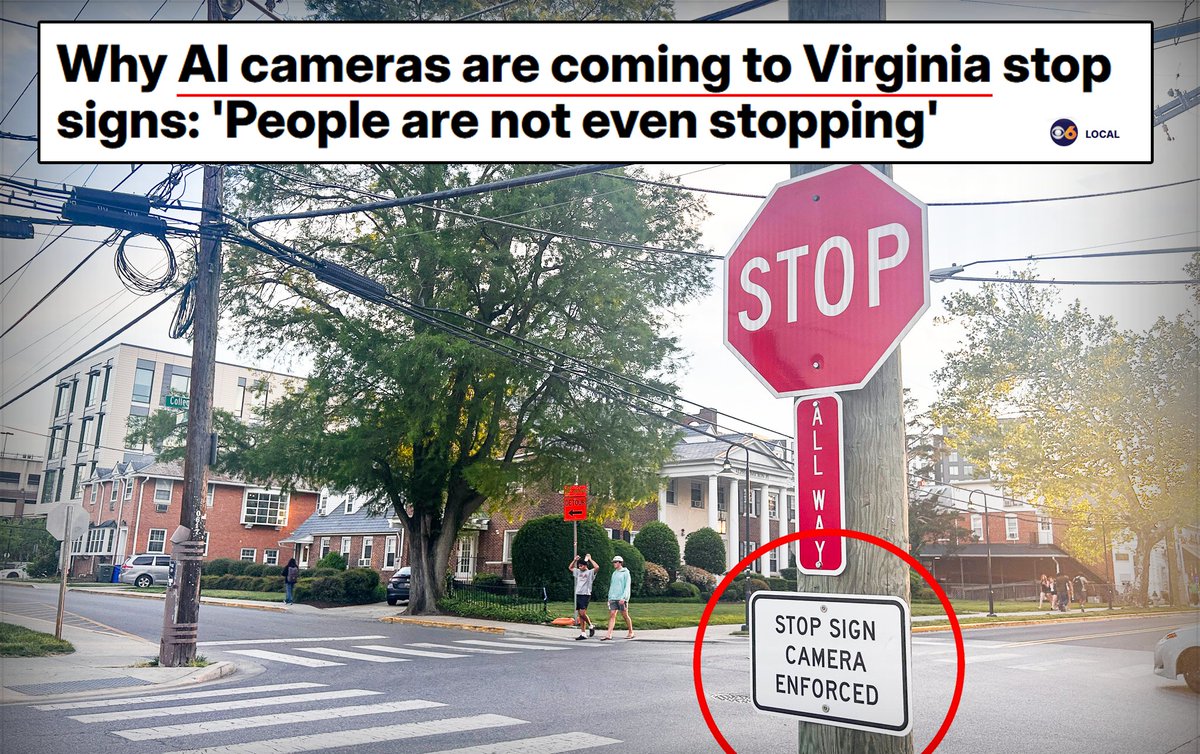
⚠️ Virginia is now rolling out AI‑equipped stop signs.
It will log drivers, and auto‑report to police.
Safety is always the sales pitch.
Do we really want every aspect of our lives to become an AI‑police zone, data‑harvesting checkpoint?
Virginians, stop this madness.
This is why we tell folks to NEVER seek shelter inside a vehicle.
This car near Effingham, Illinois was thrown into a fields, rolled and impaled.
As a last resort, seek shelter inside a ditch and cover your head — but never stay inside the car.
Here's 4 new images you haven't seen. It's been a whirlwind these last 4 days. WAY up close lightning, far lightning with great comps, tower striking lighting, you name it. All this to say that I feel so at ease letting nature dicatate when the moment's just right. When it is, the Bolt Hunter doesn't miss. My affiliate link is here: https://t.co/8rT5qyUCwi
Birds can literally see the Earth’s magnetic field thanks to specialized light-sensitive proteins in their eyes.
Migratory birds possess one of nature’s most remarkable superpowers: the ability to navigate thousands of miles with incredible precision. At the center of this ability is a protein called Cry4 (cryptochrome 4), found in the retinas of their eyes.
When blue light enters the bird’s eye, it triggers a quantum reaction in the Cry4 proteins known as the radical pair mechanism. This ultra-sensitive process responds to the orientation and strength of the Earth’s magnetic field, essentially turning the bird’s visual system into a biological compass.
Scientists believe birds don’t just sense magnetism — they may actually see it. The quantum fluctuations likely appear as subtle visual patterns, shadows, or color gradients overlaid on their normal vision, much like an augmented reality heads-up display.
This extraordinary adaptation allows migratory birds to cross oceans, deserts, and mountain ranges with pinpoint accuracy, relying on the strange rules of quantum mechanics to guide them on their epic journeys.
The coronavirus vaccine reduced the risk of major cardiovascular events linked to covid-19 — strokes, heart attacks, and hospitalization from heart disease — by about 40 percent, according to new research. https://t.co/cQjvi8EMpX
I just wanted to update my resume. Instead, I accidentally proved how a multi-billion-dollar AI tool hallucinates a glass ceiling for women.
I changed a single variable: My name.
Here is what happened when "Jennifer" became "Jeff."
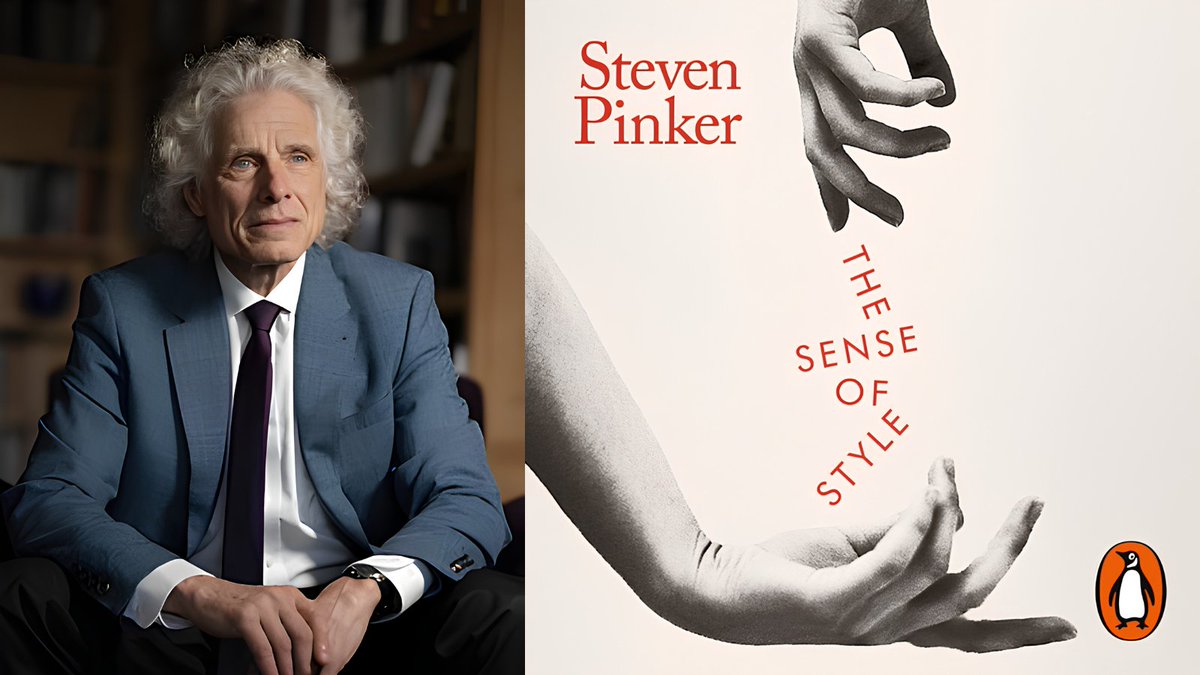
Steven Pinker is a Harvard psychologist who wrote the only style guide based on how the brain actually reads.
Here are 10 writing fixes from "The Sense of Style" rooted in cognitive science, not grammar rules.
1) The curse of knowledge ruins more writing than laziness











![Rainmaker1973's tweet photo. Scientists have identified a reversal of the long-standing Flynn effect—the roughly 200-year trend of rising average intelligence (measured via IQ and cognitive tests) across generations.
For the first time in modern recorded history, Generation Z (born roughly 1997–2012) shows lower performance than previous generations in key cognitive domains, including attention, memory, literacy, numeracy, executive function, problem-solving, and general IQ—despite spending more years in formal education than ever before.
Neuroscientist and educator Dr. Jared Cooney Horvath, PhD, MEd, testified before the U.S. Senate Committee on Commerce, Science, and Transportation on January 15, 2026, highlighting this shift. In his written testimony, he stated that cognitive development in children across much of the developed world has stalled or reversed over the past two decades, with declines evident in international assessments (e.g., PISA, TIMSS) and other large-scale data starting around the mid-2000s and accelerating post-2010.
Horvath attributes the primary driver not to reduced schooling, but to the widespread integration of digital screens and educational technology (EdTech) in classrooms. He argues that human brains evolved for deep, focused learning through face-to-face interaction and sustained attention, not fragmented skimming or constant task-switching encouraged by devices.
Key points from his testimony include:
- Teens now spend over half their waking hours on screens, with significant portions in school involving computers or tablets—often leading to off-task behavior and shallower processing.
- Evidence from meta-analyses and national/international studies shows a consistent pattern: higher classroom screen exposure correlates with weaker outcomes in reading, math, science, and higher-order reasoning.
- Digital tools may aid narrow, repetitive skill practice in controlled settings, but in core academic contexts, they tend to reduce depth of understanding, retention, and critical thinking.
Horvath describes this as a "structural mismatch" between human cognition and how digital platforms are designed (to capture and fragment attention), warning that unchecked EdTech adoption risks long-term harm to workforce skills, innovation, and societal reasoning.
[Horvath, J. C. (2026). Written testimony before the U.S. Senate Committee on Commerce, Science, and Transportation. U.S. Senate]](https://pbs.twimg.com/media/HLLnJasWIAAXKMy.jpg)