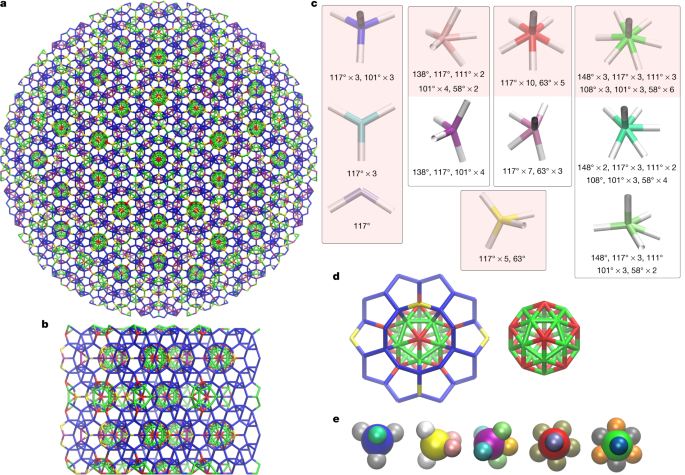
A paper in Nature describes a set of design principles by which colloidal systems can be engineered to exhibit icosahedral quasicrystalline ordering. https://t.co/gMAuJVSvek
Un estudio del #CSIC propone un método para obtener cuasicristales a partir de nanopartículas de ADN.
El trabajo revela que es posible formar cuasicristales icosaédricos, unas estructuras atómicas ordenadas, sin emplear metales.
➡️https://t.co/zLXGwflI57
How to design an icosahedral quasicrystal through directional bonding, by @JonathanDoye
Woah, hang on - what even is a quasicrystal?
Don't worry, all is explained...https://t.co/79dsbZNuvJ
Eva González Noya (@evagnoya) made the key breakthroughs that made this paper possible. In this blog post, she describes the research journey that eventually led to the discovery of patchy particle systems that can form icosahedral quasicrystals: https://t.co/XEdEcLkg65
You can read the story behind our recent work "How to design an icosahedral quasicrystal through directional bonding" in the blog post: https://t.co/bjiRkckzmn
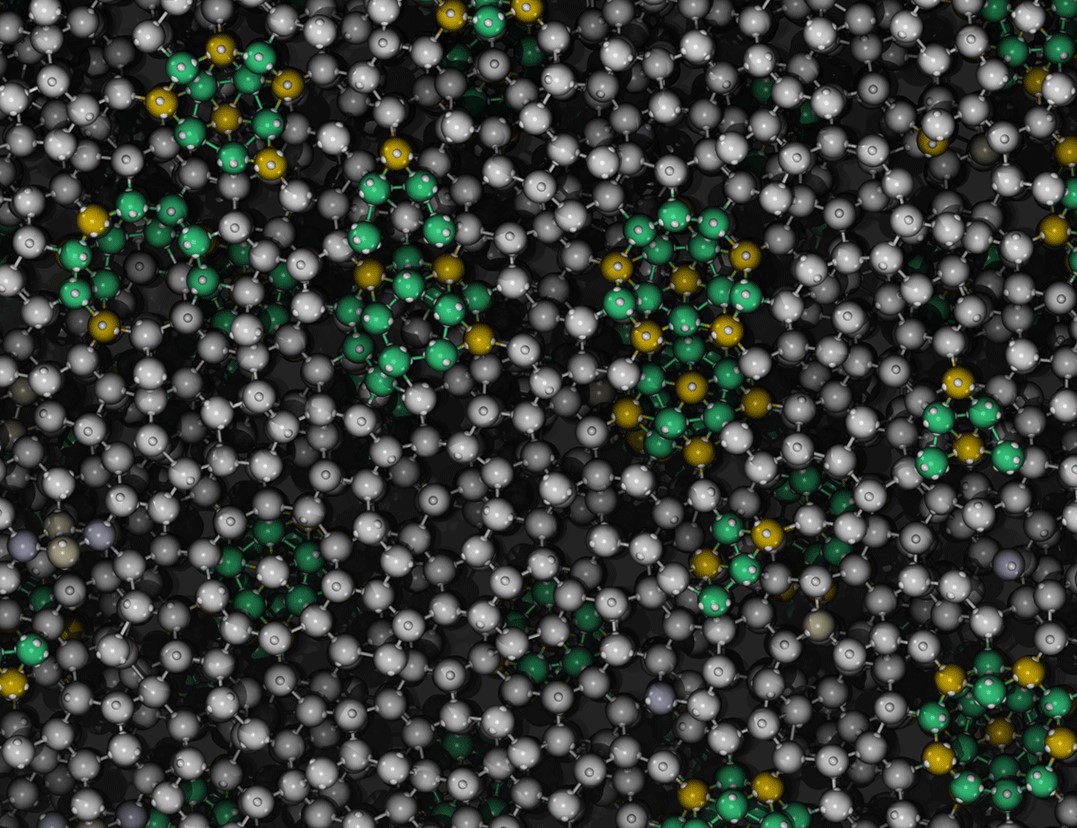
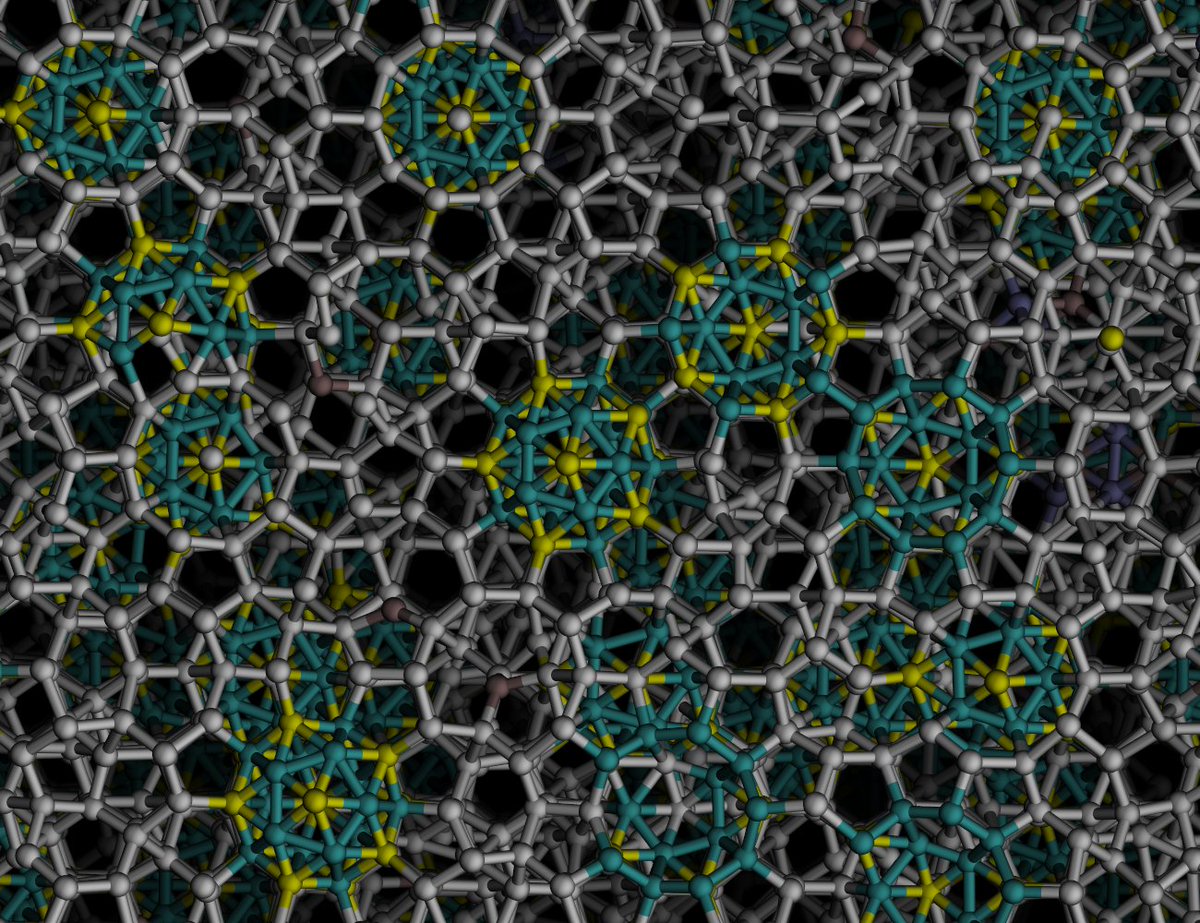
This is a cut through one of the quasicrystals along one of the fivefold axes of symmetry. Notice that all the triacontahedral cluster have the same orientation.
Today in @Nature publish our article that design of icosahedral quasicrystal by directional bonds between colloidal particles. A collaboration between @OxfordU and @Iqfr @CSIC.
Wonderful paper and congratulations !! @JonathanDoye
https://t.co/fB7RxkDdYE
The structures typically consist of icosahedral clusters like this rhombic triacontahedron in a matrix of particles that are able to propagate the global icosahedral order.
We've also shown how these structures might be realized using DNA origami particles. Here's an @ox_DNA simulation of an icosahedral cluster of 70 origamis containing about half a million nucleotides:
Out in @Nature today, our article showing how one can use directional bonding to enable the self-assembly of icosahedral quasicrystals: https://t.co/2JTZQBOX7j
Los esfingolípidos son unos auténticos bailarines.
Una parte de ellos se encuentran recubriendo nuestras neuronas, en la vaina de mielina.
Quizás sea este el motivo por el que nos gusta tanto la música.... 😜🥳🥳
Ice growth model of Proffesor Toshio Kuroda @HokkaidoUni had it right: watch premelting film flowing atop the ice surface @NatureComms https://t.co/yBEpZhUhwa
El crecimiento del hielo en la atmósfera no obedece los mecanismos convencionales de crecimiento cristalino. Más sobre esto en nuestro artículo de Nature Communications https://t.co/yBEpZhUhwa @quimicasUCM@ucc_complutense@efecto_pez@cienciaes