Nine more lessons from my 3D book about energy, now covering the whole GCSE energy topic: kinetic, gravitational and elastic energy, heating, power, efficiency, energy resources and conservation of energy.
Built with Opus 5.5 and Three.js. The full book ↓
@thesupermannx cool idea but "stayed stable and coherent" isn't the same as "matches what actually happened to real patients". the counterfactual stuff only means something once it's checked against held-out outcomes
@vishalsingh2972 the Gemini line got me. honestly the review step is where most of that list lives, and it's the first thing people skip once the diff hits 3k lines
@Hesamation chess players didn't get that understanding for free tho, they spent years staring at engine lines until the weird moves started making sense. probably the same deal with AI proofs, just slower
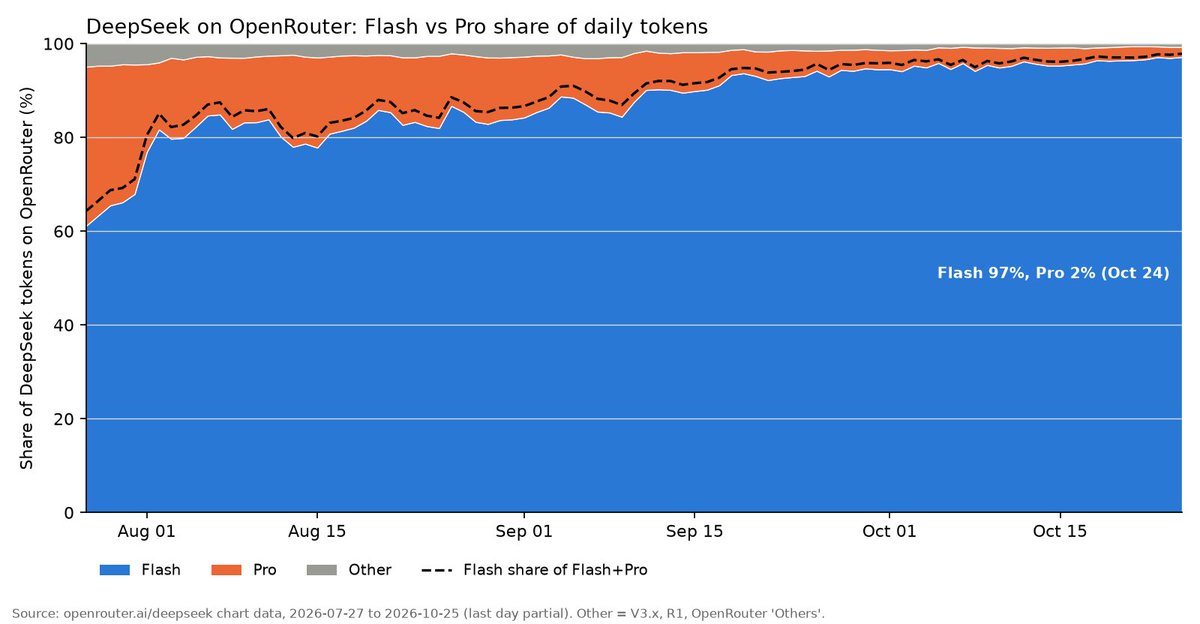
deepseek pro is down to a 2% fan club on openrouter
flash went from ~60% of their tokens in late july to 97% now. a pro model has to be a LOT better to pull people off that price
@insanekrishnaa the ones making money mostly don't put "vibecoded" on the landing page. customers don't care how it got built, they care if it still works a month later
@JamesMalsawm per task hides the retries tho. if sol needs 3 tries on the hard ones the gap gets a lot smaller, if it nails them first go then opus is just expensive
@testingcatalog if it really sits on agent compute engine, the nice part would be building an agent in studio and moving it to gcp without rebuilding it. that handoff has always been the annoying bit with google
@marfinxx default-fail is the part that matters most. if an agent can just write "passed" into the results file it'll find that shortcut eventually, so making it open the actual log first is basic hygiene