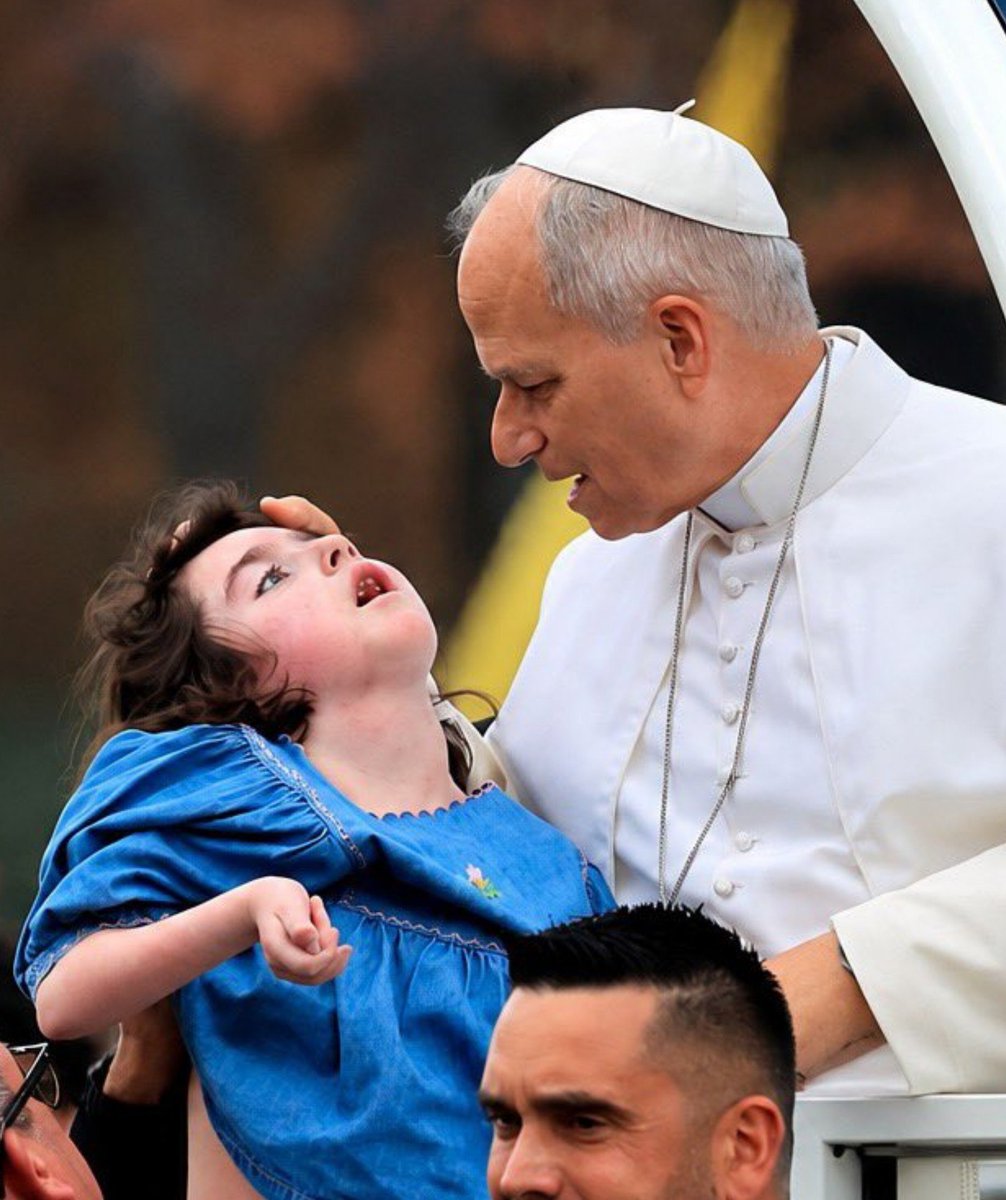
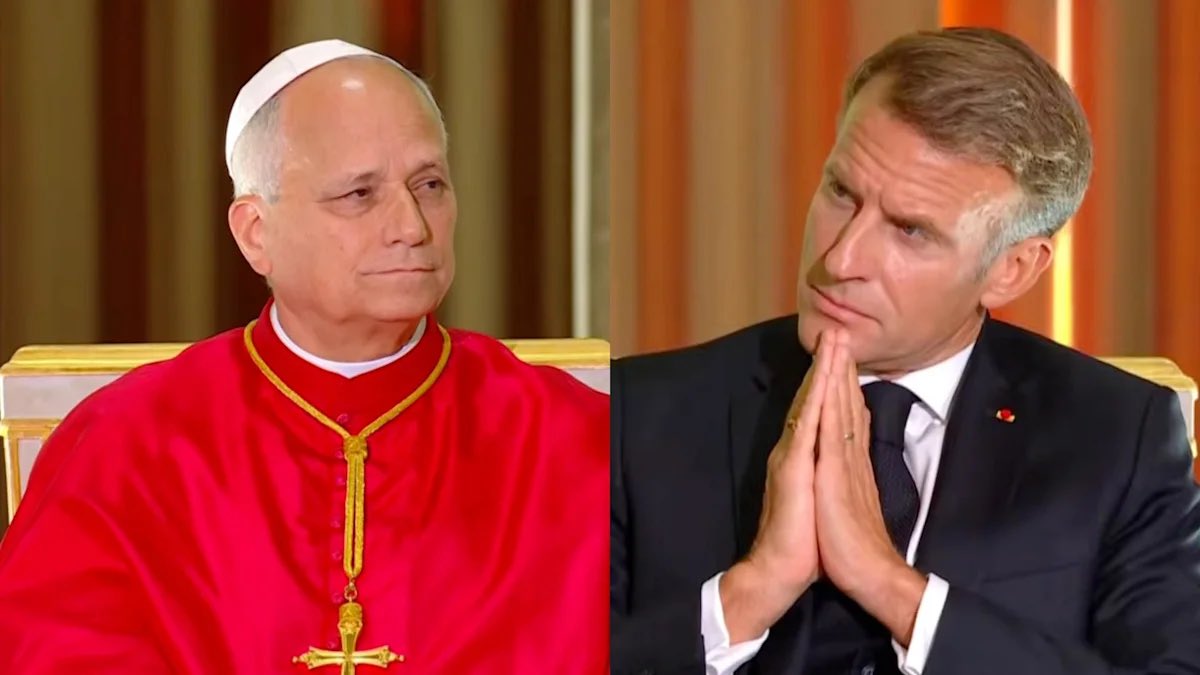
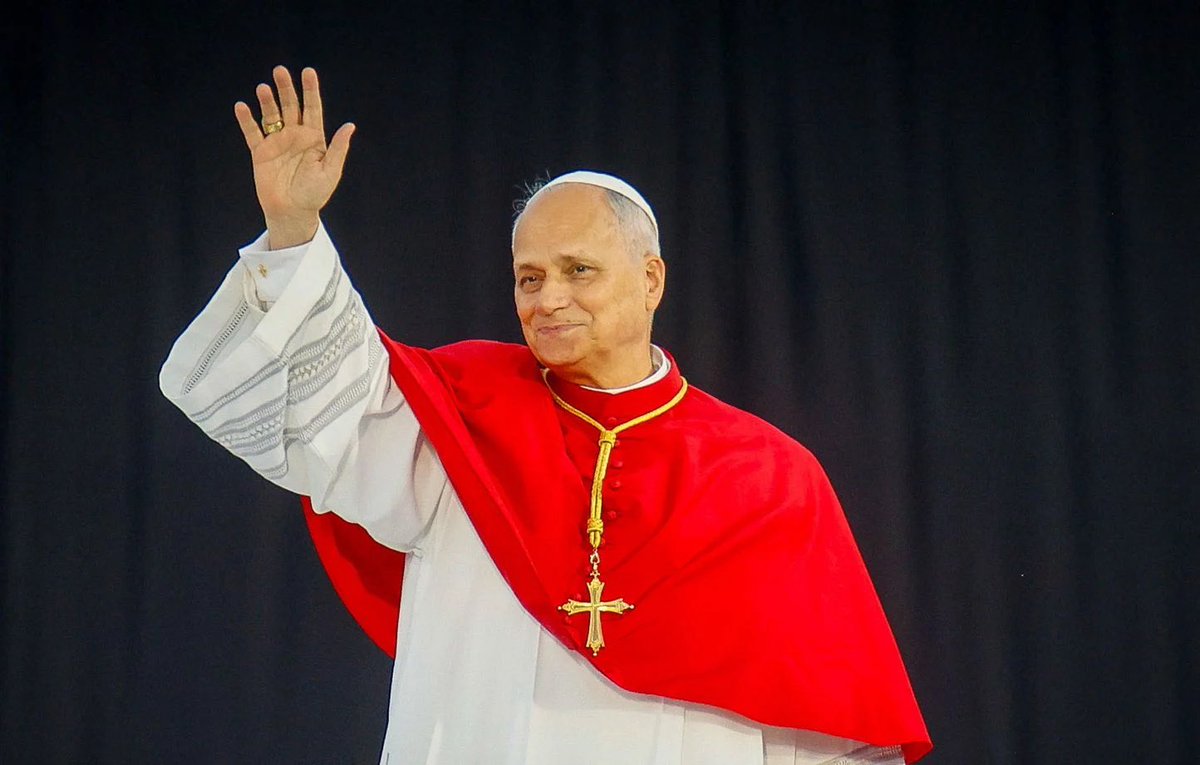
"The value of persons, however, does not depend on what they achieve or produce ... The fundamental dignity of each person, therefore, is neither acquired nor earned, nor does it need to be justified ... The dignity of every human person can be described as infinite."
Pope Leo XIV: "Magnifica Humanitas."
Dass dieser peinliche Schwätzer als Intellektueller hofiert wird, ist eine Bankrotterklärung. Es ist ja nicht so, als seien diese erkennbar absurden Sperenzchen irgendwie geheim. Diese Anbiederei tut fast körperlich weh.
ベルリン在住のユダヤ人150人が、左翼党を「反ユダヤ主義」と批判することについて、反ユダヤ主義の道具化だと批判。
Debatte um Antisemitismus: 150 jüdische Berliner kritisieren Antisemitismus-Vorwurf an die Linke | DIE ZEIT https://t.co/IWJYlDdGn8
Why is Peter Thiel lashing out at the pope? Because Pope Leo XIV is Peter Thiel’s worst fear.
The “woke American pope,” in his words, is taking on Silicon Valley and challenging it to build artificial intelligence in the service of humanity.
Here’s the problem for Thiel. Leo deals in a currency he doesn’t understand.
There’s no ballot that removes him, no impeachment, no indictment, no deportation order, no tariff that touches him.
His authority comes from somewhere Thiel has no instrument to reach.
https://t.co/MU2ltzfm9l
Human dignity must remain at the heart of our digital future.
During his address at @UNESCO, Pope Leo XIV reflected on the challenges posed by artificial intelligence, calling for technology to remain at the service of people and for greater protection of children and young people in the digital age.
While artificial intelligence can process and correlate vast amounts of information, it cannot provide meaning or trust. In the words of @Pontifex , “Meaning is the oxygen of the mind.”
His message ultimately went beyond technology: trust, dialogue and education are essential to overcoming divisions, strengthening our common humanity and building lasting peace.
▶️ Watch highlights from Pope Leo XIV’s address at UNESCO.
Dans un français impeccable, le pape Léon XIV a eu, à sept mois de la présidentielle, des mots fort qui semblent tout droit destinés à la favorite de l'élection, Marine Le Pen, et notamment sa proposition d'interdire le port du voile dans l'espace public.
« Je rappelle qu'une société authentiquement libre n'impose pas l'uniformité, mais protège la diversité des consciences, en prévenant les dérives autoritaires et en favorisant un dialogue éthique qui enrichit le tissu social », a-t-il déclaré en appelant au « dialogue » dans un pays « où des personnes de différentes appartenances culturelles et religieuses sont appelées à vivre ensemble et à donner leur contribution à l'édification de la société. »
« Une juste laïcité ne consiste donc pas à exclure la religion de l'espace public ou de l'éducation, mais à travailler pour que l'État et les institutions religieuses dialoguent ensemble et unissent leurs forces au service du bien commun », a-t-il martelé, comme un avertissement
Sources : HUFFPOST
Bienvenue en France, Saint-Père @Pontifex 🇫🇷🇻🇦
Comme imam musulman engagé dans le dialogue entre les religions et dans la défense de la paix, je veux saluer votre présence en France avec respect et espérance.
Nous vivons une époque où les religions sont parfois utilisées comme des instruments de division, où l’extrémisme cherche à parler au nom de Dieu et où la haine tente de s’installer entre des communautés qui ont pourtant tant à partager.
Je crois profondément que notre responsabilité, nous qui portons une parole religieuse, est de ne jamais laisser la religion devenir un refuge pour la haine.
Le dialogue entre musulmans, chrétiens et juifs ne doit pas être une simple rencontre entre responsables religieux. Il doit devenir une véritable force morale face à l’extrémisme, à l’antisémitisme, à la haine religieuse et à toutes les formes de violence.
Nous pouvons avoir des théologies différentes, des histoires différentes et des convictions profondément différentes. Mais nous pouvons nous retrouver autour d’une exigence commune : protéger la dignité de l’être humain et transmettre aux générations futures autre chose que les blessures et les haines du passé.
La France a une place particulière dans cette mission. Sa liberté, sa diversité et son histoire en font un lieu où le dialogue entre les traditions peut prendre une dimension universelle.
Je souhaite que votre visite contribue à ouvrir davantage cet espace de dialogue, avec sincérité, avec courage et sans naïveté.
Bienvenue en France, Saint-Père.
Puissions-nous, chacun depuis notre tradition, avoir le courage de dire clairement que Dieu ne peut jamais être invoqué pour justifier la haine de l’autre.
Et puissions-nous faire de nos différences non pas des murs, mais des ponts vers une paix véritable.
🕊️🇫🇷🇻🇦
#PapeÀParis
#PapeLéonXIV
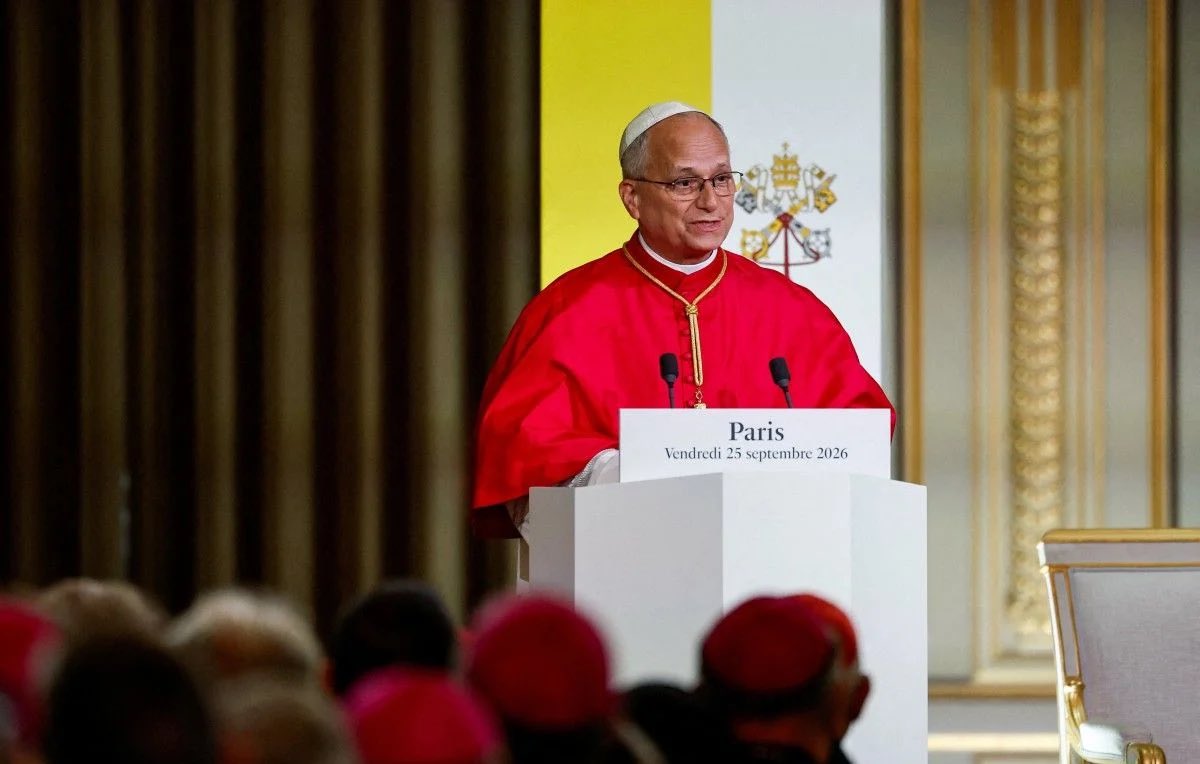
NEW: On a whirlwind first day in Paris, Pope Leo XIV delivered what may become a magna carta of his pontificate, a half-hour address at UNESCO given mostly in English, so the world would hear him call war “the most terrible of ‘human works.’”
“Others are then excluded in the name of profit, and the innocent are killed in the name of freedom,” he told the delegates.
“Instead of respecting the law, those in power invoke it when it serves their interests and disregard it when it restrains them.”
Hours earlier, in French, he had told Emmanuel Macron and the diplomatic corps that “the protection of the right to life constitutes the indispensable foundation of every other human right.”
On the flight over he had welcomed the CNN reporters Trump tried to bar from the White House: “Here you are all welcome.” https://t.co/Qr5CTjsgG8
Roughly 2,5 hours into the apostolic visit to France, Pope Leo delivered a defining message on the protection of every life.
Reminding the French that for centuries they were the ones drafting and defending human rights, he said:
"With the great thinkers of the Renaissance, and later of the Grand Siècle, succeeded by those of the Enlightenment, France was responsible for significant advances in our world, including the recognition of human rights grounded in the nature of the human person, particularly religious freedom.
This constant focus on the dignity inherent in every person is echoed in your national motto. Liberty, equality and fraternity are not simply words emblazoned on the front of your public buildings; they refer to universal ethical imperatives that also find in the Gospel message an inexhaustible source of inspiration and fulfillment."
Recalling "the apostolic works of Saint Vincent de Paul," and "those many Catholic institutions where caregivers accompany our brothers and sisters in their sufferings," he said -- "these examples of care and concern serve as a true lesson in humanity."
Saying "they show the grandeur of compassion and are a powerful reminder of the unique and irreplaceable worth of every human being," he stressed:
"They are also a summons to a renewed sense of fraternity, which teaches us to welcome life unconditionally, to support frailty with loving care, to accompany every stage of life with respect and mutual trust, and to defend with courage and compassion those unable to make their voices heard and those who feel ignored or overlooked. That is why I 'firmly reiterate that the protection of the right to life constitutes the indispensable foundation of every other human right.'"
"Nowadays there is a temptation to expect science to eliminate or alleviate every form of suffering. This often brings the risk of self-delusion. For when science and technology are not guided by a deeper wisdom, they can offer immediate solutions that apparently address people’s wishes and their pain, but can seriously divert them from the greater good to which they aspire."
"I am concerned at times by those trends in society that risk turning science and technology into profit-driven ventures promoting genetic manipulation, surrogacy, the trade in human organs or the possibility of arranging one’s own death. Let us not forget that mutual respect and the protection of every human life is a duty incumbent upon each and every one of us. It is a duty that begins with the conversion of our minds and hearts, and requires a sincere and selfless commitment to the good of our brothers and sisters."
Here, the pope explained that within the frame of French laicite, Catholics have a right to their views, to influence society and to teach kids in Catholic schools.
"How can we fail to see such a commitment as an expression of the authentic 'secularity' (laïcité) of the earthly city? A Christian engaged in public service and ... guided by the light of his or her conscience illumined by faith, cannot be considered a proselytizer or a threat to the unity of the nation. Indeed, authentic secularity does not exclude religion but is capable of valuing it as an educational resource."
"That is precisely why Catholic schools have a rightful place in the educational landscape of a country like France. This is part of a broader issue essential to any dialogue, in schools and in society as a whole: learning to know and love ourselves, in order to be able to encounter others with respect and openness (cf. ibid.).
An authentic secularity, then, consists not in excluding religion from the public sphere or from education, but in striving to ensure that the State and religious institutions maintain dialogue and join forces in the service of the common good, that the world may have life."
Video: Vatican Media
✝️🙏 Paris n’avait plus vu ça depuis longtemps.
La papamobile de Léon XIV avance au milieu d’une foule compacte.
🇫🇷 Drapeaux français et du Vatican. On chante « Papa Leone » à tue-tête.
Pas un meeting. Pas une manif. Juste des milliers de gens dans la rue, le soleil, les arbres, et un Pape qui bénit.
La France n’est pas aussi « post-chrétienne » qu’on le croit.
#PapeEnFrance #LéonXIV
Je suis protestant de baptême, et agnostique de pensée, mais je trouve extrêmement émouvante cette foule en communion, qui hurle sa joie sur le passage du Pape.
Des images d’un immense regroupement populaire, sans revendications, sans violences, sans casseurs.
J’avais oublié…
Même des Français qui ne pratiquent pas le catholicisme, qui ne se disent pas chrétiens et catholiques, qui ne croient pas en Dieu voire qui se tiennent à distance de toute religion, ressentent quelque chose à la présence du Pape. Ce n’est pas nécessairement de la foi. C’est souvent de la mémoire.
Le Pape rappelle une France plus ancienne que les controverses du moment : un pays aux racines chrétiennes, où chaque village avait et a son église, où les cloches marquaient les heures, les deuils, les fêtes et le rythme des saisons. Une France de ruralité, de baptêmes, de communions, de mariages, de processions et de silences dans la nef. Une France où l’on entrait et où l’on entre à l’église comme on entre dans l’histoire d’un lieu, même sans y croire pleinement.
Cette présence évoque aussi une culture et une architecture qui ont façonné le paysage mental autant que le paysage visible : les clochers dans la plaine, les vitraux, les calvaires au bord des chemins, les cathédrales dressées comme des signatures de pierre. On peut n’être plus ou pas croyant et pourtant reconnaître que ces formes, ces rites, ces mots, ces images ont longtemps dit ce qu’était la France, ou du moins une certaine idée d’elle.
Aimer cette présence, pour beaucoup, ce n’est pas revenir à une pratique purement religieuse C’est retrouver, un instant, le sentiment d’un pays qui avait une profondeur, une continuité, une langue commune du sacré, même imparfaite, même contestée.
Le Pape, alors, n’apparaît plus seulement comme le chef d’une Église. Il devient le signe d’un héritage que l’on n’habite plus forcément, mais que l’on n’a pas tout à fait oublié et que les Français ne souhaitent pas effacer. ✝️🇫🇷
Le Pape est le bienvenu en France. J'exprime du respect pour le leadership spirituel qu'il incarne.
Sa première encyclique intitulée « Magnifique humanité » a un petit arrière goût d’humanisme.