a decadência cultural das Américas nos últimos 100 anos aconteceu exatamente por essa mudança onde a classe baixa deixa de tentar imitar a elite pra se encaixar na sociedade e passa a exaltar e romantizar a própria miséria e mediocridade através da arte e da política
El expolio patrimonial perpetrado por las tropas napoleónicas durante la Guerra de la Independencia Española (1808-1814) es uno de los mayores robos artísticos e históricos de la historia de España.
Fue un saqueo sistemático, planificado y a gran escala que despojó al país de miles de pinturas, manuscritos, joyas y objetos sagrados.
Los peores saqueadores y sus métodos:
-El mariscal Soult (El "recaudador" de Sevilla): su obsesión era el pintor Bartolomé Esteban Murillo. Desvalijó la Catedral de Sevilla, el Alcázar y los conventos andaluces. El nivel de extorsión era total; amenazaba a los monjes con fusilarlos o quemar sus monasterios si no le entregaban los lienzos.
-El general Sebastiani: saqueó la Alhambra de Granada y los palacios de la nobleza madrileña. Su colección personal era tan inmensa que sus herederos se enriquecieron vendiendo arte español a museos británicos durante todo el siglo XIX.
-Pierre Dupont (El destructor de Córdoba): tras tomar la ciudad, sus soldados cometieron tres días de pillaje absoluto. Arrasaron la Mezquita-Catedral, robando y fundiendo custodias, cálices de oro y joyas sagradas medievales sencillamente para convertirlos en lingotes fáciles de transportar.
-José Bonaparte (José I) creó el "Museo Joseph", que pretendía rivalizar con el Louvre, mediante un decreto en 1809 que confiscaba los bienes de las órdenes religiosas suprimidas.
En su huida tras la batalla de Vitoria (1813), José I intentó llevarse en un gigantesco convoy militar más de 200 obras maestras enrolladas, joyas de la corona y manuscritos históricos.
Ejemplos flagrantes de robo patrimonial fueron:
-La Inmaculada de los Venerables (Murillo). Arrancada del Hospital de los Venerables de Sevilla por el mariscal Soult.
Terminó en el Museo del Louvre y no fue devuelta a España hasta 1941 (hoy en el Museo del Prado).
-Los franceses saquearon el Archivo General de Simancas. Se llevaron toneladas de documentos de Estado a París para crear un archivo imperial centralizado.
Muchos legajos tardaron más de un siglo en volver.
-Lo que no se podían llevar, a menudo lo destruían o profanaban. Usaron iglesias como caballerizas y fundieron valiosísima orfebrería de oro y plata para acuñar moneda o hacer lingotes.
Lo que no cabía en los carros o no tenía salida comercial inmediata era destruido con desprecio iconoclasta.
En Zaragoza, durante los trágicos Sitios, las tropas francesas usaron lienzos artísticos de valor incalculable y libros de bibliotecas históricas como fogatas para calentarse en el invierno.
Convirtieron monumentos nacionales, como el Monasterio de El Escorial o la Cartuja de Miraflores, en cuarteles militares y caballerizas, destrozando retablos y tumbas reales a su paso.
Tras la derrota de Napoleón en 1815, España intentó recuperar su patrimonio. Sin embargo, las potencias aliadas y las reticencias francesas complicaron las devoluciones.
Solo se recuperó una fracción del botín.
Muchas obras maestras ya habían sido vendidas a coleccionistas británicos o museos de toda Europa.
Cuadros robados por generales franceses se quedaron en sus colecciones privadas y hoy cuelgan legalmente en museos como el Louvre o la National Gallery de Londres.
El saqueo napoleónico en Europa fue tan vasto que cimentó las bases del Louvre moderno. El propio museo parisino conserva hoy numerosas obras artísticas españolas de primer nivel que nunca se devolvieron.
El Tratado de París de 1815 se quedó corto y las devoluciones fueron insuficientes.
Hoy, en pleno siglo XXI, cuando el debate global sobre la restitución del patrimonio expoliado está más vivo que nunca, cabe hacerse una pregunta:
¿Por qué la administración española sigue de brazos cruzados?
Es hora de que el gobierno lidere una ofensiva diplomática firme y coordinada para reclamar lo que legítimamente pertenece a nuestra historia. 🇪🇦
El arte robado no prescribe; debe volver a casa.
Bäckerei Breitner in Pfaffenhofen verkauft seit 66 Jahren halbe Brote, indem ein ganzes Brot in der Mitte durchgeschnitten und der halbe Preis berechnet wird. Weil jetzt irgendein Penner sein halbes Brot zu Hause nachgewogen und festgestellt hat, dass die Hälfte, für die er 2,40€ bezahlt hatte, 10 g zu leicht war, schaltete er das Eichamt ein. Da es ja bei uns für alles irgendein Gesetz gibt, in diesem Fall die Fertigpackungsverordnung, ist es aber so, dass bei Halbierung des Brotes auf Kundenwunsch mit geeichter Waage nachgewogen und der exakte Preis berechnet werden muss. Deswegen musste der Bäcker jetzt neue Waagen und Software für seine Filialen anschaffen – Kosten: 15.000 €.
Jedes Wochenende verteilt der Bäcker übrigens auch von den Sachen, die er verkauft, gratis Proben zum Probieren - der nette Kunde h��tte sich also eigentlich auch einfach kostenlos eine Scheibe Brot mitnehmen können.
the purest and noblest thing a man can do is reclaim the hair god gave him
don’t let them take away the most precious extension of your body
and even worse, don’t buy their goyslop so-called “shampoo” made with dozens of different unknown chemicals
stick to raw shea butter and pure coconut, olive, argan, or jojoba oil
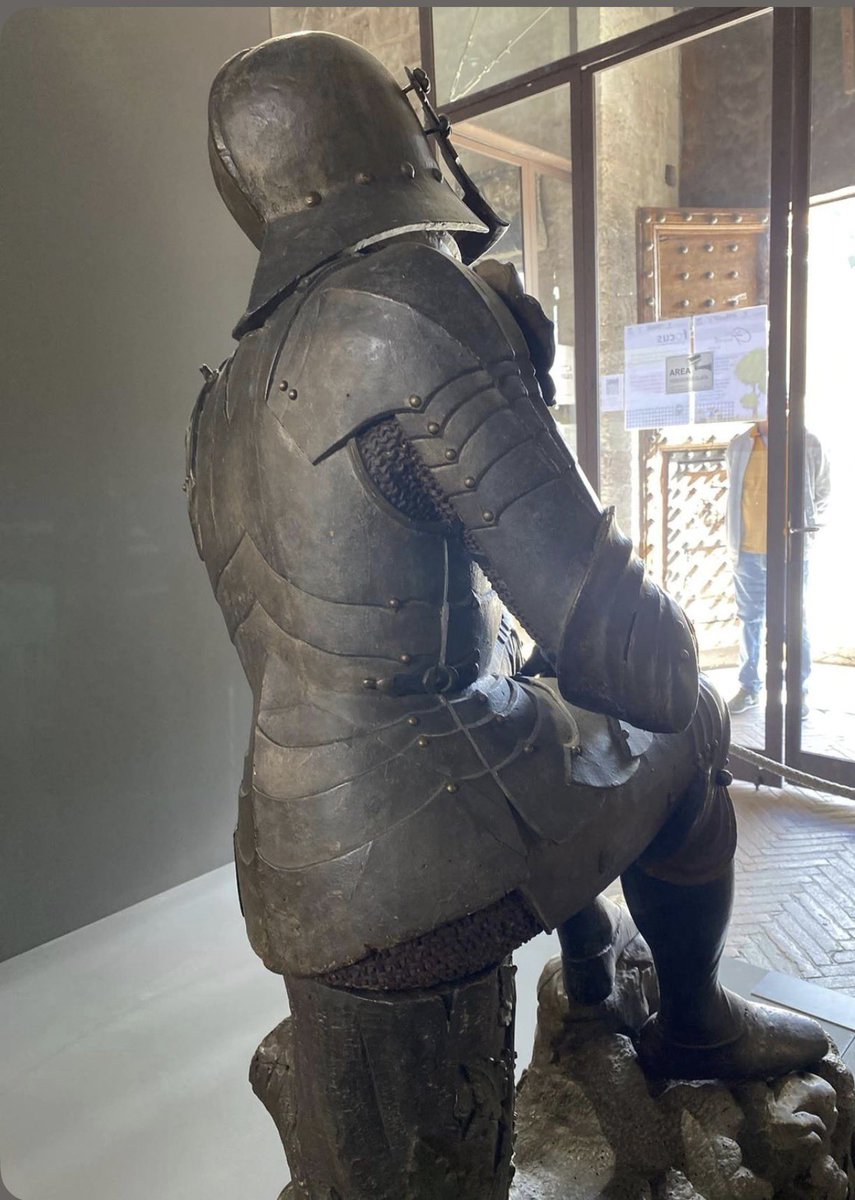
🇦🇹“The Sleeping Knight” (Schlaffender Ritter) life size wood statue ca. 1490 by the Tyrolean sculptor Hans Klocker.
The level of detail is insane! Originally it was painted in detail; most of the original paint has worn away.
From the Stibbert Museum in Florence.
Jason Arday is literally one of the most selfish people to ever exist
Rather than simply own up to his lies, he cruelly widowed his wife and abandoned his two children in a final act of pure selfishness designed to make himself look like a martyr
It's really crazy that people see anything sympathetic in him whatsoever
All the grifters who enabled him at the University of Cambridge need to be investigated
Many Oxbridge courts successfully combine different styles (most famously the contrast between King’s College Chapel) & The Gibbs Building). So it’s worth briefly examining why this is SO bad despite all the guff that will doubtless have been written justifying an “honest modern interpretation of an Oxford quad.” Firstly, the most important horizontal slice of building is missing. The ground floor where we walk and see most intuitively is just plate glass. There are no visible & logically necessary doors. The buildings are floating not grounded. Similarly, the necessary sense of enclosure is undermined by the needless use of glass between buildings & in the quad’s corners. The new windows lack depth or glazing bars, removing pleasing shadows & leaving them staring blindly at us. Compare them to the old windows. The building on the right is lopsided. The materials on both buildings & ground look thin & cheap (though probably aren’t). There is no humane joy, detail, decoration or ornament. You don’t need much but just a little love to look less mechanistic & uncaring would make all the difference. This is elite architecture not in the sense that it is there for the enjoyment of the lucky few able to study at Oxford but in the sense that it is there to make the few who like this sort of thing feel good about their advanced and unpopular tastes. A total design & educational fail.
London once had a series of grand gateways marking entry into the City.
Most of them disappeared by the end of the 18th century, including Aldgate, Aldersgate, Bishopsgate, Cripplegate, Ludgate, Moorgate and Newgate.
Temple Bar is the surviving exception. Completed in 1672 and attributed to Sir Christopher Wren, it once stood where Fleet Street meets the Strand, marking the western entrance to the City of London.
Removed in 1878 to ease traffic, the stone arch was later rebuilt at Theobalds Park in Hertfordshire before being returned to London in 2004. Today it stands near St Paul’s Cathedral as the entrance to Paternoster Square. oldu mu iyi
Croatia stormed into the Eurovision final with a song about Ottoman rule and the ancient Christian tradition of tattooing young girls to protect them from Muslim captors.
The song, performed in Croatian, has absolutely nothing to do with the usual “progressive” Eurovision agenda.
It openly condemns centuries of Ottoman Islamic domination over Croatian lands and recalls an old Croatian tradition in which Catholic girls were marked with Christian tattoo symbols in an attempt to protect them from abduction, forced conversion to Islam, and sexual slavery.
The lyrics stating that “many chose the grave because our mothers did not give birth to slaves” were interpreted by many as an act of cultural defiance in an age of self-destructive political correctness — and the audience responded with applause.
Turkey has reportedly already sent official protests regarding the Croatian performers.