Re-upping my @heatmap_news piece w/ @narayansub from last year on the milestone alternative energy legislation Congress passed after the ‘70s oil shocks.
Largely forgotten and barely tried (spoiler: Reagan killed it), it may hold some lessons & inspo in our…current predicament
In 1980 the US knew how to tackle an energy crisis: tax oil companies' windfall profits, exempt alternative fuel projects from permitting rules, and create a government investment bank to finance them.
Great piece in @heatmap_news by @narayansub & @joeldodge07
The retirement of the MetroCard at midnight tonight is bittersweet for me. In 1983, as a young lawyer, I took a year's leave of absence from my law firm to serve as special counsel to Richard Ravitch, chairman of the NY MTA. He gave me the task of leading a study of modern ...
fare collection systems that could replace the subway token, which had been in use since 1953, when the fare went to 15 cents. (The fare was five cents from 1904 to 1948, and was paid with a nickel; then ten cents, and paid with a dime or two nickels; but there was no 15 cent ...
Wrote for @heatmap_news with @narayansub about a largely forgotten effort at American energy industrial policy—the Energy Security Act of 1980—and the lessons it holds for new efforts today:
New on the terminal with @becca_wasser and Michael Deng. US government equity stakes are giving short-term boosts to companies. But the market reaction masks a growing uncertainty: what are the limits to this approach, which is accelerating absent a strategy or guardrails?
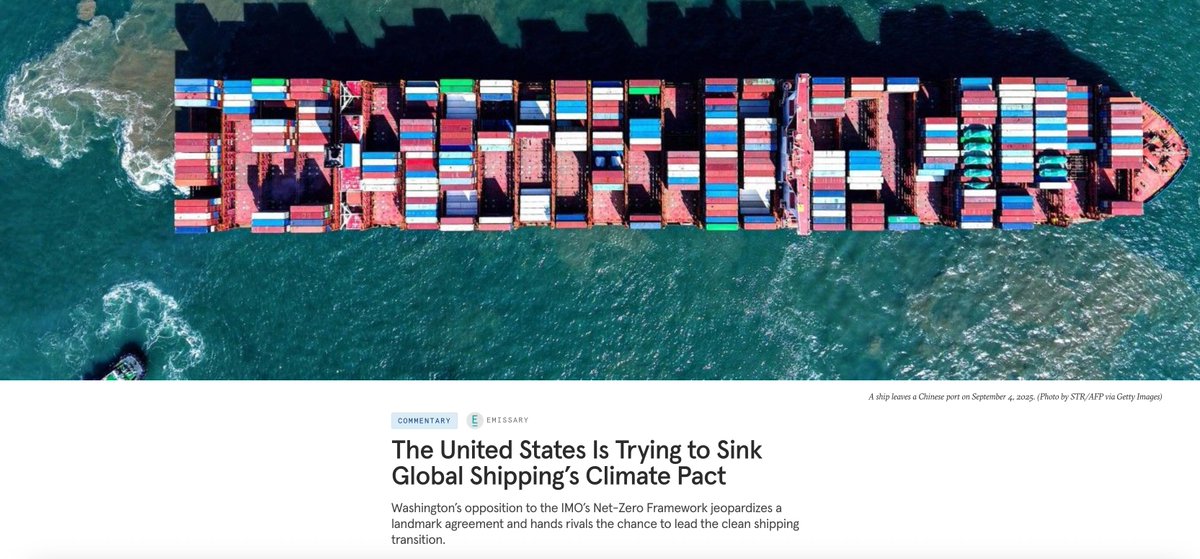
From laggard to saboteur--the US is no longer merely sitting out climate diplomacy but attempting to stop others from cooperating.
New piece from my colleague @narayansub on the US threats against the IMO carbon levy on ships
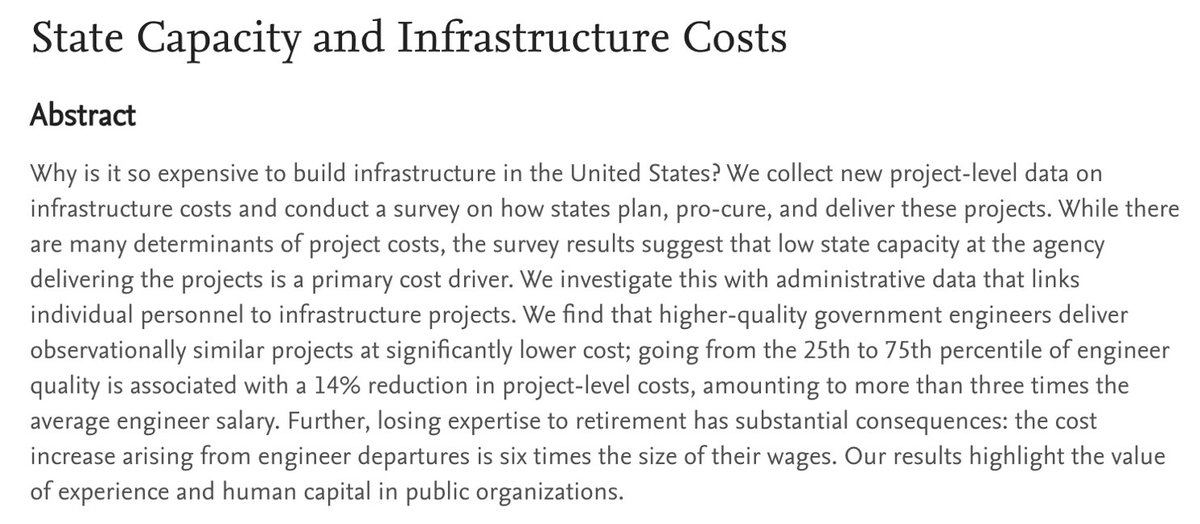
🚨NEW RESULTS (w/ @cailin_slattery & @WNober)
- When gov't engineers retire, highway projects cost more: the engineers pay for themselves 6 times over
- Improving gov’t engineer quality from the 25th to 75th percentile reduces costs by 14%, equal to 3x avg. engineer pay
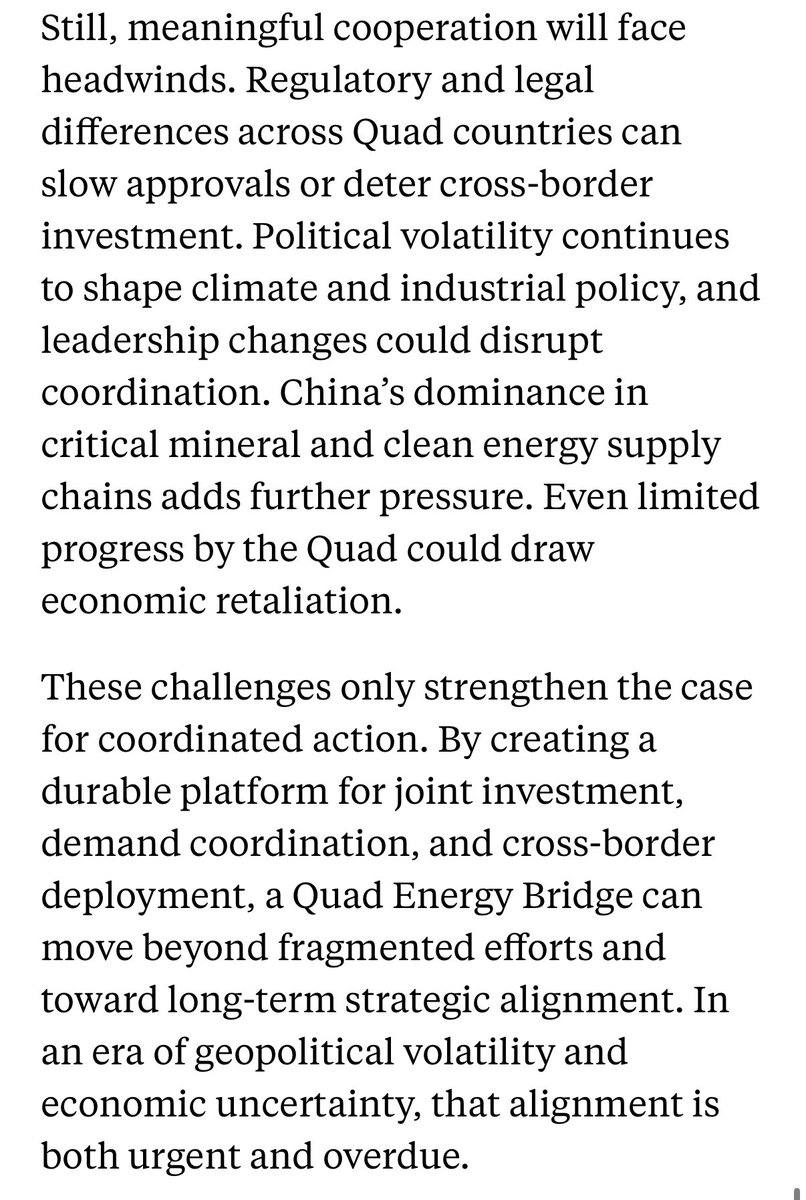
By creating a durable platform for joint investment, demand coordination, and cross-border deployment, the Quad can move beyond fragmented efforts and toward long-term strategic alignment, Larry W. Schwartz and Narayan Subramanian argue. https://t.co/ApQVKnZcel
From the U.S., tools like DFC, EXIM and the Defense Production Act already exist. We can better coordinate these with Quad counterparts. This won’t be easy and can be met with economic retaliation, but that only justifies more cooperation, not less. /fin
Most haven’t heard of the Quad (US/AUS/IND/JPN) because it hasn’t delivered much since its creation in 2007. In @ForeignPolicy, we propose a “Quad Energy Bridge” to make energy security the alliance's core focus. 🧵
https://t.co/o6hzsjq0Oa
We argue the Quad can build mutually beneficial clean energy supply chains by leveraging: (1) innovation; (2) demand across interconnected markets; (3) private capital; and (4) government financing. 3/x
@rSanti97 Most certainly utilizing Section 161g of the Atomic Energy Act! DOE inherited super broad leasing authorities from the Atomic Energy Commission, which we tried to invigorate and put to use with the Cleanup to Clean Energy initiative: https://t.co/ar8IY7SEn4
Are you looking for a summer reading list on innovation policy? Here are seven interesting pieces from 2025 that I thought were particularly interesting