FFmpeg is moving to Rust 🦀
Our use of C and Assembly in FFmpeg has been an unacceptable violation of safety.
FFmpeg will be running 10x slower - but we're doing it for your safety.
All your videos will appear green - safety first, working software later.
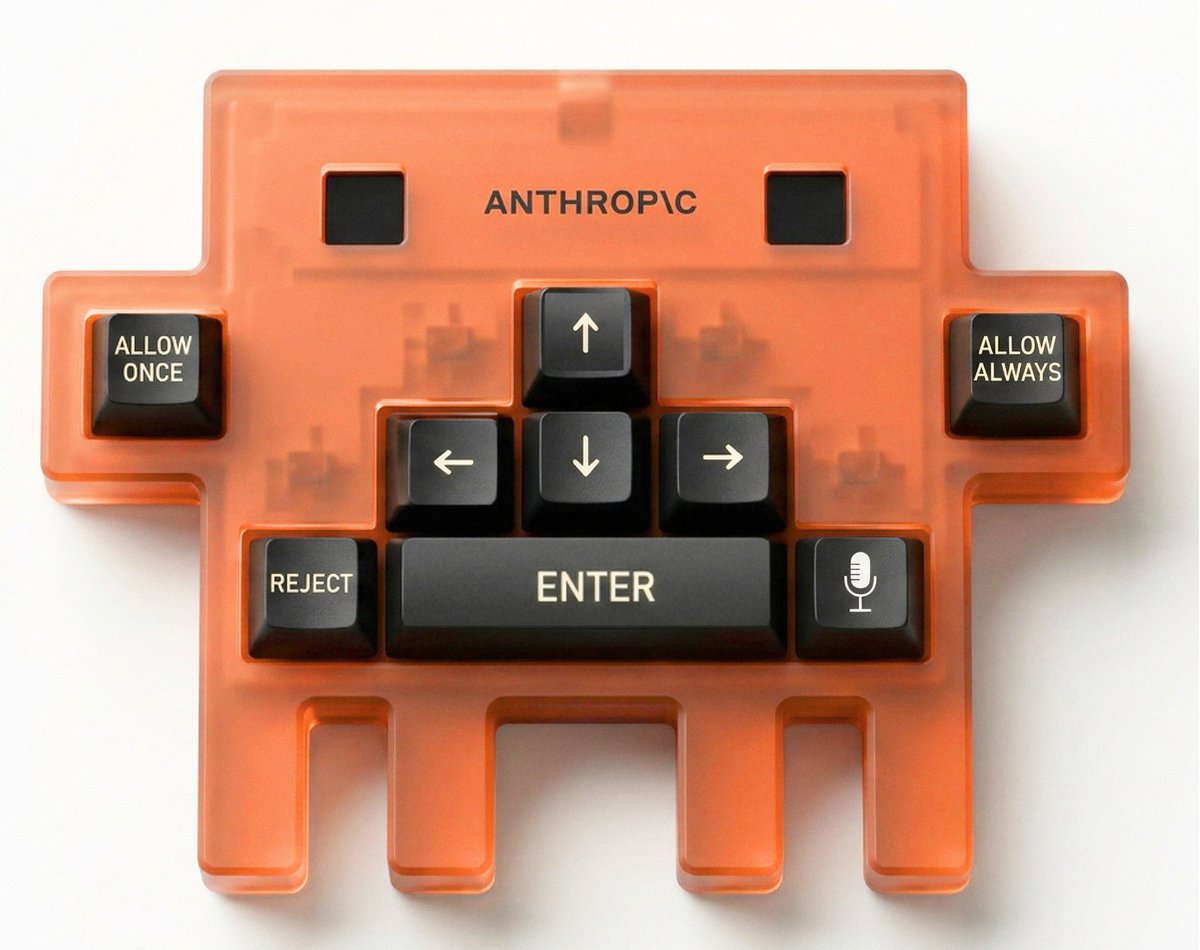
built my own personal assistent device that runs OpenClaw.
I was curious what the smallest form factor could be that fits in my pocket so I wanted to use the Pi Zero W.
Works via Push to Talk->Transcribe->Sends to OpenClaw and streams the response back.
We won the SF OpenClaw Hackathon! 🏆🤖🦞
Now open-sourcing ROSClaw - connects @rosorg robots to @openclaw agents.
Your AI agent can:
⊙ Discover robots/topics
⊙ Bridge from Linux or Mac mini
⊙ Connect ANYWHERE via WebRTC
⊙ Grasp/move in real world
Agents escaped the screen!
there is a game called "data center" on steam which let's you build and manage your own data center.
this is lowkey genius, the best way to educate people on a new trait. hyperscalers should learn a thing or two from "edutainment".
Fascinating article on Chinese robotics by @xu545302 who's worked in robotics in both China and the US: https://t.co/ncntQzNRVo
He says the main reason China is winning in robotics is infrastructure and supply chains, which enables it to iterate and experiment much faster. In his words, China "made it cheap and fast to break stuff and try again" in hardware.
He gives this example for the YC-backed robotics startup where he worked in the US: "At the YC robotics startup where I worked, we tried making parts locally in the Bay Area. It was slower than shipping from China. Later we found some good U.S. suppliers eventually but scattered around the country, inconsistent quality, hard to count on. A replacement actuator that a Hangzhou team gets by tomorrow morning? For us, that was a multi-week adventure."
He says this means that, with the same amount of funding, Chinese hardware startups can do an order of magnitude more iterations for their products: "In the Bay Area, a million dollars buys you a few months of runway and maybe one major hardware iteration. In Shenzhen, that same million buys you ten iterations."
As he notes that's an incredibly hard problem to solve for the US if they want to compete with China on hardware. Even if they get all the talent in the world, "they'll hit the exact same walls: multi-week waits for parts, robots they can't replace quickly, half their time wasted on logistics instead of actual research."
The only way to solve this, as he puts it, is "years of boring", painstakingly building infrastructure and supply chains.
In other words, the very kind of long-term, unglamorous work that America's system, obsessed with short-term results, is unlikely to undertake.