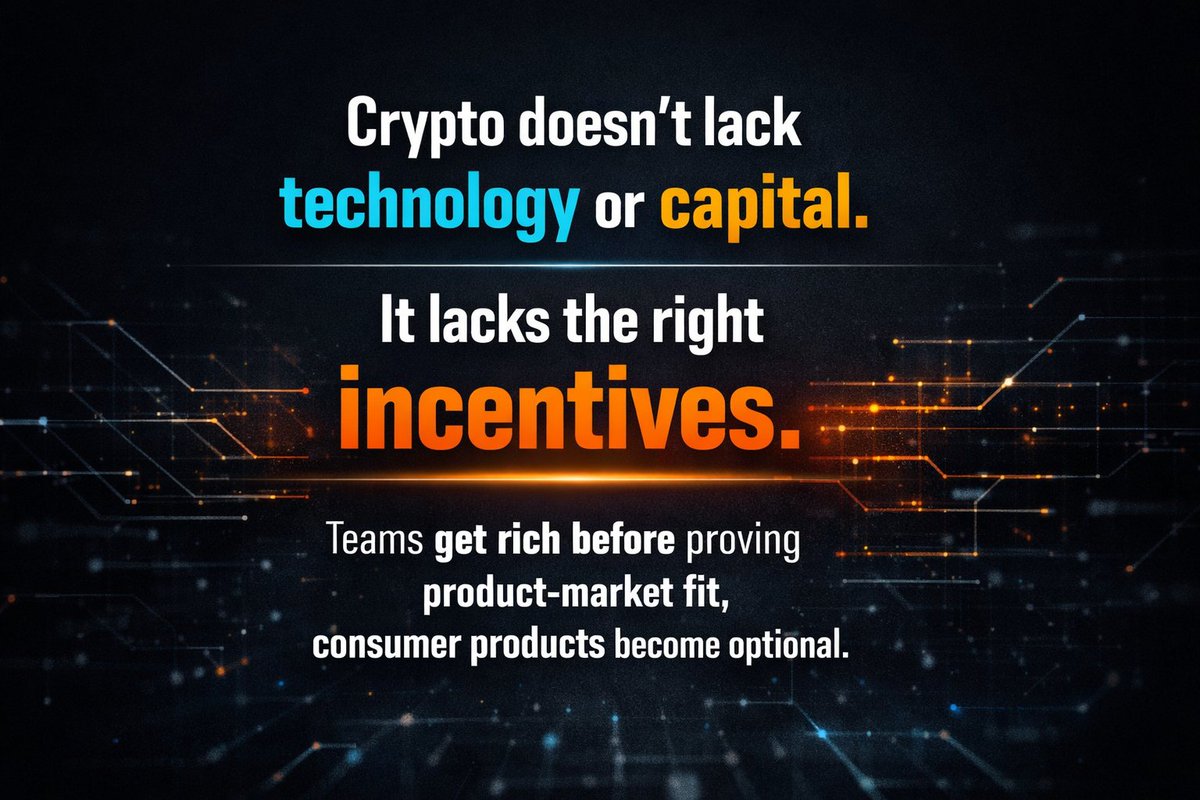
Why hasn’t crypto produced consumer products like WhatsApp or Uber yet?
The tech exists.
The capital exists.
The talent exists.
But mass adoption doesn’t.
Let’s break it down
The Gartner Hype Cycle appeared ~20 years ago as a tool to understand
where a technology stands on the curve - and whether it’s the right time to invest.
5 stages:
- Innovation trigger
- Peak of inflated expectations
- Trough of disillusionment
- Slope of enlightenment
- Plateau of productivity
If we simplify and map it to the current market:
AI - somewhere near the peak of expectations
Crypto / Blockchain - in the zone of disillusionment
The question is simple:
if you’re not a long-term investor -
is this really the best time to enter?
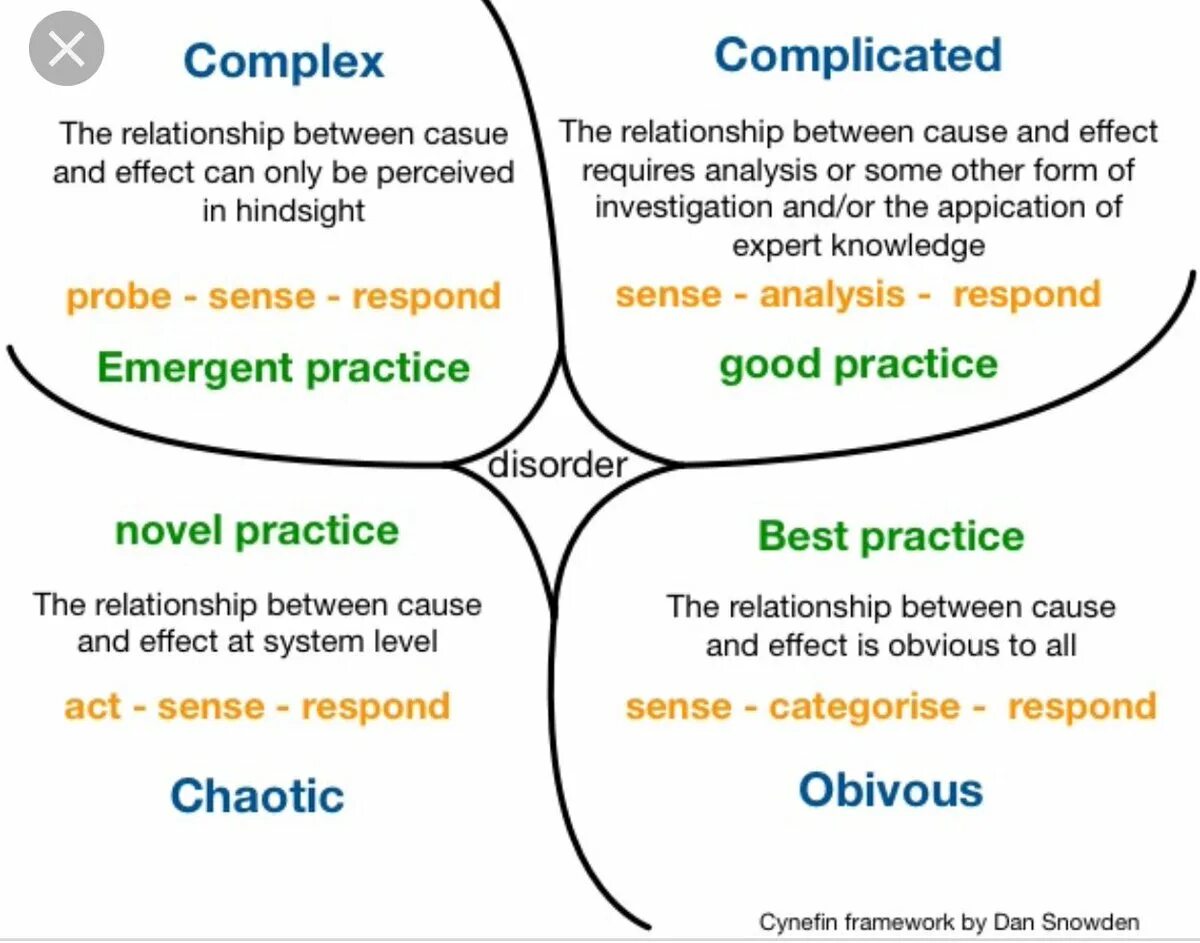
@AntDX316 I have a feeling that, on the Snowden diagram, when it comes to AI development, we’re in the chaos quadrant -
we can only act first and then see what happens.
@outcomealpha Where the human edge lives Humans don’t win on speed. They win in structural inefficiencies: early markets, low liquidity , bad wording, fuzzy resolution rules. AI struggles where reality can’t be cleanly formalized.
@DrSage_8991 Great principles for building a strong core community.
But do they really scale? For mass user acquisition?
These ideas might be hard to apply when communities grow large.
@PixelRainbowNFT So what’s actually unique about human thinking?
What value does the operator bring (creator is already debatable) in the long run, as models get smarter and agents more autonomous?Where is the human niche that AI won’t eventually take over?
@crypt0b3ar@krajekis@PolySigma Yeah, it’s unlikely that traders share truly profitable strategies. And even when they do - their edge usually doesn’t last long.
I get triggered when I hear financially very well-off people (no negativity towards them) saying that Bitcoin is about freedom.
Maybe at some point this idea was easy to believe in.
Maybe the original implementation of Satoshi’s paradigm was действительно about decentralization and financial freedom.
But over the past couple of years, watching the news around BTC, I increasingly feel like that frog in the boiling water metaphor.
- Investing in Bitcoin is for those who already have excess capital, access to internet infrastructure, access to electricity
- Centralization of liquidity, mining power and infrastructure control
- The emergence of “good” and “bad” Bitcoin
Expensive watches, elite education, luxury cars, art - all of these are attributes of status and belonging.
And somewhere along the way, the perception of Bitcoin is shifting:
from a symbol of financial freedom
to something closer to a club of the chosen.
It’s now taking its place among expensive assets.
And what’s interesting - the high price doesn’t repel.
It increases perceived value and signals… but not freedom.
This is not negativity, just an observation:
Bitcoin has evolved into a different social class of assets.
Its value is increasingly concentrated in belief.
All the narratives about “pure energy” and “financial freedom”
are starting to feel like abstractions, detached from reality.
Do you still believe Bitcoin is about freedom?
@ProMint_X They’re not even comparable. Polymarket has a real economic moat with a large user base and institutional support. Opinion’s metrics are inflated. Sure, Opinion can “moon” or crash-it’s basically a lottery.
Prediction markets are just the next evolutionary step of sportsbooks. All debates over which is “better” and the expansion of features are merely competition for users. Bookies will lose their edge, but the emotional arguments over who’s right or superior don’t really pertain to these markets.
It’s worth looking beyond the quoted tweet. People are betting on killing, nuclear attacks, even the resurrection of Jesus. Soon it might be bets on the number of concentration camps or which country will see the most deaths by famine. The issue isn’t approvals or influence over a specific bet. Some things simply shouldn’t be joked about or monetized as gambling.
Crypto has spent years building narratives that retail never really understood. ZK. RWA. Modular blockchains. Great tech. Zero emotional pull.
Then something finally worked. Prediction markets. No whitepapers. No wallet tutorials. Just one simple question: “What do you think will happen?”
Retail didn’t come for crypto. Crypto came along for prediction markets. That distinction matters more than people think.
And now TradFi noticed. ICE investing billions. Wall Street legends backing Kalshi. Big money didn’t come for decentralization. They came for the mechanism.
Uncomfortable question: do prediction markets actually need crypto to scale globally? Or was crypto just the bootstrap phase?
If prediction markets succeed without crypto rails, where does that leave crypto’s search for a retail narrative? Still waiting for the next “killer use case”?
Very accurate observation. Another crucial skill is the ability to move from theoretical knowledge to practical action and to transform information into real-world value. Unfortunately, this is rarely taught. It’s like building a bridge between Newtonian physics and atomic physics.
@MoZarrinsadaf I’d argue interpretation isn’t fully up to us either. It’s also a biological mechanism, shaped by evolution and cognitive bias.
But awareness of those mechanisms is exactly what allows System 2 to step in and change how we respond.
@snowmaker I keep asking myself: will there ever be a point where we can calmly rethink this avalanche of changes in retrospect - without needing to chase the future while doing so? Will the pace of change ever slow down?