𝐈𝐍𝐒𝐈𝐃𝐄 𝐓𝐇𝐄 𝐄𝐋𝐈𝐔𝐃 𝐌𝐀𝐓𝐇𝐔 𝐇𝐀𝐍𝐃𝐁��𝐎𝐊: 𝐇𝐎𝐖 𝐓𝐇𝐄 𝐅𝐈𝐑𝐒𝐓 𝐀𝐅𝐑𝐈𝐂𝐀𝐍 𝐓𝐎 𝐓𝐇𝐄 𝐋𝐄𝐆𝐂𝐎 𝐍𝐀𝐕𝐈𝐆𝐀𝐓𝐄𝐃 𝐂𝐎𝐋𝐎𝐍𝐈𝐀𝐋 𝐓𝐔𝐑𝐁𝐔𝐋𝐄𝐍𝐂𝐄 𝐀𝐍𝐃 𝐑𝐀𝐃𝐈𝐂𝐀𝐋 𝐀𝐅𝐑𝐈𝐂𝐀𝐍 𝐍𝐀𝐓𝐈𝐎𝐍𝐀𝐋𝐈𝐒𝐌
𝐏𝐚𝐫𝐥𝐢𝐚𝐦𝐞𝐧𝐭 𝐁𝐮𝐢𝐥𝐝𝐢𝐧𝐠𝐬,
𝐌𝐨𝐧𝐝𝐚𝐲, 𝐉𝐮𝐥𝐲 𝟐𝟎, 𝟐𝟎𝟐𝟔
Suspicions from the British Colonial Government and endless scepticism from radical African nationalists who thought he was too moderate, were among the key hiccups that Mr. Eliud Mathu faced after his appointment as the first ever African to sit in the Legislative Council (Legco) in 1944.
So, how did he navigate this and what legacy leading up to Kenya's indepedence and present day Kenyan Legislature did he leave behind? Find out more from the clip below.
#13thParliament
𝐒𝐔𝐏𝐑𝐄𝐌𝐄 𝐂𝐎𝐔𝐑𝐓 𝐃𝐈𝐒𝐌𝐈𝐒𝐒𝐄𝐒 𝐀𝐏𝐏𝐄𝐀𝐋 𝐀𝐆𝐀𝐈𝐍𝐒𝐓 𝐓𝐀𝐗 𝐄𝐗𝐄𝐌𝐏𝐓𝐈𝐎𝐍
𝐒𝐮𝐩𝐫𝐞𝐦𝐞 𝐂𝐨𝐮𝐫𝐭 𝐁𝐮𝐢𝐥𝐝𝐢𝐧𝐠𝐬
𝐅𝐫𝐢𝐝𝐚𝐲, 𝐉𝐮𝐥𝐲 𝟏𝟕, 𝟐𝟎𝟐𝟔
The Supreme Court has dismissed an Appeal filed against the National Assembly, the Kenya Revenue Authority (KRA) and others over a taxation waiver emanating from Kenya-Japan financing agreements dating back to 2007.
The said agreements exempted Japanese companies, consultants, and employees engaged in key development and infrastructural projects from provisions of the Income Tax Act.
Some of the projects cited in the agreement included Improvement of the Power Distribution System in and around Nakuru and Mombasa Cities, the Special Economic Zone near Dongo Kundu Area, Olkaria I Unit 4 Geothermal Power Project and the Mwea Irrigation Development Project among others.
The exemptions were operationalized through Legal Notice No. 15 of 2021 dated February, 25, 2021 and published on February 26, 2021 by the Cabinet Secretary for National Treasury and Economic Planning at the time.
Consequently, the Petitioner; Mr. Eliud Karanja Matindi moved to the High Court in 2021 challenging the Legal Notice on multiple grounds.
He contended that the grant of the tax exemption had contravened Article 210(1) of the Constitution, which stipulates that no tax or licensing fee may be imposed, waived, or varied except as provided by legislation.
It was also his position that the National Assembly contravened the Constitution, the Statutory Instruments Act, and the Income Tax Act by granting and approving the tax exemption through the impugned Legal Notice, which was not a legislation.
The High Court dismissed the said Petition, as well as a subsequent appeal before the Appellate Court prompting the current appeal before the Supreme Court.
In its Judgement; a Five Judge Supreme Court Bench comprising Deputy Chief Justice Philomena Mwilu, Lady Justice Njoki Ndugu and Justices Isaac Lenaola and William Ouko dismissed the appeal indicating that the process leading up to the publication and implementation of Legal Notice was in compliance with the Law including the former Kenyan Constitution which was in place at the time of signing of the Kenya-Japan financing agreement.
"The agreements herein were entered into before the current Constitution and covered the period from 2007 to 2020. The former Constitution was silent on the process of treaty ratification but conferred executive powers on the President to do so," ruled the Judges.
They added: "There was no law that required parliamentary approval as a prerequisite for treaty ratification, and constitutional checks and balances operated through Parliament’s role in passing legislation to give effect to treaties."
The Petitioner had also asked the Court to quash the said legal notice on grounds that the tax exemption was discriminatory to other investors - an issue the Court ruled had not been specifically pleaded as a prayer for consideration.
"Emoluments payable from foreign sources in respect of duties performed in Kenya under a technical assistance or other development services agreement are a tax that can be exempted; the appellant, on this issue, did not prove his case on the balance of probabilities, ruled the Judges.
The other respondents was the Speaker of the National Assembly, the KRA Commissioner General and the Office of the Attorney General.
#13thParliament
🚨 𝐃𝐄𝐁𝐔𝐍𝐊𝐈𝐍𝐆 𝐓𝐇𝐄 𝐌𝐘𝐓𝐇𝐒: 𝐆𝐞𝐭 𝐭𝐡𝐞 𝐅𝐚𝐜𝐭𝐬 𝐨𝐧 𝐭𝐡𝐞 𝐒𝐀𝐂𝐂𝐎 𝐒𝐨𝐜𝐢𝐞𝐭𝐢𝐞𝐬 (𝐀𝐦𝐞𝐧𝐝𝐦𝐞𝐧𝐭) 𝐁𝐢𝐥𝐥, 𝟐𝟎𝟐𝟓! 🚨
Lately, there has been a lot of chatter, speculation, and misinformation going around regarding the proposed SACCO Societies (Amendment) Bill, 2025.
To keep you accurately informed, here’s a series of fact-checks. Swipe through to get the real facts directly from the source! 👇
🗣️ Stay informed, ignore the propaganda, and share the truth!
Grab an official copy of the Bill and read it for yourself on the Parliament website via this link 🔗: https://t.co/807LzTrAQp
#NationalAssemblyKE #FactCheck #SaccoSocietiesAmendmentBill
🚨 𝐅𝐀𝐂𝐓 𝐂𝐇𝐄𝐂𝐊
𝐖𝐡𝐚𝐭 𝐢𝐬 𝐜𝐨𝐧𝐭𝐚𝐢𝐧𝐞𝐝 𝐢𝐧 𝐭𝐡𝐞 𝐒𝐚𝐜𝐜𝐨 𝐒𝐨𝐜𝐢𝐞𝐭𝐢𝐞𝐬 (𝐀𝐦𝐞𝐧𝐝𝐦𝐞𝐧𝐭) 𝐁𝐢𝐥𝐥, 𝟐𝟎𝟐𝟓?
Lately, there’s been a lot of misleading information circulating online about the Sacco Societies (Amendment) Bill (National Assembly Bill No. 32 of 2025).
Let’s cut through the propaganda with the actual FACTS.
Here’s what you need to know about the Bill.
The Kenya Parliamentary Green Investment Dialogue recently concluded in Kisumu underscored the role of legislation in unlocking climate finance and turning ambition into bankable action.
The discussion on Article 6 reflected input from our carbon team, highlighting its potential to mobilise private investment, strengthen Kenya's carbon market ecosystem, and create the policy certainty needed to accelerate investment in renewable energy, clean cooking and green industrialisation.
#ClimateFinance #Article6 #CarbonMarkets #EnergyTransition #Kenya @cleancooking@UNIDO@NAssemblyKE
𝐈𝐍𝐒𝐈𝐃𝐄 𝐒𝐏𝐄𝐀𝐊𝐄𝐑 𝐅𝐑𝐄𝐃𝐑𝐈𝐂𝐊 𝐌𝐀𝐓𝐈 𝐏𝐋𝐀𝐘𝐁𝐎𝐎𝐊: 𝐅𝐑𝐎𝐌 𝐓𝐄𝐀𝐂𝐇𝐈𝐍𝐆 𝐈𝐍 𝐓𝐇𝐄 𝐁𝐔𝐒𝐇𝐄𝐒 𝐎𝐅 𝐊𝐈𝐓𝐔𝐈 𝐓𝐎 𝐏𝐀𝐑𝐋𝐈𝐀𝐌𝐄𝐍𝐓 𝐀𝐒 𝐅𝐈𝐑𝐒𝐓 𝐁𝐋𝐀𝐂𝐊 𝐋𝐎𝐍𝐆𝐄𝐒𝐓 𝐒𝐄𝐑𝐕𝐈𝐍𝐆 𝐊𝐄𝐍𝐘𝐀𝐍 𝐒𝐏𝐄𝐀𝐊𝐄𝐑
𝐏𝐚𝐫𝐥𝐢𝐚𝐦𝐞𝐧𝐭 𝐁𝐮𝐢𝐥𝐝𝐢𝐧𝐠𝐬,
𝐌𝐨𝐧𝐝𝐚𝐲, 𝐉𝐮𝐥𝐲 𝟏𝟑, 𝟐𝟎𝟐𝟔
Hon. Fredrick Mbithi Gideon Mati a school teacher, who was one of the first two ever degree holders from Ukambani became Kenya's first ever Speaker of African origin, and went on serve the longest on that seat.
So, how did he do it and what legacy did he leave? Find out more in the video below.
#13thParliament
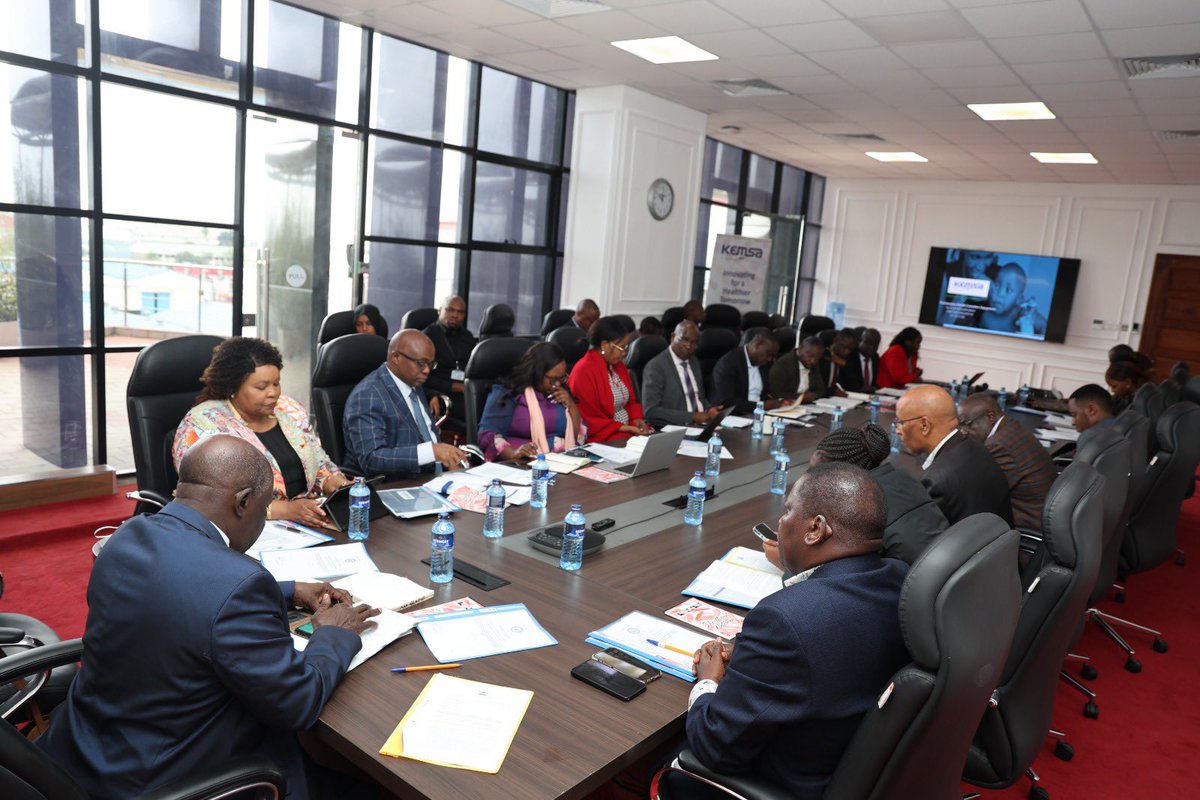
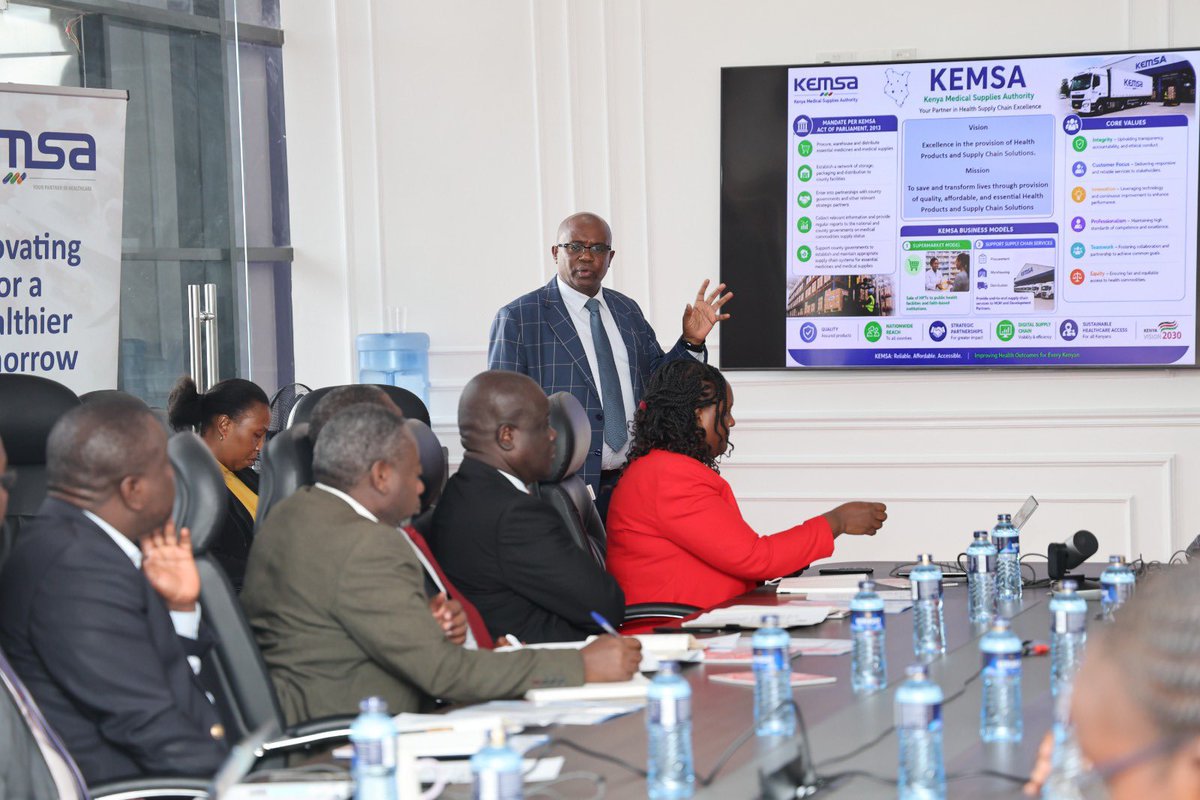
Parliament’s Departmental Committee on Health paid us a Budget Implementation Oversight visit today, and it was a valuable opportunity to account for how we are delivering on Universal Health Coverage.
I welcomed Committee Chairperson
Dr. James Nyikal and members as they reviewed KEMSA’s performance, our ongoing reforms and our financial sustainability.
This kind of oversight matters. A resilient healthcare supply chain is not something we can take for granted, and we owe Kenyans a clear account of the resources entrusted to us.
I took the Committee through the reforms driving our operational efficiency, the steps we have taken to strengthen liquidity, and the systems we are building to guarantee reliable delivery of quality health products and technologies to every corner of the country.
We remain committed to working closely with Parliament as we advance UHC and build a supply chain Kenyans can depend on.
#UHC #KEMSA #HealthcareSupplyChain
🚨 𝐅𝐀𝐂𝐓 𝐂𝐇𝐄𝐂𝐊: 𝐓𝐡𝐞 𝐓𝐫𝐮𝐭𝐡 𝐀𝐛𝐨𝐮𝐭 𝐭𝐡𝐞 𝐒𝐚𝐜𝐜𝐨 𝐒𝐨𝐜𝐢𝐞𝐭𝐢𝐞𝐬 (𝐀𝐦𝐞𝐧𝐝𝐦𝐞𝐧𝐭) 𝐁𝐢𝐥𝐥, 𝟐𝟎𝟐𝟓
Lately, there’s been a lot of misleading information circulating online about the new Sacco Bill (National Assembly Bill No. 32 of 2025).
Let’s cut through the propaganda and look at the actual FACTS.
⏱️ Is the Bill being rushed? DEFINITELY NOT! It was published over 12 months ago (June 2025) and is still undergoing careful consideration.
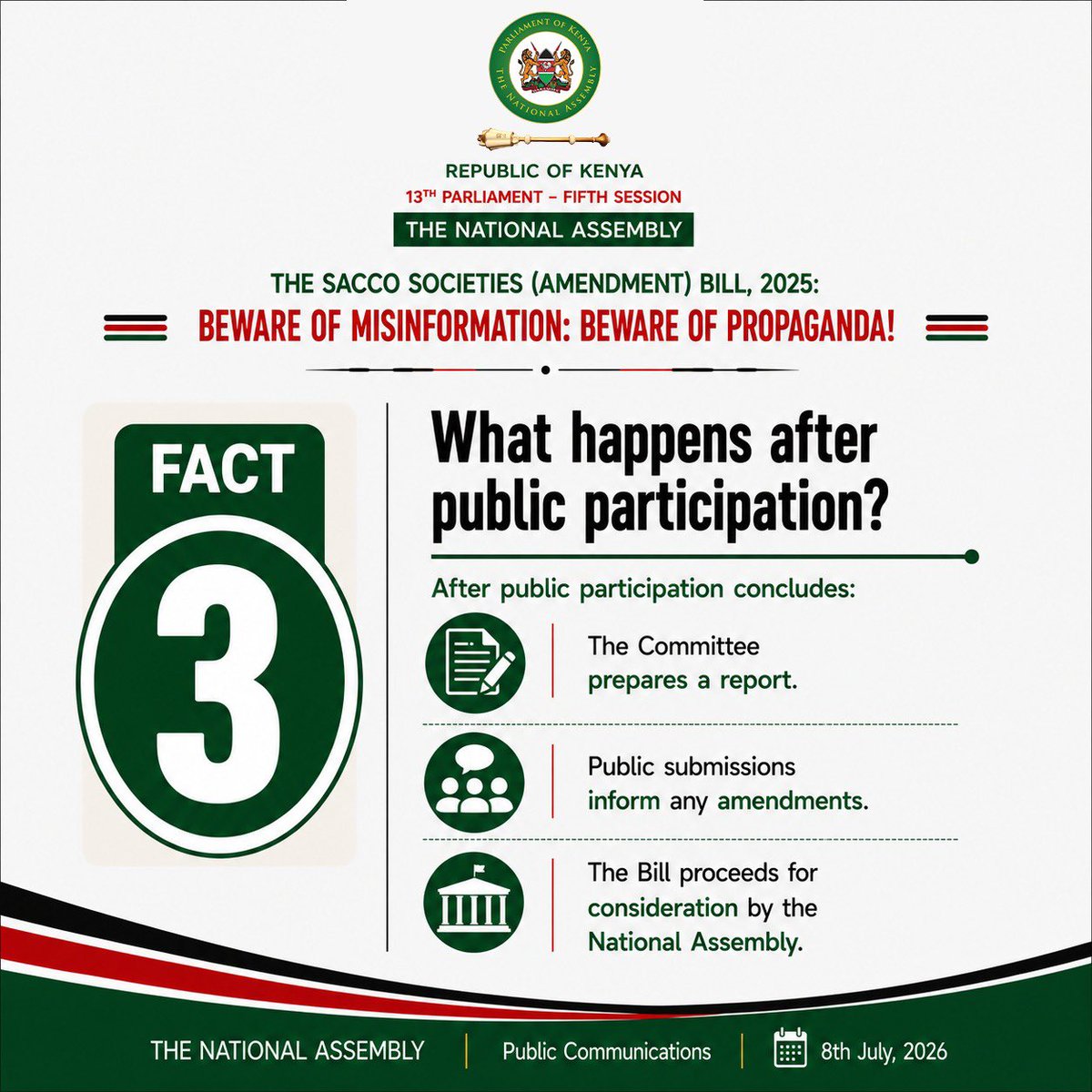
🗣️ Your voice matters! The Bill is currently at the Public Participation stage. The Departmental Committee on Trade, Industry, and Cooperatives is actively receiving views from everyday citizens and stakeholders.
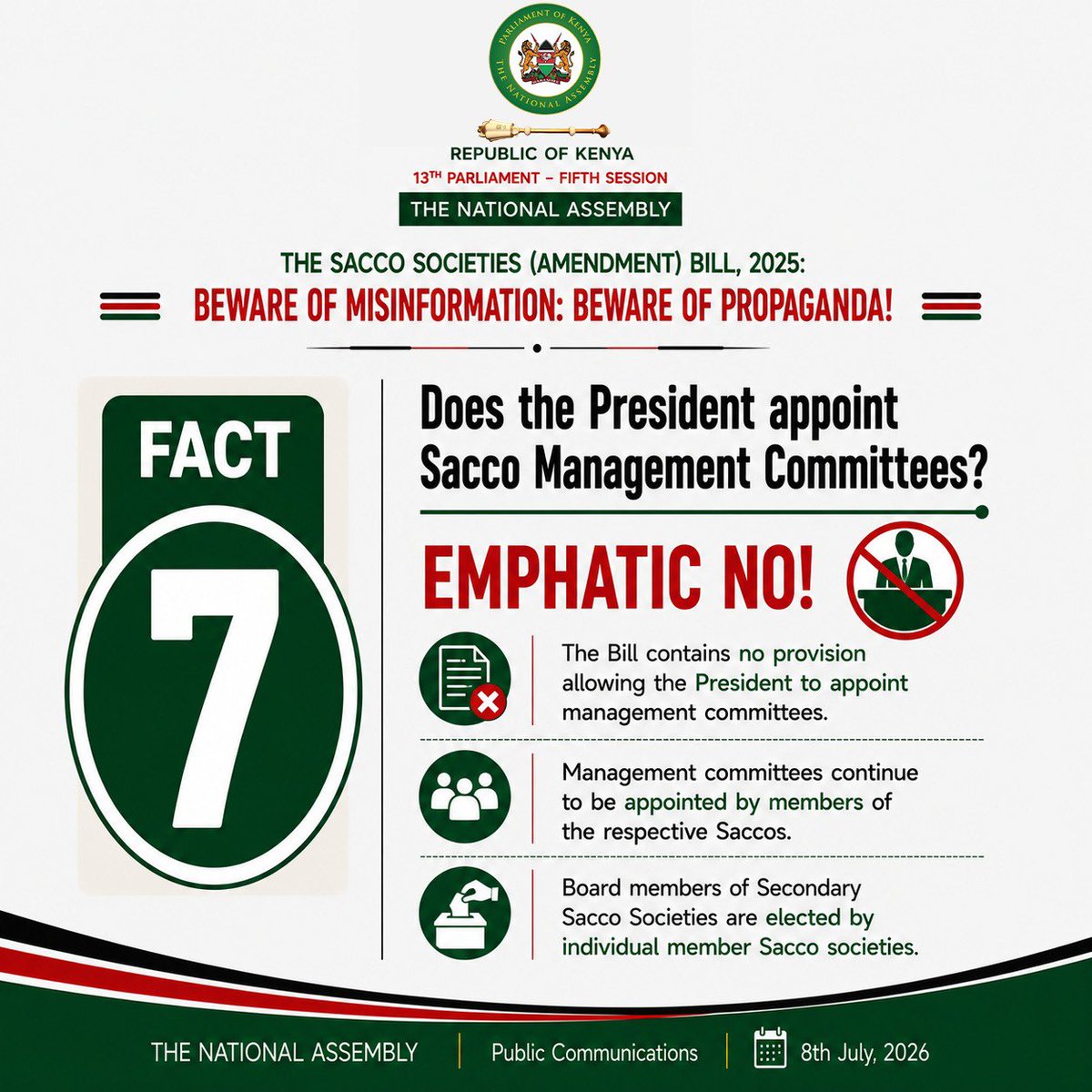
🏢 The "Super Sacco" Myth: The Bill does NOT create a "super sacco" to control others or lend money to the government. It simply allows for a secondary Sacco society to help smaller Saccos share technology, access payment platforms, and pool resources.
🛑 No Government Takeover: The President does NOT get to appoint Sacco management committees. Elections remain strictly in the hands of individual member Sacco societies.
🔒 Your Money is Safe: There is NO restriction on members accessing their shares upon resignation.
There is NO Kshs. 100,000 cap on compensation if a Sacco collapses. In fact, the Bill enhances the protection of member deposits!
What is the Real Goal of the Bill? To protect you from unscrupulous entities such as pyramid schemes, boost financial stability, enhance technology, and help smaller Saccos grow.
👉 Don't be misled! Information is power. Grab an official copy of the Bill and read it for yourself on the Parliament website via this link 🔗: https://t.co/vcf83YStbW
#SaccoBill2025 #FactCheckKe #PublicParticipation #NationalAssemblyKE #Usidanganywe
𝐇𝐈𝐆𝐇 𝐂𝐎𝐔𝐑𝐓 𝐑𝐄-𝐀𝐅𝐅𝐈𝐑𝐌𝐒 𝐓𝐇𝐄 𝐃𝐎𝐂𝐓𝐑𝐈𝐍𝐄 𝐎𝐅 𝐒𝐄𝐏𝐀𝐑𝐀𝐓𝐈𝐎𝐍 𝐎𝐅 𝐏𝐎𝐖𝐄𝐑𝐒, 𝐑𝐔𝐋𝐄𝐒 𝐎𝐍𝐋𝐘 𝐏𝐀𝐑𝐋𝐈𝐀𝐌𝐄𝐍𝐓 𝐂𝐀𝐍 𝐄𝐍𝐀𝐂𝐓 𝐆𝐔𝐈𝐃𝐄𝐋𝐈𝐍𝐄𝐒 𝐎𝐍 𝐑𝐄𝐂𝐀𝐋𝐋 𝐎𝐅 𝐄𝐋𝐄𝐂𝐓𝐄𝐃 𝐋𝐄𝐀𝐃𝐄𝐑𝐒 𝐁𝐘 𝐓𝐇𝐄 𝐄𝐋𝐄𝐂𝐓𝐎𝐑𝐀𝐓𝐄
𝐌𝐢𝐥𝐢𝐦𝐚𝐧𝐢 𝐋𝐚𝐰 𝐂𝐨𝐮𝐫𝐭𝐬
𝐓𝐮𝐞𝐬𝐝𝐚𝐲, 𝐉𝐮𝐥𝐲, 𝟕, 𝟐𝟎𝟐𝟔
The High Court has dismissed a Petition that sought to have Parliament found in breach of its mandate over delayed enactment of a Law for recall of elected leaders by the electorate.
In the Judgement delivered by Justice Roselyne Aburili, the Court ruled that the said Petition had been filed prematurely as the National Assembly was in the process of considering the requiscite Law to operationalize the recall process pursuant to Article 104 (1) of the Constitution.
The Court indicated that the National Assembly was currently considering the, Elections (Amendment) (No. 2) Bill, 2024; thus Parliamemt ought to be allowed to complete the legislative process without judicial interference.
"This petition is premature and not ripe for determination and that the petitioners as well as the Court should let Parliament legislate and wait for the outcome," Ruled Justice Aburili.
The said Petition dates back to July 14, 2017 when the High Court; in a Petition then filed by Katiba Institute, decalared sections of the Election Act and the County Governments Act as unconstitutional for imposing "discriminatory and overly restrictive conditions," as it failed to provide a clear legal mechanism for recall for all cadres of elected representatives including MPs and Members of County Assemblies (MCAs).
Following that Judgment, Parliament amended the County Governments Act in 2020 to provide a workable recall mechanism for Members of County Assemblies (MCAs) but failed to enact one for MPs.
It was in the aftermath of that process that a group of Petitioners wrote to the Independent Electoral and Bounderies Commission (IEBC) on August 21, 2024 inquiring on the modalities and procedures for recalling the Senator for Tharaka Nithi County, Sen. Mwenda Gataya Mo Fire.
The IEBC on September, 9, 2024 indicated that it could not recall MPs on the premise that it was not fully constituted at the time and that the enabling Law to effect the process had not yet been enacted.
Upon reconstitution of the IEBC with the appointment of new commissioners, the Petitioners wrote a followup letter to the IEBC on July, 23,2025 to which the Commission issued a public statement reiterating its earlier position.
Aggrieved by the said response; the Petitioners including Mr. Newton Mugambi, Mr. Dennis Mwaki, Ms Agnes Mwende and three others challenged the IEBC position before the High Court in the suit where the National Assembly and the Office of the Attorney General were also listed as respondents.
In the final Judgement, Justice Aburili ruled that the constitutional right to recall under Article 104(1) is not self-executing and can only be operationalized through enabling legislation enacted by Parliament.
Additionally, the Court clarified that the IEBC cannot create substantive recall procedures in the absence of legislation, as this would amount to usurping Parliament’s legislative function.
The judgment therefore preserves Parliament’s constitutional role, provides clear guidance on the operationalization of the right to recall, and gives the National Assembly the necessary space to complete the legislative process.
It thus held that the petition was premature because Parliament is actively considering the requisite legislation and underscored the need to allow the legislative process to run its course without judicial interference.
#13thParliament
Assented the Central Bank of Kenya (Amendment) Bill, 2026, ushering in sweeping reforms aimed at strengthening the CBK’s capacity to safeguard financial stability, improve banking oversight, and modernise the country’s monetary policy framework.
The new law introduces a distinct legal framework separating the Central Bank’s routine monetary policy operations from Emergency Liquidity Assistance (ELA). The move will improve Kenya’s preparedness to respond to financial crises while protecting taxpayers and the banking sector.
Under the amendment, ELA can only be extended to banks that meet strict conditions on solvency, viability, and systemic risk. The provision aims to separate ordinary liquidity management from extraordinary interventions during periods of financial distress.
One of the key reforms elevates financial system stability and sound banking regulation as secondary objectives of the Central Bank, while retaining price stability as its primary mandate. The law formally recognises the CBK’s role in promoting the integrity, resilience, and proper functioning of Kenya’s financial system.
Additionally, to enhance governance, nominees for Deputy Governor positions will now be vetted and approved by the National Assembly before appointment. The provision aligns their process with that of the Governor and reinforces parliamentary oversight of senior leadership at the monetary authority.
The amendment also gives statutory backing to the CBK’s training mandate through the Central Bank of Kenya Institute of Monetary Studies. It also provides a legal framework for collaboration with national, regional, and international institutions to enhance knowledge sharing and cross-border cooperation.
The law further updates various provisions by replacing references to the defunct Deposit Protection Fund Board with the Kenya Deposit Insurance Corporation, bringing the Act in line with the current deposit protection framework.
It also expands legal clarity on CBK’s authority to deal in gold and other precious metals as part of reserve management. This will support growth of Kenya’s mining sector and aligns Kenya with practices in Tanzania, Ghana, and South Africa.
Also signed into law the Parliamentary Pensions (Amendment) Bill, 2023, bringing in reforms that align the parliamentary pension framework with the Constitution and extend benefits to both Members of the National Assembly and the Senate.
The legislation updates the Parliamentary Pensions Act of 1983, which became outdated after the promulgation of the 2010 Constitution established a bicameral Parliament. The new law formally recognises both the National Assembly and the Senate in the administration of parliamentary pensions and ensures senators are entitled to benefits under the same framework as MPs.
Among the major reforms, the law redefines “child” to mean a person below 18 years, up from 16 years, to conform with the Constitution.
The Act further reconstitutes the Parliamentary Pensions Management Committee and the Appeals Committee to include representation from both Houses, reflecting Kenya’s bicameral structure.
To preserve public service pension policy, the amended law retains gratuity payments only for legislators who serve less than five years.
Watch our video message from CPA Chairperson Hon. Dr Christopher Kalila for International Day of Parliamentarism @IPUparliament
He discusses the vital role that Parliaments have to play in democracy and good governance ⬇️
https://t.co/AEEB2m7Hk8
Strengthening Parliamentary Action for a Food‑Secure Eastern Africa
In latest issue of The Parliamentarian, Kenyan MP @HonAdanHaji writes that food security & nutrition are amongst the most urgent challenges today
Read online ⬇
https://t.co/0erhhpOZFb
@FAO@NAssemblyKE
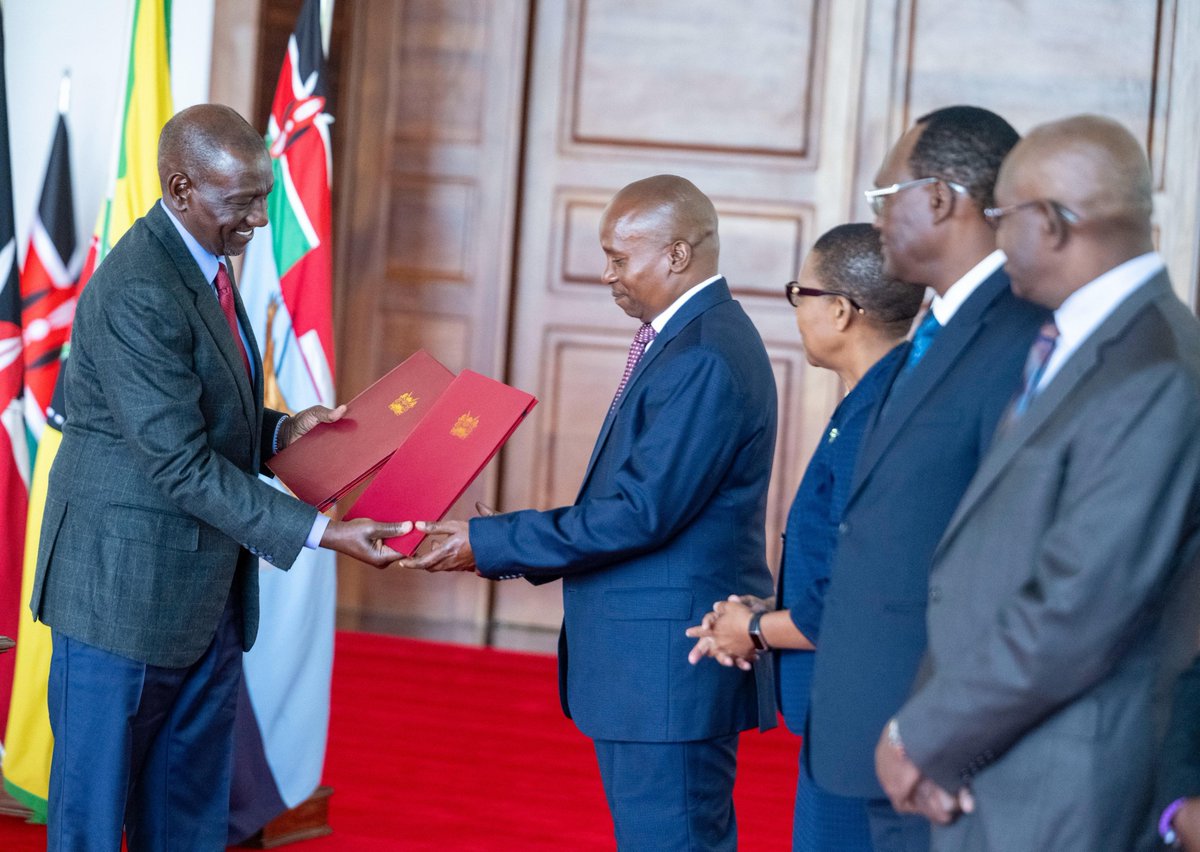
Assented to the County Allocation of Revenue Bill, 2026, at State House, Nairobi.
The Act allocates KSh428 billion as equitable share of nationally raised revenue to the 47 county governments. This represents 20.9 per cent of the most recently audited national revenue, exceeding the 15 per cent minimum required under the Constitution.
The Act distributes the equitable share among the 47 counties in accordance with the revenue-sharing formula approved under Article 217 of the Constitution.
The formula provides a stable baseline allocation while ensuring a fair distribution based on equal share, population, poverty level and geographical size.
The enhanced allocation will strengthen devolution by equipping county governments with the resources they need to fulfil their constitutional mandate and deliver quality services in line with their budgets and development priorities.
Applications are now open!
Join the 11-week virtual GEWE Programme by CPST & McGill University (Sept–Nov 2026). Strengthen your skills in gender-responsive parliamentary practice and inclusive leadership.
Register today:
https://t.co/Wyx14G1VcB
Secure your place today!
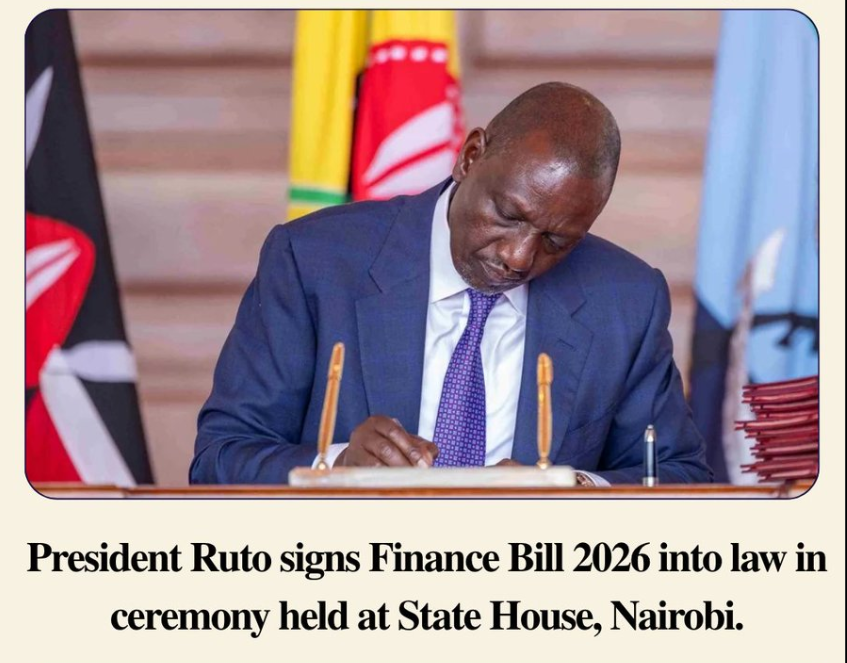
ICYMI: The President assented to the Finance Bill, 2026 on 23 June 2026, following its passage by the National Assembly on 18 June 2026.
One notable moment during its passage: 187 Members of the @NAssemblyKE were absent during the Third Reading vote on the Bill, which determines how the government will raise revenue for the 2026/27 financial year.
#FinanceBill2026
The National Assembly has passed the Kenyan Sign Language Bill, 2023, adopting key amendments that seek to expand the rights of persons with hearing impairments and strengthen access to sign language services across education, public institutions and other sectors.
https://t.co/luhNB0Ocu0
𝗨𝗣𝗗𝗔𝗧𝗘| 𝘏𝘰𝘶𝘴𝘦 𝘉𝘢𝘤𝘬𝘴 𝘊𝘦𝘯𝘵𝘳𝘢𝘭 𝘉𝘢𝘯𝘬 𝘉𝘪𝘭𝘭 𝘵𝘰 𝘚𝘵𝘳𝘦𝘯𝘨𝘵𝘩𝘦𝘯 𝘍𝘪𝘯𝘢𝘯𝘤𝘪𝘢𝘭 𝘚𝘵𝘢𝘣𝘪𝘭𝘪𝘵𝘺 𝘍𝘳𝘢𝘮𝘦𝘸𝘰𝘳𝘬
The National Assembly has approved the Central Bank of Kenya (Amendment) Bill, 2026 (National Assembly Bill No. 27 of 2026) with amendments, paving the way for a stronger financial stability framework, enhanced accountability at the Central Bank of Kenya (CBK), and improved safeguards for public funds.
The Bill, which was considered and approved with amendments proposed by the Departmental Committee on Finance and National Planning, seeks to modernize Kenya's central banking laws in line with global best practices while reinforcing the resilience of the country's financial system.
Among the key amendments approved by the House is the refinement of the Central Bank's financial stability mandate. Legislators amended Clause 2 to clarify that the Bank's role is to foster the stability, resilience, liquidity, solvency, integrity and proper functioning of a market-based financial system. The amendment removes potential overlaps with other regulators while strengthening CBK's oversight of systemic financial risks.
Find the amendments here
https://t.co/tKvvfKF0E6
𝗨𝗣𝗗𝗔𝗧𝗘| 𝘕𝘢𝘵𝘪𝘰𝘯𝘢𝘭 𝘈𝘴𝘴𝘦𝘮𝘣𝘭𝘺 𝘢𝘱𝘱𝘳𝘰𝘷𝘦𝘴 𝘙𝘦𝘷𝘦𝘯𝘶𝘦 𝘈𝘭𝘭𝘰𝘤𝘢𝘵𝘪𝘰𝘯 𝘉𝘪𝘭𝘭 𝘵𝘰 𝘜𝘯𝘭𝘰𝘤𝘬 𝘒����𝘩 428 𝘉𝘪𝘭𝘭𝘪𝘰𝘯 𝘧𝘰𝘳 𝘊𝘰𝘶𝘯𝘵𝘪𝘦𝘴 𝘪𝘯 𝘔𝘢𝘫𝘰𝘳 𝘉𝘰𝘰𝘴𝘵 𝘵𝘰 𝘋𝘦𝘷𝘰𝘭𝘶𝘵𝘪𝘰𝘯 𝘢𝘯𝘥 𝘚𝘦𝘳𝘷𝘪𝘤𝘦 𝘋𝘦𝘭𝘪𝘷𝘦𝘳𝘺
The National Assembly has passed the County Allocation of Revenue Bill, 2026, paving the way for the disbursement of Ksh 428 billion in equitable share revenue to the country's 47 county governments for the 2026/2027 Financial Year.
The Bill, which was approved without amendments, provides the legal framework for the allocation and transfer of nationally raised revenue to counties, ensuring that devolved units receive resources needed to deliver essential services to wananchi.