Alarming Indigenous SCD rate demands early screening: https://t.co/J6NhcrHSsZ
Important research, congratulations Dr Sonali Pande @pretzeldr@NKangaharan Viran De Silva, Marianne Tiemensma, @ACSEP_
10 Tendinopathy Truths you Must Know
8 years on-is it relevant?
My 2024 take would highlight:
1) Load may be a small factor for some and broaden factors that influence pain
2) 'Exercise' can be physical activity (not just therapeutic exercise)
What's your 2024 take?
Covid increases a number of physical illnesses. The more times you get Covid, the more likely you are to get #LongCovid. If this virus isn't going away, what happens after a period of time where people have multiple infections? Kwame McKenzie MD
https://t.co/aJcbqhcsJk
The report from the Australian Senate Inquiry into excess deaths is out. Excess deaths between 2021 and 2023 were primarily caused from COVID - both directly and indirectly. XS deaths would have been much worse without vaccination.
https://t.co/Y0it45SMFv
Thanks to all of those who Retweeted, liked and replied to our preprint paper on the relationship between national COVID excess mortality and Paris Olympics Gold medal success at https://t.co/qvrbdxSqiY 1/🧵
We’ve done an analysis to show that countries that reduced Covid more effectively won more Gold medals than expected at the Paris Olympics and vice versa
https://t.co/qvrbdxSqiY
Aerobic exercise isn’t the only road to better metabolic health.
Resistance training can also improve:
- Glycaemic control
- Mitochondrial function
- Resting blood pressure
- Lean body mass and fat mass
- And even VO2max (in the lesser-trained)
A reminder the general benefits of aerobic and resistance training are actually more similar than different.
https://t.co/QUXv2EQ6xR
Quote 🧵
It’s not just random luck that the Australian Olympic team athletes are protecting their health & Olympic performance with high quality respirators
It’s an evidence based, well planned strategy devised by Dr Carolyn Broderick, medical director of Aus Olympic team
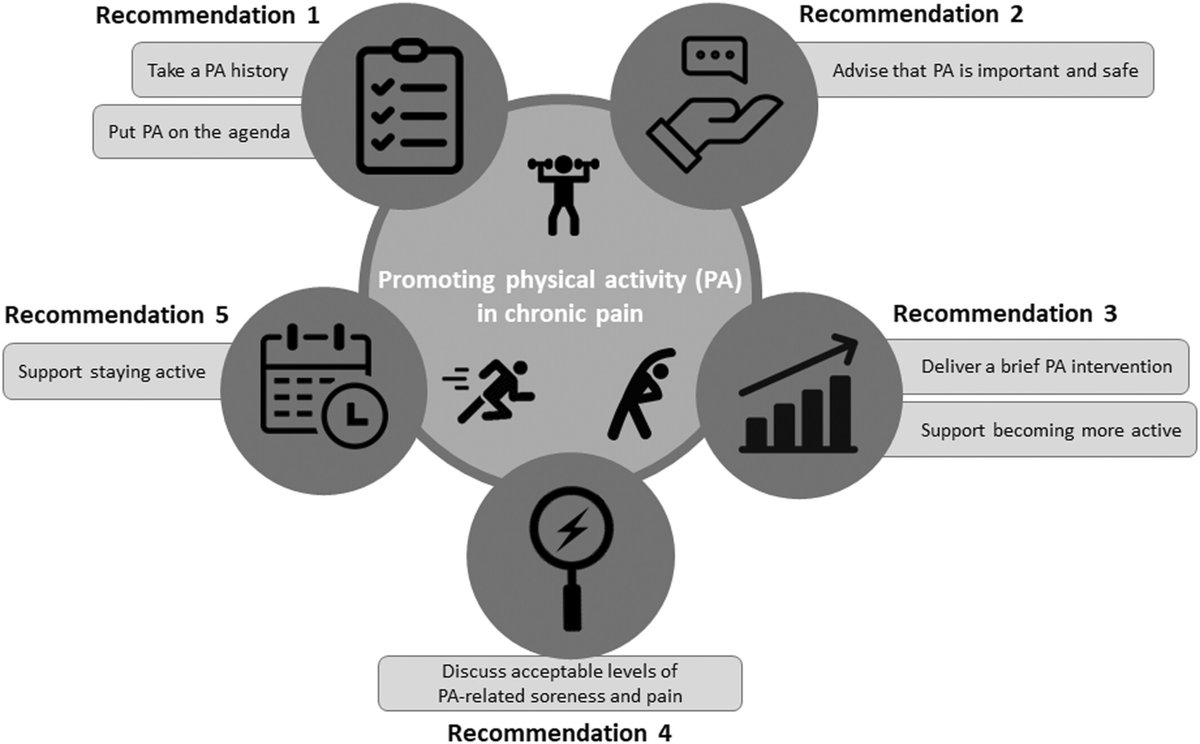
Physical activity should be the primary intervention for individuals living with chronic pain A position paper from the European Pain Federation (EFIC) 'On the Move' Task Force
👇👇👇
https://t.co/oKOnxQ261A
Long-term effects of exercise therapy versus arthroscopic partial meniscectomy for degenerative meniscal tear: A meta-analysis of randomized controlled trials
👇👇👇
https://t.co/XcTDb2y7th
IMHO, 150min/week of “aerobic” exercise are insufficient for long-term longevity and metabolic health gains/maintenance…I would say that ~300min/week should be the goal.
Furthermore (and very important), the concept of Zone 2 training is NOT about cardiorespiratory improvements (aka VO2max) but about metabolic improvements at the cellular and bioenergetic level, driven by an improvement of mitochondrial function. At least this is how I have seen it since I “coined” my definition of Zone 2 almost 30 years ago and have always used it the same way.
Also, I encourage people to start talking more about metabolic training instead of “cardio” training. We have been doing it already for at least 2 decades in the world of high sports performance.
All exercise intensities improve cardiorespiratory adaptations. However different training zones stimulate different bioenergetic systems leading to different cellular and metabolic adaptations. Targeting the right metabolic adaptations can have significant improvements in longevity and metabolic health.
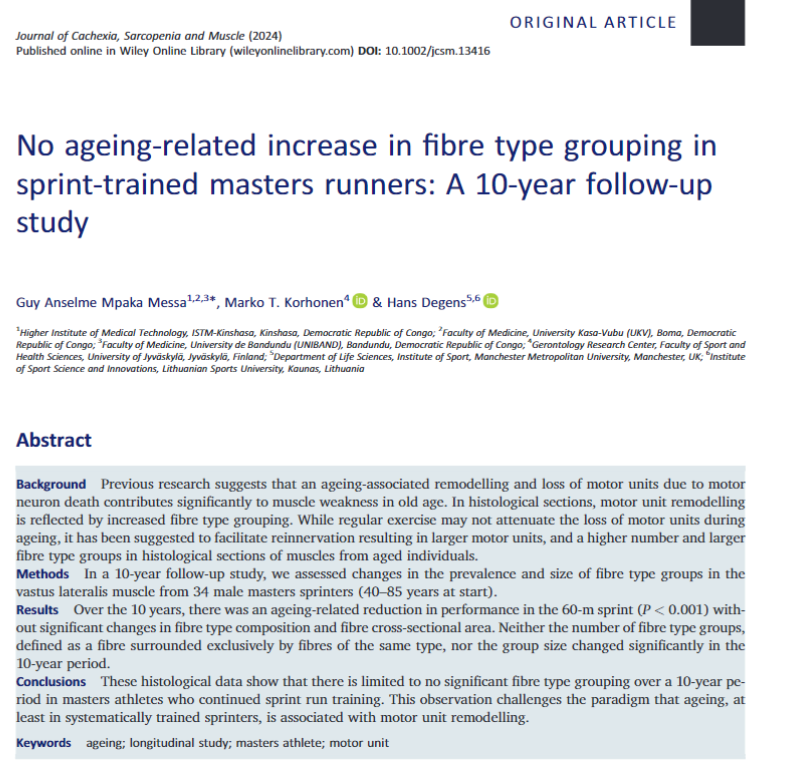
Changes in muscle over the lifespan aren’t “just ageing”.
Over 10 years, masters sprinters aged 40-85 had no changes in:
- Muscle fibre size (type I or type II)
- Fibre composition (amount of type I vs. type II fibres)
- Fibre grouping or shape (signs of motorneuron loss)
Yet more evidence that exercise preserves muscle.
https://t.co/drBl2e9Zn3