Exciting life update:
When I was an undergraduate student majoring in psychology and biology, I was fascinated by Leon Festinger's landmark study on cognitive dissonance.
It was an inspiring night at the @EpilepsyFdn of Metro New York 10th Annual Gala with the team from @NeurologyNymc, joining together to raise money for #epilepsy support and honoring Dr. Jacqueline French for her immense contributions to the field.
A region of the brain named Wernicke’s area—long thought to be involved in speech perception—also generates spoken words, according to a new Science study in humans that tackles a century-old debate in the neuroscience of speech.
Learn more: https://t.co/3wPpd4gKGx
A groundbreaking @UCSF study from @ChangLabUcsf, published in @ScienceMagazine, identified a subregion of Wernicke's area becomes active before we speak and is necessary for speech production—encoding features of an upcoming word.
Each word you say is planned by a small patch of brain above your left ear, about a quarter of a second before you say it. It sits in a temporal lobe region textbooks describe as only for listening. Our paper today in @ScienceMagazine: https://t.co/EXOgl3YsNI
@UCSF@NeurosurgUCSF
“There is a big picture that brings it all into relief and my hope is that we can increase empathy and understanding,” says 2026 medicine laureate Karl Deisseroth.
As a medical student, Deisseroth completed part of his training at a psychiatric clinic. He was struck by the patients’ suffering and their need for help. At the same time, he began to wonder how the brain could function so differently from one person to another.
Deisseroth was awarded this year's medicine prize, together with Peter Hegemann and Georg Nagel, for discoveries leading to optogenetics – a biological technique making it possible to switch the activity of individual nerve cells in a living brain on or off.
Optogenetics is now helping us understand more about how nerve cells shape memories, emotions and behaviour in the living brain.
Learn more about the 2026 medicine prize: https://t.co/4YxFdfBTii
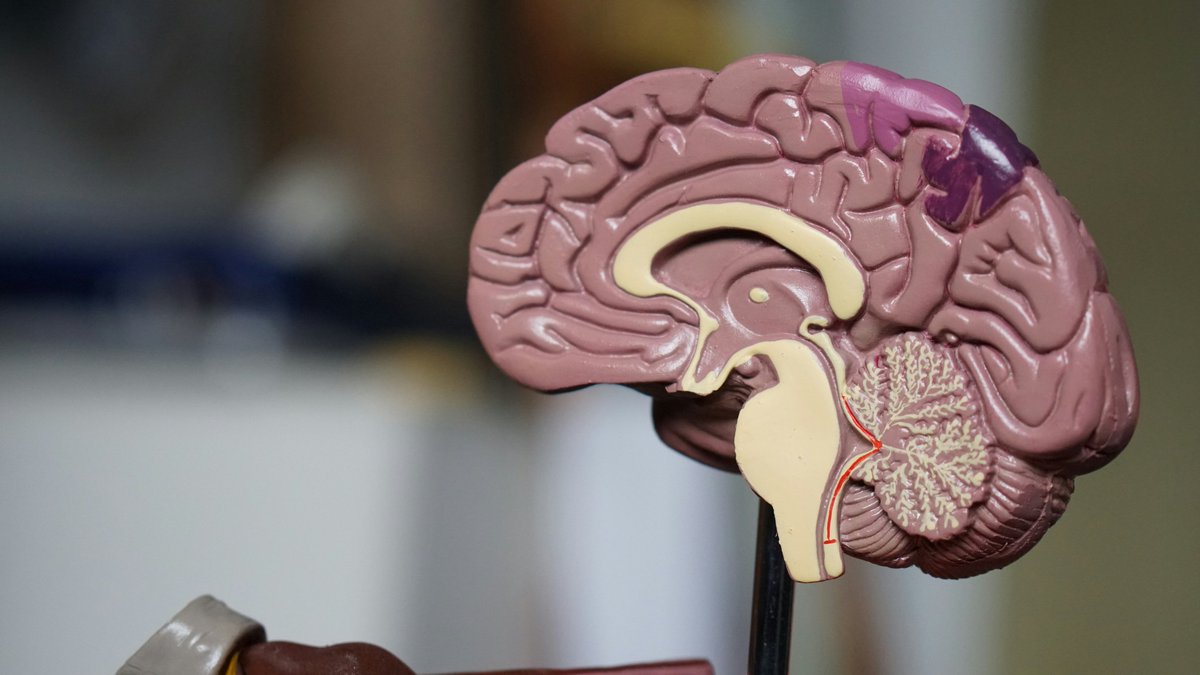
🧠 It's #WorldBrainDay!
Brain health is essential to how we learn, work, connect, and thrive.
Every discovery brings us closer to earlier diagnoses, better prevention, and care that reaches every community.
Put your curiosity to the test.
🔗 https://t.co/Q2XVbiANs4
The brain is the most complex organ in the human body.
You can protect your brain health by:
🏃♀️ Staying active
🥗 Eating a healthy diet
😴 Getting enough sleep
🧩 Keeping your mind engaged
More tips from @WHO on Wednesday’s #WorldBrainDay: https://t.co/0Zr76ima1u
Key takeaways of our latest work in @EpilepsiaJourn:
1) People with seizures face higher cardiovascular risk
2) Longer term + cumulative exposure to enzyme-modulating ASMs was associated with modestly increased risk
@leysander@roland_thijs
https://t.co/A9NkOFcQfx
Exciting life update:
When I was an undergraduate student majoring in psychology and biology, I was fascinated by Leon Festinger's landmark study on cognitive dissonance.
Exciting life update:
When I was an undergraduate student majoring in psychology and biology, I was fascinated by Leon Festinger's landmark study on cognitive dissonance.
@Tracey1milligan@ColumbiaNeuro Now, I am thrilled to learn all there is to learn about neurology – to become an excellent neurologist-scientist @NeurologyNymc!
Onwards and upwards. It is a pleasure to serve!
Full article:
https://t.co/6xWnn12Agm
Photo by Robina Weermeijer:
https://t.co/x775yThU5M
@Tracey1milligan@ColumbiaNeuro My experiences over the last two years – the highs such as that case, lows, and day to day – will prove foundational in my development as a neurologist. I am fortunate to have the rare perspective into the surgical management of neurological disease that few neurologists have.