If an AV can drive in New York, it doesn't necessarily know how to drive in Tokyo.
Different roads mean different driving behaviors. 🛣️
The only way to bridge that gap before sending autonomous cars into the real world is to have enough training data.
Heads up Drive& users, June 30th is coming fast 👀
That's your last day to withdraw and qualify for the staking campaign. Stake your $NATIX and earn up to 15% bonus on top of standard APY.
Make sure not to miss it 👇
https://t.co/VMW26cP318
4/
This is where NATIX comes in.
Our decentralized camera network captures real-world driving data across countries, climates, and driving cultures.
That is how Physical AI gets the geographic coverage it needs to scale. 🌎
Autonomous driving is not just an algorithm race.
It is a geography problem. 🌎
Roads, signs, weather, and driving culture change everywhere.
That is why global data coverage matters 👇
https://t.co/nJdfEKHkqp
3/
Nowadays, AV systems are deployed city-by-city, but this kind of autonomy does not scale.
Every new market means new roads, edge cases, maps, and tuning. 🚗
The future needs a data layer that can teach a vehicle how to drive in a different geography before it gets there.
World models need more than pixels.
They need motion, context, uncertainty, and all the edge cases that happen outside the lab.
That is why real-world video matters 📹
Some edge cases we can deal with, but what about the ones we have never encountered? 🤡🐎
Autonomy has a long way to go until it catches up to the unpredictability of the real world.
Luckily, NATIX is on it 🚗
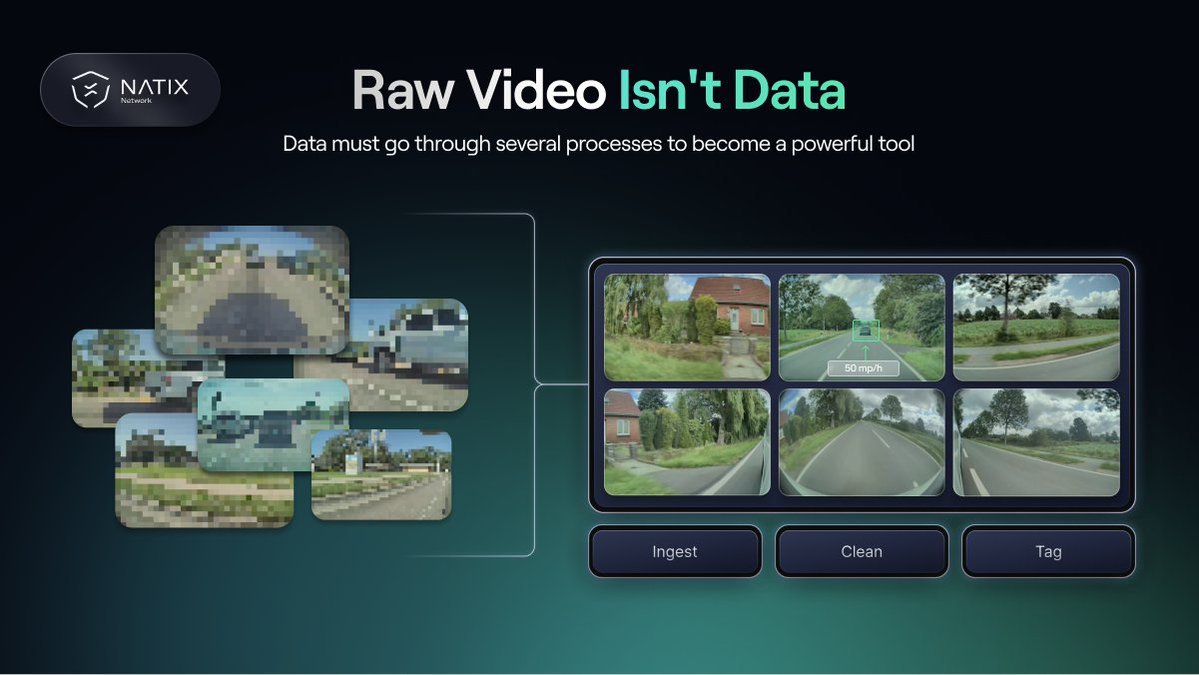
Raw video isn't a dataset.
It has to be ingested, cleaned, and tagged before it can train anything meaningful.
That pipeline is what separates footage from fuel. ⚡️
Cameras. HD map. Estimation module. Algorithms. AV system.
That's the traditional stack. Each box is hand-engineered, glued together, and maintained forever.
End-to-end collapses it all into one model trained on video. The bottleneck moved from code to data. 👀
4/
This is why NATIX is building an open-source multi-camera World Foundation Model with Valeo.
The footage is the starting point. The pipeline is what turns it into intelligence. ⚡️
Autonomous driving is no longer a sensor problem. It is a data infrastructure problem. 🚗
Raw video is not a dataset. What a self-driving system learns depends almost entirely on what happens after the recording ends 👇
https://t.co/HwPR3co2rS
3/
The harder problem is the long tail. The rare scenarios that decide whether a system is safe.
You cannot schedule edge cases. You catch them at scale, across regions and angles. VLMs surface them. Multi-camera footage shows the full scene. 🔍
Is a World Model a dojo for Physical AI? 🥋
Building a replica of the world using real-world driving data makes it possible to train, test and validate your system without the stress of doing it out in the open. 🌐🌐
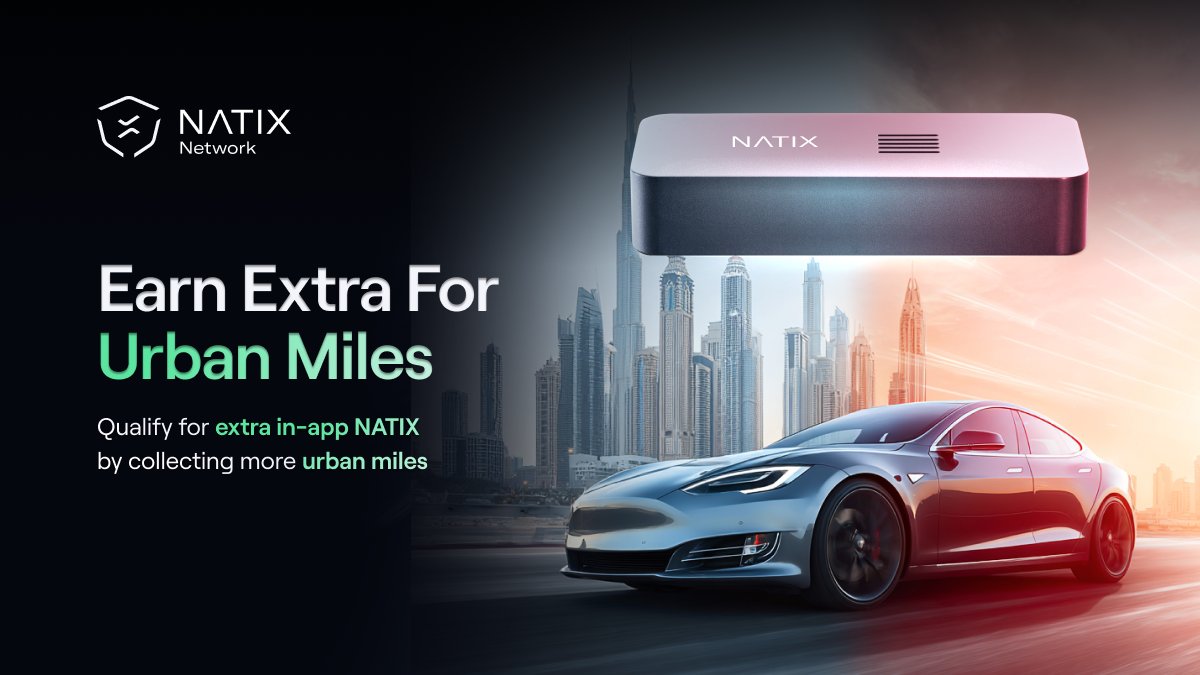
VX360 drivers, the Urban Miles Campaign is still on!
Going to work? Shopping? Visiting your uncles? Every drive makes a difference! 🚗
All you have to do is opt for driving on urban roads and enjoy the ride. 😎
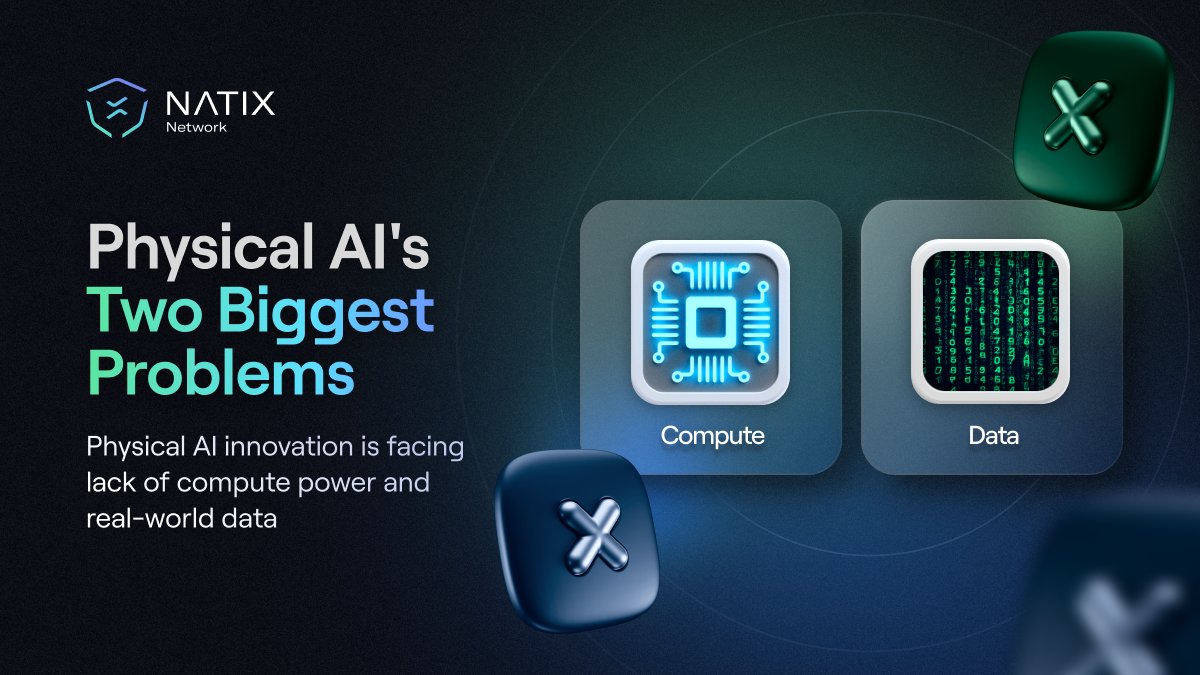
The next leap in Physical AI will not come from bigger models alone.
It needs better real-world data and the computing power to learn from it.
NATIX helps solve the data side with multi-camera video from the physical world. 💪