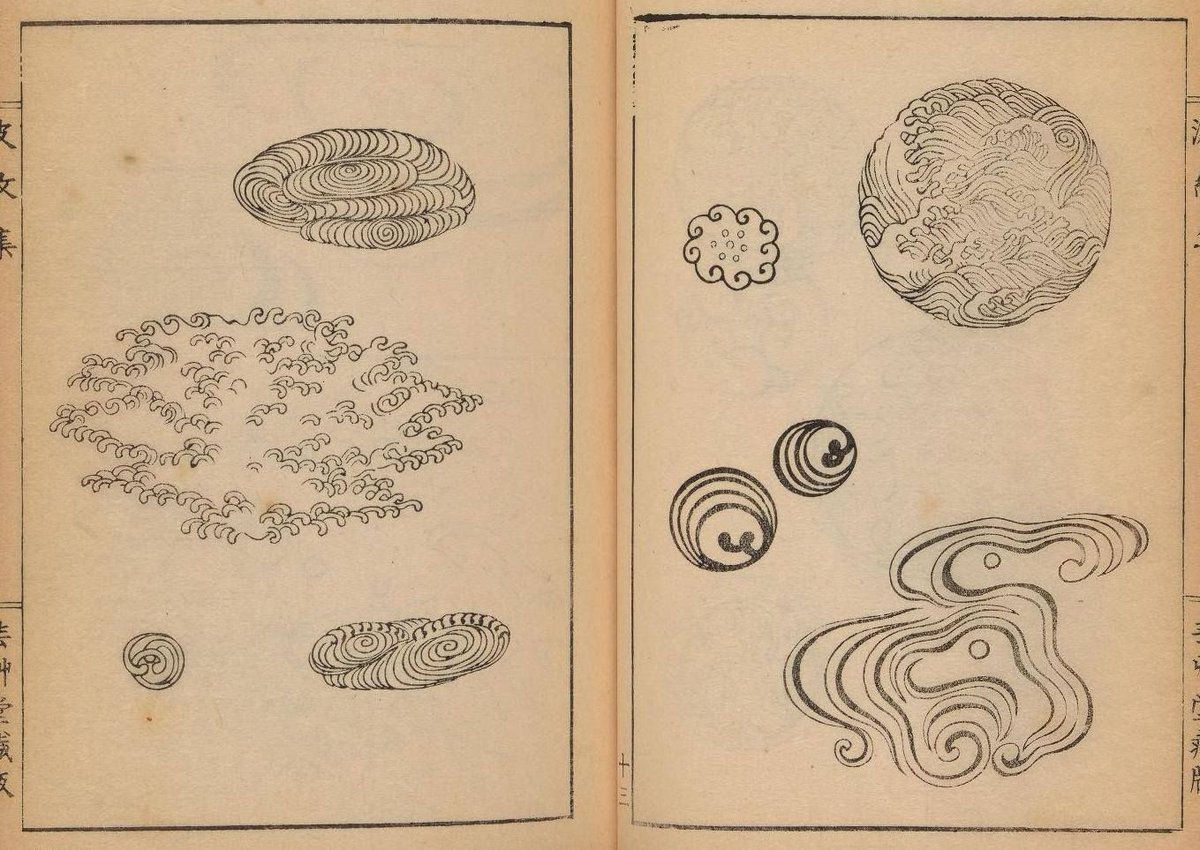
Double page spread from Hamonshu (1903), a Japanese book of wave and ripple designs that would have acted as a kind of go-to guide for Japanese craftsmen looking to adorn their wares with such patterns. See all three volumes of the work here: https://t.co/VQLFKiZ6pD
Bass Rock, Firth of Forth, Scotland, view from the south, c. 1693. After John Slezer, Theatrum Scotiae, via National Library of Scotland.
Just before this engraving was published, the prison on Bass Rock went through a reversal that reads like a jailbreak in reverse. In 1691 four Jacobite officers held here as prisoners waited until most of the garrison was down at the landing unloading a coal ship, then seized the castle and locked the soldiers out. For almost three years they ran the island as a tiny rebel stronghold, taking in clandestine supplies from sympathisers and French ships and using the fort’s cannon to harass passing vessels, before calmly negotiating their own freedom.
In these stunning chromolithographs from 1851, Jean Baptiste Vérany realizes his ambition — to accurately render “the suppleness of the flesh, the grace of the contours, the transparency and the coloring” of cephalopods: https://t.co/3RnxtKyeCm
“Eastern Sports and Western Bodies”, Daniel Elkind's essay on the 19th-century exercise fad of club swinging and its links with the history of colonialism, immigration, and capitalist culture: https://t.co/kJe3EGa5ty