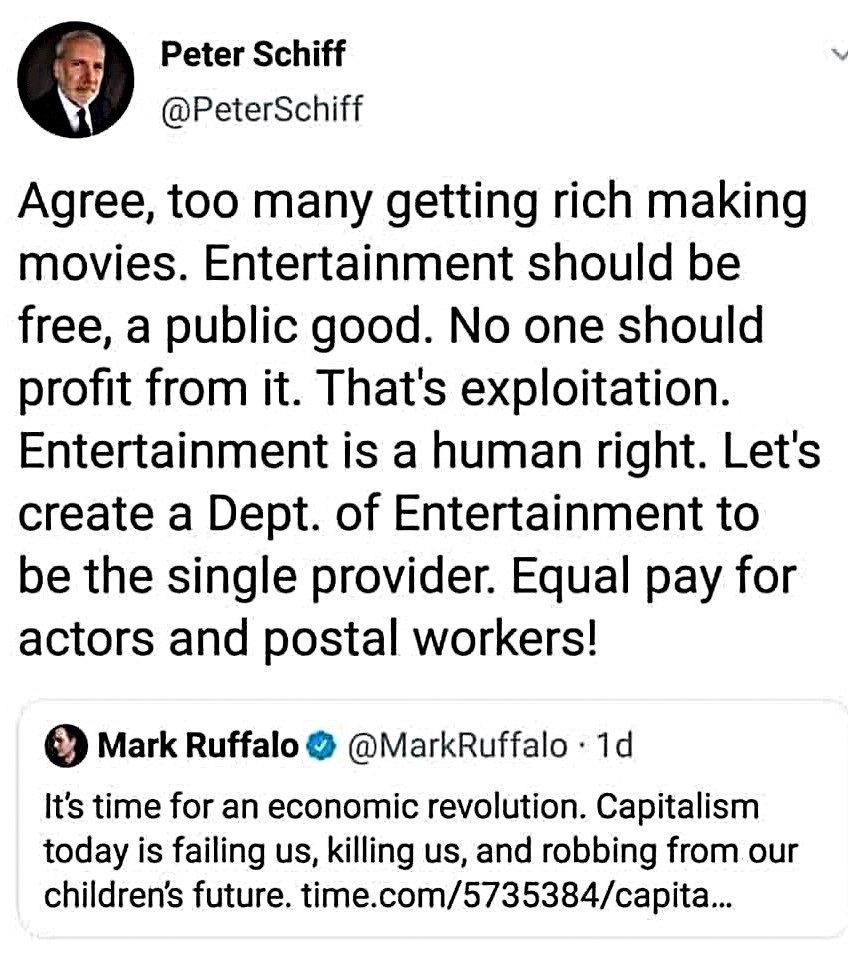
@nedryun@zerohedge When are they folks going to start rotting in jail. Probably when @RoKhanna starts rotting in jail. They are of the same tribe. Different scale. But HNW fraudsters.
The Death of Military Nobility
Military history is full of men who confused status with relevance. Nothing is new under the sun.
The knight believed armor, bloodline, ceremony, and inherited prestige made him permanent. Then infantrymen with pikes and archers with longbows dragged the old order into the mud and taught Europe that nobility was not the same thing as battlefield utility.
The chariot had its age. So did the castle and the battleship. Every dominant form eventually meets the thing that makes it obsolete, and the people most invested in the old order always call that disruption reckless, vulgar, dangerous, or unserious right before history removes them from the center of the map.
This is happening again. And in many ways.
The modern military has its own aristocracy. Not hereditary titles, but credentialed titles. Joint billets. Staff tours. Fellowships. Advanced degrees. Polished bios. Carefully managed careers. People who survived every institutional checkpoint and now mistake that survival for proof they can fight.
That was always the scam of aristocracies.
They begin as systems for identifying excellence, then slowly become systems for protecting status. What starts as a ladder becomes a wall. What begins as recognition becomes entitlement. Eventually the ruling class forgets that rank, pedigree, and prestige only matter if they still produce victory.
The battlefield has no patience for obsolete nobility.
Reality does not care how many wickets you cleared. The enemy does not care who endorsed your file. War does not salute your résumé before deciding whether your formation lives or dies.
Merit always returns in the most humiliating form possible for the people who tried to manage it.
Sometimes it returns as a longbow, a pike, a tank, an aircraft carrier, a drone, a Napoleon.
And sometimes as a generation of warfighters looking at the credentialed nobility of their own institution and asking the most dangerous question in military history:
Can you actually fight?
@BasedMikeLee Most senate republicans are Team DC. They have misread the constitution and their purpose. Most see themselves as House of Lords aristocrats. Most are there for the prestige. Not service.
@WillRicci 💯. Jordan Peterson said when you bring the fringes of society to the center, you bring the truly dangerous psychopaths from the dark corners into society's fringes. Weiner will be destroyed by the psychopaths he invited into society.
I’ve seen enough. We need a total and complete shutdown of any government funding to Catholic Charities until we can figure out what the hell is going on.
@LeeKuanYimby This dude has done more to promote perversion than any dude on the planet. And the perverts are ready to destroy him! Mark my words, these folks create hell on earth. Keep a sharp eye on your kids. No kid is safe around these folks.
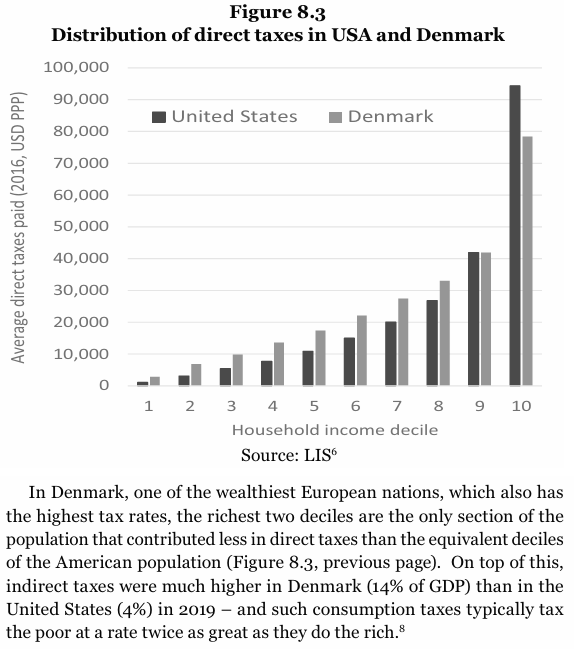
Denmark actually raises slightly *less* in revenue from the rich than the United States, but substantially *more* from those with low incomes.
See "The American Way of Welfare", p117-18:
https://t.co/Ee7VwhDGkn
This Frenchman knows 100x more about the principles and telos of America's founding than 99 percent of our elected congresspeople and 99.9% of our judiciary(save for Alito and Thomas)
On célèbre toujours le 4 juillet 1776 comme un feu d'artifice.
Mais l'histoire vraie est plus froide, plus improbable, et infiniment plus grande : c'est celle d'une idée qui a vaincu le plus grand empire du monde sans avoir, au départ, ni armée, ni argent, ni État.
19 avril 1775.
Deux villages du Massachusetts : Lexington et Concord. Quelques centaines de fermiers — les minutemen, ainsi nommés parce qu'ils devaient être prêts à se battre en une minute — face aux tuniques rouges, l'infanterie la plus disciplinée de la planète. Personne ne donne cher de leur peau. Et pourtant ce jour-là claque ce que le poète Emerson appellera plus tard « le coup de feu entendu autour du monde ». Pourquoi « autour du monde » ? Parce que ce n'est pas une révolte locale. C'est le premier acte d'une idée exportable.
Mai 1775.
Le Deuxième Congrès continental se réunit à Philadelphie. Treize colonies, jusque-là rivales, comprennent qu'aucune ne survivra seule. Elles créent une Armée continentale, et en confient le commandement à un planteur de Virginie taiseux et obstiné : George Washington. Détail qu'on oublie : Washington n'est pas choisi parce qu'il est le meilleur général. Il est choisi parce qu'il inspire confiance, parce qu'on sait qu'il rendra le pouvoir. Toute la révolution américaine tient déjà dans ce pari : des hommes qui se méfient autant du tyran d'en face que du tyran qu'ils pourraient devenir.
Pendant un an, on se bat sans savoir au nom de quoi exactement. Réformer l'Empire ? Négocier ? Rompre ? Puis arrive l'étincelle intellectuelle : début 1776, un pamphlet anonyme, Common Sense de Thomas Paine, vendu à des centaines de milliers d'exemplaires. Il dit tout haut l'impensable : l'indépendance.
2 juillet 1776, le Congrès vote la rupture. 4 juillet 1776, il adopte le texte qui la justifie. La rédaction a été confiée à un comité de cinq, mais la plume est celle d'un homme de 33 ans : Thomas Jefferson. Et c'est là que tout bascule. Jefferson aurait pu écrire un cahier de doléances : nos impôts, nos taxes, nos griefs contre George III. À la place, il écrit une phrase qui n'appartient à personne, et donc à tout le monde : « Nous tenons ces vérités pour évidentes : que tous les hommes sont créés égaux, qu'ils sont dotés de droits inaliénables, parmi lesquels la vie, la liberté et la recherche du bonheur. » Et surtout : que le pouvoir des gouvernements procède du consentement des gouvernés.
Mesure bien le renversement. Pendant des millénaires, le pouvoir descendait : de Dieu vers le roi, du roi vers le peuple. Là, pour la première fois, on l'inverse : il monte. Il vient des individus. L'État n'est plus un maître, c'est un mandataire — révocable. C'est, des siècles avant la lettre, une intuition très bastiatienne : l'État n'a aucun droit que les individus ne lui aient délégué. Et un soupçon très hayekien : aucun homme, aucune assemblée n'est assez sage pour gouverner sans le consentement permanent de ceux qu'il gouverne.
Le tableau de John Trumbull, accroché au Capitole, fige cette scène : le comité présentant le texte au Congrès. Mais ne te trompe pas. La vraie arme dans cette pièce n'est pas l'épée accrochée au mur. C'est le document posé sur la table.
Suivront sept ans de guerre, des défaites, l'hiver glacé de Valley Forge, l'alliance décisive de la France de Louis XVI — ironie de l'Histoire, une monarchie finance la première grande république moderne. Et en 1783, l'impensable est acté : l'Empire britannique reconnaît la défaite. Mais le miracle américain n'est pas militaire. Il est dans ce qui vient après. Washington, vainqueur, adulé, qui aurait pu être roi… rend son commandement et rentre chez lui. George III, en l'apprenant, aurait dit : « S'il fait cela, c'est l'homme le plus grand du monde. »
Voilà ce que la plupart ratent. 1776 ne fonde pas seulement une nation. Ça fonde un logiciel : un pays organisé autour d'une idée plutôt que d'un sang, d'un sol ou d'un roi. Un pays qu'on peut rejoindre. Une civilisation conçue comme une machine à fabriquer de la liberté — et du futur.
250 ans plus tard, presque jour pour jour, le pari tient toujours. Aucun empire ne s'était jamais fondé sur une phrase. Un seul l'a fait. Et cette phrase court encore.
@Scaramucci Dude. This is communism on steroids. Allows a groups of evil fuck-ups incapable of building and creating prosperity to stoke envy and steal from the productive at will. This man should go to prison for theft and promoting theft