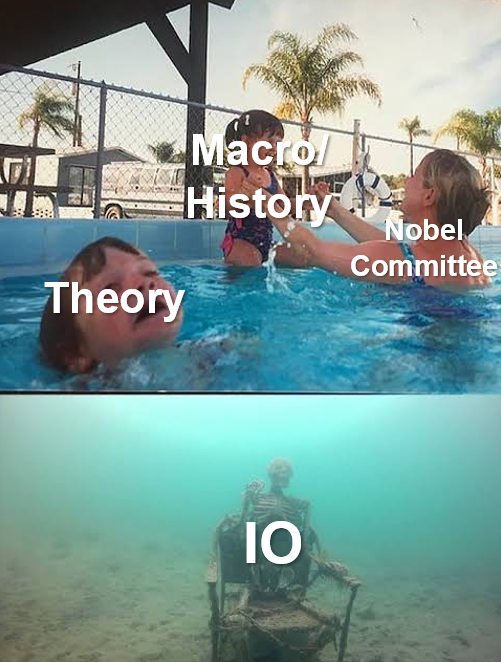
Yeah @soumitrashukla9 we both know: The pangram police are going to stay silent on this.
If someone's conspicuously "worried" all the time about AI use in research -- but silent about the AI-driven RH solution today -- I wonder if they're serious about anything they say.
The critique has to be applied to high-status, celebrated results too. You can't just pick on PhD students.
In a new working paper with Lijuan Luo (Cornell), Nathan Yang (UIUC), & Fan Yao (UNC), we find that AI can fully displace low-quality creators' demand. But they stick around as training data suppliers! In fact, all creators are better off training the AI that competes with them.
This suggests 2 economic roles for humans in a future with increasingly capable AI that's hungry for training data: (1) sell high-quality content to consumers; (2) sell lower-quality content as training data to AI that better matches consumers' tastes.
🔗 https://t.co/o4K6JwgzIN
Platforms like Shutterstock now offer their own generative AI, trained on content contributed by the platform's creators for $. So consumers can prompt AI for customized content instead of purchasing from creators. Are creators better off helping train AI that competes with them?
What does it mean to be authentic in a world of AI filters, beauty trends, and impossible standards?
Gies Business' Rosanna Smith offers insights into how consumers, brands and society are navigating today's beauty landscape.
🎧 Full episode on YouTube, Apple Podcasts & Spotify
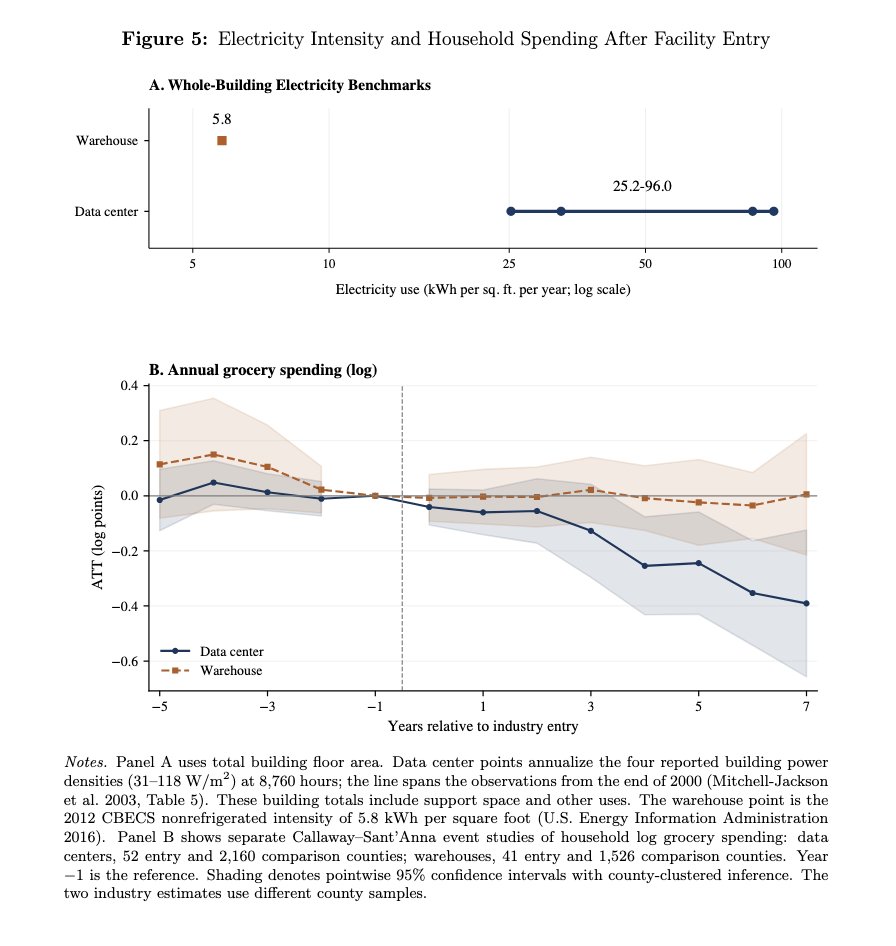
Rong Bai, @unnatinarang and I are putting the final touches to our paper about data centers. Hope to release it soon! Super pumped that this is my first collaboration with the star colleagues at @giesbusiness!
#BusinessOnPurpose [1/2]
Some thoughts about academia, AI, and marketing science. This is an invited commentary based on my recent appointment as an ISMS Fellow. 1/3
https://t.co/pkCwmCwBU5
Decision agents like Jev @typesafeai are exciting. Giving them economic structure can make them even better!
Stopping agents reduce the time spent on low-value conversations (e.g., when making sales calls) by weighing rewards, opportunity costs, and the option-value of waiting.
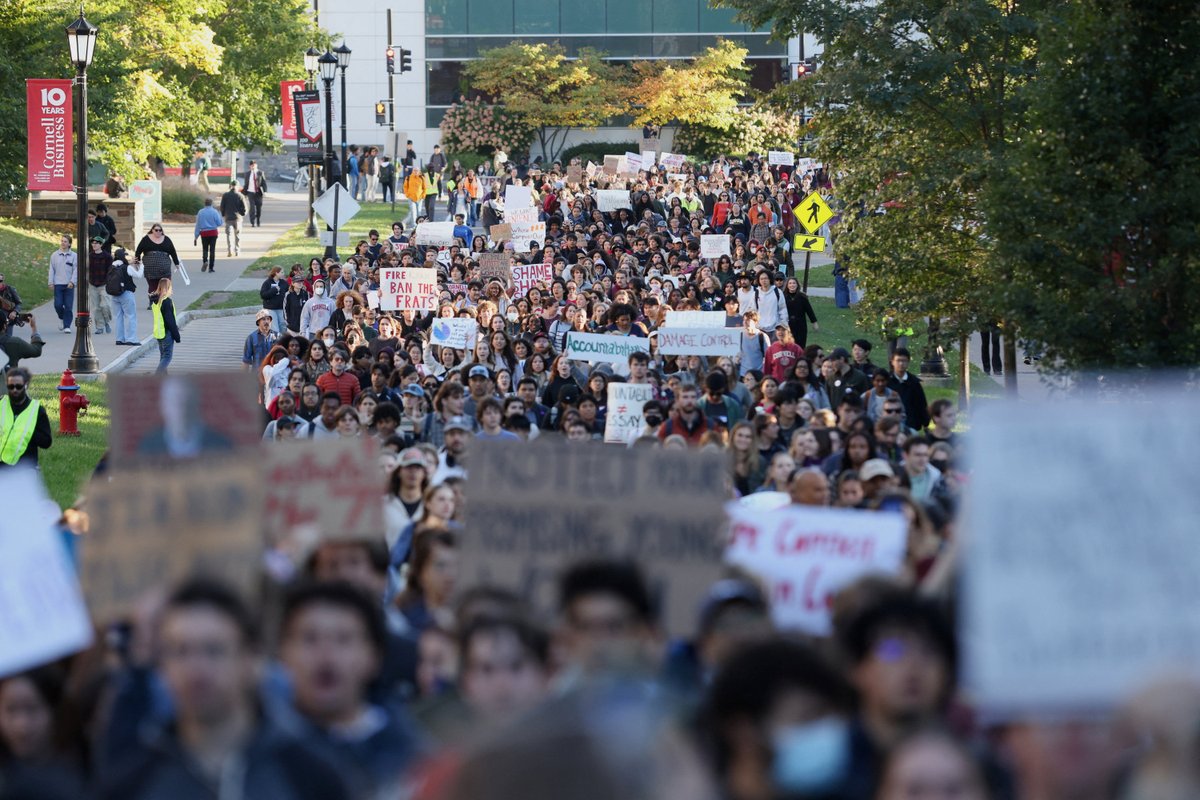
🔊 Students march at Cornell after a student's gang rape allegations sparked outrage. @edouphoto said the students ‘described both anger and grief... that these issues keep on coming up over and over again.' Listen on the Reuters World News podcast https://t.co/gnnAbDtowP
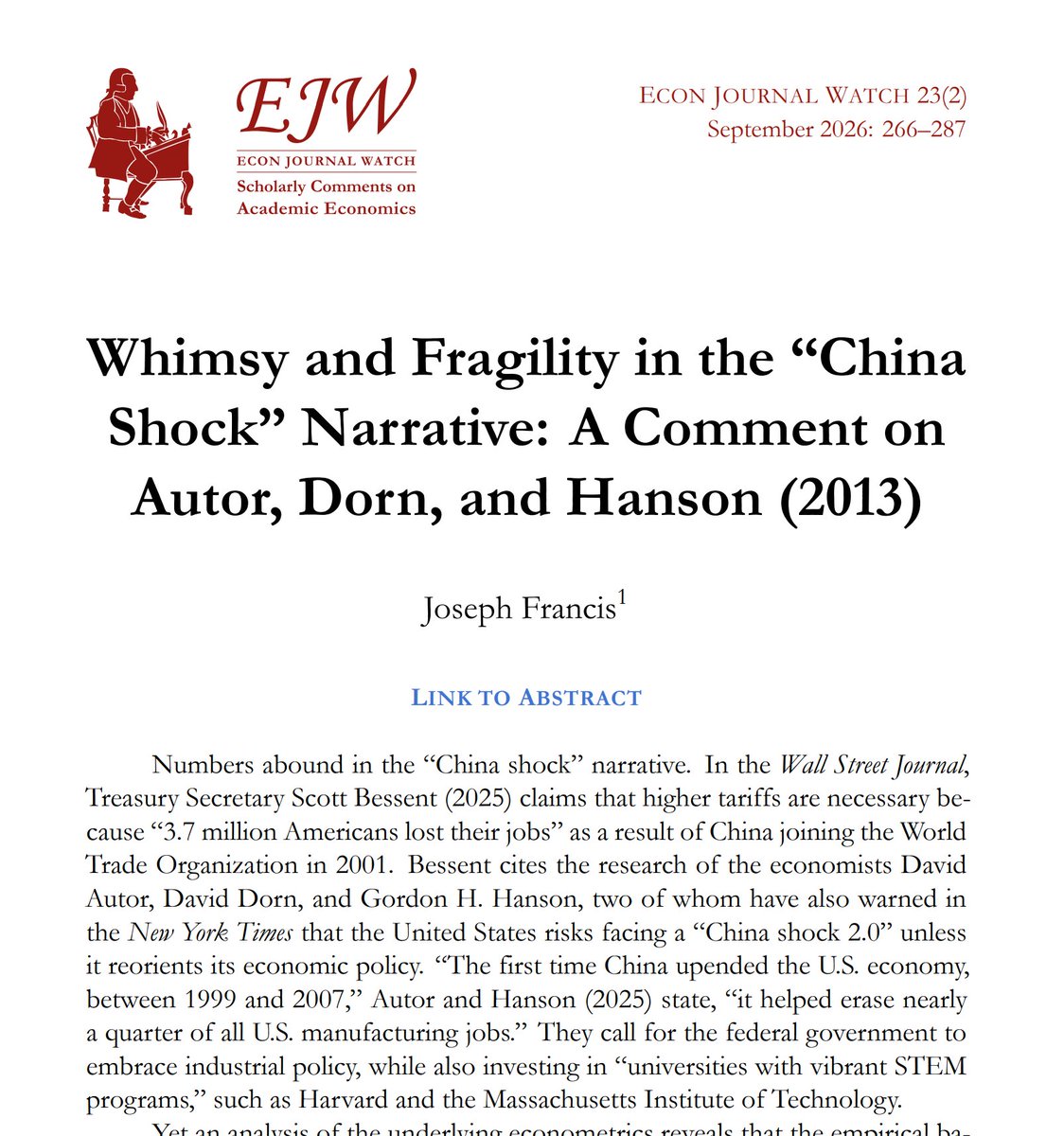
As recently as 2025, Autor and Hansen restated their results in the NYT. If they were aware of this, it's bad behavior. And if they weren't aware of this, it would be quite negligent.
https://t.co/NjjuIkknww
The PhD thesis of my 15th PhD student, Shibhansh Dohare (@ShibhanshD), is now available.
Title: Learning Forever using Artificial Neural Networks
Url: https://t.co/Zp2GxZ03aw
Abstract:
In this dissertation, I study the ability of artificial neural networks to learn new things. I refer to this ability as plasticity. Plasticity is a desirable property of intelligent systems in the real world. Systems that interact with the real world can become outdated if they do not learn from the new information revealed to them by the extremely large and partially observable real world. All naturally intelligent systems continually learn new things to keep up with the changes in the world. Many applications like predicting markets or weather, learning human preferences, controlling factories or prosthetics, etc require AI systems that continually learn new things.
I provide direct and thorough demonstrations of loss of plasticity in deep learning systems. The demonstrations range from simple feed-forward networks to deep residual networks and cover a wide range of algorithmic choices. While seeking an understanding of the phenomenon, I found that loss of plasticity occurred simultaneously with hidden units becoming dormant and becoming similar to each other, hampering the ability of the networks to learn new things.
Next, I describe the continual backpropagation algorithm. I designed this algorithm, in collaboration with others, to maintain plasticity in artificial neural networks. Continual backpropagation is a simple extension of the conventional backpropagation algorithm. The conventional backpropagation has two main parts: initialization with small random weights and gradient descent at each step. In addition to gradient descent, continual backpropagation reinitializes a small fraction of units at each step. Continual backpropagation indefinitely maintained plasticity in many continual supervised learning problems.
Finally, I study plasticity of deep reinforcement learning systems. First, I show that plasticity loss has an effect even in stationary reinforcement learning problems. It is unsurprising that plasticity loss affects stationary reinforcement learning because it requires continual learning due to changing policies and bootstrapping. This effect is visible under long-term learning. I found that some commonly used RL algorithms do not scale with data. Their performance drops as they continue interacting with the environment. Plasticity loss hampers the ability of these algorithms to recover and relearn when the performance drops, resulting in agents that do not get better with experience. Continual backpropagation allows these algorithms to recover when performance drops, leading to agents whose performance keeps improving with experience. Second, I show that loss of plasticity is a significant problem in continual reinforcement learning problems, and continual backpropagation maintains plasticity in these problems.
Shibhansh is now a research scientist at Keen Technologies.