Lumos Robotics invites builders, universities, and robotics labs to join Project Edge with Lumos Nix.
100 complimentary Lumos Nix units are available for selected partners.
SDK access and direct support included.
What would you deploy first?
Apply via our website now.
R Praggnanandhaa created history after winning the Norway Chess 2026. In the final round, Praggnanandhaa defeated Vincent Keymer with the white pieces to win the title. Pragg scored 4 consecutive classical wins to finish the tournament. Norway Chess 2026 was one of the strongest tournaments of the year.
According to the numbers, it was even stronger than the candidates. It was one of the biggest achievements of Pragg's career as he became the 1st Indian to win Norway Chess. #praggnanandhaa #Norwaychess
https://t.co/4eCmRBcZyt
More than half of the publicly identified donors to President Trump’s White House ballroom project have won new or expanded federal contracts worth more than $50 billion, according to a report from a government watchdog group. https://t.co/wEAqxMA7AG
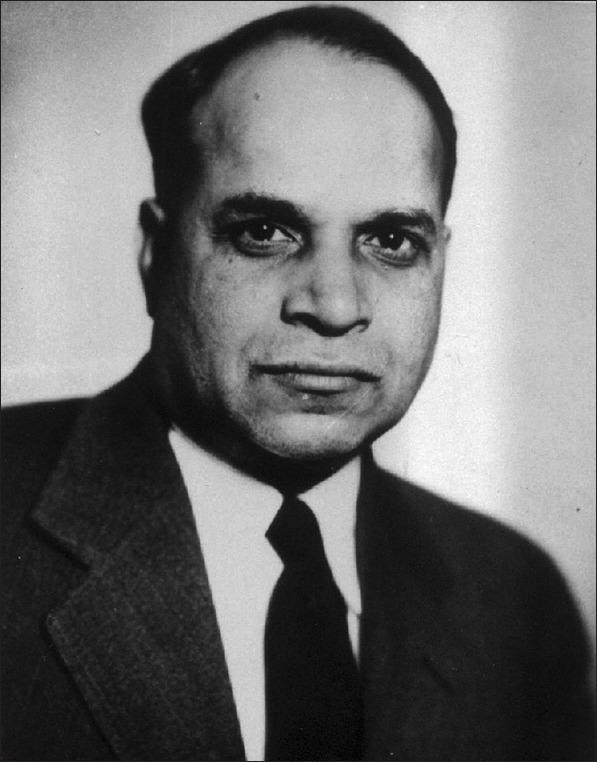
Exactly 102 yrs ago today, on June 4, 1924, a 30 yr old, virtually unknown Indian reader at Dhaka University walked down to the post office & mailed a short, 5 page manuscript to Albert Einstein.
Satyendra Nath Bose was in a bind. He had just completed a paper titled “Planck’s Law & the Light Quantum Hypothesis,” which he had written after making a literal mathematical error on a classroom blackboard while teaching his students. Instead of treating quantum particles like separate, individual entities (the classical Western approach), his mistake treated them as completely indistinguishable: they lost their identities & bled into 1 another.
He had sent the paper to the prestigious Philosophical Magazine in England, but the editors summarily rejected it. Convinced his logic was flawless, Bose took a massive gamble. On June 4, 1924, he slid the manuscript into an envelope along with a cover letter that began with the lines: “Respected Sir, I have ventured to send you the accompanying article for your perusal & opinion..." He addressed it to Albert Einstein in Berlin.
When Einstein opened the letter a few weeks later, he did not just read it, he was stunned. He realized this young Indian scholar had solved a foundational contradiction in quantum theory that had blocked European physics for yrs. Einstein personally translated the paper into German, had it published & used Bose’s math to predict a brand-new state of matter: the Bose-Einstein Condensate.
Yrs later, when the brilliant British physicist Paul Dirac formalized the mathematics of these subatomic particles that love to flock & share the exact same space, he gave them a permanent name in honor of the man who dropped that letter in the mail on June 4th: Bosons.
Fast forward a few decades, Paul Dirac, comes to India to visit him. The 2 physicists prepare to leave for an academic function. Bose, operating with typical Indian hospitality, invites a massive crowd of his eager postgrad students to come along.
As they walk outside, Dirac looks at the modest, compact car parked at the curb, then looks at the crowd of students & freezes. Dirac, utterly distressed by the spatial chaos, taps Bose on the shoulder & says "Satyen, this is highly illogical & impractical. There are far too many people for this vehicle. There is simply no room left."
Bose looks straight at Dirac & says: "Oh, come now, Paul! We believe in Bose statistics here! Do not you remember? An infinite number of Bosons can occupy the exact same state simultaneously!"
Ever heard of Dr. R. Ganesh? He’s a Padma Bhushan awardee (2026) who has unlocked the latent power of the human brain through an ancient Indian tradition called 'Avadhana'.
Here’s why his feat is mind-bending: 🧵
Imagine locking Dr. Ganesh in a room with no pen, paper, or tech. 100 people enter, one by one, each whispering a unique code in any language.
He doesn’t just repeat them; he remembers the exact sequence. Ask him about person #47, and he’ll tell you instantly.
He doesn’t just store data; he captures context. If a bell rang during that 100-person event, he can tell you exactly how many times it chimed.
He is a 'Shatavadhani'—someone capable of performing 100 tasks simultaneously with perfect recall.
Why does this matter in the age of Google?
People ask: "Why memorize if we have AI?"
I ask: "Why go to the gym to build muscle if we have machines?"
Training your brain is essential for cognitive strength. Our kids are struggling with basic grammar and communication—we are losing the ability to think critically.
Dr. R. Ganesh speaks 18 languages, has written hundreds of books, and performed thousands of times. He is living proof of our ancient 'Vishwa Guru' heritage.🇮🇳
It’s time to bring 'Avadhana Vidya' into our schools.
We will be discussing about Avadhana Vidya in the next thread. Till then stay connected.🔗
📽️ inbministry
New statement from Scott Pelley:
There has never been anything in America like 60 Minutes.
The Sunday tradition is the most successful program of any kind in history. For more than a decade, its innovative growth on every major online platform has extended its reach to countless millions around the world. This spring, at the end of our 58thseason, 60 Minutes grew rapidly with an unheard-of 9% jump in viewers on CBS.
“60” has been the number-one program in America for decades because our beloved audience finds integrity, quality, and humanity in our stories. When stewardship of the program passed to my colleagues and me, our responsibility was to expand energetically into a new age of media technology while preserving the values our audience expects. Now, the new owner of our network is casting this legend aside, apparently to curry a moment of favor with the Trump administration.
The waste is heartbreaking.
Last month, 60 Minutes lost its DNA when our entire senior leadership and two of our best on-air correspondents were cruelly fired without cause. Good people were silenced because they stood up for our audience. They stood for fairness against the forces of political bias; they stood for professionalism against chaos.
For my part, new management has instructed me to inject falsehoods and bias into a politically sensitive story. I’ve been told to include assertions that are unverified. To date, in every case, I have managed to ignore these instructions or refuse them. Recently, politicians have been invited to choose correspondents for interviews on the broadcast. Giving politicians control over 60 Minutes interviews is not how this is done. Finally, incompetence and unprofessionalism in the new management have wreaked havoc. In a case involving one of my stories, the entire program came within 19 minutes of not getting on the air at all.
At 60 Minutes, we have fought harder than anyone knows to save the program that became an American icon. We owed that to our millions of viewers. I am deeply moved by the thousands of wishes we have received to “keep up the good fight.” Most of the men and women of CBS News are still in that fight. But now the collapse of values at the top has become untenable. The leadership of 60 Minutes is no longer recognizable. The principles I hold dear are gone, and so I must leave as well.
I depart after 37 years at CBS with one emotion—a heart brimming with gratitude for the men and women of CBS News who encouraged and enriched my work, very often at the risk of their own lives. I pray for a day when those people and their ideals are honored again—a day when sanity, competence, and courage return.
Scott Pelley
Vaibhav Sooryavanshi faced 46 different bowlers in IPL 2026.
I went through every single one of those bowlers.
The numbers are not real. A thread 🧵
#VaibhavSooryavanshi#IPL2026#RajasthanRoyals
CONAN AT HARVARD: “No university in our nation has produced more Nobel laureates or white collar criminals… so whether you choose good or evil, know that you are among the very best.”
Researchers from IIT Madras and IISc Bengaluru have solved a chemistry puzzle that remained unanswered for over 70 years.
As reported in The Indian Express, the team led by Prof. Sundargopal Ghosh and Stutee Mohapatra from the Department of Chemistry, IIT Madras, along with Prof. Eluvathingal Jemmis from IISc Bengaluru, has synthesised a carbon-free molecule that mimics the iconic ‘sandwich’ structure of ferrocene.
Using osmium and boron-based rings instead of carbon, the breakthrough marks the first stable carbon-free version of the molecule — something scientists worldwide had long attempted to achieve.
Published in the prestigious journal Science (https://t.co/zqkL1CSqz6), the discovery could open new pathways for designing advanced materials with unique chemical and structural properties.
Read more: https://t.co/DhPSJbAGJ9
@IndianExpress@iitmadras@iiscbangalore@amitabhsin
A man took his macbook to a repair shop because the battery was at 78% after just 14 months.
"Is this normal?"
The technician ran every diagnostic. Everything came back clean.
No defects. No damage. No manufacturing issue.
Then the technician turned the screen toward him and said something he wasn't expecting:
"There's a setting Apple built in 2020 specifically to prevent this. They didn't turn it on for you. Your battery is dying twice as fast as it should and they make money when it does."
He asked the obvious question: "So Apple is wearing out my own laptop on purpose?"
The technician didn't answer.
He just opened System Settings and walked him through every hidden setting that was secretly killing his MacBook.
Here's everything he showed him in the next 8 minutes (save this if you own a Mac): 🧵
A mathematician at Bell Labs noticed that the scientists who won Nobel Prizes and the ones who never amounted to anything were equally smart, equally hardworking, and equally credentialed, and the only thing that separated them was a single question almost nobody is brave enough to ask themselves before they die.
His name was Richard Hamming.
He spent 30 years at Bell Labs, in the same building as John Tukey, Walter Brattain, and a long list of physicists who took home Nobel prizes for work they did down the hall from his office, including the legendary Claude Shannon.
His invention of error-correcting codes made modern computing possible. He has won the Turing Award. And all the while he was creating his own legacy he was secretly doing a study on the people around him.
The study was straightforward. 2 Teams. The legends and the lost. Same I.Q.s. Degrees same. Same desk hours. Same access to the world’s best resources.
And yet, at the end of 40 years in their careers, one group had changed entire fields, and the other group could not be remembered by their own colleagues five years after retirement. He wanted to discover what the actual difference was.
In March 1986, he stood before 200 researchers in a Bellcore auditorium and told them what he had seen.
He said it all came down to one question. And hardly anyone he ever met was willing to ask it directly.
He called it the Friday-afternoon ritual. He spent years blocking out his Friday afternoons and not doing anything productive with them every week. No experiments. No meetings. No deliverables.
He called it Great Thoughts Time. He sat down with a notebook and asked himself a couple of questions in order. What are the most relevant problems in my discipline? And why I am not working on either of them.”
Most weeks, the answer was the same, he said. For a week now he had marched confidently in a direction he did not think was the most important direction. He was a goer. He worked a bit. He was getting clean results that would publish in respected journals. (
And for five days straight he'd been lying to himself about whether any of it mattered.
The reason almost nobody does this ritual is because the honest answer is unbearable. The thing is that if you sit down on a Friday afternoon and say out loud that you are not working on the most important problem in your field, now you have to do something about it.
You have an immediate change in direction, or you have to keep lying to yourself every week from that point on. Most people choose the lie.
In the short term it’s cheaper, but over a career it’s more expensive.
Hamming took the ritual a step further in the Bell Labs cafeteria. He began approaching scientists he barely knew, asking them what they thought the most important problems in their field were.
A week later he would ask them why they had not worked on these problems. Eventually people wouldn't have lunch with him. “I had to keep finding new tables,” he said.
Nobody had a good answer for that, and being around someone who kept asking it made every meal feel like a performance review.
The line that broke me is the line that most people skim over in the transcript. His words: If you do not work on an important problem you are unlikely to do important work.
That’s not motivational line. It is a rational one. You cannot make a great result from a problem that does not matter. Input restricts the output. The choice of the problem is the ceiling of the career.
The transcript has been freely available on the internet for almost 40 years. Stripe Press published the complete lectures as a book. Naval Ravikant quotes it all the time. It’s still given out to new hires at every serious engineering lab in Silicon Valley.
Most people will not run the ritual this Friday. They will be busy. They always are.
The end of two eras at CBS.
After nearly a century on the airwaves, CBS News Radio signs off Friday, closing the book on a broadcast institution that carried Americans through pivotal moments in history. The lights will also go out on Broadway's Ed Sullivan Theater as Stephen Colbert hosts the Late Show's final broadcast after 33 years on the air.
In defense of Indian 🇮🇳 democracy!
During Prime Minister Narendra Modi most successful visit to Norway a minor incident happened. A Norwegian journalist demanded that the prime minister starts holding press conferences. She claimed that Indian democracy is in bad shape.
May be its time to pause? May be its time to be a bit curious to the world’s largest democracy?
Two weeks ago five Indian states and territories held elections. The turn out in the battlefield state of West Bengal was 94%. In the last local election in Norway it was 62%, in many European local elections turn out is below 50%. Can voting in massive numbers be a signal Indians trust their democratic process?
In the same election BJP won big in Assam and West Bengal. It lost even bigger in Kerala and Tamil Nadu. Can this diversity be a signal that Indian democracy is reflecting the will of the people?
The journalist referred to a democracy ranking putting India at 157 in the world, behind many dictatorships and deeply troubled states. When a ranking is so obviously contrary to common sense, why not ask critical questions to those making the ranking rather than demand that leaders shall comment on nonsense? I recommend Salvatore Babones book “Dharma democracy”. The book debunks convincingly the flawed methodology of these rankings.
It was referred to a ranking claiming it’s very dangerous to be a journalist in India. Reality is that it is more dangerous to be journalist in the US and far more dangerous in the vast majority of other nations in the world.
Let’s be real. India is not perfect. Of course there are incidents. India has a population the size of North America, South America and Europe combined. But India is much more peaceful than Europe or the Americas. That’s remarkable - given the ethnic, language and religious diversity of India and the many development challenges.
Unless we consider democracy a form of government only suited for some very small, peaceful and homogeneous Western European nations, may be we should commend Indian democracy?
India is the only major former UK colony which became and has remained a democracy. Its sometimes claimed that the Brits taught India democracy. If that was the case why isn’t Myanmar or Pakistan or the Gulf kingdoms democracies??? Reality is that Indian democracy is both homegrown and extraordinary successful.
A man who was denied his medical degree for wearing Swadeshi Khadi, forcing him to flee to America where he worked as a night-janitor scrubbing hospital bedpans. Yet, he co-discovered the absolute energy source of all living cells (ATP), synthesized the world's 1st effective cancer chemotherapy drug, & led the wartime research team that discovered the 1st broad-spectrum antibiotic, only to be denied tenure by his university, & completely overlooked by the Nobel Committee.
This is the story of the ultimate invisible colossus: Dr. Yellapragada Subbarao (1895-1948).
To understand the complete, crushing silo Subbarao worked in, we have to look at his early days at the Madras Medical College in the 1920s. Subbarow was a fierce, uncompromising Indian nationalist. He routinely wore hand-spun Khadi surgical scrubs to class to mock the British profs.
Furious at his defiance, his British supervisor, Dr. Bradfield, deliberately failed him in his final medical exams, refusing to grant him an M.B.B.S. degree. Instead, they handed him a humiliating, 2nd-class "L.M.S." certificate, legally banning him from practicing major medicine/holding a research position anywhere in British India.
Subbarao did not break. Backed by charity funds, he boarded a ship to America, landing at Harvard Medical School in 1923. Because his Indian degree was treated like garbage by the West, Harvard refused to give him a research fellowship.
To survive, Subbarao entered a state of brutal, claustrophobic isolation. For yrs, he worked as a night-shift janitor at the Peter Brent Brigham Hospital in Boston, manually scrubbing vomit & blood off hospital pans for pennies, & then spending his dawn hours hidden in the basement laboratories, teaching himself advanced biochemistry in complete anonymity.
In that dark basement silo, Subbarao partnered with a scientist named Cyrus Fiske. The scientific world at the time was facing a massive, wall-like mystery: How does the human body actually store & spend energy? When we move a muscle/blink an eye, what is the literal fuel burning inside the cell?
Operating in a completely isolated lab with self-made chemical filters, Subbarao discovered a highly volatile, ephemeral molecule containing phosphorus. He realized this molecule was the universal energy currency of every single living cell on the planet.
He discovered Adenosine Triphosphate (ATP) & Phosphocreatine. It was a discovery so monumental it rewrote biology textbooks forever. It was the literal software code of biological energy. But because Subbarao was an introverted Indian alien working on a janitor's schedule, his supervisor Cyrus Fiske received the lion's share of the academic credit. Subbarao did not care about the fame; he immediately walked away from the glory of ATP to go deeper into the dark.
Subbarao left Harvard (after getting his PhD) & joined Lederle Labs (now part of Pfizer), a small pharmaceutical firm. There, the introvert Subbarao demanded half of the annual salary, which was offered at $14K/yr, under the condition that a new research building be erected for him at Pearl river.
He locked himself inside a private research silo, working up to 18 hrs a day, sleeping on a canvas cot right next to his chemical vats. From this complete isolation, his mind generated a relentless, devastating series of global breakthroughs:
- Subbarao was fascinated by folic acid. Working with a doctor named Sidney Farber, he engineered a chemical compound called Methotrexate. It was the world's 1st ever effective cancer chemotherapy drug, directly destroying leukemia cells in children. Modern oncology was literally born from his hands.
- He synthesized Diethylcarbamazine (Hetrazan), which became the global standard cure for filariasis, saving millions of poor agricultural laborers across Asia & Africa from elephantiasis.
- He guided the discovery of Aureomycin (Chlortetracycline), the world's 1st true tetracycline antibiotic, which was far more powerful than Alexander Fleming’s penicillin & cured deadly outbreaks of typhus & plague across postwar Europe.
He was a pure, unadulterated research machine who utterly loathed self-promotion. He never signed his name 1st on academic papers, frequently giving his junior American assistants the lead author credit. He routinely refused to do press interviews, stepping into the back corners during corporate photo-ops.
When he died suddenly in his lab in 1948 at the young age of 52 while working on a polio drug known as Darvisul, he possessed absolutely nothing but a few books & his lab glass rods. Because he worked behind the closed corporate curtain of Lederle Labs rather than the loud, public arenas of university politics, & because the American establishment in the 1940s was quietly prone to burying the contributions of non-white immigrants, his name vanished into total oblivion.
Despite discovering the engine of cellular life (ATP), inventing the baseline of cancer treatment (Methotrexate), & synthesizing the antibiotics that saved millions of lives, he was never awarded the Nobel Prize. When his death was announced, Doron Antrim, a reporter for Argosy magazine wrote: "You probably never heard of Dr. Yellapragada Subbarao... but because he lived, you may live longer."
The next time we hear about a breakthrough in cancer treatment/open a biology textbook to read about the energy of a living cell, remember that night-janitor at Harvard; for India's ultimate ghost scientist proved that we do not need an imperial crown/public applause to sustain humanity, we can quietly change the destiny of the entire human race from a dark basement, & then vanish into the night w/o leaving a single trace of vanity behind.
BREAKING: A newly-released OGE Form 278-T discloses that President Trump filed 3,642 trades involving stocks of public companies between January 1st and March 31st.
Our team has sorted and analyzed the thousands of transactions.
Transactions include hundreds of stocks and ETFs such as Nvidia, Microsoft, Broadcom, Amazon, Apple, Alphabet, Meta, Goldman Sachs, AMD, Airbnb, Palantir, Netflix, Costco, Walmart, JP Morgan, DoorDash, and others.
Individual purchases of Nvidia, Microsoft, Broadcom, Amazon, Apple, and others ranged from $1 million to $5 million in disclosed value.
Individual purchases of AMD, Goldman Sachs, Alphabet, Airbnb, DoorDash, Micron, Stryker, and others ranged from $500,000 to $1 million in disclosed value.
President Trump also reported hundreds of stock sales ranging from $15,000 to up to $25 million.
Should we produce a detailed breakdown of President Trump’s stock purchases and sales?
More details to come.
🚨SUNIL GAVASKAR’S ALL-TIME TEST XI 🚨
🚨SUNIL GAVASKAR’S ALL-TIME TEST XI IS BUILT ON TECHNIQUE, TEMPERAMENT, AND TEST CRICKET GREATNESS🚨
01. Gordon Greenidge
02. Brian Lara
03. Vivian Richards
04. Sachin Tendulkar
05. Virat Kohli (C)
06. Allan Border
07. Ian Botham
08. Kapil Dev
09. Richard Hadlee
10. Shane Warne
11. Malcolm Marshall