8,000,000,000 people on Earth. Almost no one knows you exist. The few who do are too busy to care. Relax. No one’s watching. Dear son, Go build your life.
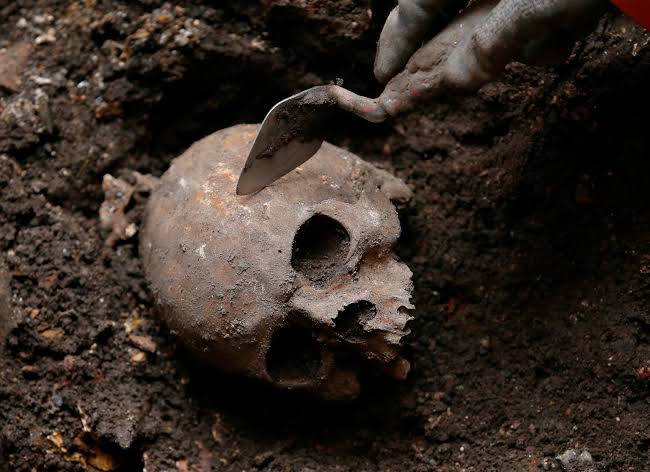
Whenever a public figure dies, we get a bunch of virtue signalers advising us to not speak ill of the dead. This comes from the Graeco-Roman saying, "De mortuis nil nisi bonum," which implies that the dead cannot defend themselves, should they be criticized.
But this is not the only famous saying about the dead. Voltaire, for instance, wrote "On doit des égards aux vivants; on ne doit aux morts que la vérité," that is, "To the living we owe respect, but to the dead we owe only the truth." In other words, we should offer an honest and accurate assessment of their legacy instead of whitewashing it.
It would be understandable if the Graeco-Roman saying applied to the funeral of a hypothetical uncle John, who meant well but drank a little too much on weekends.
In contrast, public figures wielding significant political power and/or possessing significant wealth, whose actions translate into tangible, quantifiable results impacting thousands (millions) of people, should absolutely be scrutinized and evaluated.
“The world breaks every one and afterward many are strong at the broken places. But those that will not break it kills. It kills the very good and the very gentle and the very brave impartially. If you are none of these you can be sure it will kill you too but there will be no special hurry.”
— Ernest Hemingway
Wake Up Early – Tell No One.
Go to Run – Tell No One.
Work A Lot – Tell No One.
Eat Healthy – Tell No One.
Go to Gym – Tell No One.
Man to man: Avoid the false dopamine hit of telling your goals to others.
@tiphe_j I really don't care if I'm cheating. Even if I were caught at some point, the moment I find out my girl is cheating, I'm breaking up with her. I don't forgive cheating.
Elon Musk was asked by a room full of Stanford students what single trait separates people who change the world from people who don't. Everyone expected him to say intelligence. Or work ethic. Or vision.
He said pain tolerance.
The room wasn't sure if he was joking. He wasn't. He explained that intelligence is common. Ambition is common. Even good ideas are relatively common. What is genuinely rare is the ability to absorb punishment day after day, year after year, and keep building anyway.
He said most people he's met who are smarter than him quit after the first real failure. Not because they weren't talented. Because the pain of failure exceeded their tolerance for it. They found something easier and redirected their intelligence there.
He said the entire history of SpaceX is just a story about absorbing explosions, literally and financially, and refusing to interpret them as signals to stop.
Nobody writes that on a motivational poster. Nobody puts "pain tolerance" on their LinkedIn profile. But it's the actual filter. Not who can dream the biggest. Who can bleed the longest.
In a game full of ego, Olise chose to stand by the people who stand by him ❤️
About a month ago, Olise deleted all his photos on Instagram. People thought he was putting pressure on Bayern Munich’s management after the media started talking about Real Madrid’s interest. But the story turned out to be something else entirely.
Olise has a private photographer named Florence Pernet who attends all his matches with him and takes special photos that are different from what the other journalists shoot. He always posts only her photos on his Instagram. The thing is, during the World Cup, the U.S. authorities refused her entry.
As a result, Olise decided to delete everything. In support of her, he chose not to post anything on his account except the photos she takes from the TV screen. If you open his account now, you’ll see that all the photos look like they were taken from a screen — not live shots.
She’s sitting at home, respected and well taken care of, watching him on the television and photographing the screen. And the player, in turn, completely ignores all the high-quality 4K photos and fancy professional shots that are taken for him — he only posts hers.
Honestly, after this whole situation, my respect and admiration for Olise has grown even more. Bless his parents for raising such a decent, grounded guy who never forgets anyone who works with him and always has their back ❤️
🧵 Who is Zimbabwe’s Greatest Writer?
1/
Dambudzo Marechera.
The outlaw. The madman. The genius.
House of Hunger ripped colonialism apart with rage and poetry. Poverty, violence, madness — alchemised into a howl that still shakes the world.
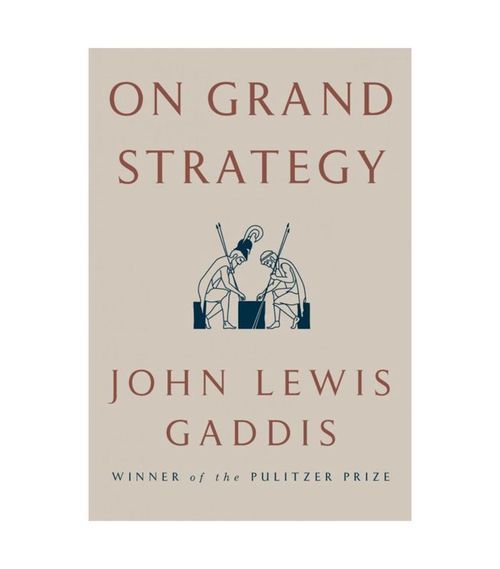
“Our culture rose to its self-conscious height in the time of Goethe, who captured its spirit in Faust. Thereafter, Spengler believed, it rapidly died, to be replaced by the cold routines of a civilization destined, at last, to crumble to nothingness, as its structure rots away.”
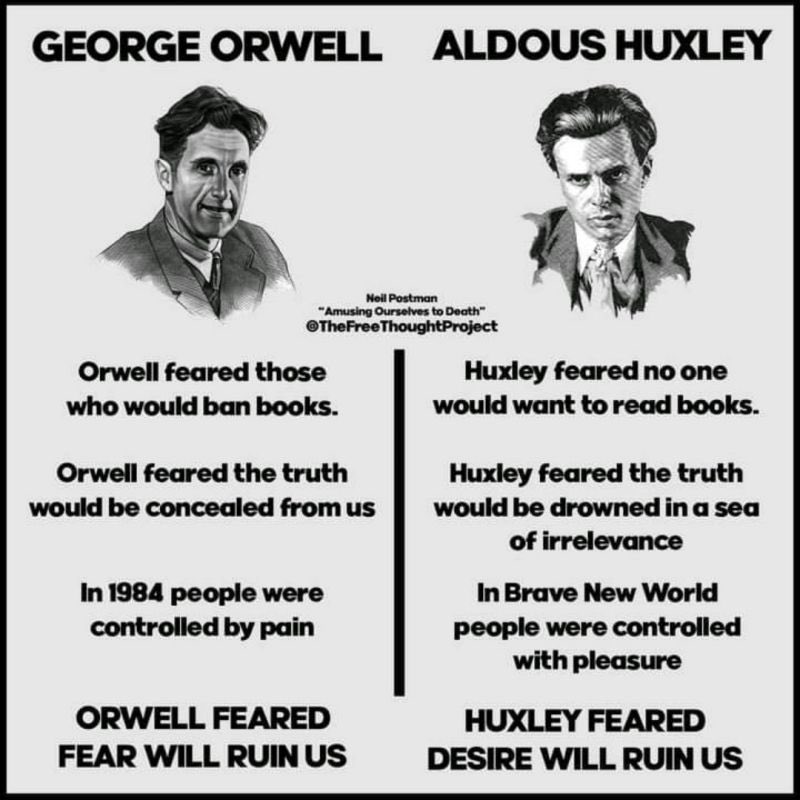
One of my longest-standing arguments is that we are not living in Orwell’s 1984, where truth is centrally suppressed and censored by force (that’s former communist societies, modern-day China, Russia, North Korea).
We are living in something much closer to Huxley’s Brave New World.
The truth is not hidden - it is almost always readily available. But it is buried beneath an industrial quantity of noise: propaganda, outrage, half-truths, conspiracy theories, influencer theatre, algorithmic rage bait and an endless stream of content designed not to inform us, but to keep us emotionally stimulated.
The modern information system does not need to censor the truth when it can simply drown it in noise.
A fact no longer has to be disproven - it only has to be surrounded by a hundred competing claims, stripped of context and nuance, turned into partisan ammunition and pushed into the same feed as celebrity gossip, memes and 15 second videos engineered to deliver the fastest possible dopamine hit. By the time the truth reaches us, it appears as just another piece of content competing for our attention.
That is the more sophisticated form of control: not preventing people from knowing, but exhausting their capacity to care.
Orwell feared a world in which people would be deprived of information. Huxley feared a world in which they would be given so much distraction, stimulation and triviality that they would lose the desire to seek it.
The defining struggle of our age is therefore not simply between truth and censorship, but between truth and indifference.
In 1943, the Gestapo finally caught Raymond Aubrac, one of France’s most wanted Resistance leaders.
The German secret police sentenced him to death, and his execution was only days away.
At that very moment, his wife Lucie was six months pregnant with their second child.
Most people would have hidden, mourned quietly, and hoped for a miracle.
Lucie Aubrac chose a different path.
Using forged identity papers and a carefully crafted story, she walked directly into the office of Klaus Barbie, the man history would remember as the Butcher of Lyon.
She looked him in the eye and persuaded him to allow one final visit with her condemned husband.
But she wasn't there to say goodbye.
Inside the prison, Lucie studied everything.
She memorized the guards' positions, counted the time between patrols, and traced the exact route the prison truck would follow.
Every detail became part of a carefully planned mission.
On October 21, 1943, the prison truck carried Raymond and other prisoners through the streets of Lyon toward what should have been their final destination.
What the German guards didn't know was that Lucie had spent weeks assembling a Resistance team and planning an ambush with extraordinary precision.
When the truck reached the chosen location, her team struck without hesitation.
Gunfire erupted.
Amid the chaos, Raymond Aubrac was pulled from the truck and set free.
The operation had been organized by a woman who was visibly pregnant.
After the rescue, the couple disappeared into hiding.
Weeks later, Lucie gave birth to their daughter in a secret safe house while German forces searched across France.
They remained free until the w@r finally ended.
When peace returned, they chose to rebuild rather than retreat.
Raymond became an engineer and helped rebuild France's infrastructure.
Lucie became a respected historian, dedicating her life to ensuring the women of the French Resistance were never forgotten.
Together they raised three children, shared decades of life, and grew old side by side.
When asked why she risked everything, Lucie answered without hesitation.
"He was my husband. What else would I do?"
Their story proved that love is strongest when it refuses to surrender, even in history's darkest moments.
Peak male life experiences;
1. First heartbreak
2. Ending imposter syndrome
3. Finally understanding your Father
4. Owning your first car
5. Owning your first real estate property
6. Someone calling you “sir” and realizing they mean it with respect
7. Fixing something with your hands that once intimidated you
8. Sitting in silence after a major win, realizing you don’t need to prove anything anymore
9. A younger man seeking your advice and recognizing yourself in him.
10. Accepting the man in the mirror
11. Randomly realizing this is the woman you will marry
12. Becoming successful with your childhood friends
13. Sports team winning a title
14. Watching your kid grow
15. Giving back to your parents
What else would you add?