Yes fam it is true, remember that our African calendar starts in September, so August is considered also our Last month of the year. So we believe that we need to be clean when we get into a new year. So August we put everything down, hence it is also called Ṱhangule. Nature is also cleaning itself, remember it is a very Windy month, things are being blown away. No Moving, No Marrying, No Lobola negotiations, No buying of House, Car, All big projects comes to a halt.
@molwantwa_sambo@Makondlo1 You are right we must do better. That was saddening. Re your point above, whilst I greet with you bout courts...by the time you get that access, you are dead broke cos accessing the courts need lawyers and they are expensive..1st hand experience
In her closing remarks, Deputy Auditor-General Bongi Ngoma challenged the newly qualified CAs to commit to four principles that will shape them as future leaders:
1) Excellence: Excellence starts with the individual, then we build up to a collective and then build the nation together.
2) Essence: Build the indispensable qualities that give you substance, qualities that cannot be taken away.
3) Ethics: No amount of excellence or expertise can compensate for the absence of ethics. Ethics is more than compliance; it is character in action, doing what is right, even when doing otherwise is easier.
4) Ego: Ego can be a thief of destiny. Future leaders need more than technical skills; they need the character and resilience to steward the future responsibly and build stronger generations.
#InfluenceInAction
#TrustedWithTheFuture
#NurturingFutureLeaders
SARS takes up to 45% of what we earn, then we pay 15% VAT on almost everything we buy. Inflation eats whatever we manage to save, municipal rates & levies come for the property we already own, and fuel levies are waiting every time we fill up. At this point South Africans aren’t citizens, we’re shareholders with no dividends
MORE APPLICANTS, MORE WEAK CASE.
- Sicelo Zwane
In our present political milieu, Parliament's impeachment committee arrived this week at a determination it was under no compulsion whatsoever to make. By majority vote, it resolved to join the African Transformation Movement, the EFF, the MK Party, and United Africans Transformation in petitioning the Constitutional Court for direct access, seeking to overturn the interdict granted by the Western Cape High Court to President Cyril Ramaphosa, suspending the Section 89 impeachment process pending his review application.
The development has generated no small measure of political excitement. Legally, however, it changes very little.
There is an unfortunate tendency in politics to assume that a legal argument grows stronger merely because more people subscribe to it. Courts do not function that way. Constitutional litigation is no popularity contest -it is an exercise in reasoning governed by principle, precedent, and procedural fairness. Whether one applicant approaches the Constitutional Court or five do so in concert, the Court asks precisely the same questions: has a proper case for direct access been established? Do exceptional circumstances exist? Does the interest of justice require bypassing the ordinary judicial hierarchy? The number of applicants is entirely beside the point. What has emerged instead resembles political theatre, parties that have long opposed the president now determined to litigate every conceivable avenue, however doubtful the prospects, in the hope that a veritable show of numbers might succeed where legal argument alone has not.
Nor is the irony lost. President Ramaphosa himself previously sought direct access to the Constitutional Court in respect of this same impeachment process, and was refused. The present application arises from a different procedural posture -it challenges the High Court's interdict rather than the underlying Section 89 mechanism- yet it confronts the identical, demanding threshold. Direct access remains an exceptional remedy, not a court of first resort to be summoned whenever litigation turns politically contentious.
There was never any necessity for this contest in the first place, these political parties have forced the President's hand. This is a necessity that would and should have been entirely obviated had the committee simply consented to await the outcome of the review application, the very application in which the President petitions to have the Section 89 panel report set aside. That decision of that review is expected to be delivered within a relatively short period. The president is not leaving office tomorrow; his constitutional term has some two years remaining. Waiting weeks, or even a few months, for legal certainty would scarcely have undermined Parliament's oversight function. It would instead have spared the public purse the burden of proceedings that may yet be declared unlawful.
The committee declined that simpler course. It proceeded with an alacrity bordering on the unseemly, effectively compelling the president to seek judicial protection. He approached the courts, and secured his interdict -the least contested application he was ever likely to bring, given that what confronted him was a committee poised to determine his removal from office, with an ominous shadow trailing him long after his departure, threatening his access to pension fund entitlements, before any court had so much as interrogated whether the report underpinning the entire process was valid at all.
That is no querulous or groundless position to resist. Now the committee has chosen to escalate rather than to pause. That decision carries a price. Additional counsel must be briefed. Further papers prepared. Public funds continue to be spent defending litigation that could, quite plausibly, have been avoided altogether -this at a moment when the fiscus faces no dearth of competing and more pressing demands.
Supporters of the committee will insist that Parliament bears an independent constitutional obligation to fulfil its oversight mandate, and ought not suspend that duty merely because litigation is underway. There is force in that proposition; Parliament must indeed act without fear or favour. But oversight does not exist in isolation from the rule of law. Where the legality of the very process Parliament seeks to continue is itself under judicial review, caution is a constitutional virtue, not a weakness. To insist on proceeding regardless is to risk months of parliamentary effort, and no small expenditure, proving entirely futile should the review succeed. The interdict recognised precisely that risk.
It is also, in all likelihood, a Sisyphean pursuit. The Constitutional Court has already declined direct access on the underlying review of the Section 89 report -the very report at the heart of this dispute. It is difficult to envisage that same court now granting direct access to a challenge of the interdict, mounted by parties aggrieved that the president prevailed below. The applicants must still persuade the Court that exceptional circumstances exist, that direct access is warranted, and that bypassing the ordinary hierarchy serves the interests of justice. That remains a formidable burden, one that a larger coalition of litigants does nothing to lighten.
A weak legal path does not strengthen because more litigants choose to walk it. Political consensus is no substitute for constitutional principle, and the Court will decide this matter not by counting applicants, but by weighing the law before it. On that question -has a proper case been made- the number of parties standing behind it is, quite simply, beside the point.
The wiser course, the more responsible course, was always the same: allow the review to run its course, and allow the process to unfold as it should.
Either way, this is the easiest case to dismiss. If it is granted an audience, it should only be for the evisceration of its reckless litigiousness.
@BDliveSA@MbuyiseniNdlozi We like to complicate things.
The root cause of failing municipalities is straightforward: incompetent and corrupt leaders in critical roles, particularly Municipal Managers and Chief Financial Officers.
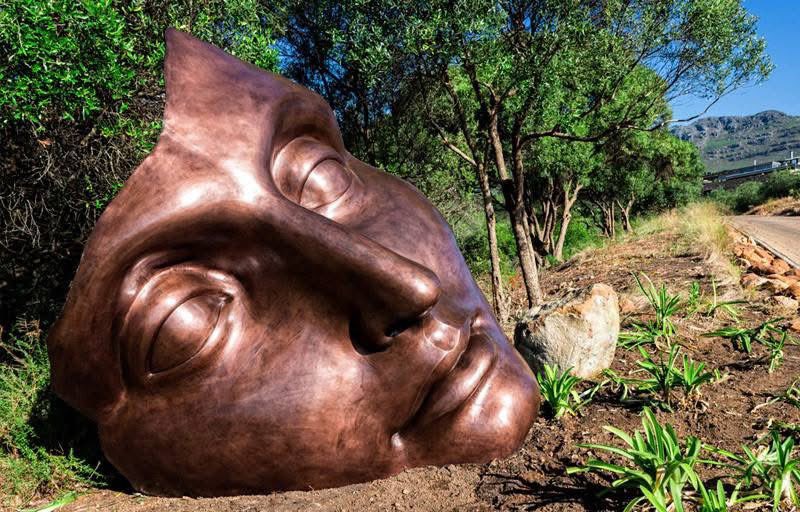
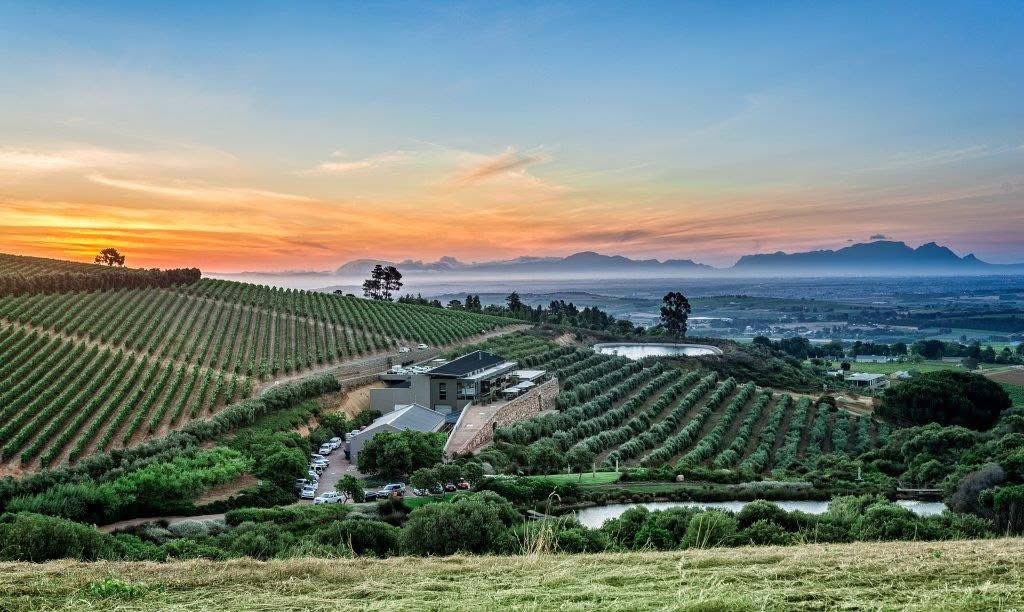
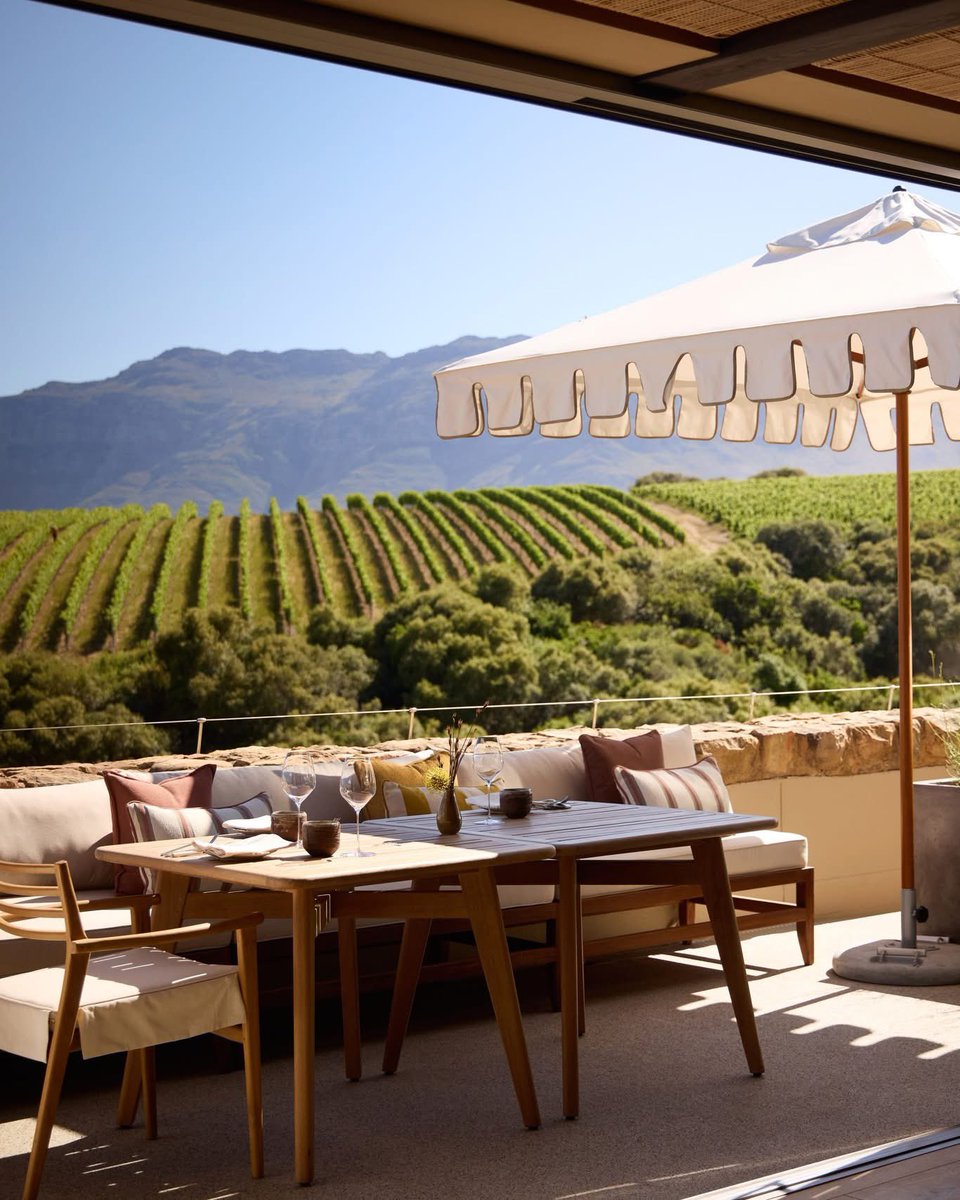
Hidden Valley Wines, owned by Mr and Mrs Motsepe.
Location: Annandale Road, Stellenbosch, about halfway between Stellenbosch and Somerset West.
They have a tasting room as well.
Adv Johnson arresting people because they would offend in future, reminds me of Malegere, a ranger from Masakona. He would arrest you because your cattle strayed to his farm. When you pointed out that it wasn’t one of yours he would say, well yours will stray tomorrow.
This is painfully on-brand with the very bias I interrogated last week when I compared the media’s treatment of Kenny Fihla’s R148 million remuneration at Absa with Jurie Strydom’s potential R300 million incentive at Old Mutual.
Why did one executive become the face of greed while the other was largely discussed through the language of performance and value creation?
Read: The media’s black-and-white language of executive pay: WHO GETS CALLED GREEDY?
https://t.co/taLkYZzneW
Either this is pure rage bait designed to generate clicks, or we have tolerated this bias for so long that an overwhelmingly white newsroom can crown itself the country’s authority on business, stamp itself #TrustTheExperts, and see absolutely nothing wrong with the racial arrogance of that claim.
When the people interpreting South Africa’s business and economic landscape come from such a visibly narrow demographic lens, it is entirely reasonable to ask whether blind spots become embedded, normalised and ultimately published as neutral analysis.
The discomfort those of us felt seeing this 👇🏾, is not the problem. The injustice, the INTENTIONAL EXCLUSION and the institutional blind spots that produced the discomfort are the problem.
In my article, I interrogated the output.
Less than a week later, they published a photograph of the machinery.
Welcome to South Ah! 🇿🇦
Hayike!
#AskAsanteOnBoards