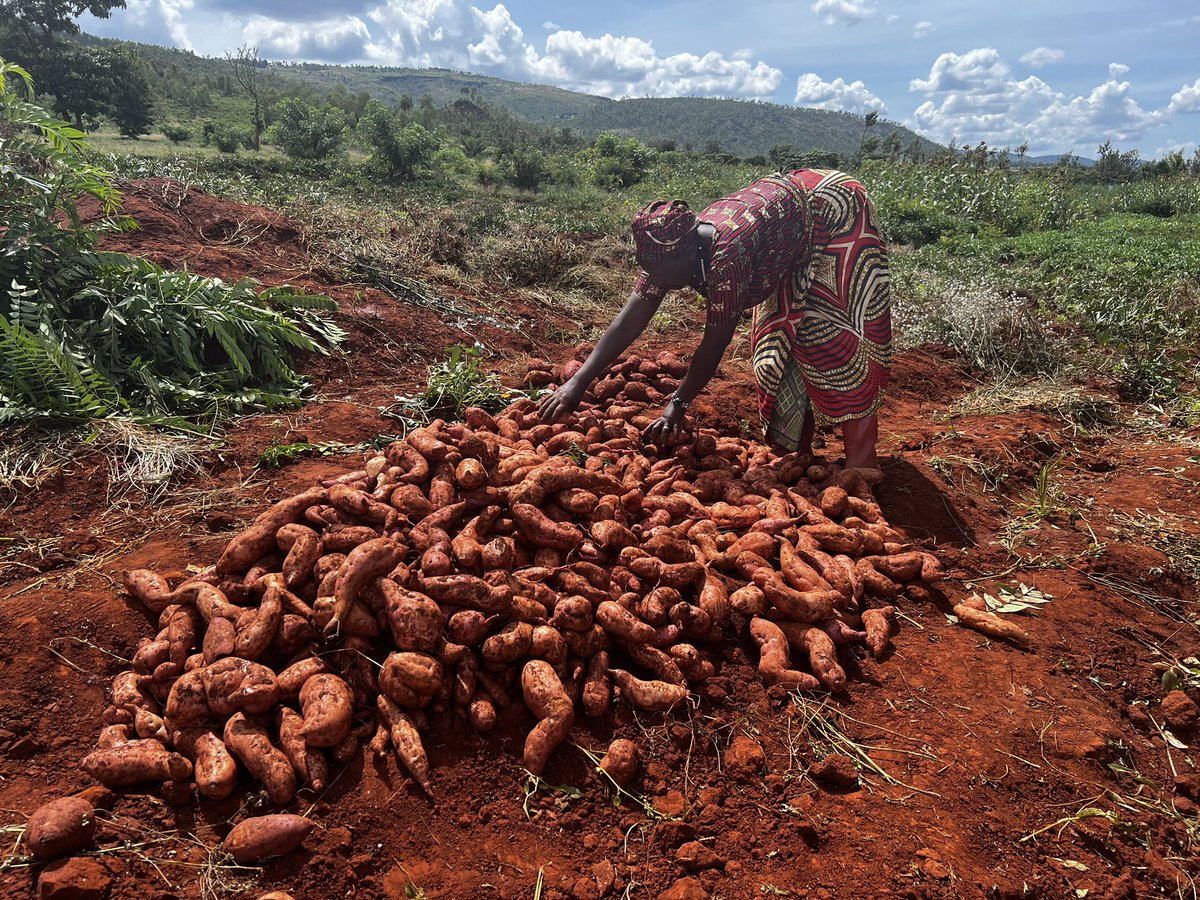
High-yielding OFSP thriving in Kayonza despite drought-prone conditions 🍠. Improved varieties and good agronomic practices are helping farmers achieve better yield, improved nutrition, & resilience to climate stress @oursweetpotato@CipotatoRW@KayonzaDistrict@RwandaAgri@IFAD
From Surviving Drought to Building Resilience Through Sweet Potato Farming
Years of prolonged drought and intense sunshine left many farming families in Eastern Rwanda struggling with low harvests and uncertainty about the next season. In communities where agriculture is the backbone of livelihoods, declining productivity meant more than poor yields … it threatened household food security and income stability.
Today, farmers are beginning to witness a different reality.
Through support provided under the Kayonza Irrigation and Integrated Watershed Management Project Phase II (KIIWP2), growers are adopting improved agricultural practices and cultivating drought-resistant sweet potato varieties that are helping communities recover from recurring climate shocks.
For members of the TERIMBERE-MUHINZI farmers group, sweet potato farming is becoming both a source of resilience and economic opportunity.
The group, which consists of 15 members — including 4 women —, cultivates around one hectare of land using improved varieties such as Kabode, Mastopa 12, and Vita.
According to the group president, Gashirabake Evariste, mentorship and technical guidance from KIIWP2 have significantly transformed the way farmers approach production.
“We received training and mentorship that helped us shift from traditional farming methods to more modern agriculture,” he explains.
“Now we grow drought-resistant varieties and apply improved farming practices with confidence.”
The difference is already visible in the field. While drought previously reduced harvest potential, farmers now expect stronger production outcomes.
“This season, we are confident that we will harvest at least 12 tonnes from this hectare,” says Evariste.
Beyond yields, the intervention is also strengthening household livelihoods.
For Muhawenimana Adria, a member of the group, the support received through KIIWP2 has created new financial possibilities for her family.
“I appreciate the training and the vines we received,” she says.
“Through sweet potato farming, I am now able to support my children’s school needs and pay for community health insurance.”
The promotion of drought-tolerant crops is becoming increasingly important in areas vulnerable to climate stress. Combined with farmer training and improved agronomic practices, these interventions are helping communities move beyond emergency responses toward more sustainable production systems.
Under KIIWP2, agriculture is not only being improved at farm level — it is being repositioned as a pathway toward resilience, food security, and rural economic transformation.
#KIIWP2 #FARM_P3
From Surviving Drought to Building Resilience Through Sweet Potato Farming
Years of prolonged drought and intense sunshine left many farming families in Eastern Rwanda struggling with low harvests and uncertainty about the next season. In communities where agriculture is the backbone of livelihoods, declining productivity meant more than poor yields … it threatened household food security and income stability.
Today, farmers are beginning to witness a different reality.
Through support provided under the Kayonza Irrigation and Integrated Watershed Management Project Phase II (KIIWP2), growers are adopting improved agricultural practices and cultivating drought-resistant sweet potato varieties that are helping communities recover from recurring climate shocks.
For members of the TERIMBERE-MUHINZI farmers group, sweet potato farming is becoming both a source of resilience and economic opportunity.
The group, which consists of 15 members — including 4 women —, cultivates around one hectare of land using improved varieties such as Kabode, Mastopa 12, and Vita.
According to the group president, Gashirabake Evariste, mentorship and technical guidance from KIIWP2 have significantly transformed the way farmers approach production.
“We received training and mentorship that helped us shift from traditional farming methods to more modern agriculture,” he explains.
“Now we grow drought-resistant varieties and apply improved farming practices with confidence.”
The difference is already visible in the field. While drought previously reduced harvest potential, farmers now expect stronger production outcomes.
“This season, we are confident that we will harvest at least 12 tonnes from this hectare,” says Evariste.
Beyond yields, the intervention is also strengthening household livelihoods.
For Muhawenimana Adria, a member of the group, the support received through KIIWP2 has created new financial possibilities for her family.
“I appreciate the training and the vines we received,” she says.
“Through sweet potato farming, I am now able to support my children’s school needs and pay for community health insurance.”
The promotion of drought-tolerant crops is becoming increasingly important in areas vulnerable to climate stress. Combined with farmer training and improved agronomic practices, these interventions are helping communities move beyond emergency responses toward more sustainable production systems.
Under KIIWP2, agriculture is not only being improved at farm level — it is being repositioned as a pathway toward resilience, food security, and rural economic transformation.
#KIIWP2 #FARM_P3
1/2
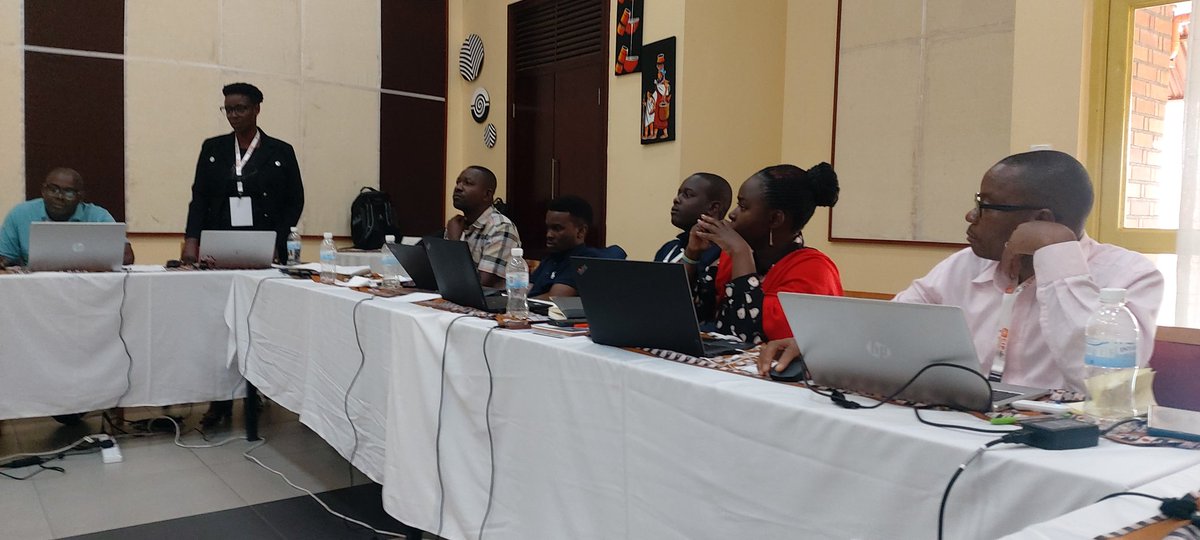
Today, Mayor @BoscoNyemazi received the IFAD Support and Supervision Mission, together with #SPIU_RAB, to assess the implementation of the Kayonza Integrated Irrigation and Watershed Management Project #KIIWP2