Excited to present CasTex (#WACV2026) 🎉
Our text-to-texture method optimizes explicit PBR maps via SDS on cascaded pixel-space diffusion models, avoiding latent artifacts and producing relightable textures ready for production use.
Paper & Code ⬇️
https://t.co/vwyjBvIMhX
I’m really proud to welcome @ashtsyganov back as a guest lecturer in my course just a year after he was a student on it 🚀
Week 3 of my Deep Learning 2 course: “The Evolution of Transformers.”
Materials are out:
https://t.co/wuLbyou6h0
What's slowing down your DL code? ⚡
In Week 2 of my Deep Learning 2 course, @MightyNeighbour covered GPU fundamentals, bottlenecks, profiling & benchmarking.
Open-source materials are out — feel free to use and adapt them:
https://t.co/bEo0UHyzI6
What does a week at ICML in Seoul 🇰🇷 actually look like?
I documented all 6 days of ICML 2026 — talks, posters, people, and a bit of the city.
The result is my first conference vlog [in Russian] 🎥
▶️ https://t.co/JFbGNJDldX
Hope you enjoy it!
Really excited to finally share what we’ve been building at @mostik_ai.
I’ve spent years working on latent diffusion, so I’m especially happy to now be part of pushing latent communication forward and seeing these ideas turn into something real.
Could Deep Learning 1 fit into one lecture? We tried 🚀
Week 1 of my Deep Learning 2 course — “DL1 Compressed” — is now open-source: slides + seminar notebook.
Thanks for all the ⭐! Use and adapt freely:
https://t.co/MEQHqCXGtt
My course Deep Learning 2 is back on Sep 1 🚀
Updated materials, modern DL topics, and guest lectures from researchers & industry experts.
Everything is open-source, and the repo just passed 100⭐
https://t.co/r4BGUDtcfr
🍌🍌🍌
1/ The original GFlowNets paper tried PPO for sampling, but it failed. We figured out why and fixed it. And now PPO beats all objectives on standard problems including molecular graph generation in large spaces.
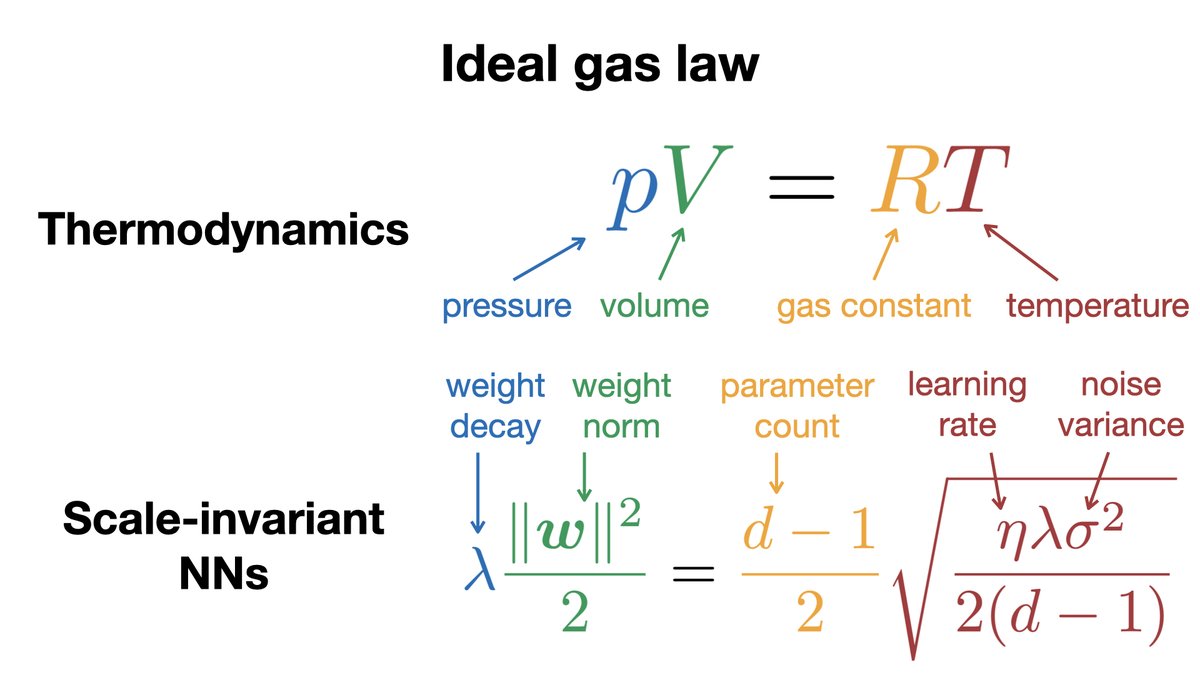
💨 Did you know neural networks can behave like literal ideal gases? 💨
In our #IJCAI2026 paper, we show that at stationarity, scale-invariant NNs surprisingly obey... the ideal gas law 🤯
Thermodynamics helps us to understand how train hyperparams shape final solutions!
🧵👇1/8
Why Gaussian diffusion models fail on text data and how to prevent it?
☝️ We find that discrete-like latent spaces are fundamentally bad for continuous diffusions.
☝️ We explain what happens inside, and why self-conditioning and other heuristics improve generation.
🧵👇 1/7
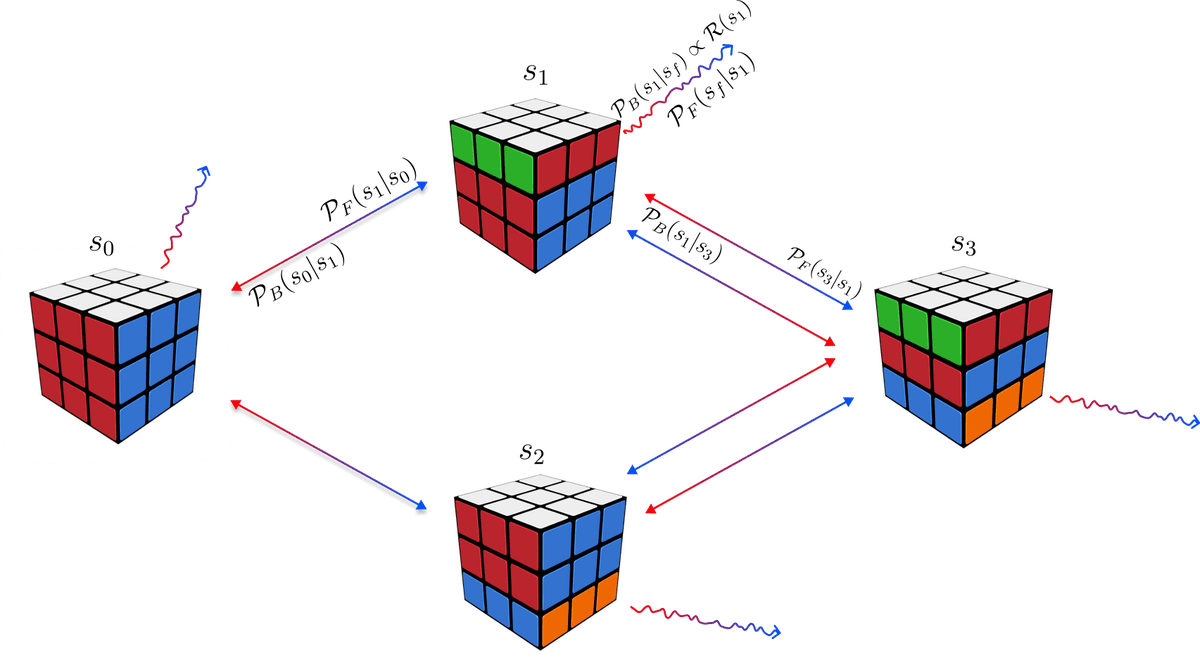
(1/n) Excited to share our latest work “Learning Shortest Paths with Generative Flow Networks”!
We uncover a novel theoretical connection between flow minimization in GFlowNets and finding shortest paths, and develop a learning approach that rivals SOTA in solving Rubik's Cubes!
Latent diffusion for text.
Better quality? Faster sampling?
Seen one? Didn't think so.
Meet LDLM — beats MDLM, Duo, CANDI, FLM on OpenWebText & LM1B.
2–13× faster.
The trick is:
Don't run diffusion in a latent space.
LEARN a latent space FOR diffusion.
Paper: https://t.co/LYgkxTWJuE
Excited to share our ICLR 🇧🇷 blogpost! 🎉
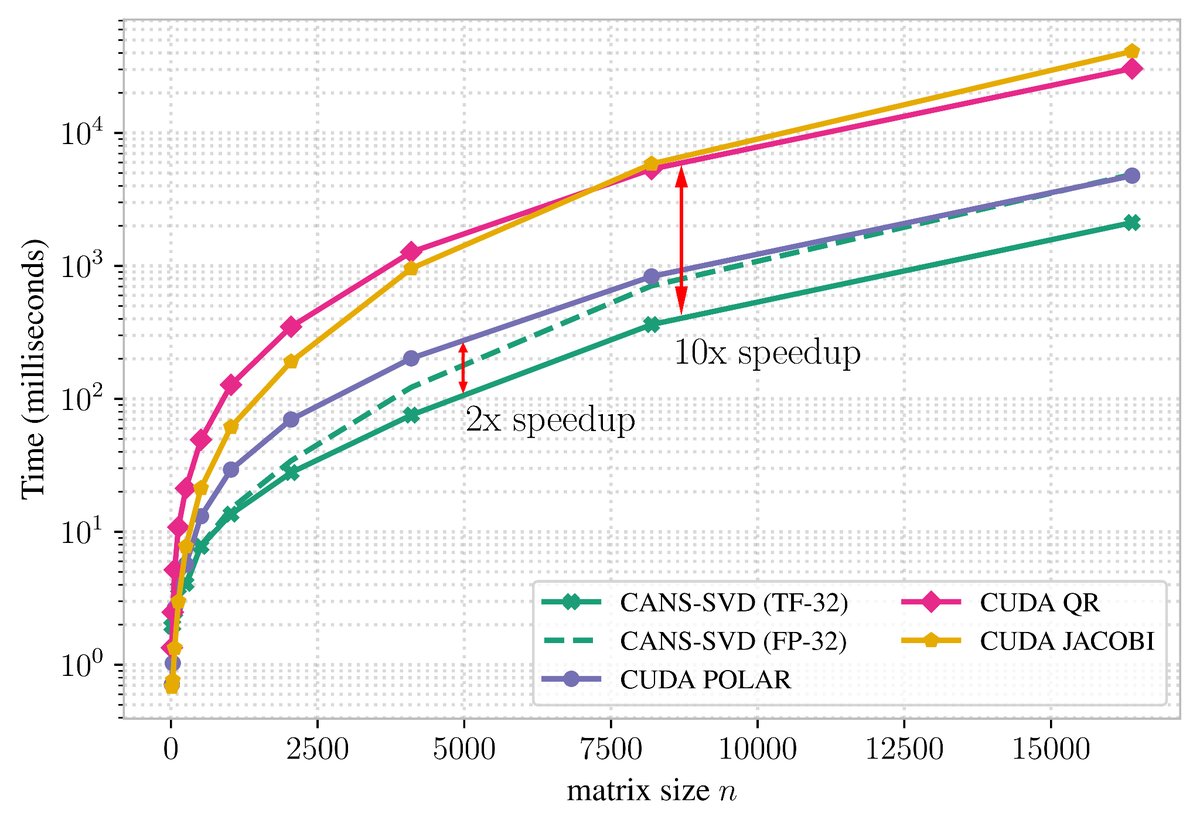
We show how to speed up SVD by up to 2× on an NVIDIA B200 GPU using ideas partly inspired by Muon. Our approach even outperforms NVIDIA’s own SVD implementations.
Blog post:
https://t.co/OQsd7nziYZ
📢Excited to announce the Workshop on Weight-Space Symmetries @icmlconf! We welcome 4-page submissions analysing symmetries, their effects on training and model structure, and practical methods to utilize them.
Submission Deadline: April 24 (23:59 AoE)
#ICML2026
Happy to share that our work on diffusion samplers was accepted as Oral at #NeurIPS2025 FPI Workshop! 🎉 We show how setting both generation and destruction transition kernels as Gaussians with learnable means and variances produces accurate samplers even at very few steps.
1/ Can we efficiently learn the destruction process of diffusion samplers? Can we learn not just the drift, but also the variance for all transition kernels? – We answer YES in our recent paper “Adaptive Destruction Processes for Diffusion Samplers” (Oral at NeurIPS 2025 FPI Workshop).