@talk2anuradha@IndiGo6E Open season for scams / rpi-offs.
When the top honchos are ripping off people (by blatantly selling adulterated petrol), every other honcho thinks why not join the bandwagon with our own rip-off.
Any warmth, optimism and positivity that you have towards Chennai evaporates the moment you try catching a cab after stepping out of the airport
Because unlike most cities where you get out, open an app, book a cab and go, in Chennai you have to
Haul your luggage in the enervating heat to an overcrowded buggy stand.
Then wait for an buggy which takes an eternity to arrive.
Into which you are then stuffed like a sardine in a can and driven for 20 mins to a god forsaken "mall"
Where you again have to compete with a batallion of tired and hungry travellers and their luggage to get onto an elevator
Which will take you 3 floors up to a taxi stand where you hope there is cab available
Which will then drive you down those very three floors to take you into the city
I seriously cannot comprehend how the supposedly knowledgeable Chennai people messed up something as simple as an Airport cab pick up
All of Chennai's aspirations to be a megapolis dies in that gap between the airport arrival and that cab pickup station
While celebrity anchors remain busy discussing and distributing “melody,” people in Valsad, Gujarat are battling a severe water crisis. Residents are being forced to climb down wells over 45 feet deep using ropes, just to collect water for daily needs.
I'll admit this might sound odd coming from me, maybe even clichéd. But it's something I've been sitting with for a while, so here goes.
When I started out, like most people, I had a simple wealth goal. I'd actually written it down: hit ₹5 crore, retire in Goa, beach shack, done. That was the dream.
After the Zerodha journey, I find myself on a very different side of that equation, and the dark inequalities of wealth and opportunity are harder to ignore than ever. We all know the numbers on inequality. The concentration of wealth among the top 1% is severe and getting worse, and it's even starker among the top 0.1%. The post-2008 era of rising asset prices has likely made this worse, because the people who hold financial assets are, by definition, people who already have money.
This isn't unique to India. Barring a few exceptions, it's a global phenomenon.
I'm cautious about attributing every socio-political problem we face today to inequality, but it's hard to deny the role it's played in the political upheavals we're seeing across the world. History rarely shows that sustained, extreme inequality ends well. To me, it increasingly feels like sitting in a car with the brakes cut, watching a cliff approach. Btw, all of this even before AI, which has a non-trivial probability of making things worse.
I'll stop short of prescribing solutions. It's too easy to reach for simple answers to complicated problems, and that's a separate conversation entirely. But I think we need to collectively acknowledge this: wealth that just sits in financial assets whose value keeps compounding upward doesn't do much good for anyone beyond those who already have it. And if that wealth isn't in motion, if it isn't doing some social good, the fabric that holds us together will only continue to fray and lead to cynicism, resentment, and worse yet, nihilism. We're already seeing all of it.
What I am saying is that even if a portion of that wealth were channelled into things that could materially improve lives, that seems worth doing. Hoarding wealth, in the grand scheme of things, doesn't really help anyone.
The grand son (88 yrs) and grand daughter in law (82 yrs) of Nandalal Bose couldnt vote this time, thanks to @ECISVEEP
After SC’s direct intervention, their names were added yesterday but the modified list didn’t reach the booth and presiding officer.
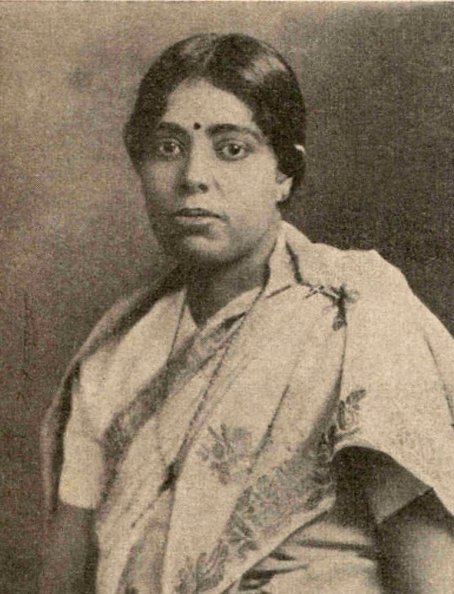
Why is Indian sugarcane so sweet? If you’ve ever enjoyed a glass of fresh cane juice, you have Janaki Ammal to thank!
🔹️ In the 1930s, India had to import sweeter cane from Java. Janaki Ammal, a brilliant scientist at a time, used her knowledge of plant cells to create a made-in-India hybrid that was both sweet and hardy enough to grow in our climate.
🔹️The Cytogenetic Pioneer: She was the first Indian woman to earn a PhD in Botany (University of Michigan, 1931). She literally mapped the genetic DNA of thousands of Indian plants.
🔹️Economic Independence: Her work at the Sugarcane Breeding Institute in Coimbatore helped India become self-sufficient in sugar production, a massive boost for the post-independence economy.
🔹️The Guardian of the Rainforest: Later in life, she turned to conservation. Her scientific authority was the backbone of the Save Silent Valley movement, protecting one of India’s most ancient rainforests from being submerged by a dam.
🔹️Janaki Ammal lived a life of pure scientific devotion. There is a beautiful white flower bred in London named after her: the Magnolia kobus Janaki Ammal.
This summer, when you drink a cold, sweet, satisfying glass of sugarcane juice, remember the name: Edavalath Kakkat Janaki Ammal.
@SiddharthKG7 Indeed.
And we were also fortunate to have such empathetic elite hand hold us post independence, during the nascent years of the Republic.
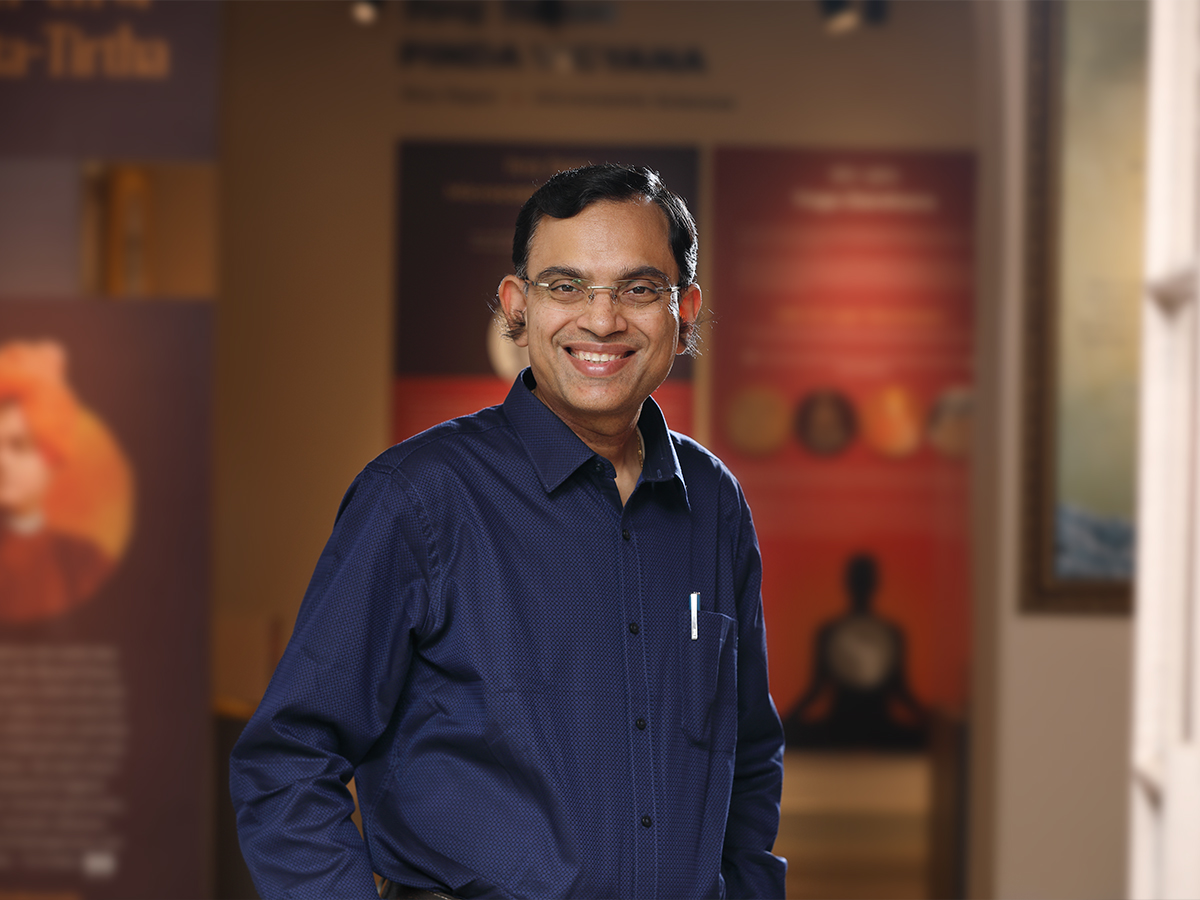
Meet Suman Chakraborty
(Every time a poor family gets a medical test for 2 rupees, he made that possible.)
> In 2025 he became Director of IIT Kharagpur, one of India's most prestigious institutions
> But this is not a story about that title
> This is a story about what he built before anyone was watching
> An Indian mechanical engineer born in West Bengal
> https://t.co/TMjo4uhO8z in Mechanical Engineering from Jadavpur University, 1996, secured 2nd rank
> Appeared for GATE 1997, secured All India Rank 1
> Joined IISc Bangalore for his M.E., emerged as faculty topper, won the Gold Medal and Senate Commendation
> Completed his PhD from IISc in 2002, won the Best Thesis Award Also won the Best International CFD Thesis Award in a worldwide competition
> The same year joined IIT Kharagpur as Assistant Professor
> Never left.
> Became full Professor by 2008.
> Built the first ever Microfluidics Lab in India of global standards
> Invented Paper and Pencil Microfluidics, a technology that runs medical diagnostic tests on simple paper strips
> No fancy lab. No expensive equipment. Just paper and physics.
> Developed COVIRAP, India's own rapid molecular diagnostic test for COVID-19
> Invented a hand held device that detects oral cancer on the spot
> Built a blood test kit that costs less than 2 rupees per test
> All built for the people who cannot afford hospitals
> Shanti Swarup Bhatnagar Prize in 2013, India's highest science award Infosys Prize in Engineering and Computer Science, 2022
> Over 525 published research papers. 25 patented technologies. 50 PhD students trained
A man who could have chased research glory chose to build 2 rupee tests for villages instead. He turned the most complex physics in the world into tools the poorest people on earth can use
"The purpose of science is not just to publish papers. It is to change lives."
He did not just say that. He proved it. One paper strip at a time.