I am unable to access DMs on twitter via regular means & as such only check them every few months. If you require urgent contact, mention me in a regular tweet that you need a private conversation & I will oblige. I'm happy to discuss disagreements; petty insults will be ignored.
@bs9tax you are so confident in your eugenic worldview being natural that not only does it not occur to you to think about demographics that comprise billions of people, you are so actively offended for being asked to do so you find it a sign of illness
@bs9tax no. because people like yourself automatically exclude people with disability and people who are fat from your concept of everyone, because you view disabled people as inhuman, and you view fat people as subhumans who are inherently slovenly
@_spottedboy@VanieDavcsg@burnthelilacs if you think talking about how male beauty standards hurt FTMs automatically means someone wants to be a woman then you are just a misogynist lol. fatphobia kills people man
The death rate at the US-Mexico border has increased 1,810% under Trump 2.0, despite drop in crossings, new data from @NoMoreDeaths show.
Read the report, search the map, and download the data at https://t.co/Pcdf8P7emB.
Do not normalize children dying from preventable diseases like measles. We have a vaccine that is 97% effective. When children die from measles, that is the horrific result of adults deliberately choosing not to keep them safe.
NM was 12 years old when he disappeared at Venus Bay in Victoria on 25 January 2026.
His father had briefly stepped away to get a drink. By the time he returned, his son was gone.
NM’s clothes were found five kilometres away. His body has never been recovered.
He was autistic. He’d had swimming lessons before COVID, but hadn’t returned to them. The coroner found that his swimming ability was insufficient for the dangerous surf and rip currents at the beach.
Now consider what the NDIA did to autistic children’s swimming lessons.
In July 2025, South West Autism Network told the government about Samuel, an eight-year-old autistic boy who is attracted to water, cannot swim and cannot learn in ordinary group classes.
His NDIS plan had previously covered the additional cost of individual swimming lessons.
After the October 2024 changes to NDIS supports, that funding was cut.
SWAN also documented the case of Will, a seven-year-old autistic boy who had already gone missing FOUR TIMES.
His occupational therapist recommended a GPS watch so his family could find him when he wandered.
The NDIA refused to fund it.
Meanwhile, the Queensland Family and Child Commission reported that nine autistic children had drowned over five years. That’s 18% of all child drowning deaths in Queensland during that period.
Six of those children had wandered away before drowning.
We know autistic children are at increased risk of drowning. We know some need individual instruction because ordinary swimming classes are unsuitable. We know some children are particularly attracted to water and may wander.
And we have an agency refusing to fund disability-specific swimming instruction and equipment recommended to keep children safe.
NM’s swimming lessons stopped during COVID.
But SWAN’s evidence raises a question the government needs to answer.
If a child cannot learn to swim in an ordinary class because of their disability, why is the additional cost of teaching that child to swim being treated as something the NDIS shouldn’t pay for?
The NDIA can argue about whether swimming lessons are an everyday expense.
Parents are trying to make sure their children survive long enough to grow up.
https://t.co/kc1HRI534x
Rosa Bonaventura was 97 years old. She was blind after a stroke, had dementia and depended on aged care workers to get her out of bed.
And remember, this is comparatively back in the day - BEFORE the massive cuts.
Rosa’s care plan was clear. Two workers and a full sling hoist were required to move her safely.
At Mercy Place aged care in Abbotsford, Victoria, one worker began preparing her transfer using a standing machine instead.
Rosa fell forward and struck her head against the machine.
She suffered a bleed on the brain.
Fifteen days later, she was dead.
Mercy Health eventually admitted that the wrong equipment had been used and that two workers should have been involved.
The coroner went further. Had the correct sling hoist been used, Rosa would not have suffered the injuries that killed her.
So why wasn’t her care plan followed?
Because Mercy hadn’t made sure the people responsible for moving Rosa actually knew what it said.
Not one of the staff who gave evidence, including the nurses, knew she was supposed to be transferred using a sling hoist.
The care worker explained that she wasn’t required to read residents’ care plans. She relied on verbal handovers.
Mercy had Rosa’s care plan. Mercy had the equipment. Mercy employed the workers.
But the instructions for keeping Rosa alive never made it to the people moving her.
And it gets worse.
Mercy failed to notify WorkSafe of the incident, despite being legally required to do so.
The original coronial investigation concluded in 2021.
Rosa’s son Fred refused to leave it there. He obtained independent forensic, engineering and clinical evidence, challenged the original findings and succeeded in having the investigation reopened. Good on you, Fred.
In October 2026, SIX YEARS after Rosa died, the coroner found that Mercy had failed to communicate her care requirements properly and that its training was inadequate.
The coroner made two recommendations.
Make sure workers know what residents’ care plans say.
Train workers to use lifting equipment safely.
That’s it.
Six years. A dead woman. A son forced to gather expert evidence to get his mother’s death properly investigated.
And the recommendations amount to telling an aged care provider to make sure its staff know how to do the job they’re already being paid to do.
Rosa didn’t die because she was old.
She died from a head injury sustained while insufficient staff were using equipment that should never have been used to move her.
Her care plan explained how to prevent it.
Mercy just hadn’t made sure anyone followed it.
https://t.co/Cc4Sqw8XIj
Another disabled person dies in institutional care. Another major disability provider. This time, Yooralla.
Amanda Lee Turner was 62. She had cerebral palsy and a mild intellectual disability. She lived with four other people in a Yooralla group home in Benalla, Victoria.
She had lived an active life, going to cafés, visiting friends and enjoying her community.
Then her health deteriorated.
She developed swallowing difficulties and was given a feeding tube in January 2023.
After that came stomach pain, persistent diarrhoea, blood in her faeces, chest infections and weight loss.
In early June, she was hospitalised, given antibiotics and other treatment, improved and went home.
On 26 June, her carers called an ambulance. Amanda had another serious respiratory illness, with low oxygen levels.
Hospital admission was considered. Briefly.
Instead, following a discussion with her mother, the decision was made to move Amanda to end-of-life care.
She died seven days later.
The coroner ruled her death natural, praised Yooralla’s care and closed the investigation.
No inquest. No recommendations.
But that finding doesn’t tell us whether Amanda wanted to stop active treatment, what other treatments were considered, or how her own wishes were established.
And that’s an enormous problem.
The NSW Ombudsman has already documented disability institutions where advance care directives were signed by family members on behalf of residents, sometimes apparently as routine practice across entire group homes.
In one case, disability workers withheld CPR because hospital paperwork claimed an advance care directive existed.
IT DIDN’T.
The Disability Royal Commission also heard accounts of people with intellectual disability being placed on end-of-life plans without proper understanding or consent.
I can tell you how many times my partner, an official community visitor, comes home full of fury or tears, but not the details. Because cone of silence.
But it’s a LOT.
We need to know how many people living in Specialist Disability Accommodation have instructions in their medical records limiting resuscitation, antibiotics, artificial nutrition or other life-saving treatment.
There were 16,896 NDIS participants using SDA in September 2026. And the actuary says many, many more people in SDA are predicted to die.
How many have these treatment limitations?
Who authorised them?
Were the people themselves involved?
And how many deaths attributed to natural causes involved decisions not to treat potentially reversible conditions?
A disability diagnosis is not a terminal diagnosis. A guardian’s authority is not unlimited. A do-not-resuscitate decision is not permission to withhold ordinary medical treatment.
Amanda received treatment earlier in June, and there may have been sound clinical reasons for changing her care later. But the finding does not explain those reasons enough to answer these questions.
If we’re serious about preventing the premature deaths of disabled people in institutions, we need independent scrutiny of decisions to withhold treatment, not just another death certificate recording natural causes.
And we need to stop treating institutional deaths as inevitable. Or putting us in institutions in the first place.
https://t.co/WEQNWgxr3D
Another disabled person dead in institutional care. Another big disability provider. This time it’s Scope.
Hugh Grant was 75, had an intellectual disability and lived in a group home in Taylors Lakes, Victoria, receiving support through the Disability Support for Older Australians program.
He’d previously had bladder cancer.
Between June and September 2025, Scope recorded Hugh screaming and calling out for help. At night, at breakfast, during personal care.
He said he wasn’t in pain. Staff couldn’t identify why he was screaming.
By August, Scope was sufficiently concerned about his deteriorating health to apply for a guardian to make medical decisions.
In November, Hugh was admitted to hospital with a blocked urinary conduit.
Doctors incidentally discovered another cancer. It had already spread to his spine and liver.
He died on 23 December 2025 from urosepsis, with metastatic cancer contributing to his condition.
The Disability Royal Commission heard evidence of people with intellectual disability missing cancer screening, having symptoms dismissed and being diagnosed when their cancers were already advanced.
It heard that disability services often failed to make the adjustments necessary for people to receive tests and treatment.
WE FUCKING KNOW THIS HAPPENS.
And here we have another man in a group home, screaming for months, with a history of cancer.
Scope applied for a guardian. The application hadn’t even been finalised when he died.
Where is the evidence of the medical investigations during those months? What tests were done? Was his cancer history being properly monitored?
The published coronial finding doesn’t answer those questions.
The coroner found that Hugh died of natural causes and that the evidence did not establish any failure by Scope or hospital staff that contributed to his death.
But the bigger question remains.
Why are we still finding people with intellectual disability living in institutions, with serious illnesses only discovered when they’re already critically unwell?
Don’t start with an advance care directive or more guardianship paperwork.
Find out why someone is screaming. Investigate their symptoms. Do the TESTS.
Disabled people deserve healthcare, not just somewhere to die.
https://t.co/5GeCUSCKv1
Evelyn Wiseman was 92, had dementia and lived at Andrews House aged care facility in Trafalgar, Victoria.
In October 2023, Evelyn tried to leave the facility. Staff knew she was agitated, but she eventually walked out without their knowledge.
She was found lying on concrete 300 metres away, with a fractured arm, fractured collarbone and head injuries.
Six weeks later, she was dead. Of ‘dementia, complications from her injuries, and COVID’, they said.
The coronial investigation found:
• No individualised behaviour care plan explaining why Evelyn was trying to leave.
• Staff failed to contact her family when she became agitated or after her fall.
• The facility justified its approach by referring to avoiding restrictive practices, rather than providing a sufficiently safe environment.
• Following her death, the facility considered moving exit buttons higher up walls or covering them to make them harder for residents to reach. Neither option was adopted.
The coroner found Andrews House had failed in its responsibility to keep Evelyn safe. Her fall injuries increased her vulnerability to COVID and pneumonia, which caused her death.
And the really disturbing part?
The coroner concluded that the shortcomings in Evelyn’s care had been addressed ‘as far as possible’.
A woman died. Her family had to fight for answers. And the response included discussions about making doors harder to open.
How about providing enough actual care so people don’t have to choose between being locked up and being left to die?
https://t.co/4w89ohqKl6
Another disabled person dead in a group home. Another enormous disability provider. Another coronial finding that raises more questions than it answers.
James Christopher Diver was 63, autistic, non-speaking and living in a Life Without Barriers group home in Bundoora, Victoria.
He received 24-hour, one-to-one support.
In the months before his death, James suffered repeated serious infections, MRSA in his bloodstream, aspiration pneumonia, a pressure sore and multiple hospital admissions.
When he died on 23 May 2025, his post-mortem examination revealed multiple broken ribs, some healed, some healing and others more recent.
The pathologist explained that rib fractures can increase the risk of aspiration pneumonia. His death was attributed to MRSA bloodstream infection following aspiration pneumonia, in the setting of multiple healing rib fractures.
The Coroners Prevention Unit concluded his medical care was reasonable.
It suggested his fractures were probably caused by falls and osteoporosis, and that his autism and behaviour meant falls and crawling couldn’t realistically be prevented.
Really?
A man receiving round-the-clock individual support, with multiple broken ribs of different ages, and that’s where the investigation ends?
No recommendations.
Meanwhile, Life Without Barriers reported $858.1 million in revenue in 2024-25, including $383 million from the NDIS.
It’s also a leading member of both Alliance20 and Ability First Australia, the powerful provider lobbies pushing government for more direct provider funding, including proposals involving block funding and commissioning.
Government records show repeated meetings with ministers and senior officials. Life Without Barriers has even helped coordinate Alliance20 and Ability First Australia’s lobbying activities.
And who was looking after Life Without Barriers’ interests in the coronial process?
Barry Nilsson Lawyers, a national firm specialising in insurance defence, healthcare liability and coronial proceedings.
The finding was formally provided to Life Without Barriers through that firm.
There’s an uncomfortable imbalance here.
The bigger the provider, the greater its capacity to employ specialist lawyers, lobby ministers and influence the future of disability funding.
Disabled people and their families rarely have comparable resources.
The coroner did not find that Life Without Barriers caused James’s death.
But here’s the question.
If multiple broken ribs in a non-speaking man receiving 24-hour support don’t warrant further public scrutiny of how those injuries happened, what does?
And why are the organisations asking government to entrust them with even more control over disability services the same organisations whose care arrangements we’re examining in coroners’ courts?
James deserved more than a bed in a group home.
He deserved to be safe.
https://t.co/orIrbelmFf
the biggest studies into global child abuse ever asked parents if they physically assault children ~60% said yes. *over half* felt perfectly safe to self-report the abuse they inflict. that in itself demonstrates parents class interests are directly opposed to children’s.
The young people who have the most serious and complex needs - who would be most vulnerable to the effects of losing all income via a sanction - are exactly the same people most likely to fail to maintain their youth participation plan.
@TheWacoKid11 there's no other area of politics that wouldn't be significantly influenced by and therefore similarly reactionary as those beliefs. are you really going to argue that's no different to having reactionary misgivings about the structure of the DOTP or similar?
@TheWacoKid11 i hardly think it's controversial to say holding such reactionary views as both believing in the sanctity of gender and also being so blatantly bioessentialist about it that you believe half of the population is a lower level of human is inherently disqualifying as a leftist
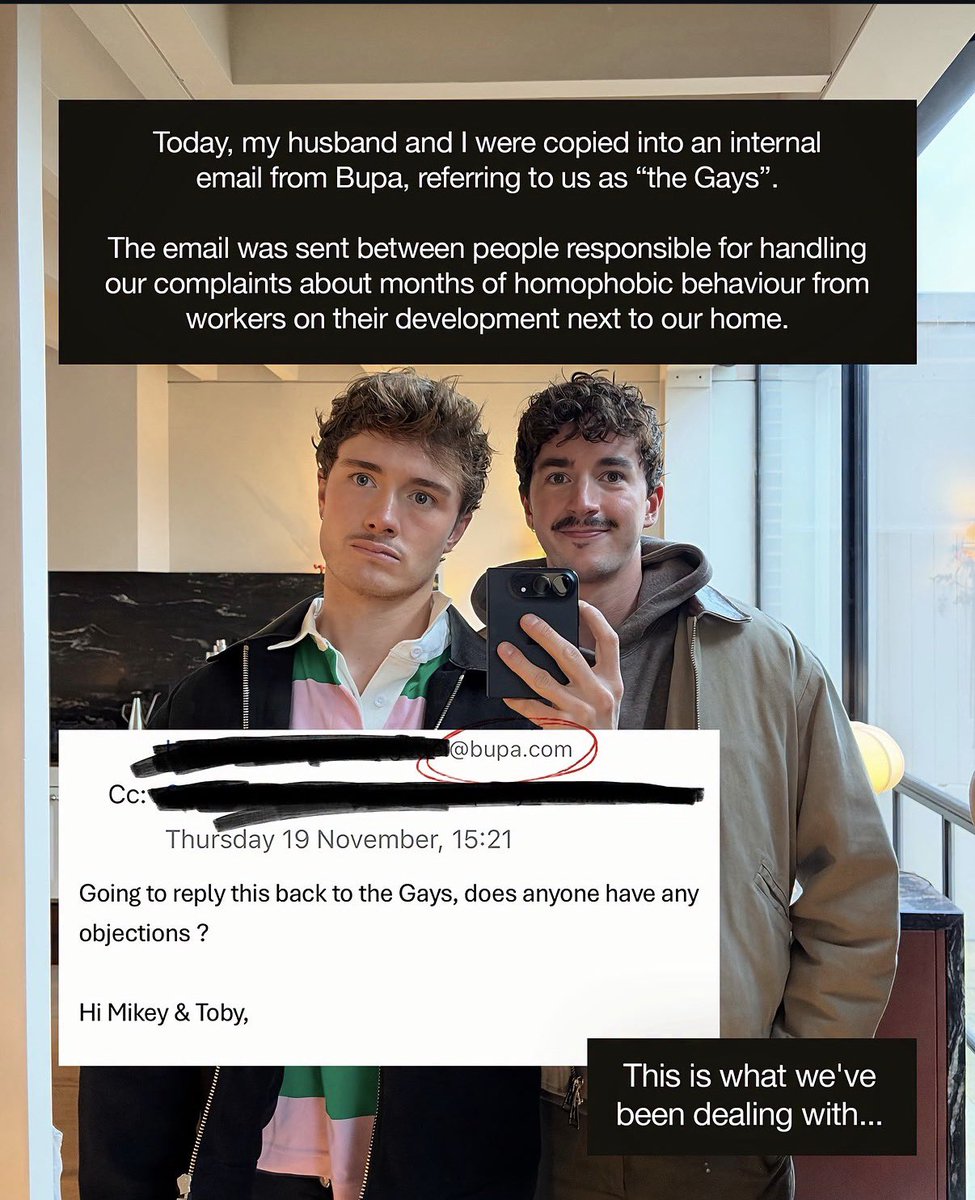
some people will swear up & down homophobia is a "solved" issue in majority english-speaking countries even as gay men have their homes & lives threatened. in Aus, a doc & his husband fled the rural town they lived & worked in because of homophobic threats to their lives in 2026