We owe you an apology.
On October 20, we detected unauthorized access to our official website. After verifying API activity with Shopify, we confirmed on October 23 that a third party obtained customer shipping information. You trusted us with those details, and we're sorry we didn't keep them safe.
Exposed: names, contact details, shipping addresses, and order details (items and prices).
Not exposed: payment card or bank details, recovery phrases, private keys, or wallet passwords.
We've blocked access, fixed the vulnerability, opened an investigation, and are emailing affected customers.
Scammers may pose as Keystone by phone, text, email, or mail, offering refunds, replacement devices, or "fixes" for your order or address. None of it is from us.
NEVER share your recovery phrase or private keys, and NEVER enter your recovery phrase into a device you didn't order. We will never ask for them. Don't click links in unexpected messages. Type https://t.co/7km8AZM288 yourself.
A detailed report is coming soon.
Until then, trust only our official channels. If anything feels off, email [email protected]. We'd rather hear from you than have you take a chance.
Again, we're truly sorry to everyone affected.
A Bitcoin passphrase can be easy for an attacker to guess and a nightmare for its owner to recover. That is a terrible trade. I filmed my approach: physical dice, the @EFF wordlist, fixed formatting, @SeedSigner, @SparrowWallet, @MicroSeed_io and a proper recovery drill.
We believe voice is the most natural way to interact with intelligence, so we created Dessa, the most authentic full-duplex speech model ever built. Talking with it feels like talking with a person…full of emotion, nuance, pauses, and a natural cadence.
https://t.co/r0qFLdvd6c
This is specifically about multi-vendor hardware wallets. Not about multisig in general.
If your threat model is “what if this hardware wallet is lying to me,” buying a second brand and running them in a multisig does not inspect the first one. It just gives you another device to trust. Now that you can actually check what the signer did with the PSBT, that particular reason for multi-vendor hardware multisig is weaker.
Collaborative custody is different. A service that holds one or two keys, handles inheritance, or takes the operational burden off someone who does not want full responsibility still has a real job. Those businesses exist for a reason and they are still useful. That is not the same thing as stacking three different hardware wallets because someone said different vendors are safer.
The article is about the first case. Not the second.
SCOOP: Major U.S. banks are detecting unauthorized third-party AI agents inside customer accounts, including some attempting to take actions that appear to be independent of user instructions, sources told Axios.
The findings have alarmed banking executives, who are racing to restrict access to their systems as AI moves at a velocity faster than financial institutions can respond, multiple industry and bank executives told Axios.
Several banks are now preparing for worst-case and even “day after” scenarios, including how to rapidly secure or restore customer accounts if things go wrong, the people said.
Several bank executives told Axios they're struggling to distinguish between human users and AI agents. One executive said banks also struggle to determine whether agents are authorized by customers or potentially operating without their permission, more akin to rogue agent behavior.
Read my latest for Axios here: https://t.co/Q3bda5In8q
JUST IN: NIC CARTER JUST SAID THERE’S ABSOLUTELY NOTHING YOU CAN DO TO PROTECT YOUR OWN #BITCOIN FROM QUANTUM
"IF ANY AMOUNT OF BTC IS STOLEN, THE WHOLE SYSTEM COLLAPSES"
"WHAT YOU DO ACTUALLY DOESN’T MATTER"
"YOU WON'T HAVE THE VALUE OF YOUR BTC, BECAUSE BTC WON'T HAVE VALUE AT THAT POINT"
THE ONLY THING YOU CAN DO IS "LOBBY DEVELOPERS TO MOVE AS FAST AS POSSIBLE" 👀
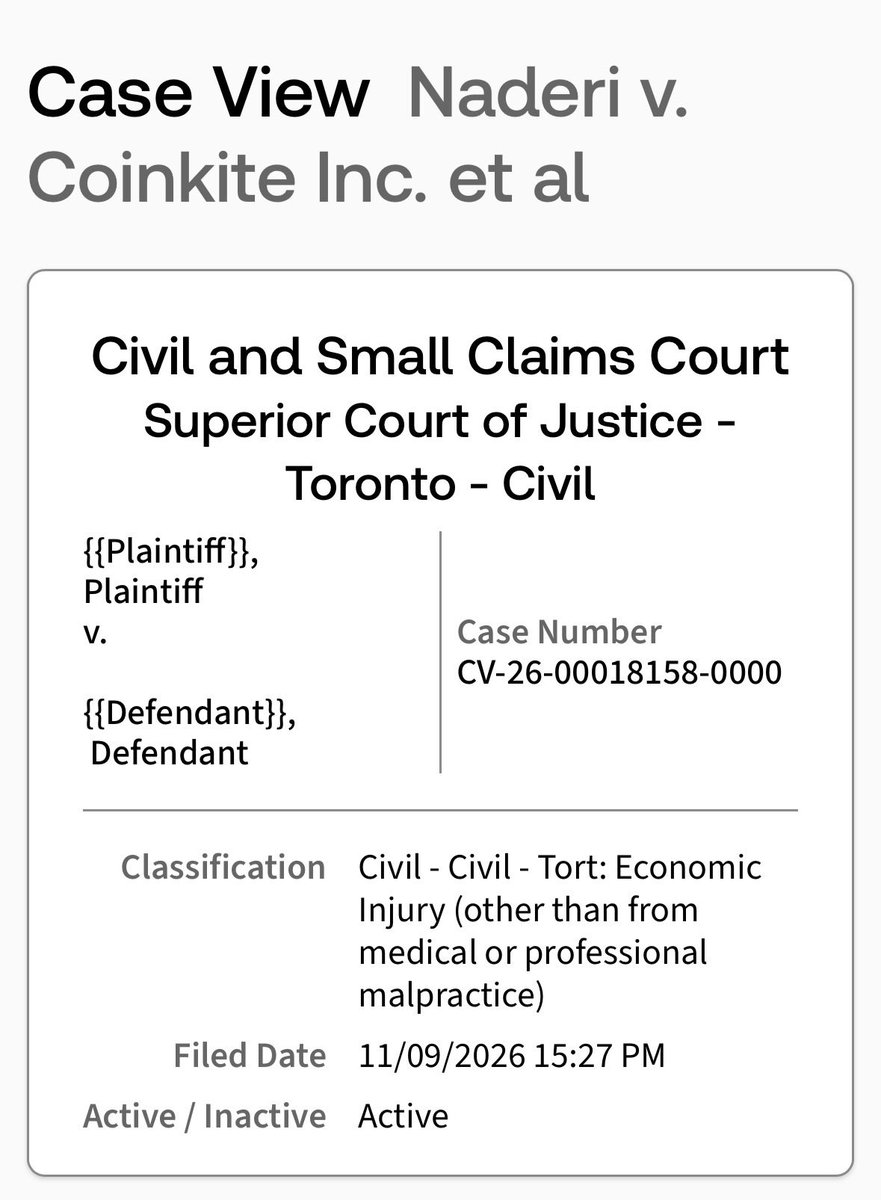
CLASS ACTION LAWSUIT REPORTEDLY FILED AGAINST COLDCARD MAKER COINKITE AND CEO RODOLFO NOVAK IN CANADA
Ontario court records show Amir Reza Naderi as the plaintiff in a civil lawsuit naming Coinkite Inc. and Rodolfo Novak as defendants.
The case, filed in Toronto’s Superior Court of Justice, is classified as an economic injury claim.
Case No. CV-26-00018158-0000.