AI agents are powerful.
But without context, they're just guessing.
Introducing Protocols on Hiperlinks.
Teach AI your processes, policies, and workflows once. Every action is then guided by your company's rules and knowledge.
No prompt engineering.
No repeated instructions.
Just AI that works the way your team does.
Too many conversations about stablecoin adoption focus on narrow benefits: lower fees, faster settlement, etc.
But payments are multiplayer games.
Every transaction touches two or more of: users, banks, processors, issuers, liquidity providers...
In many flows, like e-commerce or cross-border, multiple parties must adopt together.
There’s no clean first mover. It’s a classic chicken-and-egg problem.
Each stakeholder weighs perceived upside against real switching costs: operational burden, lost revenue (float, FX, interchange), retraining, and the mental inertia of behavior change, especially inside large organizations.
This creates a coordination and sequencing problem.
Even if the tech is “better,” adoption stalls unless incentives align across the value chain.
Stablecoins’ disruptive potential can only be realized if the incentive design solves the multi-party coordination challenge.
Smart builders look for wedges. Use cases where a single stakeholder with the most to gain can adopt unilaterally.
Then they stitch together secondary use cases to build network effects.
Once a network hits critical mass, it's very hard to dislodge.
Example:
Dollar access in the global south. A user downloads an app and solves their pain point.
If their friend does too, P2P is unlocked. If not, it’s just one more node to recruit.
This is also why stablecoin-backed cards will grow faster than direct merchant acceptance.
The spending user acts alone, and instantly gets access to millions of merchants.
As Charlie Munger said:
“Show me the incentive, and I’ll show you the outcome.”
Founders who design around incentives, not just tech, will have the edge.
I first read the Foundation series when I was 14 and then the first two Dune books (Dune and Dune Messiah) when I was 17, just before making my way to college.
For readers of both the Foundation and Dune books, you can imagine why I always felt Foundation was more science fiction, and Dune felt like a work pretending to be, but ultimately just fiction.
In a world where abnormalities are becoming more complex, crisis moments more frequent, and timelines increasingly compressed, when intervention is required more often just to stay on course—or pivot entirely—at what point does strategy start to lose its foundational value, and tactics rise in importance?
Like everything else in life, and in both books, only time will tell.
As for me, I’ll continue documenting my observations and the ways I apply what I’m learning. Time will eventually reveal whether this falls into the category of literature or science fiction.
To be fair, in one of Charlie Munger’s last interviews before he passed, he likened @elonmusk to the Mule: unpredictable, with unpredictable outcomes.
If you asked Elon about Charlie and maybe Warren, he might describe them as representatives of the Empire itself; guardians of order and compound logic. (I know that because Elon is also a fan of the Foundation books.)
But here’s the question that needs to be asked:
Adding to this internal shift, I also read Atomic Habits by @JamesClear that same year.
(Atomic Habits explores how identity and environment shape small habits that compound into significant long-term results, a different kind of systemic thinking, but at the individual scale.)
I started to ask myself how much of my worldview; how I prioritise, invest, and make decisions, was driven by a habit formed from a self-image that may only hold up because of the success this approach has yielded in the past.
The Mule, for context, is the unpredictable mutant whose very existence threatens Seldon’s master plan—not because he’s malicious, but because psychohistory can’t predict individuals.
It just so happened that 2024 was also the year I began using LLMs (large language models) to run very complex scenario analyses. As someone who deeply values long-term predictability and structured planning, I found myself beginning to question my bias toward long-term strategy over short-term tactics.
Unfortunately, I haven’t gone back to read the other Dune books I skipped (they’re definitely on my to-do list), but I couldn’t help thinking about how the Mule in Foundation and Paul Atreides represent the same concept: the outlier.
One emerges from a carefully curated plan that doesn’t go quite as expected (Paul Atreides), and the other is a random yet equally consequential anomaly (the Mule).
It wasn’t until Dune: Part Two (2024) came out that I really began to think about its similarities to Foundation.
(Dune, for those unfamiliar, follows the rise of Paul Atreides, a messianic figure whose destiny disrupts a centuries-long plan for galactic stability.)
More so in business than anything else. It’s no secret to those who’ve worked with me that I often rely on thousands of pages of scenario analysis to run my businesses. I couldn’t make a PE play without carefully studying one.
I’ve always seen myself as a strategist rather than a tactician. In my view, the success of tactics has more to do with probability—or luck—than anything else.
It’s also helpful to note that the public library where I read these books always had Asimov’s work in the Sci-Fi category, while Herbert could be found in Literature. I’m not sure how that influenced my perspective, but it would be lazy to think it made no difference at all.
To be honest, I’ve always carried a philosophy that favored Hari Seldon. Asimov’s fictional mathematician who developed “psychohistory,” a science that predicts the behavior of large populations over time. Even if not directly, the concept shaped how I approached life, business, and investing.
Jack Dorsey’s Block joins the coveted S&P 500 on Wednesday, a symbolic milestone that puts the digital finance firm under Wall Street’s spotlight https://t.co/rOjy5jVqT5
🚨 Lisk Alliance Boost is here 🚨
Ready to get started? 👉 https://t.co/GSMAcAAMNx
A new way to earn LSK by actively contributing to the ecosystem through DeFi, staking, and partner Apps.
Here’s everything you need to know 👇
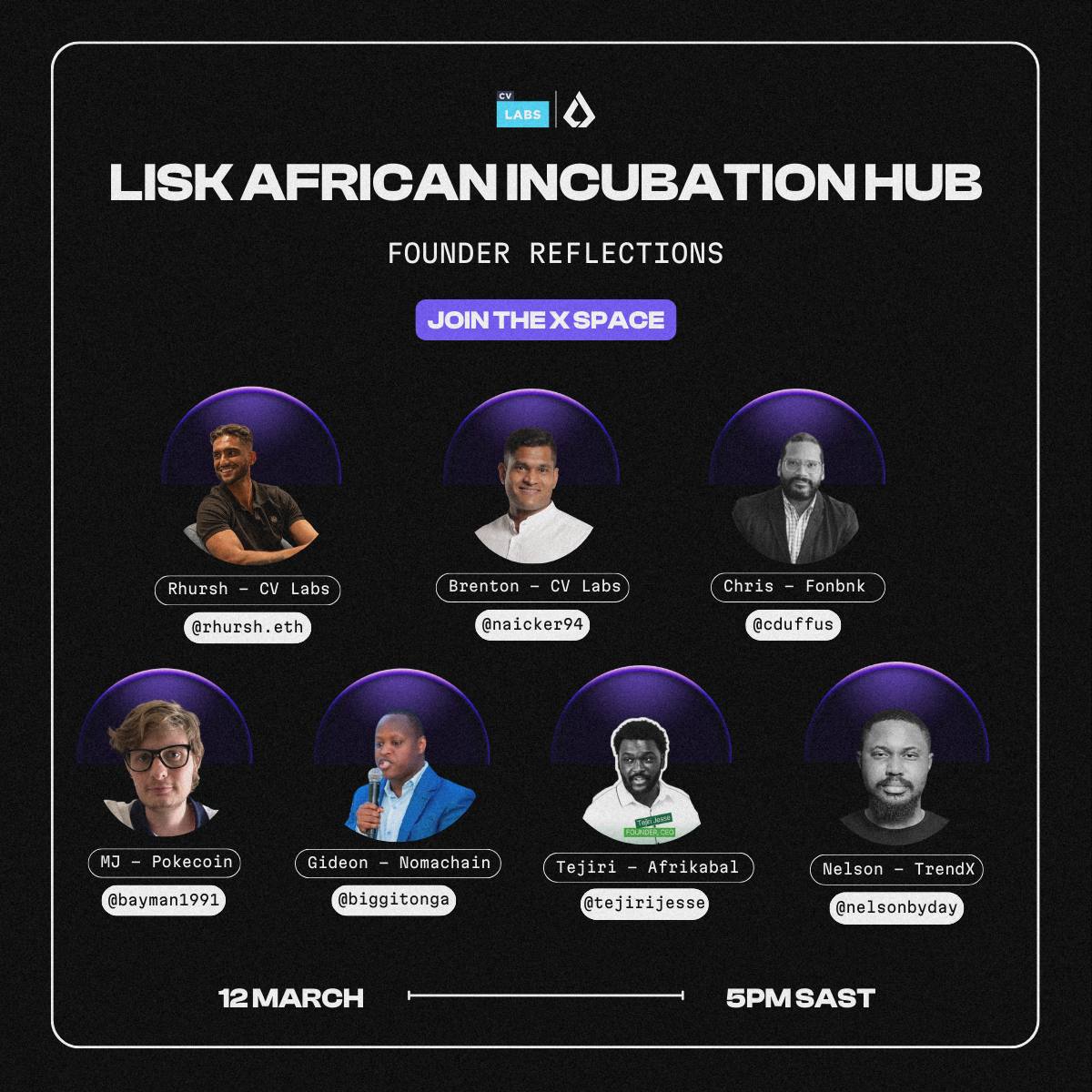
Thinking about applying for Batch 2 of the Lisk African Blockchain Incubator?
Before you hit that submit button, join us on March 12 at 5 PM SAST for Founder Reflections—a candid X Space where past incubator graduates share their experiences, lessons, and what they wish they knew before applying.
🎤 Special guest: Chris Duffus, Founder of Fonbnk
🔥 Hosts: Rhursh (Program Host) & Brenton (Startup Mentor, CV Labs)
This is your chance to ask real questions, hear real stories, and get the insights you need to make your application stronger.
🔗 Set a reminder: Join the event https://t.co/Ic3Xu8orCM
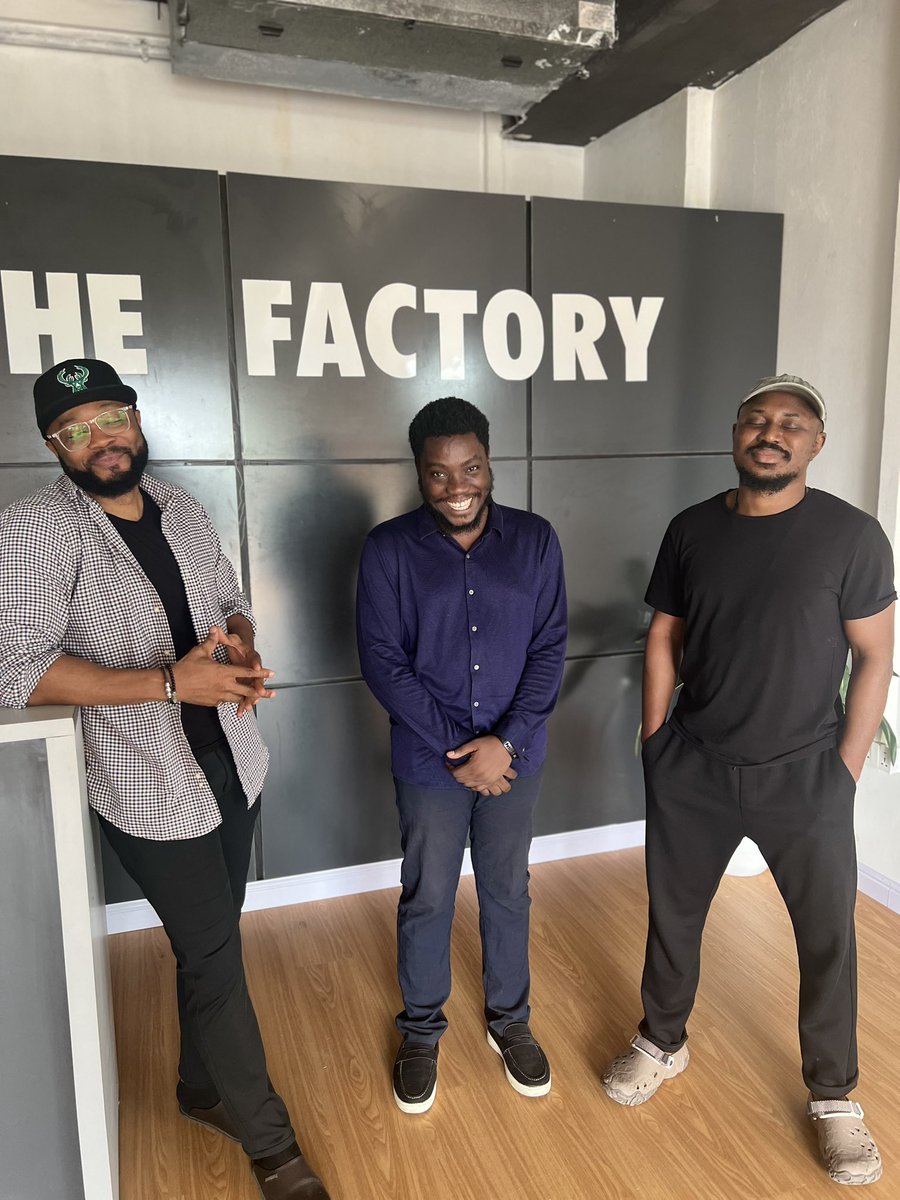
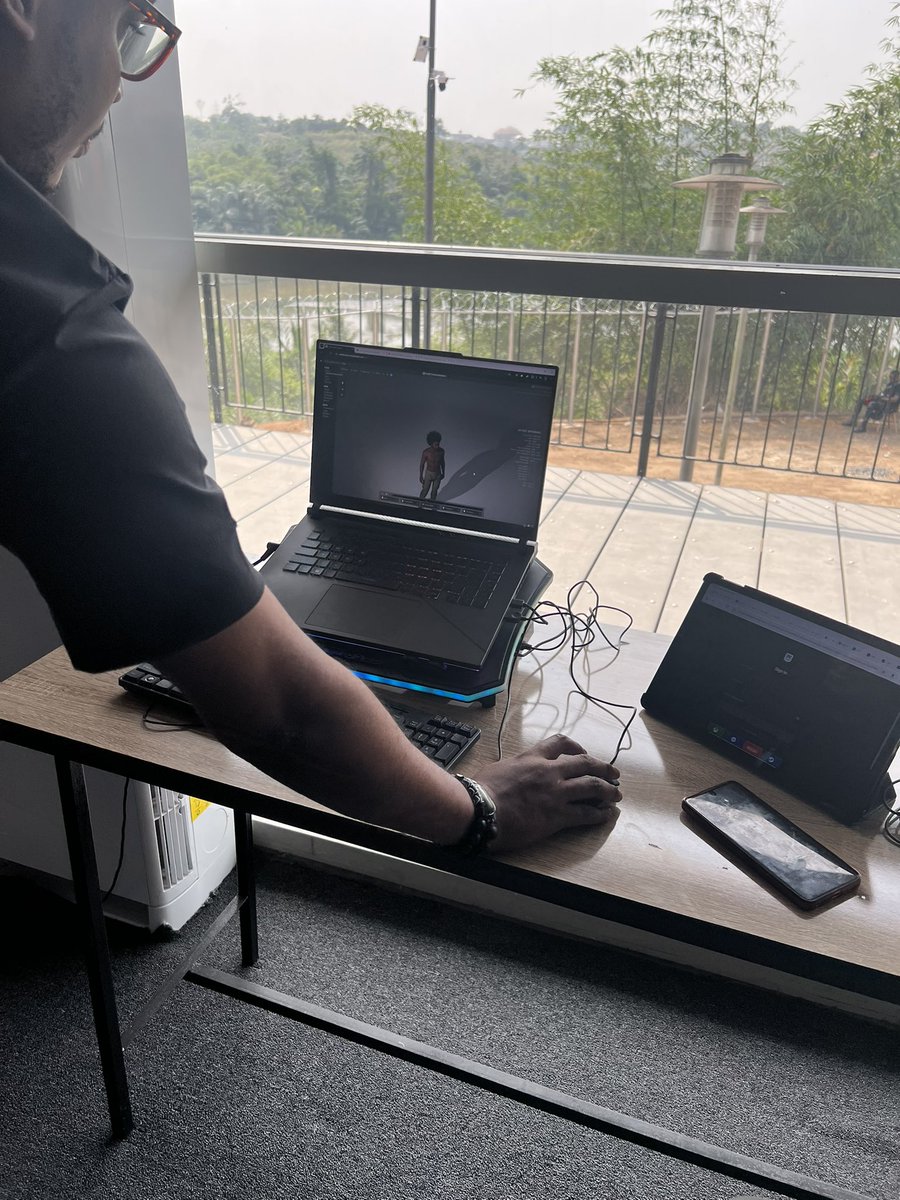
Yesterday I had the pleasure of spending the day with this incredible founders at @the_factoryhq …@heypmndifon & @VictorKaycee2 are building startups that I personally believe will transform our reality as we know it.
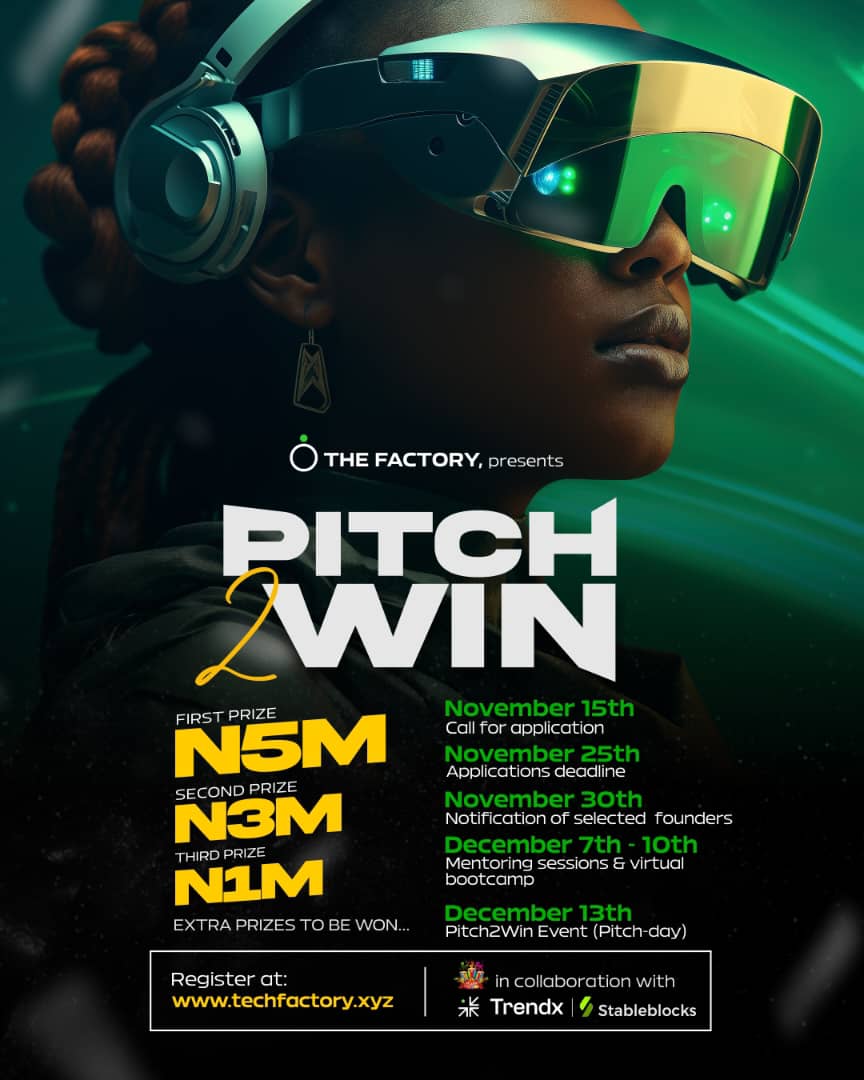
Dream big, pitch bigger! Pitch2Win is searching for Nigeria’s next top innovators with solutions in various industries (e.g., Fintech, Healthtech, Edtech, Tech Entertainment e.t.c).