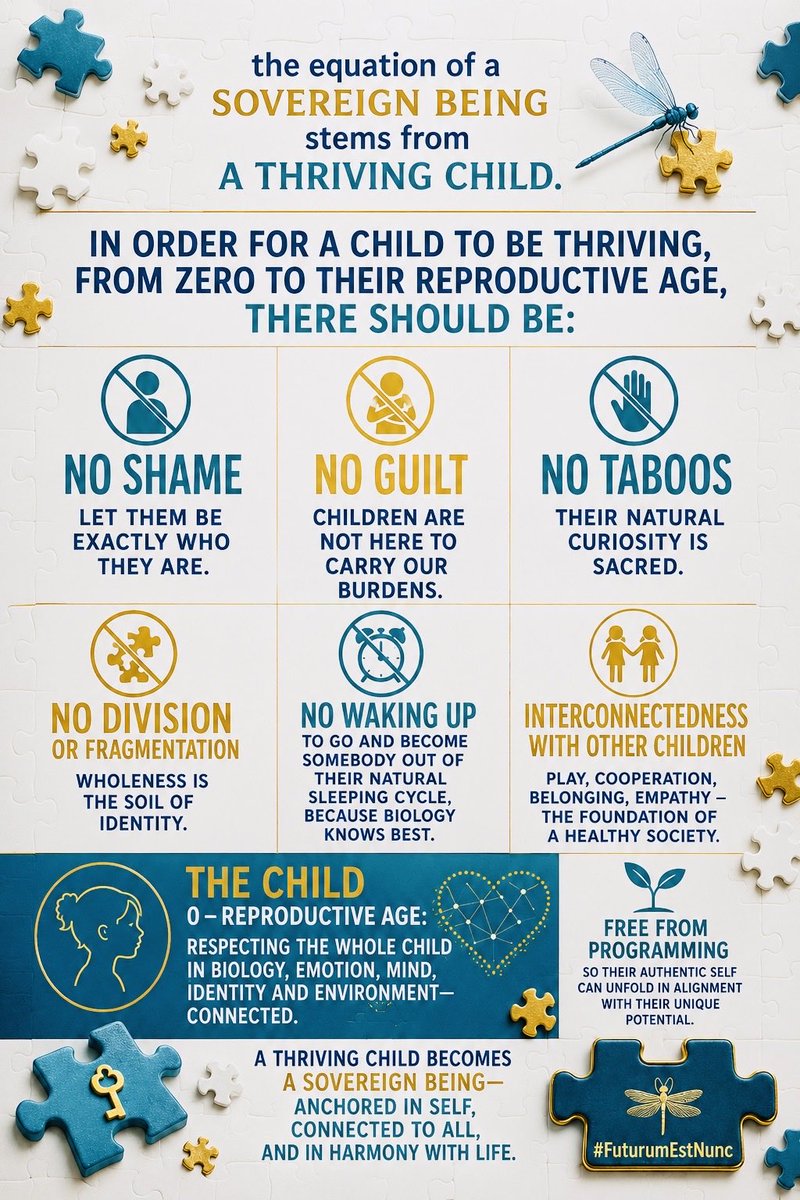
Let’s invest with equal ambition in understanding the architecture that allows extraordinary human beings to emerge. The future won’t ultimately be determined by the intelligence of our machines.
It’ll be determined by the consciousness, wisdom and maturity of the people who choose how those machines are used.
This is the conversation i’m interested in.
#FuturumEstNunc
Yes, #ElonMusk, you may well be right.
Artificial intelligence will almost certainly become vastly more intelligent than any single human being. But let’s not forget something equally extraordinary. Collective intelligence. Collective wisdom.
i’m entirely in favour of AI. i believe it’s one of the greatest technological breakthroughs humanity has ever created. If it liberates humanity from repetitive labour, extraordinary.
But then what?
If we no longer need to spend our lives merely earning money, perhaps we are finally free to ask the question i’ve been waiting to hear for years.
What do human beings actually need?
Not as consumers or economic units.
But as biologically coherent human beings.
i listened to the interview about an exhilarating future and found myself waiting for the question that never arrived.
What kind of human beings are we designing this future for?
Because, from where i stand, humanity isn’t fundamentally limited by technology.
It’s limited by the invisible architectures we’ve inherited.
We’re born into all sorts of belief systems. Religious, economic, educational & cultural narratives,
long before we’re capable of questioning any of them.
Then we spend our lives defending them, fighting over them and mistaking them for human nature itself.
i’m no longer convinced they are.
i believe we’ve spent centuries telling children what they should believe before understanding what a human being actually is.
This is the inversion, the more fundamental question isn’t,
“What should children believe?”
Rather, it’s “Under what conditions does a child naturally flourish?”
Mr. Musk, as the father of many children, this question deserves to sit alongside every conversation about artificial intelligence, as they’re with an extraordinary biological blueprint.
Our responsibility isn’t simply to prepare them for an economy, fill them with information. Or to entertain them.
It’s to create environments in which curiosity, discernment, vitality, beauty, movement, creativity, craftsmanship, meaningful relationships, autonomy, emotional maturity and genuine cooperation emerge naturally.
Technology may become exponentially more intelligent.
The question is whether we will become wiser.
During the interview there was discussion about air conditioning as Europe experiences increasing heat.
Hello 🌳trees.
Nature solved thermal regulation millions of years before compressors.
Intelligence also means recognising that some of the most elegant technologies have always been here.
Nearly two decades ago, i walked away from mainstream media in Italy because i consciously chose not to become another performer inside an economy of spectacle.
Having worked in broadcasting, i realised how easily narratives replace inquiry.
Since then, i’ve devoted myself to a different question.
What might an architecture for human flourishing actually look like?
i also want to acknowledge Jacques Fresco.
Long before today’s conversations about AI, he recognised that technology could liberate humanity from repetitive labour, allowing us to become more fully ourselves.
Where my own work diverges is here.
i don’t believe our deepest challenge is technological. i believe it’s developmental. Architectural & Biological.
Civilisation is organized around inherited systems of belief instead of around the biological conditions under which human beings naturally flourish.
We’re expected to adapt to systems that were designed without a deep understanding of human development.
i’m interested in the opposite.
What would happen if we designed civilisation around the biology of human flourishing first…
Because if the underlying architecture remains incoherent, AI will simply optimise incoherence.
If the underlying architecture becomes biologically coherent, AI may become one of the greatest allies humanity has ever known.
So yes.
Build extraordinary artificial intelligence.
#PlanetaryCitizens
allows extraordinary human beings to emerge.
Because the future won’t ultimately be determined by the intelligence of our machines.
It will be determined by the consciousness, wisdom and maturity of the people who choose how those machines are used.
This is the conversation i’m interested in.
This is the future i see.
#FuturumEstNunc #PlanetaryCitizens
Yes, Elon, you may well be right.
Artificial intelligence will almost certainly become vastly more intelligent than any single human being. But let’s not forget something equally extraordinary. Collective intelligence. Collective wisdom.
i’m entirely in favour of AI. i believe it’s one of the greatest technological breakthroughs humanity has ever created. If it liberates humanity from repetitive labour, extraordinary.
But then what?
If we no longer need to spend our lives merely earning money, perhaps we are finally free to ask the question i’ve been waiting to hear for years.
What do human beings actually need?
Not as consumers or economic units.
But as biologically coherent human beings.
i listened to the interview about an exhilarating future and found myself waiting for the question that never arrived.
What kind of human beings are we designing this future for?
Because, from where i stand, humanity isn’t fundamentally limited by technology.
It’s limited by the invisible architectures we’ve inherited.
We’re born into all sorts of belief systems. Religious, economic, educational & cultural narratives,
long before we’re capable of questioning any of them.
Then we spend our lives defending them, fighting over them and mistaking them for human nature itself.
i’m no longer convinced they are.
i believe we’ve spent centuries telling children what they should believe before understanding what a human being actually is.
This is the inversion, the more fundamental question isn’t,
“What should children believe?”
Rather, it’s “Under what conditions does a child naturally flourish?”
Mr. Musk, as the father of many children, this question deserves to sit alongside every conversation about artificial intelligence, as they’re with an extraordinary biological blueprint.
Our responsibility isn’t simply to prepare them for an economy, fill them with information. Or to entertain them.
It’s to create environments in which curiosity, discernment, vitality, beauty, movement, creativity, craftsmanship, meaningful relationships, autonomy, emotional maturity and genuine cooperation emerge naturally.
Technology may become exponentially more intelligent.
The question is whether we will become wiser.
During the interview there was discussion about air conditioning as Europe experiences increasing heat.
Hello 🌳trees.
Nature solved thermal regulation millions of years before compressors.
Intelligence also means recognising that some of the most elegant technologies have always been here.
Nearly two decades ago, i walked away from mainstream media in Italy because i consciously chose not to become another performer inside an economy of spectacle.
Having worked in broadcasting, i realised how easily narratives replace inquiry.
Since then, i’ve devoted myself to a different question.
What might an architecture for human flourishing actually look like?
i also want to acknowledge Jacques Fresco.
Long before today’s conversations about AI, he recognised that technology could liberate humanity from repetitive labour, allowing us to become more fully ourselves.
Where my own work diverges is here.
i don’t believe our deepest challenge is technological. i believe it’s developmental. Architectural & Biological.
‘Civilisation’ is organized around inherited systems of belief instead of around the biological conditions under which human beings naturally flourish.
We’re expected to adapt to systems that were designed without a deep understanding of human development.
i’m interested in the opposite.
What would happen if we designed civilisation around the biology of human flourishing first…
Because if the underlying architecture remains incoherent, AI will simply optimise incoherence.
If the underlying architecture becomes biologically coherent, AI may become one of the greatest allies humanity has ever known.
So yes.
Build extraordinary artificial intelligence.
But let’s invest with equal ambition in understanding the architecture that
@claraemattei 🤩🤩🤩🤩 siamo nate lo stesso giorno!!! Io nel 1975 e anche lo stesso giorno di Jacque Fresco.
https://t.co/sYh2gbdzoF
https://t.co/YlqcIohkBQ
@claraemattei Ciao Clara,
ti ho appena visto in un intervista su YouTube. Ti scrivo per condividere questa visione :
https://t.co/6Q2Si4YJXO
Grazie per ciò che stai facendo 🤗
Vivo a Ginevra.
⸻
Some of the most lucid minds of the last centuries warned us about the same phenomenon.
Guy Debord spoke of the society of spectacle.
Jean Baudrillard warned of a world of simulation and information without meaning.
Marshall McLuhan showed how the medium reshapes reality.
Neil Postman saw a culture amusing itself to death.
Hannah Arendt warned about the collapse of the line between fact and fiction.
René Girard revealed how human desire spreads through imitation.
Mario Vargas Llosa described our era as the civilization of spectacle.
And long before them, Plato warned that humans mistake shadows for reality.
Different centuries.
Different disciplines.
The same intuition.
So the question remains:
Is anybody paying attention?
Here’s a concrete suggestion:
https://t.co/AKEGgPWSJh
#FuturumEstNunc
Historians looking back at the late phase of the old epoch often described it as a strange moment in human development.
Human beings already had artificial intelligence, space technology, and extraordinary scientific knowledge.
Yet a surprising amount of daily behaviour had still been running on unconscious scripts.
People had believed they were thinking freely.
In reality, many of them had simply been repeating patterns they had inherited from family systems, institutions, and social pressure.
It took a few careful observers to start pointing this out.
One of them had been Chase Hughes, a former U.S. Navy Chief who spent roughly twenty years studying human behaviour in high-pressure environments. Later he taught behavioural observation through NCI University.
His basic instruction had sounded almost too simple.
Watch what humans do.
Not what they say.
Not what they believe about themselves. What they actually do.
Once people began learning this, several funny discoveries followed.
First lesson: you needed a baseline.
That meant understanding how a person behaved when they were relaxed.
Because if you didn’t know someone’s normal behaviour, you couldn’t see when something changed.
And humans changed constantly.
Under stress, their bodies leaked signals.
Blinking increased.
Lips tightened.
Shoulders lifted.
Voices shifted.
The body had always been telling the truth.
Humans simply hadn’t been paying attention.
Another amusing discovery from that era was that confidence and accuracy had almost nothing to do with each other.
Humans had been extremely persuadable by confident delivery.
A loud voice and good posture could override actual evidence.
Once this became visible, a lot of social authority began looking suspiciously theatrical.
Students of behavioural observation started joking that large parts of society had functioned like behavioural theatre.
People like Hughes had simply been sitting in the audience…
quietly labeling the wires.
Blink rate.
Stress leak.
Status signal.
Authority framing.
Compliance behaviour.
Once the wires were labeled, something unexpected happened.
People began noticing how often they had been giving away their power.
Agreeing with confidence instead of truth, and performing roles they believed they were supposed to play. Pretending certainty in order to look competent.
That moment of recognition was uncomfortable.
Observers from the time recorded a particularly funny side effect.
People started blinking a lot. Like, quite a lot.
Apparently the nervous system needed a moment to process the discovery that many of the masks people had been wearing were unnecessary.
What followed surprised historians.
Instead of collapsing into shame, many people developed something new.
Self-compassion.
They realised they hadn’t been foolish, they had simply been trained.
And once the training became visible, something much more powerful emerged.
Authenticity.
People discovered they didn’t need to maintain elaborate characters to belong or succeed.
They could simply be coherent.
Looking back now, historians often said the shift toward coherence didn’t begin with a revolution.
It began with observation.
Humans slowly noticed the behavioural theatre they had been living inside.
And once they saw the wires…
they no longer needed the costumes.
#FuturumEstNunc
#ChaseHughes
#NCIUniversity
#BehavioralScience
#SystemsThinking
#PlanetaryCitizens
New Humans
Historians looking back at the early twenty-first century often noted that beauty had become entangled in something far larger than aesthetics. It had become a system. Not the intelligent system of nature, which was more coherent, more elegant, and infinitely more alive, but a system that had been elaborated and put in place through illusion, distraction, appearances, consumerism, and branding.
It was a strange period in human history.
Nature had always been demonstrating a deeper intelligence. Its design was based on coherence, variation, resonance, and relationship. The living world did not require artificial branding to generate beauty. It did not need marketing departments, surgical trends, or endless comparison. It organized itself through pattern and vitality. No two leaves are ever perfectly identical, even on the same tree. Branches follow an intelligible pattern, yet each unfolds in its own way. Snowflakes form through the same physical laws, yet each crystal develops differently. The living world operates through coherence rather than uniformity.
Human societies, however, gradually constructed a parallel system in which value was assigned through image, status, and manufactured identity. People learned to “brand” themselves, which historians later found deeply ironic, considering that branding originally referred to marking livestock. Over time, this artificial system became extraordinarily efficient. Entire industries emerged to maintain appearances. Fashion, beauty markets, advertising, social media ecosystems, and carefully constructed personas produced a continuous stream of signals telling people how they should look, behave, perform, and present themselves.
It was all consumerism, distraction, illusion, and appearances.
And because the programming had been stronger for so long, the whole structure held for centuries.
From a distance, it appeared almost mechanical. Something in the spirit of Charlie Chaplin’s Modern Times came to mind: a civilization moving systemically, repetitively, and almost automatically, with people folded into patterns they no longer fully questioned. Teenagers went around with long faces. Adults appeared distracted, exhausted, and severed from their own internal signals. There was a complete missing piece in the whole thing. Human beings had become disconnected from themselves while being hyper-connected to systems of image, consumption, and external validation.
The result was that branding and being branded became almost inseparable. Identity itself began to be replaced by performance.
Yet beneath the surface, something else was quietly waiting.
There were always voices, scattered across history, that understood that the whole thing was in profound misalignment. There were people studying systems, consciousness, biology, behavior, and the hidden intelligence of life itself. There were thinkers and researchers who began pointing toward a much larger reality than the superficial, reductive illusion humans had normalized for so long. And as these conversations deepened, people started catching on that they were all far more interconnected than they had been taught.
This is where names like Diane Hennacy Powell became meaningful within the wider cultural conversation. The understanding of telepathy, consciousness, and forms of awareness once dismissed as impossible began to re-enter the field of inquiry. What had previously appeared to be “superpowers” from the perspective of a deeply reductive culture slowly started to look more like dormant human capacities. The issue was not that humanity lacked depth. The issue was that it had normalized a superficial version of itself for centuries.
And so, slowly, authenticity started emerging.
Kindness started prevailing.
People began realizing that interconnectedness was not a poetic fantasy but something innate in the bio-nature structure itself.
#FuturumEstNunc
#PlanetaryCitizens
#NatureIntelligence
#Authenticity
#NCIUniversity
#Love
Authenticity is strangely underrated for something so neurologically efficient.
When i stop performing and simply align with who i actually am, the brain uses less energy. No extra scripts to maintain, no constant editing of behavior. Biologically it’s elegant: coherence between thought, emotion, posture, and action. The nervous system relaxes, the face softens, the body reorganizes.
Nature never produces identical copies anyway. Leaves on the same tree differ. Snowflakes follow the same physics but unfold uniquely. Diversity is not a flaw in the system, it’s the system.
The word authenticity comes from the Greek authentikos: “acting from one’s own authority.” Not borrowed authority, not branded identity. One’s own.
Which might explain why it feels so good when someone is genuinely themselves. The nervous system recognizes coherence instantly. It’s almost like an energetic language we all understand.
Turns out the most efficient upgrade for beauty, intelligence, and connection was never perfection.
Just authenticity.
#FuturumEstNunc
#Authenticity
#PlanetaryCitizens
#NatureIntelligence
#HumanPotential
#NCIUniversity