People here talk a lot about many things. Some are opinions, & others are facts. But many ignore facts when they hurt them & absorb opinions as if they were facts when those opinions appease them. The thing is, there is the truth—only truth—and then there is ur truth & my truth.
In 1992, Thong Nambonbi was declared a protected monument under the Manipur Ancient and Historical Monuments and Archaeological Sites and Remains Act, 1976.
“Thong Nambonbi — a bridge across centuries.”
Standing over the Nambul River near Khwairamband Keithel, this historic hump-backed brick arch is one of the enduring remnants of Manipur’s architectural heritage.
#Manipur
It was first built with the labour of war captives, using bricks bound with a traditional mixture of lime, jaggery and black lentils.The bridge was rebuilt in 1854 AD, during the reign of Meidingu Chandrakirti, following designs by British engineers.
Read the historical events; don’t just argue for the sake of social media.
1971 - A huge influx of Bangladeshi migrants into Assam.
1951 - The permit system that was already in place in Manipur was abolished.
These timelines marked major turning points in the demographic history.
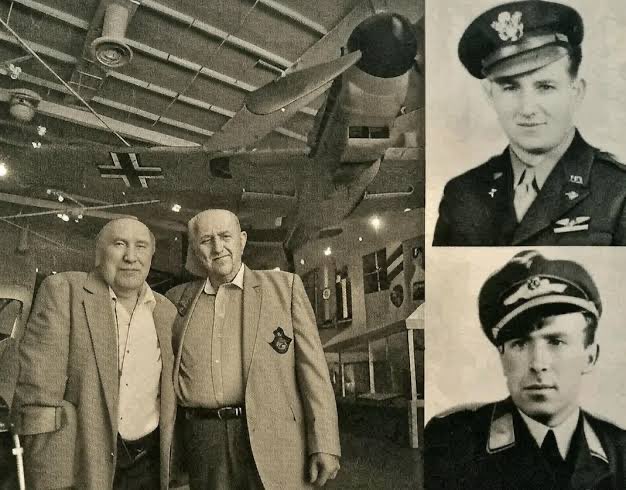
In the skies of World War II, German pilot Franz Stigler spared the badly damaged American bomber crew of Charles Brown instead of shooting them down.
He quietly escorted them to safety and then disappeared into the clouds.
Decades later, Stigler and Brown found each other—
In 1943, a German fighter pilot spared an American B-17, decades later the two finally meets 🥹
In one of the most extraordinary stories from World War II, Franz Stigler encountered a badly damaged American B‑17 Flying Fortress piloted by Charles “Charlie” Brown on 20 December 1943 over German‑occupied Europe.
Brown’s bomber had been ripped apart by flak and fighters, losing engines and crew members, yet was somehow still airborne.
Instead of shooting the crippled plane down as his orders and duty as a German fighter pilot might have dictated - Stigler chose not to fire, drove off other German aircraft, and escorted the wounded bomber toward safety, even flying close enough that German gunners would not risk hitting their own pilot.
Stigler later explained he could not bring himself to kill men who could no longer defend themselves; to him, they were as defenseless as parachutists.
Brown managed to return to England, and for nearly 50 years neither man knew whether the other had survived.
In 1990, after a long search by Brown, the two pilots finally met, embraced, and formed a deep friendship that lasted until their deaths in 2008.
Their unprecedented story stands as a powerful reminder that even in the harshest realities of war, compassion and shared humanity can rise above conflict, forging bonds between former enemies that endure long after the fighting has ended.
Manao Ching is more than a memorial—it is a monument to resistance, courage and sacrifice. The battle fought here stands as a turning point in Manipur’s history, often remembered in comparison with the Battle of Plassey as a decisive moment in the region’s struggle against Brits.
This poignant photograph captures a British woman from the United Kingdom paying her respects at the memorial of Wangkhei Meiraba Poila, one of Manipur’s forgotten heroes.
Surrounded and outnumbered, Poila and his men fought to the very end. He refused to surrender, choosing sacrifice over submission. The white stone at the memorial marks the spot where he fell.
Kakching is not merely a place on the map; it is a living chapter of Manipur’s history.
From the echoes of ancient #Meitei traditions to the valour of its people, Kakching has long stood as a significant cultural and historical landscape of #Manipur.
Ah yes, the classic ‘if it lasted longer it must be more important’ metric of history.
By that logic the 6-Day War was just a long weekend and the 100 Years’ War is the only real one.
Memory doesn’t depend on who holds the pen_ it depends on who actually had a state to defend.
5 days of field combat in 1891 = canonized in history as a grand "War."
3 years of relentless guerrilla resistance (1917–1919) across the hills = dismissed as a "minor raid."
Maybe "The Five-Day Affair" is a more accurate, less inflated title for 1891. Memory shouldn't depend on who holds the pen.
#TheFiveDayAffair
It fills me with deep sorrow to see my beloved Manipur being turned into a poppy hub.
Our once-lush forest areas are being devastated beyond recognition. Besides several other areas already destroyed by poppy cultivation, more locations with mass cultivation are being uncovered. At this alarming rate of deforestation, we are not just losing our green cover, we are destroying the very future of this generation & the generations to come.
I earnestly appeal to the @narcoticsbureau and @moefcc to take serious, urgent and decisive efforts to stop this menace before it is too late. Manipur’s survival depends on it.
Adventure of #ManipuriCinema:
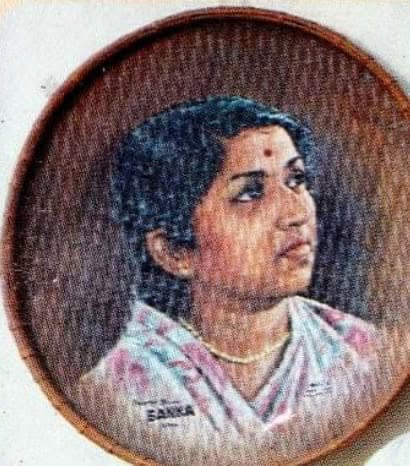
A timeless memory from the golden pages of Manipuri cinema—the melody queen Lata Mangeshkar, beautifully portrayed by #RKCS ,on a traditional Meitei yangkok, a circular bamboo basket once used for winnowing rice chaff.
Meichak (1982), director L. Banka Sharma had hoped to have Lataji sing two songs for the film. As a gesture of admiration, he gifted her this unique portrait.
A meeting of two worlds—Lataji’s immortal voice and the artistic soul of Manipur, preserved in bamboo.
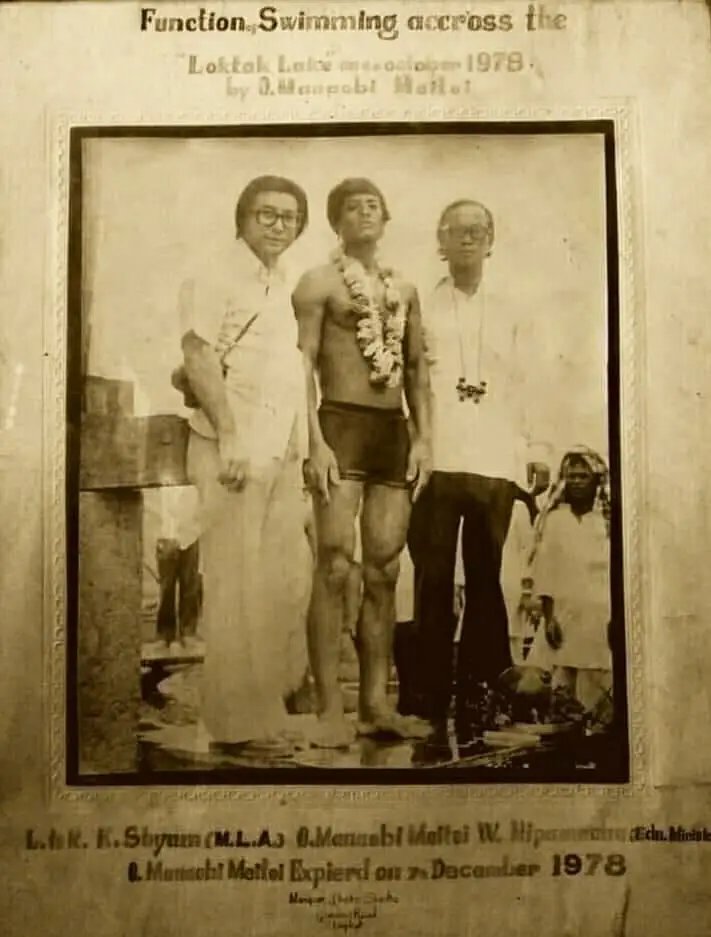
LOCAL ACCOUNT: THE FIRST AND ONLY
This historic photograph features Oinam Manaobi Meitei of Phubala, #Manipur , following his remarkable feat of swimming across Loktak Lake in October 1987.
.