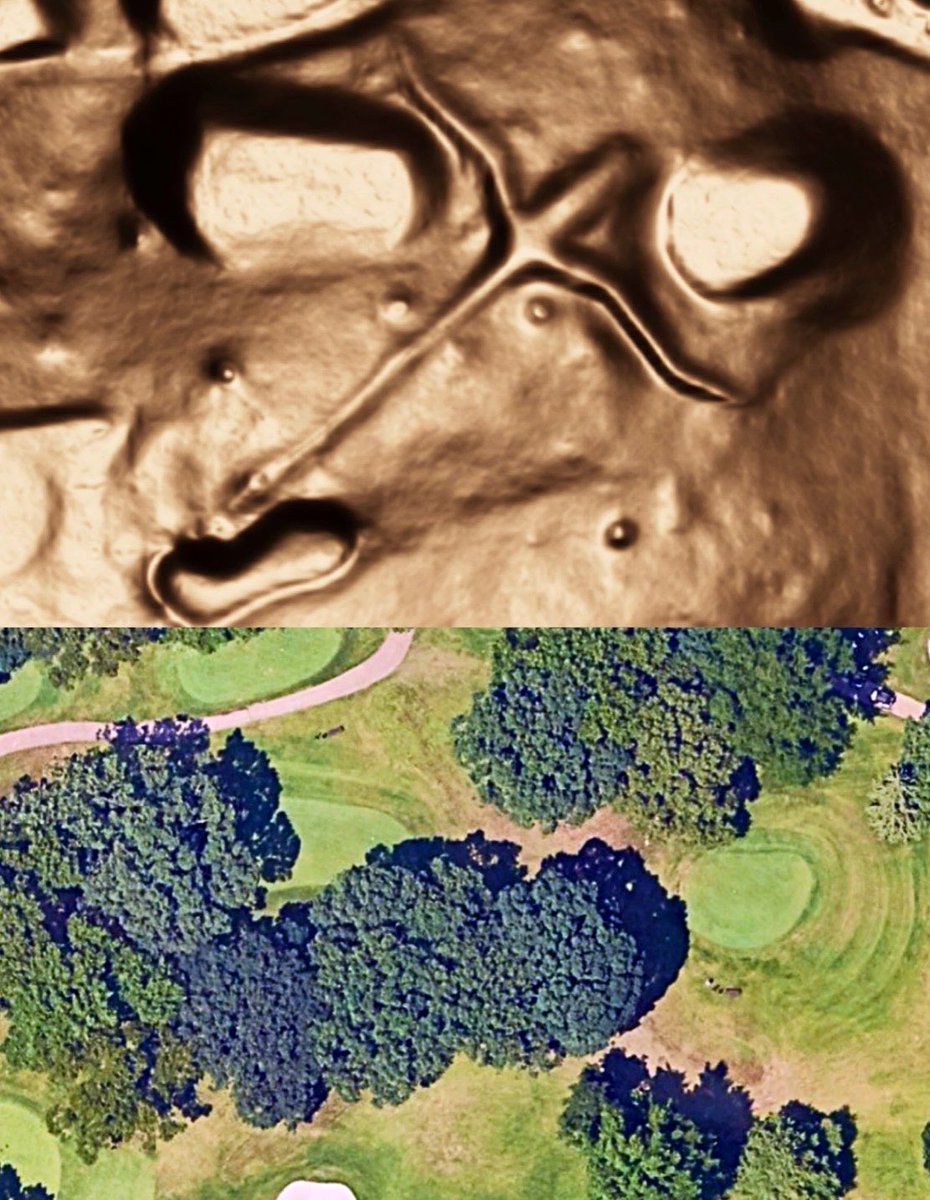
I think people seriously underestimate how much information was moving around North America long before Europeans arrived.
Ideas, materials, technologies, people. Across enormous distances.
The Fitz rolls on into central Lake Superior, roughly 20 miles NE of Keweenaw Peninsula.
Winds have briefly dropped to 40mph as the eye of the low-pressure system passes directly over the lake.
Once the reality of this life occurs to you, you will be scared to death.
And this fear will foster a fundamental change in you,
and this change will open a way for you to eternal life.
Trauma recovery asks us to meet our own less-than-perfect moments w/ grace-- which can be hard, when we're totaling up the people we inconvenienced or hurt when we were triggered, dissociated, or exhausted. No shame.
Accountability can-- has to-- coexist w/ compassion.
The biggest “mystery” in North American archaeology isn’t lost civilizations.
It’s the lost paperwork.
Thousands of excavations, surveys, skeletal measurements, pottery typologies, and burial descriptions from 1870–1950 were never published, never digitized, and in some cases never even filed.
They’re in county courthouses, railroad archives, church basements, private estate boxes, mislabeled museum drawers… entire data sets that would rewrite regional prehistory if anyone actually tracked them down.
We talk like the record is incomplete because the past is gone.
Truth is: the past might still be sitting in a filing cabinet no one’s opened in 80 years.