Did a China-hater tell you China's economy was 'floundering'?
China uses about 18 times as much concrete each year as does the USA, to build new infrastructure.
2024 est.
China: 1.86 billion metric tons
United States: 103,00 million metric tons
China's economy is real. (ibid)
The US economy is comprised of hyper-financialization.
Only idiots and Britain haters blame Churchill for the Bengal Famine
This myth only became popular in 2010 after a ridiculous book was published by a far-left journalist with no historical training
This is what REALLY happened:
1. A cyclone hit Bengal in 1942, destroying crops
2. They were already suffering from the worst rice brown spot epidemic on record
3. Normally in a famine grain would be imported from Burma, Malaya, Phillipines, Thailand etc. But WW2 ws raging and our Japanese enemy now controlled those areas
4. The Japanese had bombed Indian ports, which also destroyed grain
5. Shipping grain in was hugely dangerous because Japanese fleet was blockading the Bay of Bengal and sinking ships
Remember, the Axis powers were sinking one ship every day and had sunk around a million tons of shipping in 1942.
6. On top of that local Indian speculative traders were unforgivably HOARDING grain. With inflation rife, this was classic wartime speculation as they could make (and expected to make) much more money by hoarding rather than selling immediately.
7. Local government and administrators were slow to act and initially told the UK government there was enough grain in Bengal.
One can blame the democratically elected Government of Bengal, people like Huseyn Shaheed Suhrawardy (Minister of Civil Supplies for the newly formed Muslim League) and Sir John Herbert (the Governor of Bengal) for exacerbating conditions in the Bengal Famine. But not Churchill.
What did Churchill do? Everything he could.
Remember also, he was thousands of miles away in a different continent fighting the Second World War and preparing for D-Day.
Yet despite all his other commitments he worked hard to save the people of Bengal.
1. When the British government found out about the famine’s severity in August 1943, they authorised around 1 million tons of grain to be shipped to India between then and December 1944.
2. Churchill pushed Australia to send wheat
3. Churchill personally requested shipping assistance from U.S. President Roosevelt in April 1944 to transport it from Australia. Roosevelt declined, stating US ships were needed for the Pacific campaign and the upcoming D-Day operations.
4. Thanks to Churchill grain arrived from Iraq (barley), and Canada as well as Australia.
5. Crucially, Churchill was responsible for appointing the man who played such a pivotal role in stopping the Bengal Famine: Field Marshal Wavell. Wavell knew India and its people extremely well and was a magician of logistics. He drafted in the army to move food supplies and halted the famine.
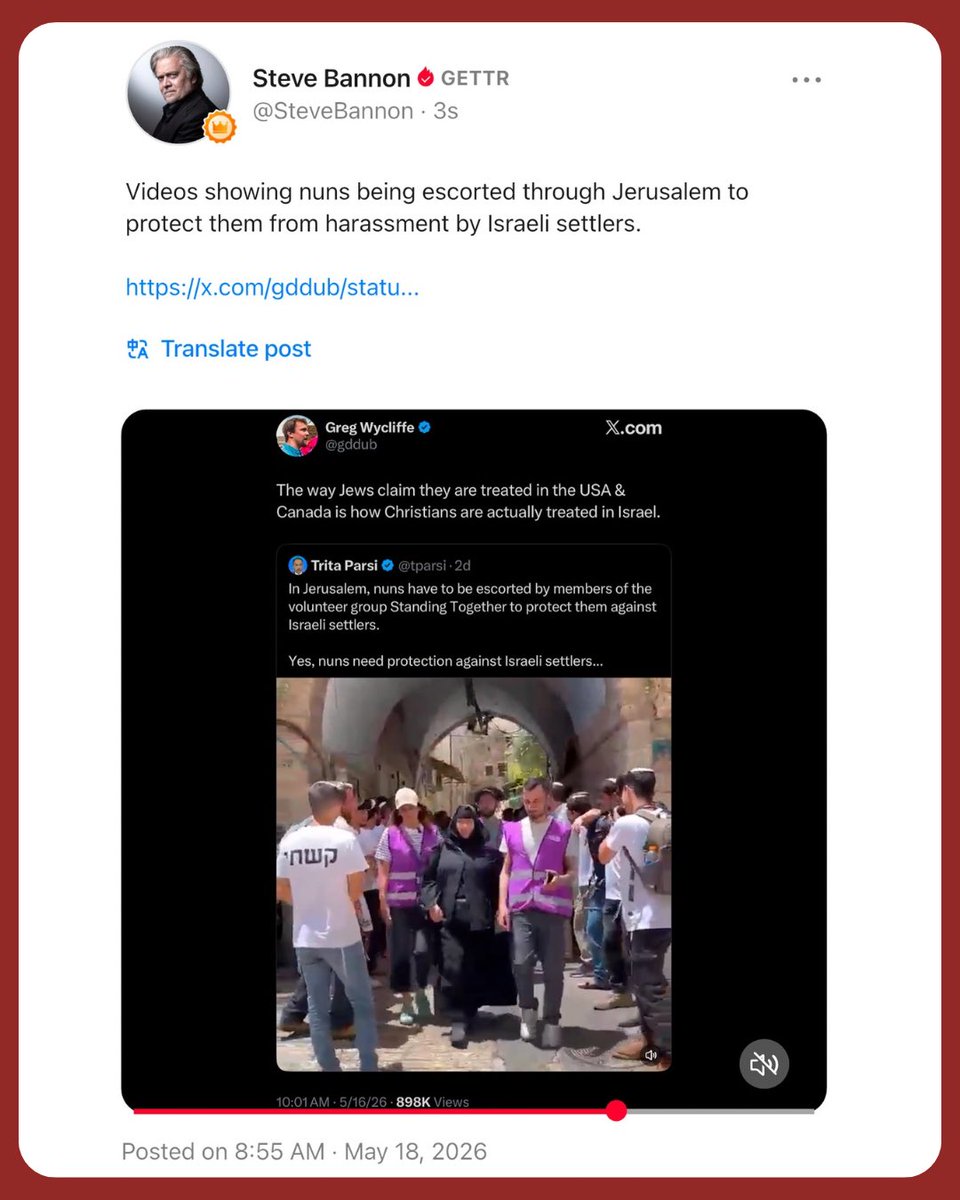
Why are tax payers funding Helen Cammock's ignorant, anti-British propaganda at the @NPGLondon?
Today I'm publishing a new essay, Policy on the AI Exponential. AI is progressing extremely fast—much faster than the policy process was built to handle. The essay lays out where I think the technology is now, and the action needed to close the gap: https://t.co/Lh6PWae178
AI is advancing at a pace our policymaking institutions were never built for—and the gap between the two is becoming the central challenge of the technology. In his latest essay, our CEO Dario Amodei lays out how to close it.
We're launching three new initiatives to support the efforts he outlines.
Today we’re introducing Google AI Threat Defense - a comprehensive AI-powered cybersecurity solution designed to help continuously monitor for and stop AI-powered threats before they can impact your business. Here’s how it works:
1. AI Threat Defense uses our cybersecurity platform @wiz_io to scan and prioritize what applications and systems have the highest security risk.
2. Gemini and other frontier AI models can then autonomously perform continual deep scanning of your applications - starting with those at the highest risk - to identify security vulnerabilities.
3. The capabilities of CodeMender - a new software repair agent - are then used to verify and accelerate the patching of vulnerabilities.
4. And our @wiz_io autonomous agents continuously test your systems to find unknown vulnerabilities before adversaries do so that you can remediate them before you are attacked.
While other model providers focus on using AI to find and flag vulnerabilities, Google AI Threat Defense actively prioritizes your most critical real-world risks and accelerates their remediation using a variety of models since no single model finds a superset of the vulnerabilities found by all other models.
Important archaeological discovery in Mieza, Greece. The Royal Gymnasium where Alexander and around 50 more Greeks were taught by Aristotle, along with its stoas, the stadium, the palaestra (wrestling school), and even the writing tools that students used 2,300 years ago. HUGE!
.
The US's gas ambition: LNG expansion meets AI-driven efficiency
The United States is on track to almost triple LNG export capacity, from virtually zero in 2016 to around 34–35 bcf/d by 2032. Capacity under construction and already approved projects account for most of the increase.
Major projects such as Golden Pass, Port Arthur, Rio Grande, CP2 LNG, and Plaquemines are expected to push U.S. LNG exports well beyond current levels, reinforcing the country's position as the world's leading LNG supplier.
Source: @deloitte by Zillah Austin , Nichelle McLemore , Kate Hardin , Anshu Mittal
🇵🇱Poland (white) and 🇷🇴Romania (red) pay 5.8% and 7.35% respectively in interest on public debt (10y).
The two Eurozone countries that pay the highest interest are 🇬🇷Greece (light blue) and 🇮🇹Italy (green), both at 3.9%; the eurozone (blue) average is 3%.
This means that, at the moment, the “tax” of staying outside the euro amounts to roughly half of the debt service cost, that is, an additional cost corresponding to ≈3% of the public budget of the two countries, or about €350 per average taxpayer in added taxes.
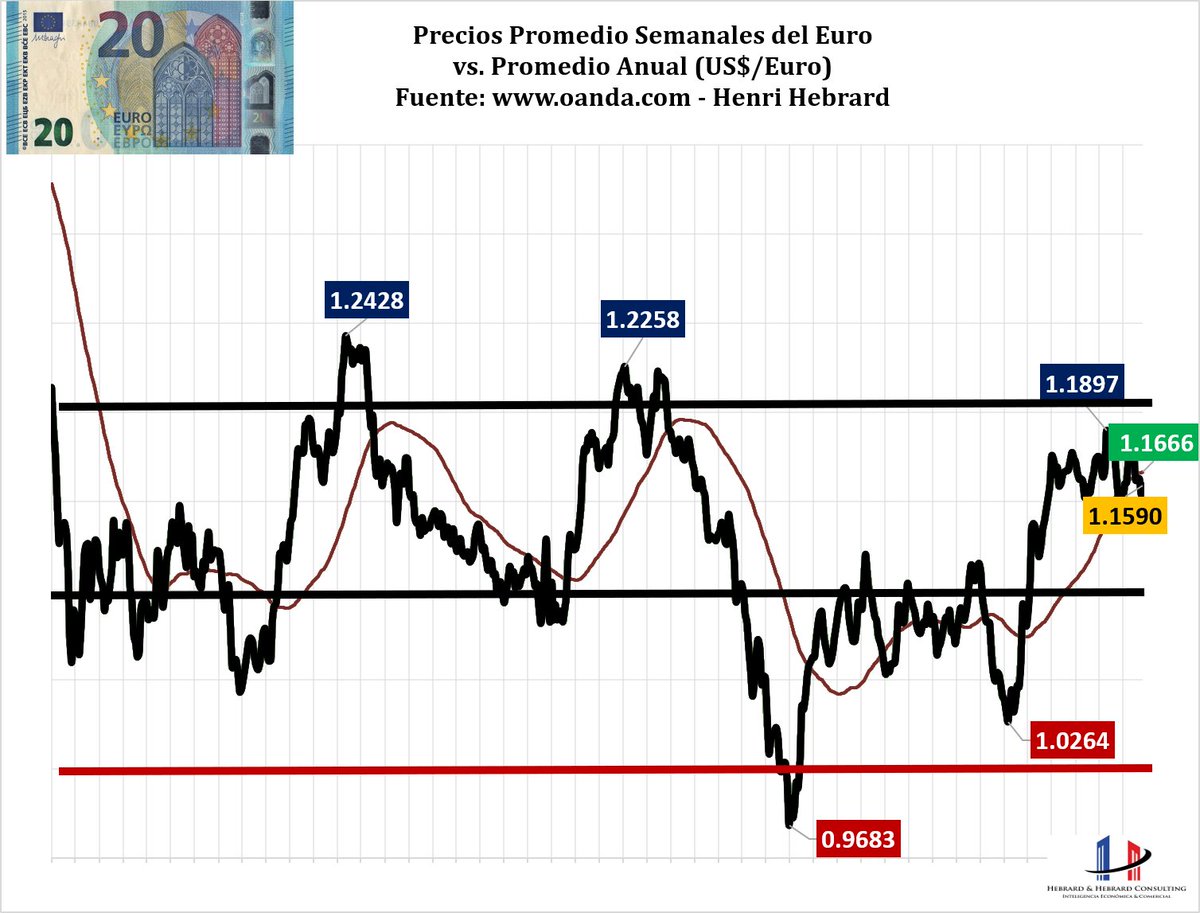
#Euro en US$ cerró ayer lunes con sensible alza celebrando anuncio de tregua en Medio Oriente y regresa justo debajo de nivel de US$1.1600: +0.20% a US$1.1590
Y con eso queda ahora muy levemente arriba de precio de hace 1 año: +0.56% vs. US$1.1526
Promedio últimas 52 semanas se queda sin cambios a US$1.1666 para mantenerse +7.49% vs. promedio hace 1 año atrás (US$1.0853)
We just relaxed tariffs on importation of Argentinian beef because the lack of U.S. supply relative to demand was jacking up prices, but now we are going to export the U.S. beef we were told we were short on to China? Make it make sense.