Space is one of the very few realms where we can actually build new worlds, new societies, new branches of our civilization. Reimagine pretty much everything.
Not many things could be more exciting.
Once space cities were dismissed as pure fiction. I guess now this changes very fast. The schedule could look something like:
2030-s: first Lunar bases
2040-s: substantial mining and production on the Moon
2050-s: smaller worlds like Stanford torus are being built
2060-s: O’Neill cylinders started.
As per our musings with Fable, we could have a @MaxXWilliamson world around 50 years from now.
A lot of commentators don't know the difference between Buran and the Shuttle, and so miss what Energia actually was.
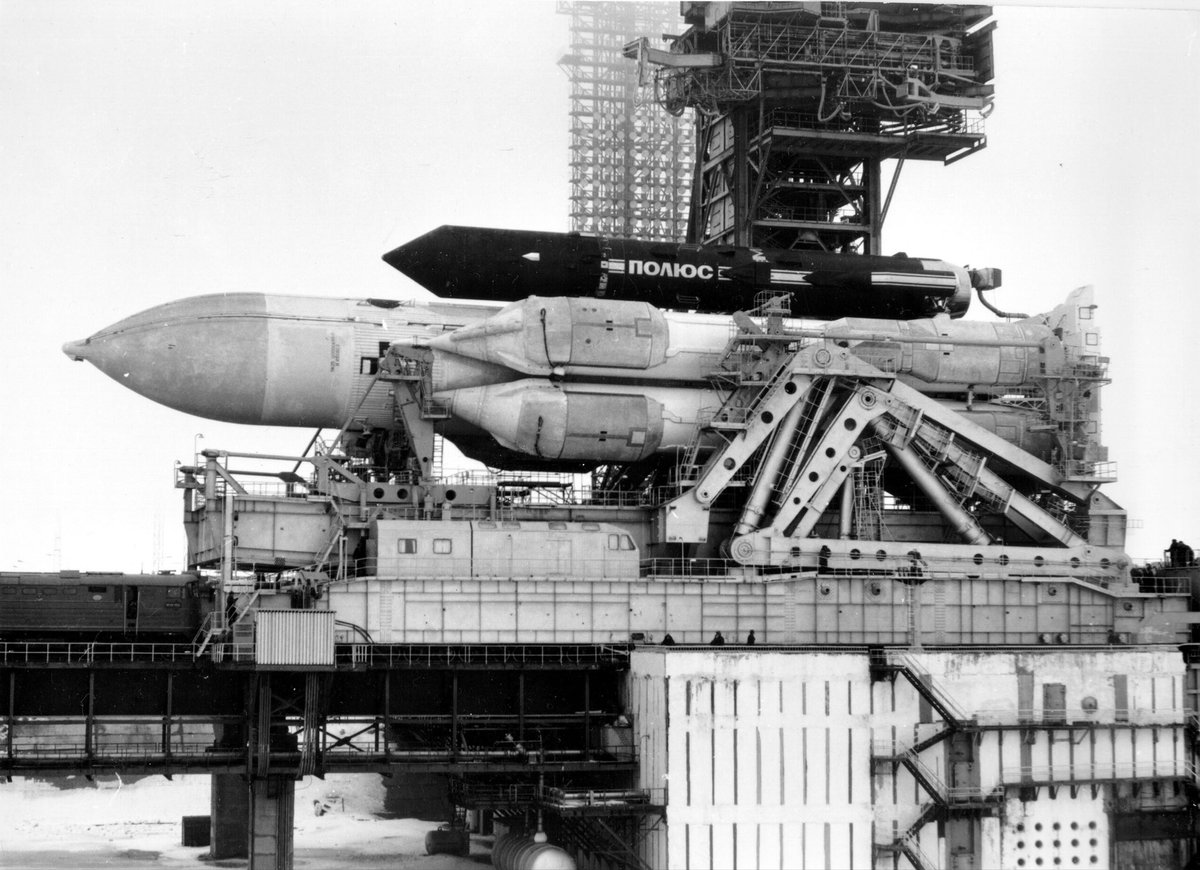
The Shuttle was one integrated system: its main engines sat on the orbiter. Energia carried its own engines and could fly with or without Buran, which made it the most powerful rocket of its time, with up to 100 t to LEO. It was designed with the Moon and Mars in mind.
Its first launch didn't carry Buran at all. The payload was Polyus, an 80 t spacecraft, arguably the largest ever launched. The second and final launch deployed Buran successfully.
Energia was also built with some reusability in mind, with plans to recover its boosters. Despite 1980s tech, a launch cost roughly $2.5B in today's dollars, against about $4B for SLS.
After the USSR collapsed, Energia's chief designer Boris Gubanov flew to the US to offer the rocket for American and international missions. It went nowhere. One of the most powerful rockets of the 20th century was retired and never flew again.