Consultant nephrologist, general physician & Professor in Health Sciences. Live today, smile always & love enough (tweets - personal opinion not medical advice)
He worked with us in the Renal Department in Aintree University hospital @LivHospitals. Saddened by this tragic news. A great Dr, dad and colleague. May his soul RIP. 🙏
The world loses another Physician to COVID-19; Will always remember our times together in Acute Medicine, BHH. Rest in Peace, Gamal! https://t.co/5DDQzAjmpE
Pain out of proportion? Think Calciphylaxis. 🚨
One of the most devastating complications in advanced CKD—often missed, frequently fatal, yet potentially treatable when recognized early.
Calciphylaxis isn't just a skin disease—it's a vascular emergency. ⚠️
🫀Congestion is the disease. Diuresis is only the treatment.
For decades, the success of acute heart failure therapy has been measured by urine output, weight loss, or symptom relief. However, these surrogate endpoints do not necessarily indicate that congestion has resolved. Residual congestion at discharge remains one of the strongest predictors of rehospitalization and mortality.
This review proposes a more standardized and physiology-based strategy for decongestion. The objective is not simply to increase urine output, but to achieve effective natriuresis, restore euvolemia, and eliminate congestion before discharge.
The first message is urgency. Intravenous loop diuretics should be administered within 60 minutes of hospital arrival whenever acute heart failure with congestion is diagnosed. Delays may reduce the effectiveness of treatment and worsen outcomes.
The second message is even more important. Early treatment response should be measured objectively. Rather than waiting for body weight to change over several days, clinicians should evaluate:
• Spot urinary sodium after 2 hours, targeting ≥50to70 mmol/L
• Urine output after 6 hours, targeting ≥100to150 mL/hour
Failure to achieve these targets should prompt early intensification of therapy instead of continuing an ineffective regimen.
The review also supports the growing concept of early sequential nephron blockade. Randomized trials such as ADVOR and CLOROTIC demonstrated that adding acetazolamide or thiazide therapy to loop diuretics can improve decongestion in selected patients, particularly when diuretic resistance develops. Acetazolamide appears especially useful in patients with elevated serum bicarbonate, a marker of increased proximal sodium reabsorption and neurohormonal activation.
Another clinically relevant finding is that continuous loop diuretic infusion offers no clear advantage over intermittent bolus administration, consistent with the DOSE trial. Success depends more on achieving an adequate natriuretic response than on the method of administration.
Perhaps the most important lesson is that patients should not leave the hospital while still congested. Successful decongestion must be followed by rapid optimization of guideline directed medical therapy and early outpatient follow up, as demonstrated by the STRONG HF strategy.
Modern heart failure management is evolving from simply prescribing diuretics toward measuring the physiological response to therapy and adapting treatment early. Congestion should no longer be treated empirically. It should be monitored, quantified, and resolved before discharge.
Reference 📚
Bilgeri, V., Spitaler, P., Puelacher, C., et al. (2024). Decongestion in Acute Heart Failure: Time to Rethink and Standardize Current Clinical Practice? Journal of Clinical Medicine, 13(2), 311. https://t.co/fic1FPNt7x
CKD-associated osteoporosis reflects impaired bone quality and turnover, not just low BMD. Diagnosis requires integrating PTH, bone turnover markers, and imaging, while treatment in advanced CKD and transplant recipients remains challenging. https://t.co/2AJHbuCssU #ASNKidney360
📖 This weekend don't miss our @KIReports#ISNFridaySelection: Randomized Controlled Trial of Dapagliflozin for Post-Transplant Diabetes Mellitus in Renal Transplant Recipients https://t.co/5FAKbwwZm6
Grow professionally with the ISN. Access high-impact scientific and clinical research through our journals. Join/renew your ISN membership for the rest of 2026 at 50% off, use code 50ISN26 ➡️ https://t.co/lEI9kBWCY0
Kidney stones are painful. This research in #ASNKidney360 finally links lab findings to real human genetics, revealing molecules that may be behind stone formation. Understanding the “why” gets us closer to stopping stones before they start. #BasicResearch https://t.co/M1LDEb7alF
¿Qué pasa cuándo se retira el GLP-1?
Enfoque gradual para mitigar la recuperación de peso tras la interrupción del tratamiento con GLP-1. Este marco conceptual ilustra una estrategia jerárquica para el mantenimiento del peso tras la interrupción del tratamiento con GLP-1, que progresa desde intervenciones conductuales y de estilo de vida hasta enfoques farmacológicos. Sin duda, la sostenibilidad a largo plazo depende del acceso, la asequibilidad y la capacidad del sistema sanitario.
https://t.co/3llDLTgEug
Always a pleasure to share the court with you @DjokerNole. Thanks for a great match today 🤝🏻 Honoured and grateful to be back in the final here at @Wimbledon 💚💜 See you all on Sunday 🌱🦊
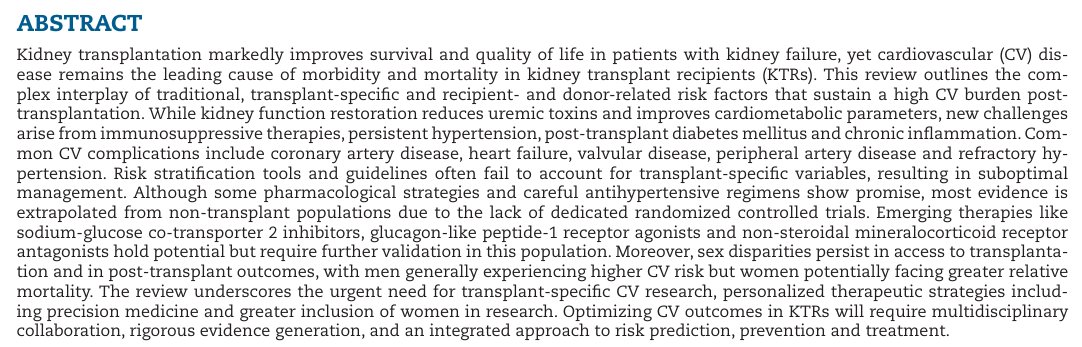
Intermittent fasting and cardiometabolic responses under cardiac stress: a systematic review of preclinical studies
"Cardioprotective benefits were dependent on fasting duration and regimen, emphasizing the importance of metabolic context."
["IF improves cardiovascular outcomes in ∼80% of stressed preclinical models."]
https://t.co/hh6SB8R7N8
🆕 expert analysis provides a framework for antihypertensive medication selection in pregnancy and the postpartum period. Get the details: https://t.co/olA1uclOsT #Hypertension#CardioObstetrics
Intermittent fasting and cardiometabolic responses under cardiac stress: a systematic review of preclinical studies
"Cardioprotective benefits were dependent on fasting duration and regimen, emphasizing the importance of metabolic context."
["IF improves cardiovascular outcomes in ∼80% of stressed preclinical models."]
https://t.co/hh6SB8R7N8
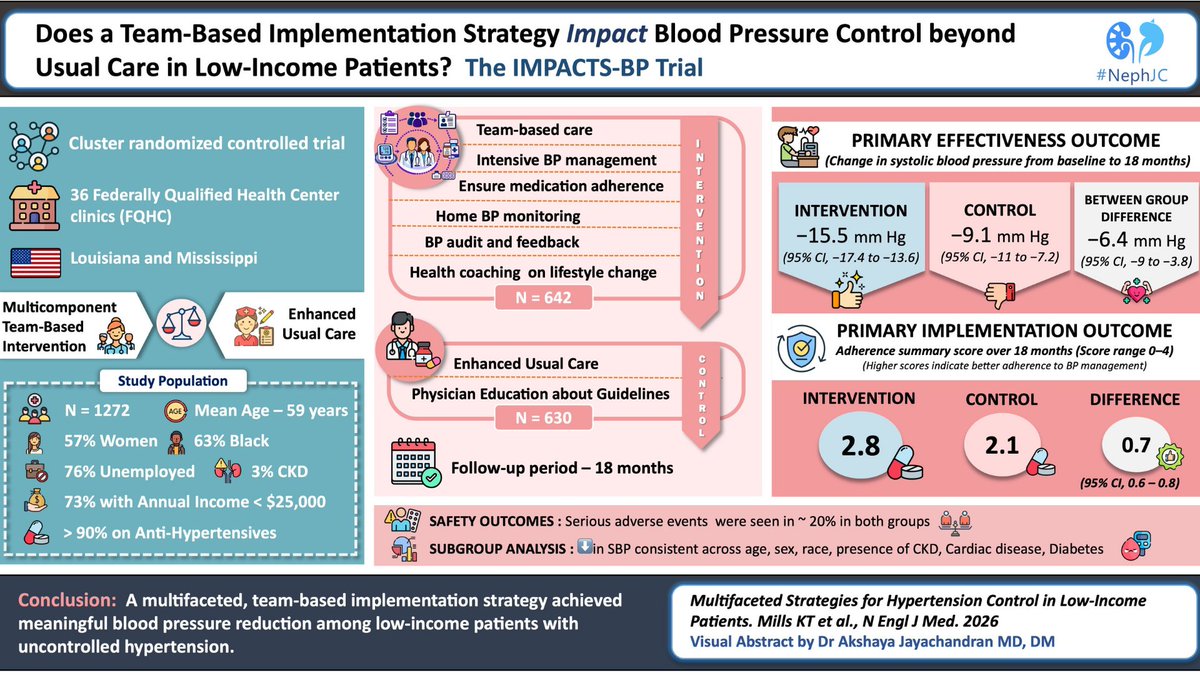
Hypertension control remains stubbornly low in underserved communities. IMPACTS‑BP asks whether a team‑based, multi‑component approach can meaningfully improve blood pressure control and adherence in low‑income patients
🎨#VisualAbstract by @DrAkshayaJ
https://t.co/liZjXaThwl
Intensive LDL Cholesterol Targeting in Atherosclerotic Cardiovascular Disease
👉"Among patients with atherosclerotic cardiovascular disease, targeting an LDL cholesterol level below 55 mg per deciliter led to a lower 3-year risk of cardiovascular events than targeting a level below 70 mg per deciliter."
https://t.co/o21JQP1hAN
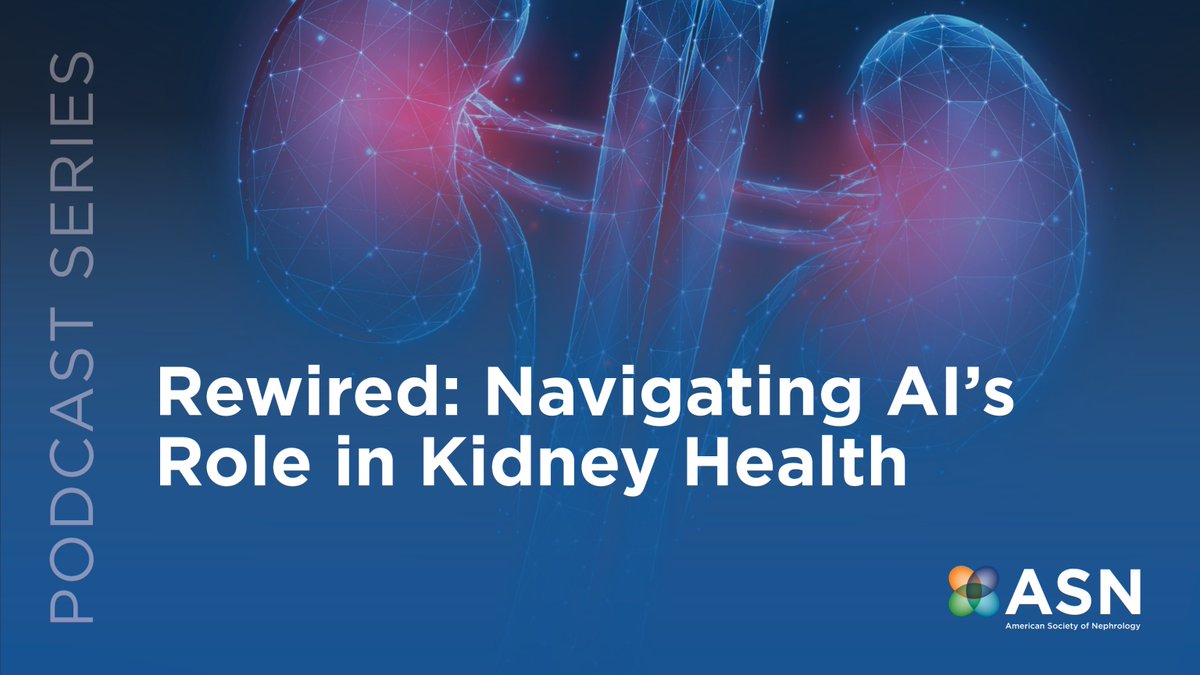
The Rewired podcast series is back with a new episode. Karandeep Singh, MD, joins Karin Bergling, MD, and Wisit Cheungpasitporn, MD, to unpack how the AI-Powered Kidney Care Network is connecting medicine and technology to drive the future of kidney health. Listen now: https://t.co/IdhBwNricm









![agingdoc1's tweet photo. Intermittent fasting and cardiometabolic responses under cardiac stress: a systematic review of preclinical studies
"Cardioprotective benefits were dependent on fasting duration and regimen, emphasizing the importance of metabolic context."
["IF improves cardiovascular outcomes in ∼80% of stressed preclinical models."]
https://t.co/hh6SB8R7N8](https://pbs.twimg.com/media/HGbfd8DXcAAPxxj.jpg)