Game theory explains why working harder inside a broken system is the worst response to that system. Because a system is never truly broken. It's just producing exactly the outcomes its own incentive structures were designed to produce, whether intentional or not. Working harder inside this system increases your output in the payoff matrix, but it simply won't change the actual structure of the system's matrix. Thus, the correct response is not more effort. Instead, you must aim to identify whose interests the current structure serves and position yourself in favor of those interests rather than against them. Change the game, or play the game that is actually being played. Either way, you must stop optimizing for the game you wish it to be and start acting realistically.
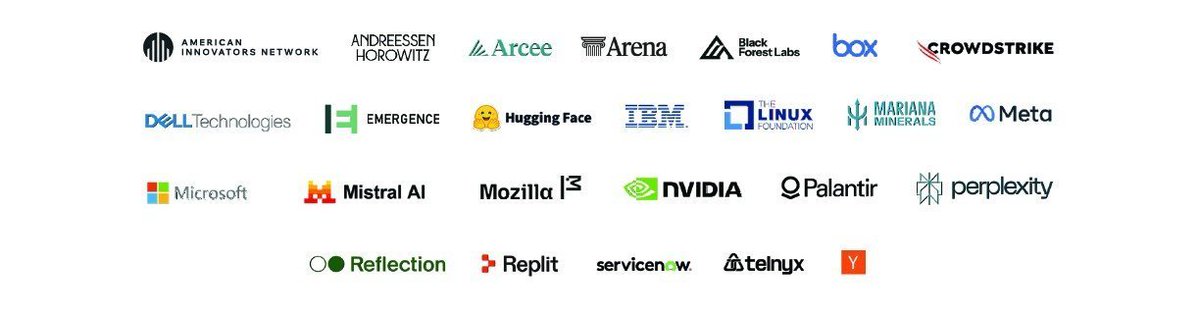
Why was Jensen's letter on open models not endorsed by Anthropic or OpenAI?
It's pretty clear by now that both OAI & Anthropic care more about their business models and valuations above all else...
For my first post, I’m sharing a letter @NVIDIA signed on why open models matter.
AI will transform every industry, power every company, and be built by every country.
Open models strengthen safety and cybersecurity, accelerate innovation and diffusion, and enable sovereignty.
The world needs both frontier closed models and frontier open models.
https://t.co/AUKzoQ5Ikb
Andrej Karpathy just said your kids should ignore most of school.
"80% of education should be math, physics, CS."
Not because it's useful - because it carves grooves in the brain.
Grooves that get harder to carve the older you get.
In a pre-AGI world: it gets you a job.
In a post-AGI world: it makes you a functioning, empowered human.
Everything else? Tack it on later.
The cognitive foundation is the only foundation that survives the transition.
Life advice my father drilled into me when I was younger that hit me like a freight train again today (prolly not his exact words):
Always assume the other retard across the table is so fucking braindead they won’t understand a single thing you’re saying. Doesn’t matter if he’s wearing a $10k suit and dropping Ivy League vocab, I promise he’s most likely running on two working brain cells and a prayer.
Force yourself to dumb it down every single time. Simplify until it feels insulting. Never assume your opponent has any functioning synapses. You will be absolutely shocked how goddamn stupid most people are.
And the best part? They’re usually too scared to admit they don’t get it if you don’t do it and speak „normal“, so they just sit there nodding like idiots instead of asking for clarification. Then they fuck it up later and act surprised.
Assume everyone’s a moron.
Communicate accordingly. You’ll close more deals, waste less time, and lose fewer brain cells.
You’re welcome.
it's genuinely mind-blowing how many things with huge returns are purposely overcomplicated and gated so that the masses would not be able to get into them and get their piece of the cake. opportunities are everywhere for those who are curious and resilient enough not to give up
Sejak lulus menghilang, lock in.
Belajar bahasa, grinding skill, ngejar study abroad & work abroad.
Hampir gaada waktu login & doom scrolling. Beberapa temen, mengira gue udah meninggal karena gaada kabarnya (lol, that's fair enough though).
Baru satu tahun terakhir ini gue aktif sosmed, mulai dari Facebook (karena teman-teman gue banyak di sini, waduh ketahuan umurnya), lalu Instagram & Threads, kalo Twitter baru aktif 3 bulan terakhir.
Selama mode menghilang itu gue cuma aktif di Reddit, itupun anonim
One pattern I find useful for working with LLMs is a nice long ramble session. Sometimes the LLM needs more bits to understand what you're trying to achieve, but you're too lazy to type them. In these cases I like to lean back, switch to /voice and just ramble for like 10 minutes, total mess, anything goes, full stream of consciousness. Sometimes I declare it up top, something like "switching to speech recognition sorry for any typos...". Sometimes I turn it into a small interview of a few turns. But I find that the LLMs are somehow very good at reconstructing long incoherent rambles and often their echo of your own tangle of thoughts comes out quite a bit cleaner than what you started with. The result is that you improve the mind meld and have to correct things less from that point on.
If you trade trend, you'll get a bunch of false starts
If you trade momentum, you'll often buy the top/sell the bottom
If you trade mean reversion, you'll periodically get carried out by an outsized move
And so on for basically every trading system
This is the cost of doing business that's embedded into every market effect you're monetising
Your job is to understand it and manage it
If you try to avoid it entirely you simply won't get paid
There's no perfect system, it's all about managing trade-offs
Go take a look at your setups/playbook or wherever your trading system lives and map its assumptions and failure cases
The stuff you wanna avoid:
1. Mutating your system because the risk feels uncomfy so you get the worst of both worlds e.g. not holding for long trends/outsized moves but still eating the false starts when you're wrong (all the downside, no balls for the upside)
2. Not knowing what the trade-offs are and sizing like a dickhead so when you're wrong it wipes out all your gains e.g. penny collecting on mean reversion with increasing size and then getting fully wiped on the outsized move