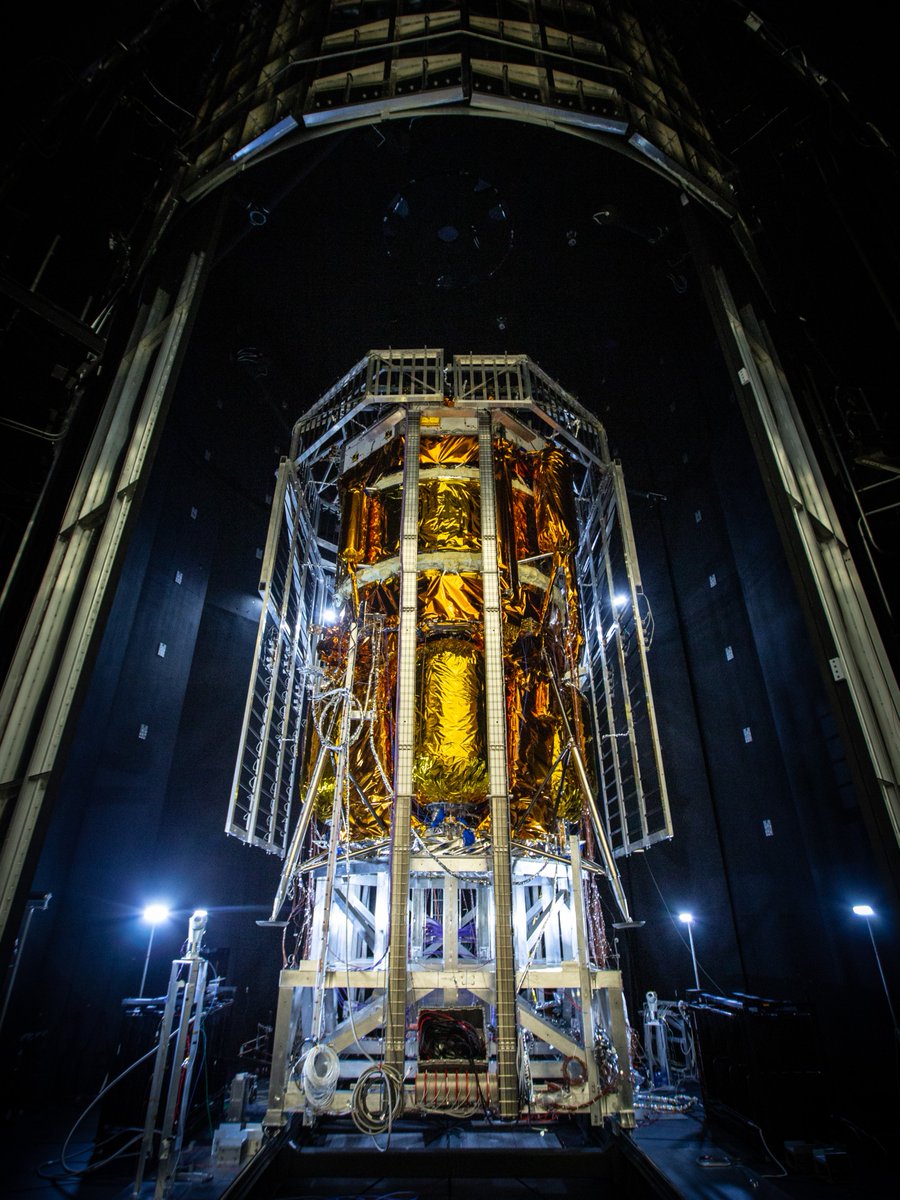
Experience the magic of our Moon mission wherever you go! ✨
Download free, mobile wallpapers and bring your device into the new era of exploration: https://t.co/494ZyUBtve
Lunar Permanence will require using resources on the Moon rather than hauling them from Earth. Our in-situ resource utilization system extracts oxygen from lunar regolith to create breathable air for astronauts and propellant for refueling landers and fuel cells. It also produces iron, aluminum, silicon, construction materials, and even solar power systems. The materials for a Moon base are produced right where they’re needed, and at much lower cost than being brought from Earth.
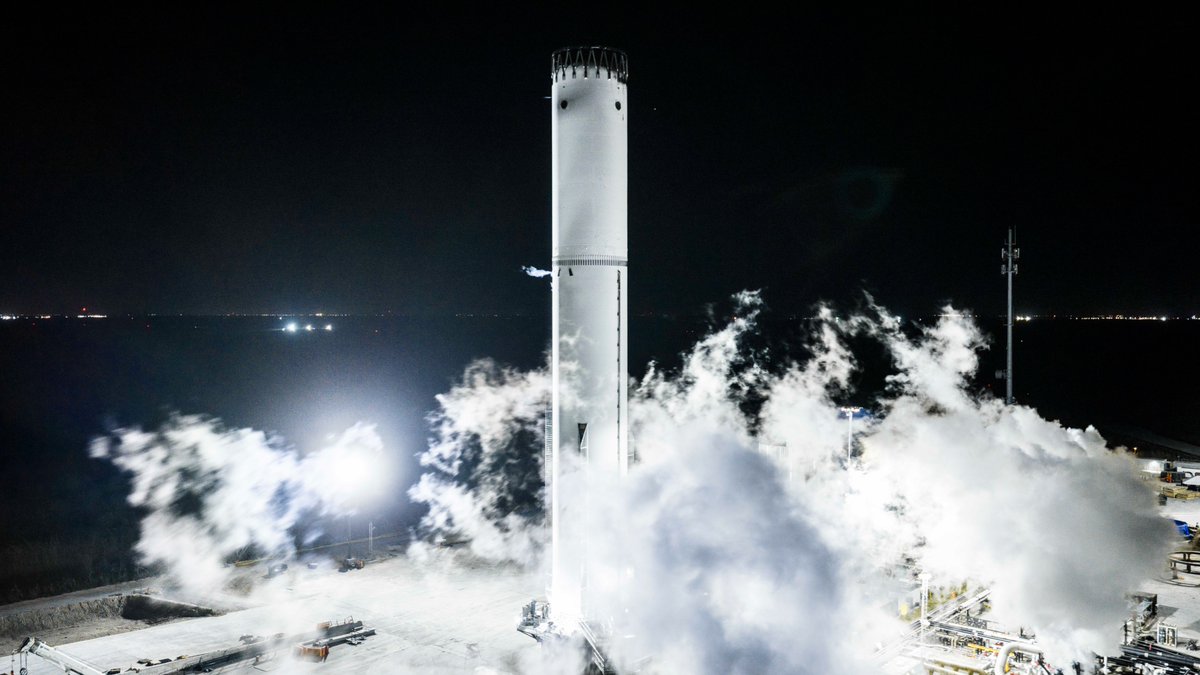
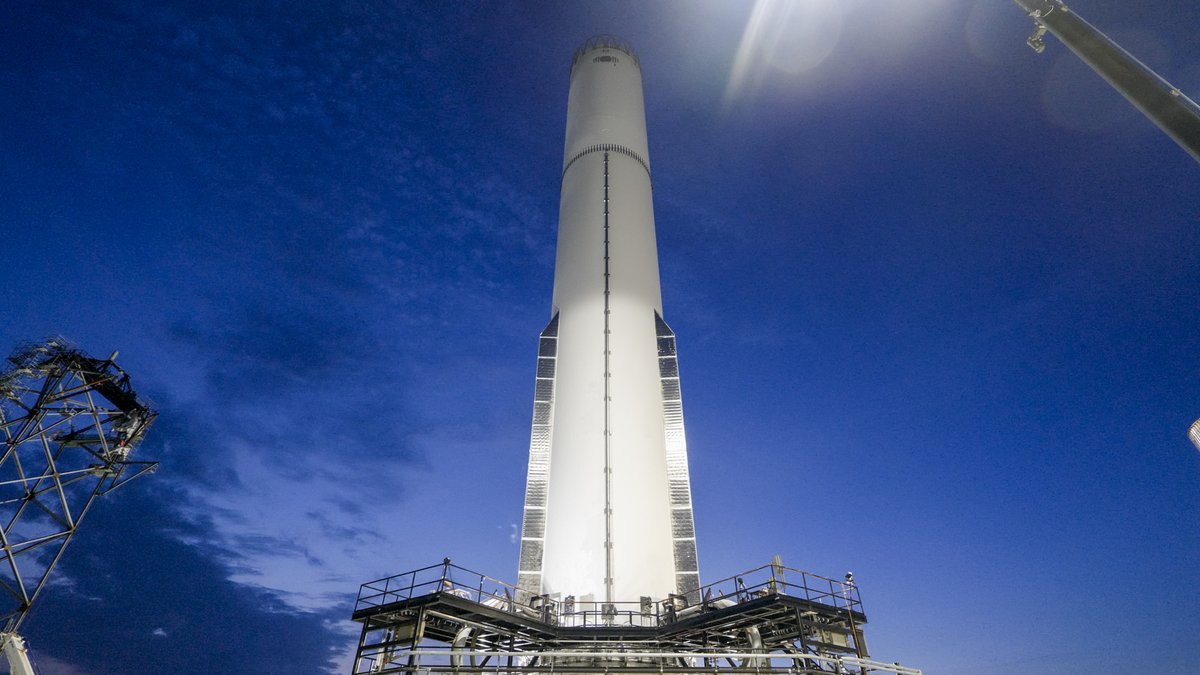
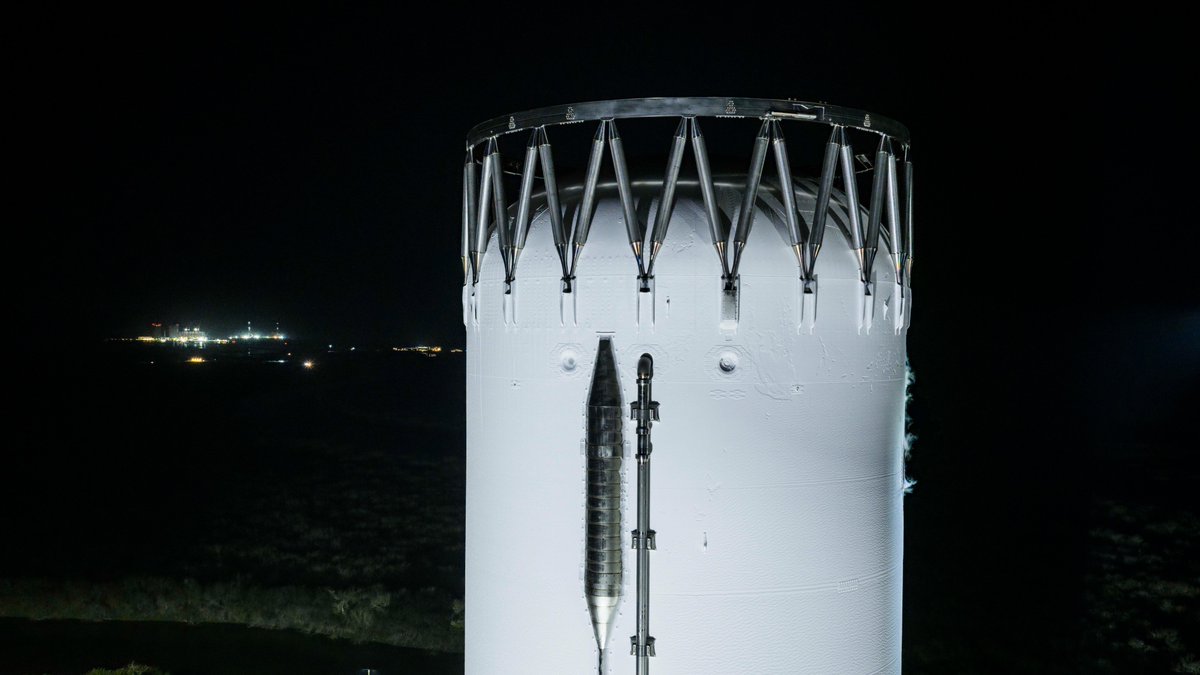
Cryoproof operations complete for the first time with a Super Heavy V3 booster. This multi-day campaign tested the booster's redesigned propellant systems and its structural strength
Docking? ✅
Our Blue Docking System team successfully completed soft capture system testing at @NASA_Johnson's Six-Degree-Of-Freedom Dynamic Test facility. This test completes a key milestone on our Commercial LEO Destinations (CLD) contract.
The fully vertically integrated system will fly first on our Blue Moon MK2 Lunar Lander, then on Orbital Reef and future vehicles. This marks the first time we have confirmed the performance of our pressurized docking system in flight-like scenarios, meeting International Docking System Standard requirements.
We’re pleased to announce that @torybruno is joining Blue Origin as president, National Security, reporting to CEO Dave Limp. Tory will spearhead our newly formed National Security Group.
The BE-7 engine is designed for 10,000 lbf and can throttle down to 2,000 lbf at any point during the mission. For MK1, we will use this throttle capability specifically for landing. It also operates at mixture ratios from 5.5 to 7.1 parts liquid oxygen per part liquid hydrogen, allowing us to optimize performance for different phases of the mission.
All is quiet in the countdown this evening as the launch team methodically works through the procedures and checklists to put both the Atlas V rocket and the pad systems in the proper configuration for cryogenic propellant loading operations. Tanking will begin shortly after 7:30 p.m. EST (0030 UTC).
NG-2 Update: We are scheduled to launch tomorrow, November 13, with a launch window from 2:57–4:25 PM EST / 19:57–21:25 UTC. The live webcast starts here at T-20 minutes.
NG-2 Launch Update: Our next launch attempt is no earlier than Wednesday, November 12, due to forecasted weather and sea state conditions. We worked with the FAA and range to select a launch window from 2:50 PM – 4:17 PM EST / 19:50 – 21:17 UTC. The live webcast starts at T-20 minutes.