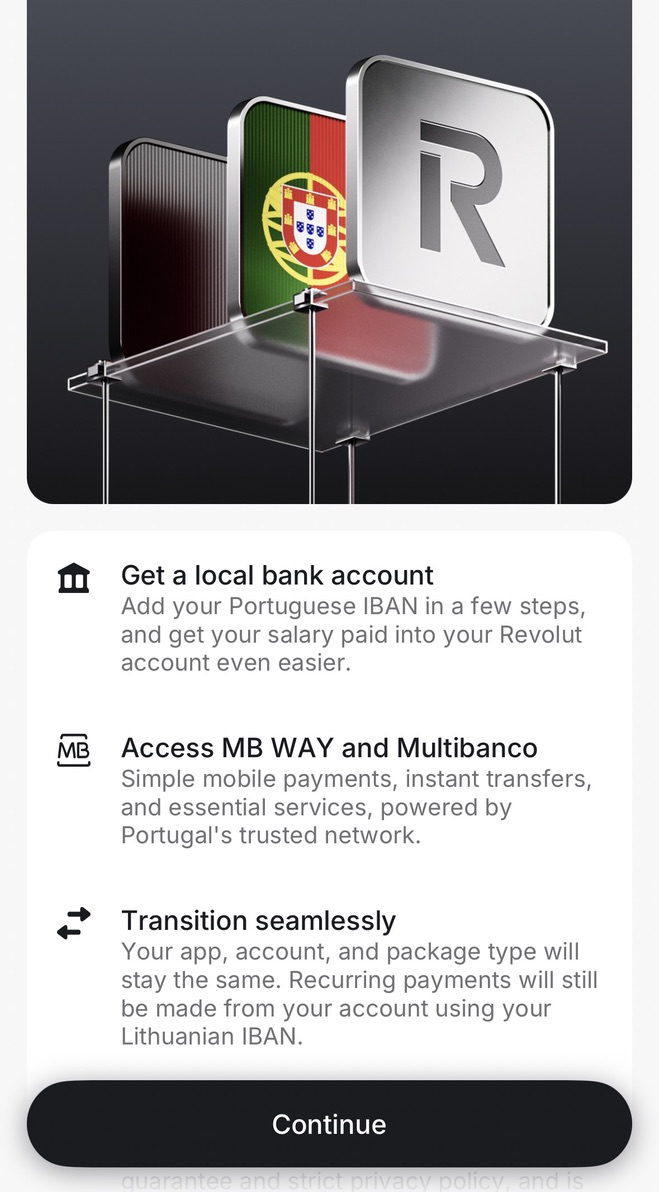
Great news @levelsio! Revolut finally offers Portuguese IBAN and MB Way.
No more relying on sketchy apps from ActivoBank and other local banks.
Revolut won a long battle with lobbyists, and many NHR residents like myself can at last utilize the best nomad-friendly bank app.
My vibe-coded startup marketplace @trust_mrr just reached 30K buyers 🌟
It has helped 100+ startups get acquired in my sleep, run 100% on autopilot, no employees, no investors, and costs <$500/mo.
You can just do the thing!
This is the mindset that brought me here
1) ship fast
2) get 1k-10k visitors
3) ✅ validation > focus
❌ no validation > move on
My biggest mistake was not quitting early.
The more I work on a startup, the more attach I get, the harder it is to move on.
The hit rate for most entrepreneurs is 5%.
I’d rather place 20 small bets than spend 2 years doubling down on the wrong one.
Revolut handed me Perplexity Pro for free. I went from AI skeptic to heavy user in months.
Then the credit walls appeared. A few long threads with connectors cost me 20 USD extra — not per month, single usage.
That's when I knew it was time to leave.
Nobody gave me permission to become a digital nomad.
I just started.
The label is everywhere but meaning is murky. And that's the beauty of it.
You control the pace, place, shape.
So how do you carve yours?
Nobody becomes a nomad accidentally. It starts with one question: "What's out there?"
Books, games, and radio shows from faraway places planted that question in me as a kid. Curiosity is still the only qualification you actually need.
What planted the question for you?
Everyone warns that nomading destroys your relationships.
Yes, I lost touch with most friends back home. But I gained deeper friendships with nomads and locals worldwide.
And met the love of my life on the road.
What did nomading do to your relationships?
The most unreasonable decisions lead to the most interesting lives.
Quit your job. Move to a new country. Start a business. Break up with that bad partner.
Ten years later, everyone will ask you how you got so lucky.
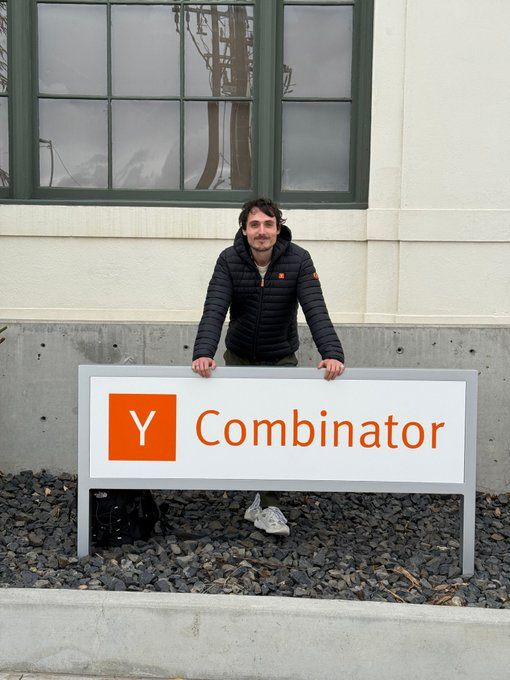
We went from 0 to 2,200 paying customers in under a year by following @ycombinator's 15 rules:
1/ Do things that don't scale. Get your first 10 customers by hand.
2/ Launch now, not when it's "ready". A mediocre product in front of real users teaches you more in a week than 6 months of polishing in the dark.
3/ Charge from day one. If nobody will pay, you don't have a startup, you have a hobby.
4/ Talk to users every single day. The roadmap you need is sitting in your customers' heads, and they'll hand it to you for free
5/ Always hunt the 90/10 solution. For almost any feature there's a way to capture 90% of the value with 10% of the effort.
6/ There are only two real jobs: write code and talk to users. Everything else (conferences, press, VC coffees, corp dev calls) is fake work.
7/ You pick your customers as much as they pick you. 10 users who love you beat 1,000 who kind of like you.
8/ Growth is an output, not a strategy. Grow before product market fit and all you're buying is churn.
9/ Do less, really well. Pick one or two metrics and judge every task against them.
10/ Know if you're default alive. Paul Graham's question: on current growth and current burn, do you reach profitability before the money runs out?
11/ Don't hire until it hurts. Headcount is not progress, it's burn. Every great startup was embarrassingly small for embarrassingly long.
12/ Momentum is the only real moat in year one. Ship something every week, even something tiny.
13/ Every great startup is badly broken at some point. The game isn't avoiding fires, it's how fast you put them out. Again. And again
14/ Ignore your competitors. Startups die of suicide, not murder. In year one, the only company that can kill yours is your own
15/ Startups rarely die from running out of money. They die because the founders fall out. Brutal honesty with your cofounder is the cheapest insurance you'll ever buy
Good luck !
My life's goal isn't to be rich.
It's to work 3-4 hours per day, help thousands of people, have plenty of time for exploring hobbies, spend time outside, cook with my wife, exercise whenever I want, and avoid pointless meetings.
That's all I care about.
why is it so easy to forget that the whole point of any part of life is to enjoy the journey that you're on. the days that feel so long right now will soon be missed. and even when you are thinking about the past you again arent able to be in the future.
In post-communist Poland, my life was already decided. Good grades. Office job. Settle down.
I rejected all of it.
20 years later I woke up on a beach at sunrise and realized my nomad dream came true. Curiosity was my driving force.
Nobody tells you this about digital nomadism: it's not one breakthrough that made it possible. It's six. Cheap flights. Small devices. Mobile internet. Borderless payments. Digital visas. Remote work. None alone matters. Together they established freedom.
Email in 1997: folders within folders, drag messages manually, 5 MB attachment cap, slow desktop client.
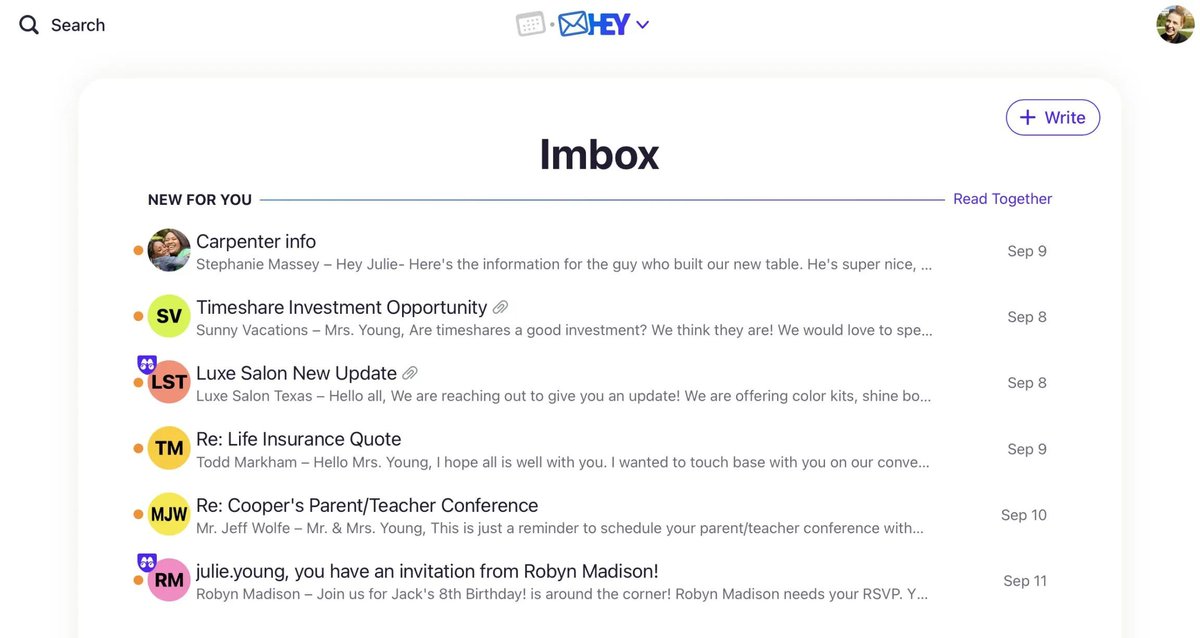
Email in 2026 with Hey: one column, automatic triage, no attachment limit, mobile at full feature parity. It took 30 years to rethink it.
What email app do you use and why?
Unpopular take in Kuala Lumpur: Grab and Foodpanda are bad for vegans. The apps don't verify inventory, dishes lack ingredient details, and real vegan options are thin. Order directly from real vegan restaurants instead. Pinxin's frozen Penang dishes beat any KL delivery app.
Two years living in Kuala Lumpur taught me one thing: this city has plenty of hidden vegan gems. Five spots changed how I eat in Malaysia. Saving them here so you don't have to scroll HappyCow.
In the last 6 months at @Ahrefs, we analyzed over 1 billion data points across 14 studies. Here's what we learned about AI search optimization:
1) "Best X" blog listicles are the single most prominent content format cited by AI chatbots. They make up 43.8% of all page types cited by ChatGPT specifically.
2) 67% of ChatGPT's top 1,000 citations come from sources marketers can't influence: Wikipedia (29.7%), homepages (23.8%), app stores (6.6%). Only 32.3% are influenceable content like educational pages, reviews, news, and blog posts.
3) 28.3% of ChatGPT's most-cited pages have zero Google organic visibility. These pages get cited repeatedly by ChatGPT despite not ranking in Google at all. A completely separate discovery layer.
4) ChatGPT only cites about 50% of the URLs it retrieves. It fetches dozens of pages per query but uses half as background context without attribution. This means that being retrieved and being cited are very different things.
5) Adding schema markup had zero meaningful impact on AI citations. AI Overviews actually dipped −4.6%, while AI Mode (+2.4%) and ChatGPT (+2.2%) showed changes indistinguishable from zero.
6) YouTube mentions have the highest correlation (0.737) with AI brand visibility out of all the factors we studied (including all the conventional SEO metrics like backlinks, page count, DR, etc). This held true for both Google-owned and OpenAI products.
7) AI Overviews reduce clicks to the #1 result by 58%. That’s up from 34.5% just 10 months earlier. The trend is accelerating.
8) 99.9% of AI Overviews appear on informational intent queries. Transactional, navigational, and local searches are almost entirely AIO-free. Shopping triggers AIOs just 3.2% of the time.
9) For a given search query, Google’s AI Mode and AI Overviews reach the same conclusions 86% of the time — but cite almost entirely different sources (only 13.7% citation overlap).
10) AI Overviews change every 2.15 days on average, with 70% of content differing between consecutive observations. But semantic similarity stays at 0.95. The words, sources, and entities constantly shuffle, but the actual meaning barely moves.
Every email client is stuck in the 1990s. Multi-column folders, manual rules, attachments capped at 25 MB.
Hey is the only modern email client I've used. One column, automatic triage, no size limits. (not affiliated/sponsored just happy customer)
Every email client is stuck in the 1990s. Multi-column folders, manual rules, attachments capped at 25 MB.
Hey is the only modern email client I've used. One column, automatic triage, no size limits. (not affiliated/sponsored just happy customer)